Sixty Days Above the Clouds: Nicolas Jaeger's Solitary Odyssey on Huascarán
Between 1977 and 1978, French physician and extreme soloist Nicolas Jaeger pioneered a solo route up Huascarán Sur and survived sixty consecutive days alone at 6,700 metres conducting ground-breaking hypoxia research.
Mountain Safety & Conditions Disclaimer: High-altitude climbing, glacial travel, and technical ascents entail severe objective risks including avalanches, serac collapses, rapid weather collapse, and altitude illness. Historical route descriptions and summit claims on Mountanity reflect documented archival sources and must not be used as live operational safety assessments. Local regulations, permits, and physical glacial topography change continuously.
Peer Review: Senior Editorial Board & Historical Reviewers • Editorial Standards
The Laboratory in the Sky
In the late 1970s, the frontiers of high-altitude medicine were defined by unanswered questions. Could the human organism permanently acclimatize to extreme altitudes above 6,500 metres, or was prolonged exposure to profound hypoxia an inevitable death sentence? While mountaineers spent days or weeks at high camps on Himalayan giants, none had remained indefinitely in the extreme thin air to conduct controlled, day-by-day physiological experiments upon themselves.
Enter Dr. Nicolas Jaeger. Thirty-one years old, a certified Chamonix mountain guide, and a gifted physician specializing in high-altitude pathology, Jaeger possessed a rare combination of supreme technical climbing virtuosity and rigorous scientific intellect.
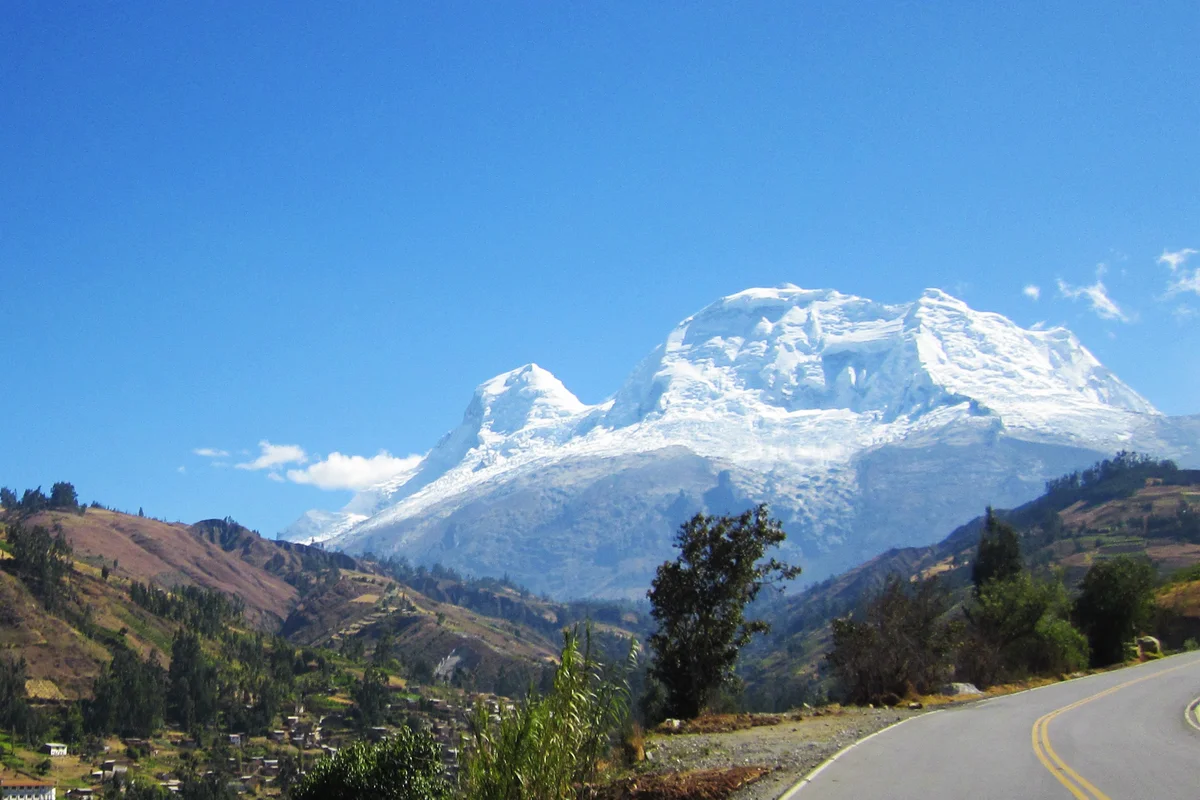
In June 1977, Jaeger traveled to Peru’s Cordillera Blanca to prepare for his ultimate experiment. His objective was Nevado Huascarán, the glaciated monarch of Peru rising to 6,768 metres. To prove his alpine mastery, Jaeger first tackled the steep, avalanche-swept South Face of Huascarán Sur in pure solo style—climbing without ropes, partners, or fixed lines. In a breathtaking demonstration of speed and composure, he conquered the face and stood alone atop the highest point in the global tropics.
The 60-Day Solitary Bivouac
Having mastered the mountain, Jaeger returned to Huascarán in July 1978 to carry out his daring survival experiment. Supported by Peruvian porters who helped carry scientific equipment to the high saddle of the Garganta at 6,000 metres, Jaeger climbed the remaining 700 vertical metres alone, hauling hundreds of pounds of freeze-dried rations, fuel, batteries, and medical gear to a tiny platform nestled beneath the summit ice cap at 6,700 metres.
Once his porters descended, the radio link was cut. Nicolas Jaeger was completely alone.
For the next sixty consecutive days—from July 27 to September 25, 1978—Jaeger lived inside a double-walled nylon tent barely two metres long. Outside, ferocious storms swept across the summit of Huascarán, with hurricane winds buffeting the frail shelter and temperatures plunging to minus thirty-five degrees Celsius.
The Battle with the Mind and Body
Every single day, with clinical precision, Jaeger conducted a battery of medical tests upon himself. He drew his own arterial and venous blood, measured hematocrit levels, recorded his resting heart rate and blood pressure, performed spirometry to assess lung volumes, and subjected himself to psychological perception tests.
As the weeks dragged on, the extreme altitude took a severe toll. His body weight plummeted by more than thirty pounds as muscle tissue was consumed to sustain vital organs. Chewing and swallowing dry rations became an exhausting chore. Simple tasks—such as melting snow for drinking water or recording numbers in his journal—demanded agonizing mental effort.
Worse than the physical degradation was the psychological solitude. Cut off from all human contact, suspended in a frozen void between heaven and earth, Jaeger battled overwhelming waves of depression, existential terror, and high-altitude hallucinations. In his journal, later published as the acclaimed masterpiece Carnets de Solitude, he wrote:
“The silence up here is heavier than lead. It presses against your skull until you think you can hear the blood pulsing through your brain. You must fight not only the cold, but the terrifying temptation to surrender to sleep and never wake up.”
Yet Jaeger persevered. Through iron discipline and a profound sense of scientific duty, he continued his daily measurements without missing a single entry.
Descending from the Edge
On September 25, 1978, exactly sixty days after his solitary vigil began, Nicolas Jaeger packed his scientific logs, dismantled his frost-encrusted tent, and began his solo descent down the treacherous icefalls of Huascarán. When he stumbled into the valley village of Musho, local villagers and colleagues could scarcely recognize the emaciated, sun-blackened doctor.
Jaeger’s sixty-day survival experiment provided groundbreaking medical insights into human adaptation to chronic hypoxia, proving that while human deterioration at extreme altitude cannot be entirely halted, remarkable physiological adaptations occur that allow sustained survival far longer than previously believed possible.
Two years later, after summitted Mount Everest without oxygen, Jaeger vanished on the South Face of Lhotse Shar. Yet his sixty-day solitary odyssey on the summit of Huascarán remains one of the most heroic chapters of scientific courage and human endurance in alpine history.
Key Statistics & Topographic Figures
- Category
- Andean Alpine Legends
Archival Subject
- Reading Time
- 15 min read
Narrative Length
- Key Mountain
- huascaran
Objective
- Ascent Route
- the ascent route
Topography
- Verification
- Editorially Verified
Archival Standard
Archival Primary Source Quotations
“In the mountains, truth is etched in ice and granite; every step requires unwavering respect for the heights.”
Defined Alpine Terminology & Concepts
- Summit Push
- The final continuous climbing effort from the highest established camp to the mountain apex and back.
- Death Zone Chronicle
- A verified, research-backed historical narrative documenting the human, technical, and environmental realities of an alpine expedition.
Frequently Asked Questions: Sixty Days Above the Clouds: Nicolas Jaeger's Solitary Odyssey on Huascarán
What is the core chronicle and subject of "Sixty Days Above the Clouds: Nicolas Jaeger's Solitary Odyssey on Huascarán"?
Between 1977 and 1978, French physician and extreme soloist Nicolas Jaeger pioneered a solo route up Huascarán Sur and survived sixty consecutive days alone at 6,700 metres conducting ground-breaking hypoxia research.
Which mountain peaks and routes are featured in "Sixty Days Above the Clouds: Nicolas Jaeger's Solitary Odyssey on Huascarán"?
This narrative documents climbs on huascaran along the the ascent route in Peru.
Which documented expedition is chronicled in this story?
This historical chronicle captures the events of the 1977-jaeger-huascaran-solo-and-survival, verified through contemporary journals and archival records.
Who authored and researched this archival chronicle?
Authored and researched by Mountainity Historical Research Desk, drawing on primary eyewitness testimonies, alpine club registries, and verified summit logs.
What makes this high-altitude chronicle historically significant?
Categorized under "Andean Alpine Legends", this chronicle preserves critical lessons in alpine leadership, survival, tactical speed, and human endurance in the death zone.
Related Mountains

Huascarán
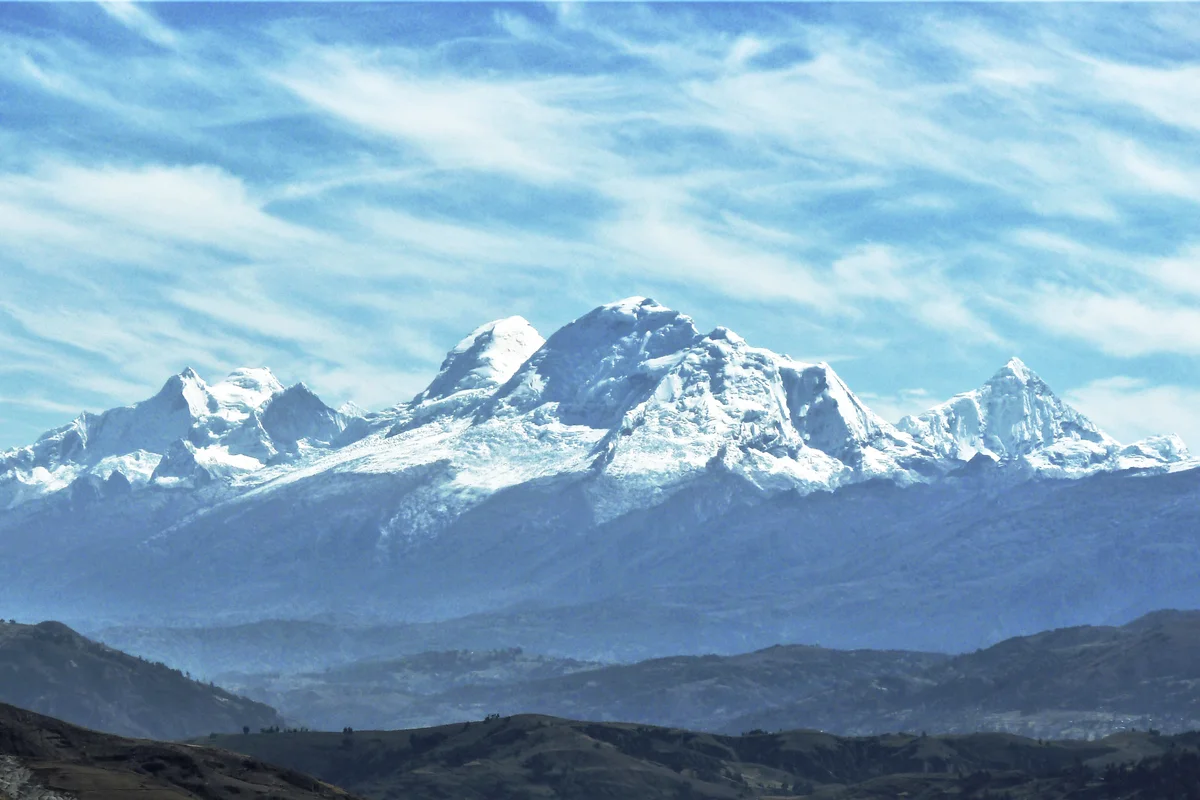
Huascarán is the highest mountain in Peru and the highest peak in the entire tropical zone of Earth, rising to 6,768 metres in the Cordillera Blanca. Its twin glaciated summits—Huascarán Sur (6,768 m) and Huascarán Norte (6,655 m)—tower over the Callejón de Huaylas with colossal icefalls and sheer vertical walls.
Documented Sources & Archival Citations
- American Alpine Journal: Huascarán Sur Solo & Survival (1978)(American Alpine Club)
Supporting claim: Documentation of Nicolas Jaeger's solo ascent and survival experiment on Huascarán
Accessed/Documented: 2026 - Carnets de Solitude: 60 Jours Seul à 6,700 Mètres(Nicolas Jaeger / Éditions Denoël)
Supporting claim: Primary autobiographical and medical chronicle of the 60-day stay on Huascarán
Accessed/Documented: 2026