The Ogre 1977: Doug Scott's Heroic Eight-Day Crawl with Two Broken Legs
In July 1977, Doug Scott and Chris Bonington made the first ascent of Baintha Brakk (The Ogre). When Scott shattered both legs in an abseil accident, it triggered an epic eight-day crawl to survival.
Mountain Safety & Conditions Disclaimer: High-altitude climbing, glacial travel, and technical ascents entail severe objective risks including avalanches, serac collapses, rapid weather collapse, and altitude illness. Historical route descriptions and summit claims on Mountanity reflect documented archival sources and must not be used as live operational safety assessments. Local regulations, permits, and physical glacial topography change continuously.
Peer Review: Senior Editorial Board & Historical Reviewers • Editorial Standards
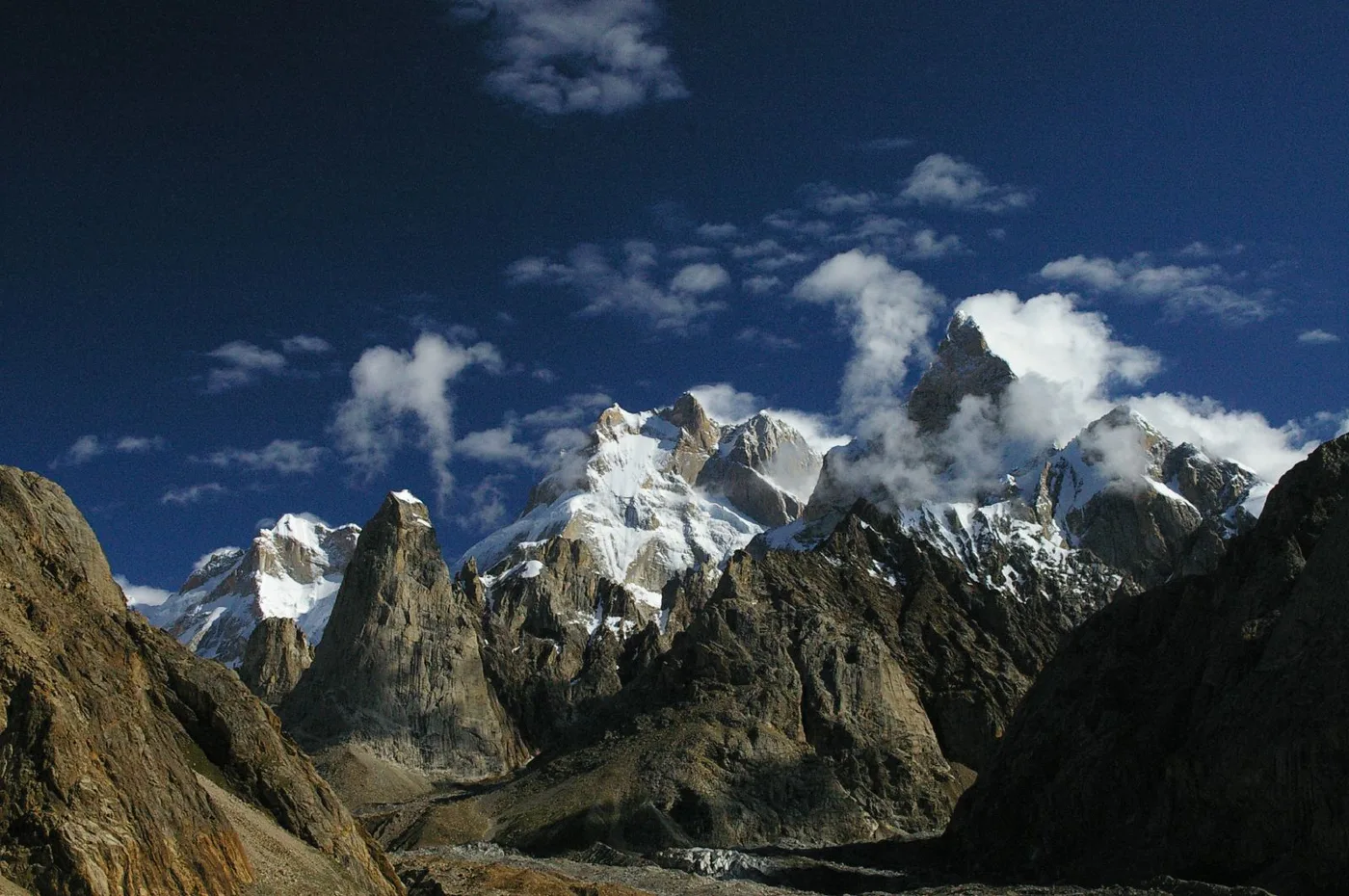
Among the jagged citadels of Pakistan’s Karakoram range, no mountain carries a more terrifying reputation than Baintha Brakk (7,285m / 23,901 ft), universally known as The Ogre. Rising in sheer vertical granite spires above the Biafo Glacier, its golden walls and knife-edge ice ridges present some of the most dangerous and technically challenging climbing on Earth.
In July 1977, a six-man British team led by Chris Bonington and featuring Doug Scott, Mo Anthoine, and Clive Rowland stood beneath the mountain. They had spent weeks forcing a route up the South Face and onto the West Col. On July 13, 1977, Scott and Bonington completed a harrowing push over vertical 5.10 rock and A3 aid, standing atop the main summit tower in the fading evening light.
They had made the historic first ascent of The Ogre. But their celebration was brutally short-lived.
The Catastrophic Pendulum Fall
Descending from the summit tower in the twilight, Doug Scott prepared to make the first rappel off the vertical granite headwall. Anchoring his rope to a peg, he threw the lines down a steep snow and ice corner. As he rappelled, he needed to pendulum sideways across a polished slab of rock to reach the next anchor stance.
Scott kicked off the rock to swing across. In the dim light, he failed to see that the rock face was coated in a thin sheet of transparent verglas. His crampon points skated off the ice.
Swinging uncontrollably in a massive 50-foot pendulum arc across the cliff, Scott slammed violently into an opposing granite corner. The impact was sickening. The bottom ends of both his legs struck the stone with immense force, instantly snapping the fibula and talus bones in both ankles.
Suspended in space on the rope, Scott looked down at his feet. They hung at unnatural, sickening angles. Climbing back up to the anchor stance on his hands and knees, Scott called out to Bonington: “Chris, I’ve broken my legs.”
Bonington at first thought Scott was joking. But when he reached him on the ledge, the reality was stark: they were perched on an isolated granite tower at over 7,000 meters in the Karakoram, miles from help, with no radios and zero possibility of helicopter rescue. Scott could not walk.
The Eight-Day Crawl Begins
Any ordinary man would have surrendered to despair. Doug Scott did not. Wrapping his shattered ankles in tape and lashing protective foam pads around his knees, Scott announced: “Well, I can still crawl.”
Over the next eight days, Scott mounted what is universally considered the greatest feat of self-rescue in mountaineering history. With teammates Mo Anthoine and Clive Rowland providing heroic support—guiding ropes, digging snow caves, and lowering gear—Scott began his descent.
Where the terrain was vertical, Scott abseiled down the ropes, using his upper body strength to absorb the shock of landings while keeping his broken legs hoisted in the air. Where the terrain leveled out onto snowfields, rock ledges, and glacial moraines, Scott dropped onto all fours and crawled.
Blizzards, Broken Ribs, and Starvation
On July 14, as the team reached the high snow caves below the summit tower, a ferocious Karakoram blizzard struck the mountain. For five continuous days, hurricane-force winds and blinding snow trapped the four men in a snow cave at 6,800 meters.
Their food was completely exhausted. They had only a few tea bags left and had to melt snow for water. To make matters worse, while attempting an abseil during a lull in the storm, Chris Bonington’s rappel anchor failed; he fell twenty feet onto a rock ledge, fracturing two ribs and developing a severe cough that threatened to turn into fatal pneumonia.
Now two of the four climbers were severely crippled.
When the storm finally subsided on July 20, the team resumed their desperate retreat. Crawling through waist-deep fresh snow that threatened to trigger avalanches, Scott dragged his shattered limbs inch by inch. His knees were rubbed raw to the bone, his fingers were frostbitten, and his trousers were shredded by sharp granite scree.
The Abandoned Base Camp
On July 24, eight days after snapping his legs, Doug Scott crawled off the lateral moraine of the Biafo Glacier and reached Base Camp.
Instead of warm food and medical aid, the exhausted team found a scene of total desolation: Base Camp was completely empty. Their Pakistani porters and liaison officer, having seen the ferocious week-long storm ravage the mountain and witnessing no sign of life for over ten days, assumed all the climbers were dead. They had dismantled the tents, packed up the expedition gear, and marched back down the valley toward Skardu.
Scott, Bonington, Anthoine, and Rowland were left alone on the glacier with almost no food. Rowland and Anthoine immediately set off on a rapid forced march down the valley to overtake the porters and send an SOS telegram for a rescue helicopter.
Scott and the injured Bonington waited in a makeshift shelter for several more days before local Balti porters returned to carry Scott on a stretcher made of branches across the rugged Braldu gorge. Finally, on August 1, eighteen days after the accident, a Pakistani Army helicopter evacuated Scott to a hospital in Rawalpindi.
Immortal Legacy
The 1977 ascent of Baintha Brakk stands as an immortal monument to human resilience, brotherhood, and the refusal to die. Scott’s eight-day crawl with two broken legs proved that the human will can overcome the most catastrophic physical trauma in the harshest environments on Earth.
The mountain itself extracted a fearsome revenge: after Bonington and Scott’s 1977 first ascent, The Ogre repelled more than twenty subsequent international expeditions over twenty-four years before finally seeing a second ascent in 2001.
Key Statistics & Topographic Figures
- Category
- Survival Epics
Archival Subject
- Reading Time
- 16 min read
Narrative Length
- Key Mountain
- baintha-brakk
Objective
- Ascent Route
- baintha-brakk-south-face
Topography
- Verification
- Editorially Verified
Archival Standard
Archival Primary Source Quotations
“In the mountains, truth is etched in ice and granite; every step requires unwavering respect for the heights.”
Defined Alpine Terminology & Concepts
- Summit Push
- The final continuous climbing effort from the highest established camp to the mountain apex and back.
- Death Zone Chronicle
- A verified, research-backed historical narrative documenting the human, technical, and environmental realities of an alpine expedition.
Frequently Asked Questions: The Ogre 1977: Doug Scott's Heroic Eight-Day Crawl with Two Broken Legs
What is the core chronicle and subject of "The Ogre 1977: Doug Scott's Heroic Eight-Day Crawl with Two Broken Legs"?
In July 1977, Doug Scott and Chris Bonington made the first ascent of Baintha Brakk (The Ogre). When Scott shattered both legs in an abseil accident, it triggered an epic eight-day crawl to survival.
Which mountain peaks and routes are featured in "The Ogre 1977: Doug Scott's Heroic Eight-Day Crawl with Two Broken Legs"?
This narrative documents climbs on baintha-brakk along the baintha-brakk-south-face in Pakistan.
Which documented expedition is chronicled in this story?
This historical chronicle captures the events of the 1977-the-ogre-first-ascent, verified through contemporary journals and archival records.
Who authored and researched this archival chronicle?
Authored and researched by Mountainity Historical Research Desk, drawing on primary eyewitness testimonies, alpine club registries, and verified summit logs.
What makes this high-altitude chronicle historically significant?
Categorized under "Survival Epics", this chronicle preserves critical lessons in alpine leadership, survival, tactical speed, and human endurance in the death zone.
Related Mountains

Baintha Brakk
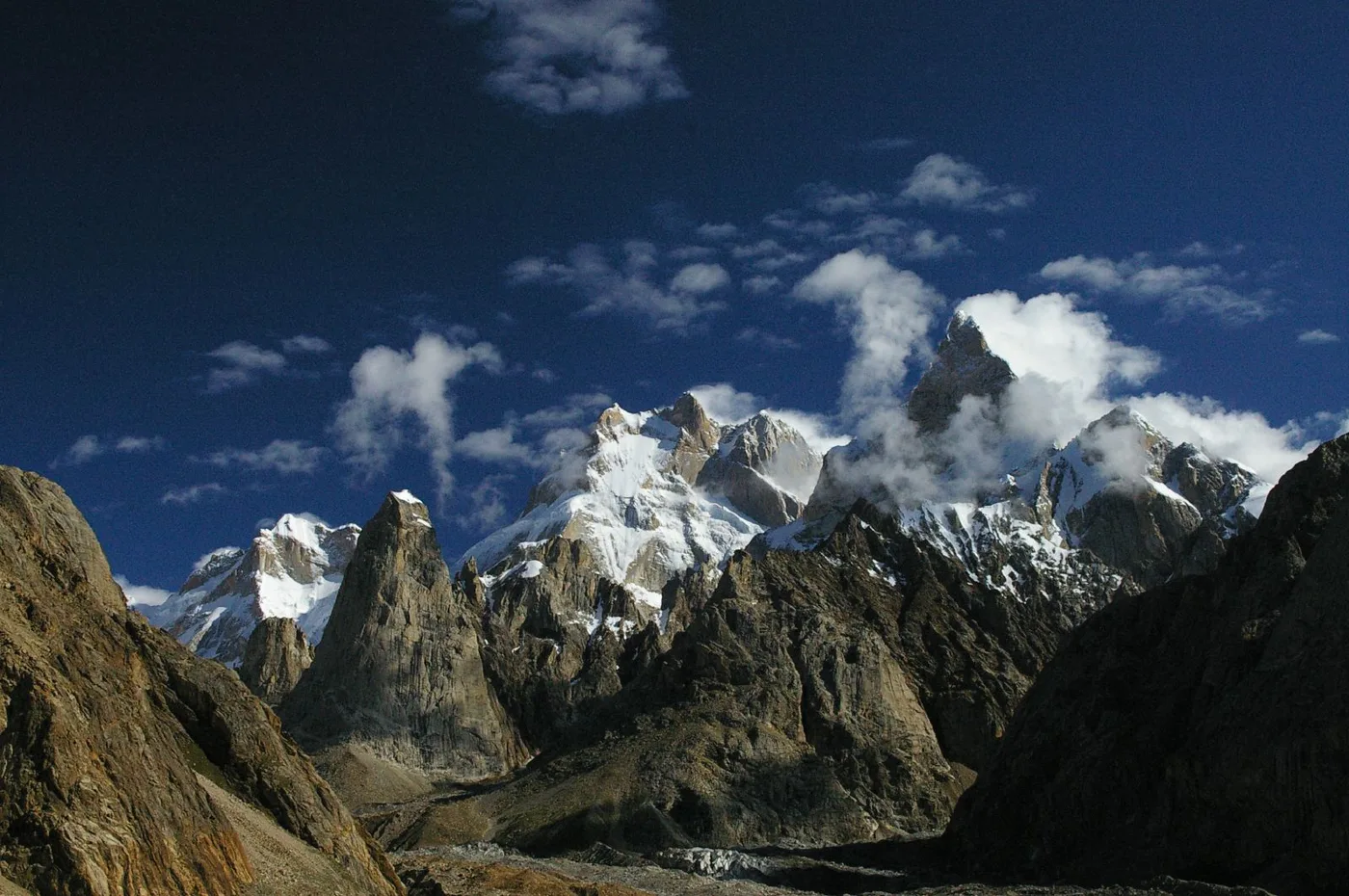
Baintha Brakk, famously known as 'The Ogre', is a colossal 7,285-meter (23,901 ft) granite mountain in the Panmah Muztagh subrange of the Karakoram. Widely regarded as one of the most perilous and technically difficult mountains in the world, its sheer vertical granite towers rise steeply above the Biafo Glacier. Following its epic 1977 first ascent by British climbers Doug Scott and Chris Bonington—during which Scott broke both legs and crawled for over a week down the mountain—The Ogre repelled more than twenty international expeditions over twenty-four years before seeing a second ascent in 2001.
Documented Sources & Archival Citations
- The Ogre: The Extraordinary Story of the First Ascent and Dramatic Descent(Doug Scott / Vertebrate Publishing)
Supporting claim: Detailed firsthand account of the 1977 summit, the double leg fracture, and the eight-day crawl to safety
Accessed/Documented: 2017 - American Alpine Journal: Ogre First Ascent(Chris Bonington / American Alpine Club)
Supporting claim: Official expedition chronicle and rescue report
Accessed/Documented: 1978