Baintha Brakk
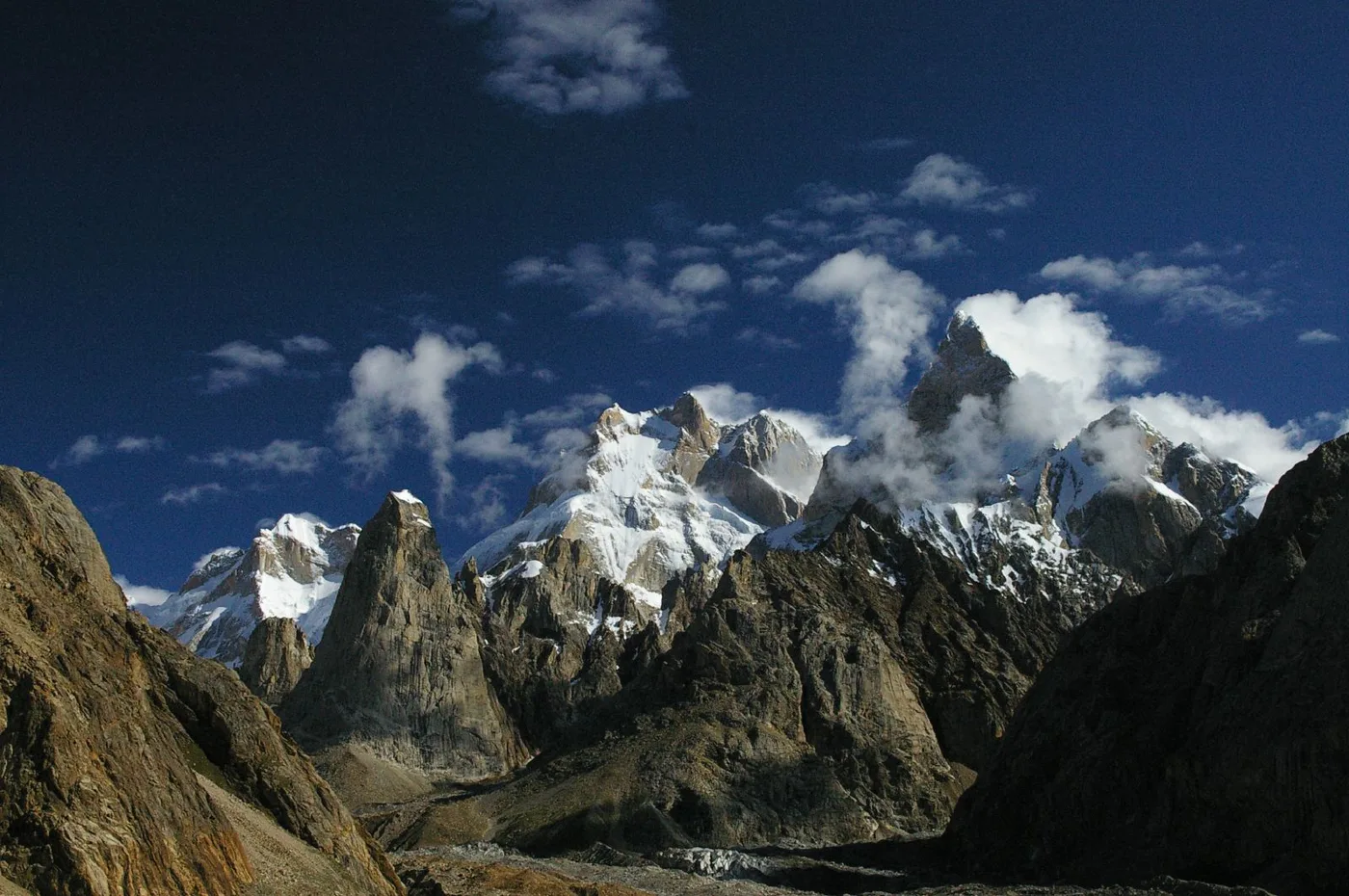
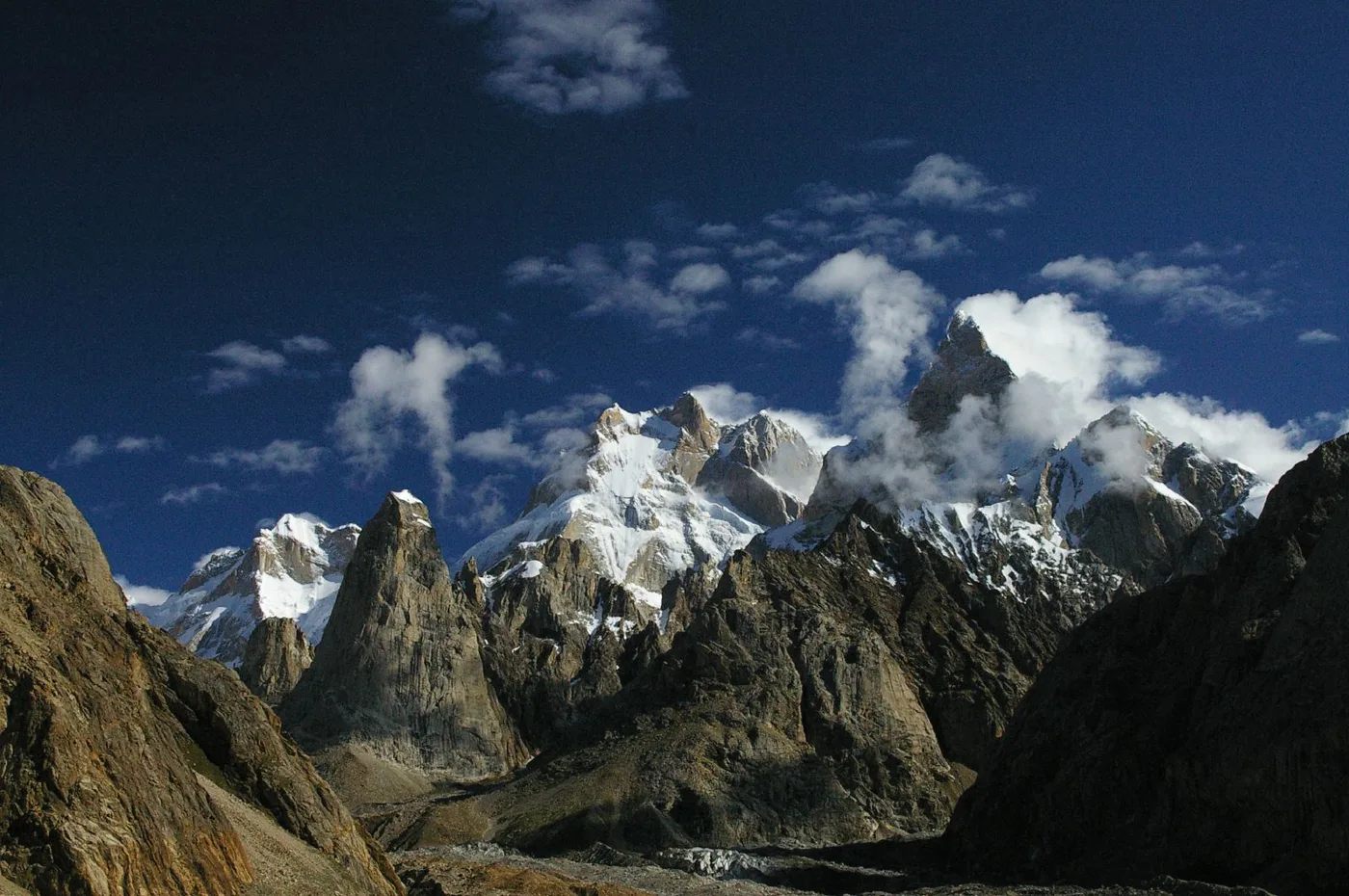
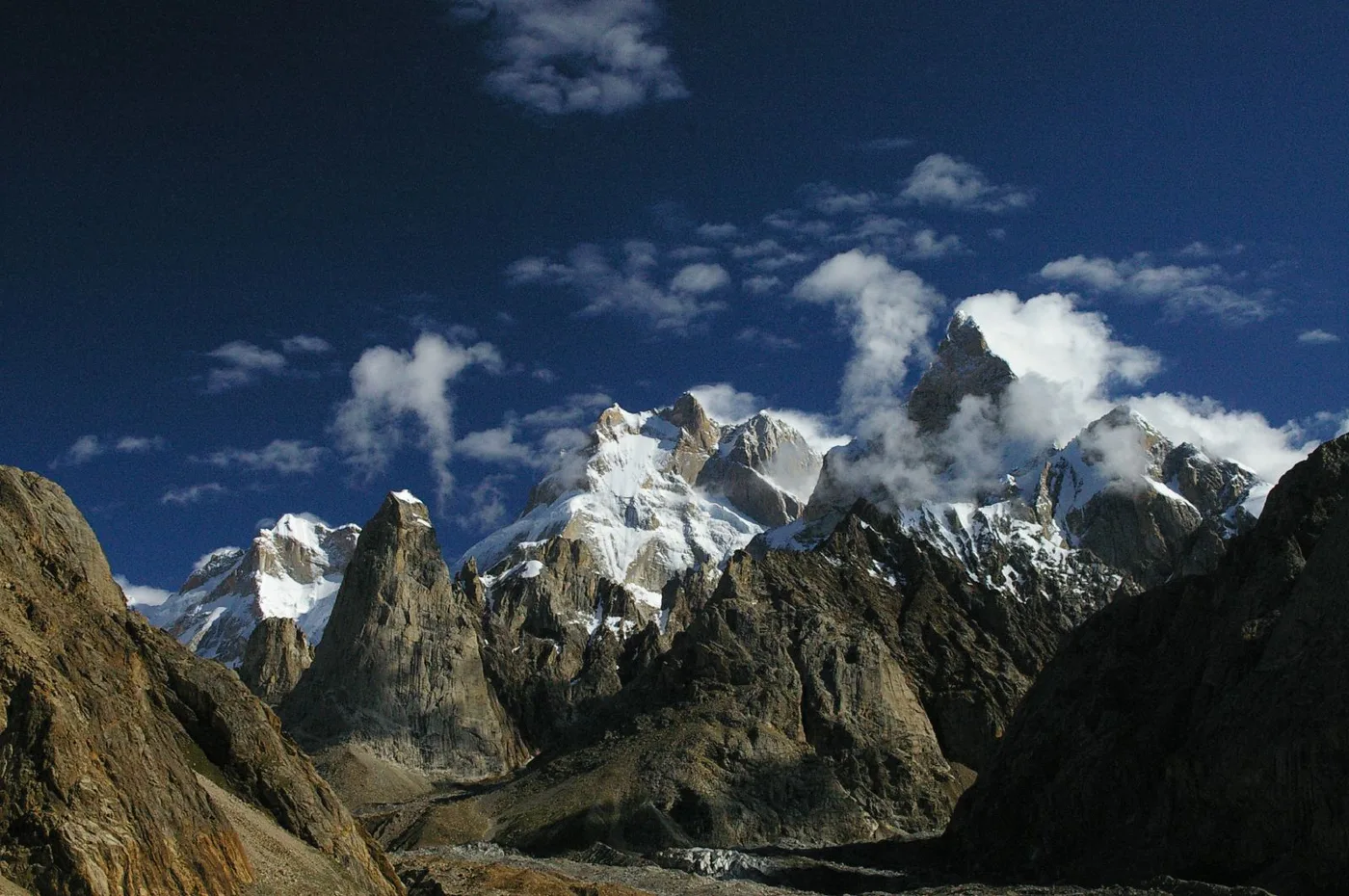
Baintha Brakk, famously known as 'The Ogre', is a colossal 7,285-meter (23,901 ft) granite mountain in the Panmah Muztagh subrange of the Karakoram. Widely regarded as one of the most perilous and technically difficult mountains in the world, its sheer vertical granite towers rise steeply above the Biafo Glacier.

Mountain Safety & Conditions Disclaimer: High-altitude climbing, glacial travel, and technical ascents entail severe objective risks including avalanches, serac collapses, rapid weather collapse, and altitude illness. Historical route descriptions and summit claims on Mountanity reflect documented archival sources and must not be used as live operational safety assessments. Local regulations, permits, and physical glacial topography change continuously.
Peer Review: Senior Editorial Board & Historical Reviewers • Editorial Standards
Geographical Setting & Topography
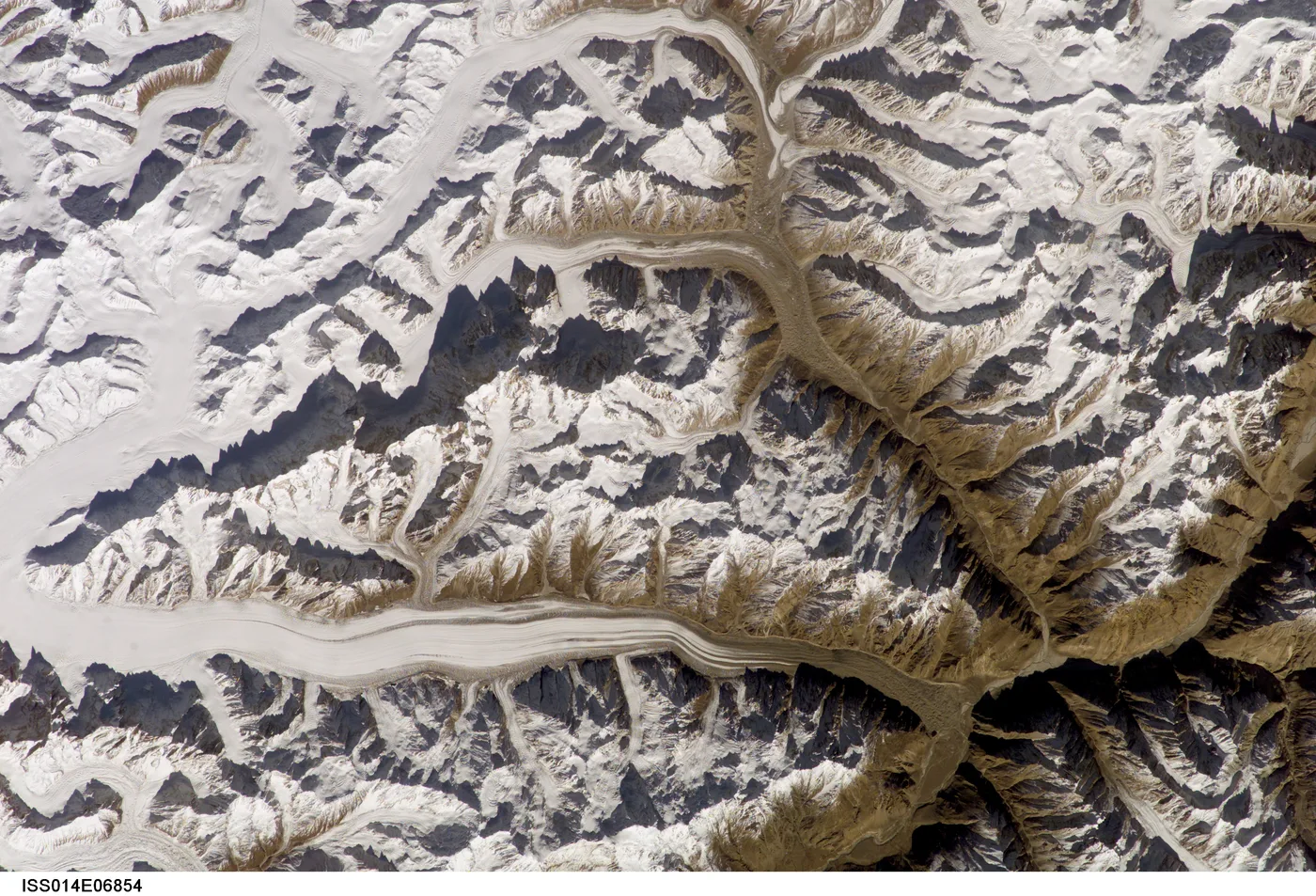
Panmah Muztagh group in the central Karakoram of Pakistan, rising north of the Biafo Glacier and dominating the Snow Lake (Lukpe Lawo) basin.
Historic First Ascent
Date: July 13, 1977
Ascent Team: Doug Scott, Chris Bonington
Key Statistics & Topographic Figures
- Summit Elevation
- 7,285 meters (23,901 ft)
Panmah Muztagh, Karakoram
- First Ascent Date
- July 13, 1977
Doug Scott & Chris Bonington
- Self-Rescue Crawl
- 8 Days on Hands & Knees
Doug Scott (Two Broken Legs)
- Second Ascent Gap
- 24 Years (1977–2001)
Over 20 Failed Expeditions
Archival Primary Source Quotations
“I looked down at my feet. They were hanging loose, pointing in different directions. I said, "Chris, I’ve broken my legs."”
Defined Alpine Terminology & Concepts
- The Ogre (Baintha Brakk)
- A steep granite citadel in Pakistan famous for vertical big-wall climbing and the greatest self-rescue survival story in mountaineering history.
- Snow Lake (Lukpe Lawo)
- A high-altitude glacial basin at 4,875m at the head of the Biafo and Hispar glaciers, presided over by Baintha Brakk.
Baintha Brakk Mountain Weather Forecast
Detailed 14-Day Summit Window & Weather Timeline
Explore day-by-day summit push safety windows, wind shear analysis, and extended multi-day forecasts for Baintha Brakk.
Explore Baintha Brakk (7,285 m) in Interactive 3D
Inspect steep glacial walls, hanging seracs, ridge approaches, and elevation relief with 360° rotation and terrain tilt in WebGL.
Documented Climbing Routes (1)
The Ogre South Face & West Ridge (Original Route)
The original route on Baintha Brakk (The Ogre, 7,285m) tackles the complex South Face, the steep West Col, and the sheer vertical summit pyramid rising dramatically above the Biafo Glacier. Pioneers Doug Scott, Chris Bonington, Mo Anthoine, and Clive Rowland unlocked the route over weeks of demanding climbing on vertical Karakoram granite. On July 13, 1977, Scott and Bonington completed the summit push over technical 5.10 rock and A3 aid. On the very first abseil off the summit tower, Scott pendulum-swung across an icy corner, lost his footing, and snapped both legs just above the ankles. Bonington subsequently fractured his ribs on a later abseil. The epic eight-day retreat—during which Scott crawled on his hands and knees over jagged moraine and glaciers through a blizzard—stands as one of the greatest survival epics in human exploration.
Historical Expeditions (1)
1977 British Baintha Brakk (The Ogre) Expedition
The legendary 1977 British expedition in which Doug Scott and Chris Bonington made the first ascent of Baintha Brakk (The Ogre, 7,285m), followed by Scott crawling on his hands and knees for eight days down the mountain with two shattered legs in one of mountaineering's greatest survival epics.
Summit Chronicles & Stories (1)
The Ogre 1977: Doug Scott's Heroic Eight-Day Crawl with Two Broken Legs
In July 1977, Doug Scott and Chris Bonington made the first ascent of Baintha Brakk (The Ogre). When Scott shattered both legs in an abseil accident, it triggered an epic eight-day crawl to survival.
Frequently Asked Questions: Baintha Brakk
What is Baintha Brakk and why is it called The Ogre?
Baintha Brakk (7,285m / 23,901 ft) is a steep granite mountain in the Karakoram range of Pakistan, nicknamed "The Ogre" due to its fearsome verticality, jagged towers, and high objective danger.
Who made the first ascent of The Ogre and when?
British mountaineers Doug Scott and Chris Bonington made the maiden first ascent on July 13, 1977, accompanied by Mo Anthoine and Clive Rowland on the lower mountain.
What happened to Doug Scott on The Ogre in 1977?
Descending from the summit tower, Scott made a pendulum rappel across verglas-coated rock, slipped, and slammed into an opposing corner, shattering both legs just above the ankles.
How did Doug Scott survive with two broken legs on The Ogre?
Scott crawled on his hands and knees over rock ledges, snow slopes, and the Biafo Glacier for eight continuous days through a blizzard to reach Base Camp in an epic self-rescue.
How many times has The Ogre been climbed?
The Ogre is one of the least summited mountains on Earth; following the 1977 first ascent, it repelled more than 20 expeditions over 24 years before its second ascent in 2001.
Where is Baintha Brakk located?
Baintha Brakk is situated in the Panmah Muztagh subrange of the central Karakoram in Gilgit-Baltistan, Pakistan, rising steeply north of the Biafo Glacier near Snow Lake.
What injuries did Chris Bonington suffer on The Ogre?
During an abseil descent in a storm, an anchor gave way and Bonington fell 20 feet onto a ledge, breaking two ribs and developing a severe pulmonary cough during the retreat.
Who made the second ascent of The Ogre in 2001?
German climbers Thomas Huber, Urs Stöcker, and Iwan Wolf completed the historic second ascent of The Ogre in July 2001, twenty-four years after Scott and Bonington’s climb.
Documented Sources & Archival Citations
- The Ogre: The Extraordinary Story of the First Ascent and Dramatic Descent(Doug Scott / Vertebrate Publishing)
Supporting claim: Detailed firsthand memoir of the 1977 climb, summit, and eight-day crawl with broken legs
Accessed/Documented: 2017 - Ogre: A Dramatic Karakoram Ascent(Chris Bonington / American Alpine Journal)
Supporting claim: Official Alpine Club and AAJ record of the 1977 expedition
Accessed/Documented: 1978