1977 British Baintha Brakk (The Ogre) Expedition
The legendary 1977 British expedition in which Doug Scott and Chris Bonington made the first ascent of Baintha Brakk (The Ogre, 7,285m), followed by Scott crawling on his hands and knees for eight days down the mountain with two shattered legs in one of mountaineering's greatest survival epics.
Mountain Safety & Conditions Disclaimer: High-altitude climbing, glacial travel, and technical ascents entail severe objective risks including avalanches, serac collapses, rapid weather collapse, and altitude illness. Historical route descriptions and summit claims on Mountanity reflect documented archival sources and must not be used as live operational safety assessments. Local regulations, permits, and physical glacial topography change continuously.
Peer Review: Senior Editorial Board & Historical Reviewers • Editorial Standards
Official Expedition Narrative & Archival Record
In June 1977, a six-man British team led by Chris Bonington tackled the unclimbed granite monolith of Baintha Brakk (The Ogre, 7,285m) rising steeply above the Biafo Glacier in the Karakoram. Repelling several attempts via difficult mixed couloirs, Bonington and Doug Scott joined Mo Anthoine and Clive Rowland on a final assault from the West Col. On July 13, Scott and Bonington completed a harrowing push over vertical 5.10 rock and A3 aid, standing atop the main summit tower at dusk. Disaster struck moments into their descent: during an abseil pendulum, Scott's crampons slipped off a wet granite face, and he swung violently into a rock corner, shattering both legs just above the ankles. Far above Base Camp with no possibility of helicopter rescue, Scott refused to despair. Over the next eight days, during which Bonington also fell and fractured two ribs in a howling blizzard, Scott crawled on his hands and knees over jagged granite blocks, sharp moraine, and across the melting Biafo Glacier. Supported by Anthoine and Rowland, Scott reached Base Camp on July 24—only to find that their porters had abandoned the camp believing the team was dead. A rescue party was eventually dispatched, and Scott was evacuated by helicopter, cementing their survival as one of the most heroic epics in human exploration.
Documented Team Composition
- Chris Bonington (Expedition Leader & Summit Climber)
- Doug Scott (Summit Climber)
- Mo Anthoine (Support Climber)
- Clive Rowland (Support Climber)
- Nick Estcourt
- Michael Carrington
Key Statistics & Topographic Figures
- Summit Date
- July 13, 1977 (7:00 PM)
Maiden First Ascent
- Crawl Duration
- 8 Days on Hands & Knees
Doug Scott Self-Rescue
- Mountain Elevation
- 7,285 meters (23,901 ft)
Panmah Muztagh, Karakoram
- Second Ascent Gap
- 24 Years (1977 to 2001)
20+ Failed Expeditions
Archival Primary Source Quotations
“Well, Chris, I’ve broken my legs. But don’t worry, I can still crawl.”
Defined Alpine Terminology & Concepts
- The Ogre (Baintha Brakk)
- A steep granite tower rising above the Biafo Glacier in Pakistan, famous for its technical verticality and the legendary 1977 survival epic.
- Pendulum Abseil
- A technical rope maneuver where a rappelling climber swings horizontally across a blank cliff face to reach an adjacent ledge or anchor stance.
Frequently Asked Questions: 1977 British Baintha Brakk (The Ogre) Expedition
What mountain is known as The Ogre?
Baintha Brakk (7,285m / 23,901 ft) in the Karakoram range of Pakistan is universally known as The Ogre due to its steep, terrifying granite towers and high difficulty.
Who made the first ascent of The Ogre in 1977?
British mountaineers Doug Scott and Chris Bonington made the maiden first ascent of The Ogre on July 13, 1977, alongside Mo Anthoine and Clive Rowland.
How did Doug Scott break both legs on The Ogre?
During the first abseil off the summit tower, Scott made a pendulum swing across an icy corner; his crampons skated off verglas, and he slammed into rock, shattering both ankles.
How did Doug Scott get down The Ogre with two broken legs?
Scott crawled on his hands and knees over jagged rock, snowfields, and the Biafo Glacier for eight agonizing days, supported by Anthoine, Rowland, and Bonington.
What happened to Chris Bonington during the descent of The Ogre?
Bonington fell when a rappel anchor gave way during a storm, fracturing two ribs and developing a severe pulmonary cough during the week-long blizzard.
Why was Base Camp abandoned when the climbers finally crawled down?
Their porters, having seen an unbroken week of storms and assuming all climbers were dead, dismantled the camp and marched down the valley before the team arrived.
How long did The Ogre remain unclimbed after the 1977 first ascent?
The Ogre repelled more than twenty international expeditions over twenty-four years before finally receiving its second ascent in 2001 by Urs Stöcker, Iwan Wolf, and Thomas Huber.
How was Doug Scott finally rescued from the Karakoram?
Balti porters carried Scott on a makeshift wooden stretcher across the Braldu gorge, after which a Pakistani Army helicopter evacuated him to Rawalpindi on August 1, 1977.
Ascent Route & Topography
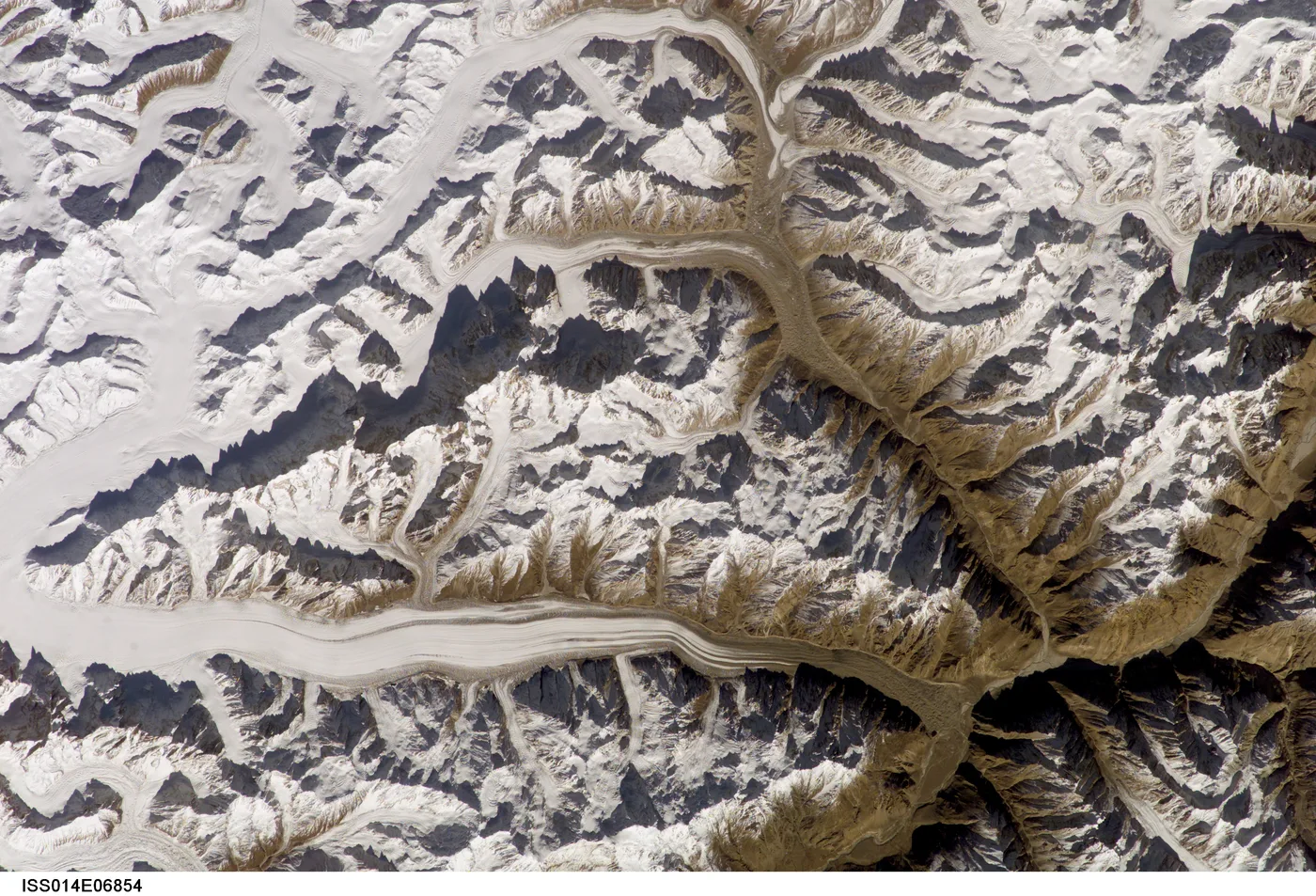
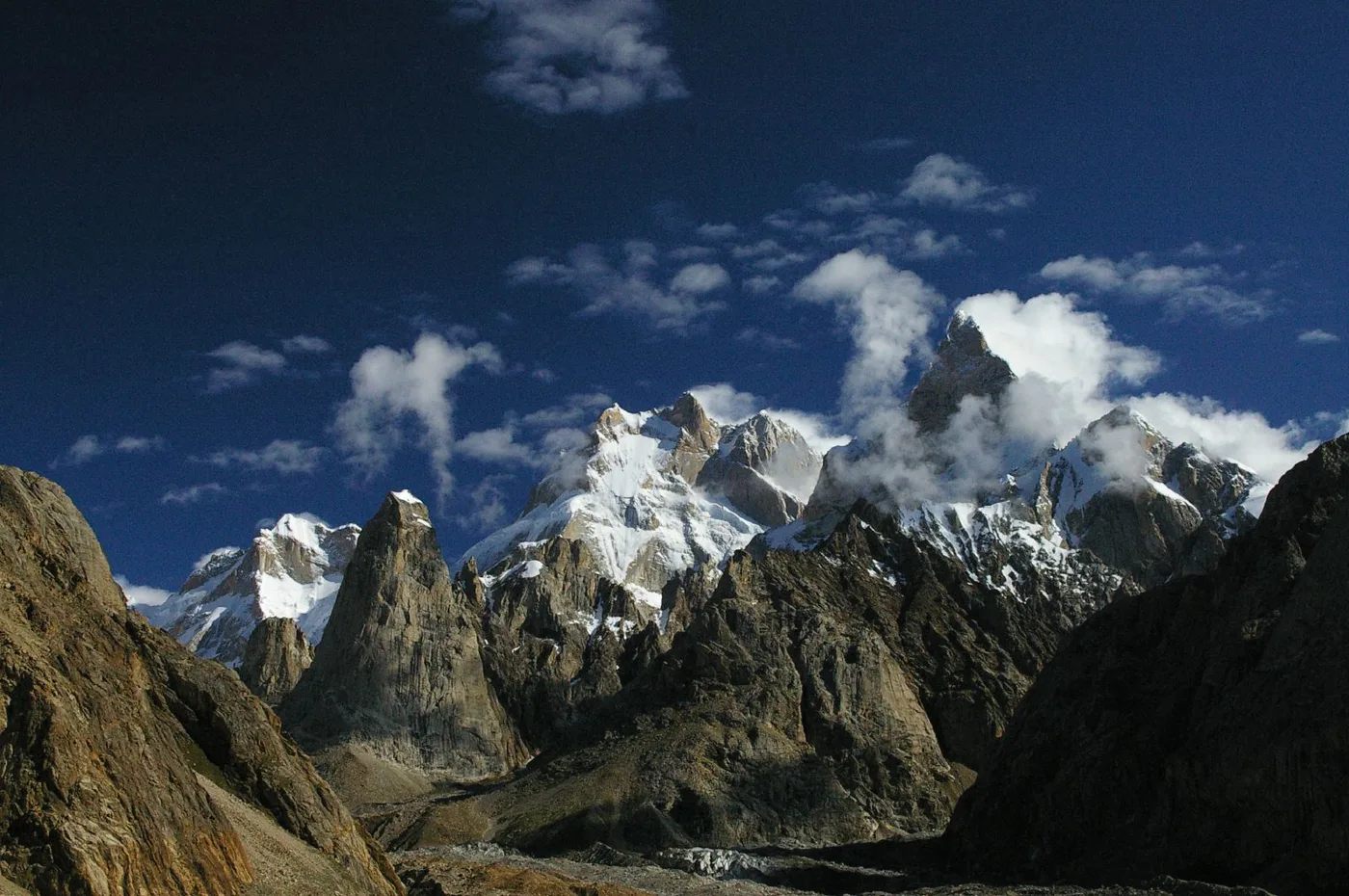
The Ogre South Face & West Ridge (Original Route)
The original route on Baintha Brakk (The Ogre, 7,285m) tackles the complex South Face, the steep West Col, and the sheer vertical summit pyramid rising dramatically above the Biafo Glacier. Pioneers Doug Scott, Chris Bonington, Mo Anthoine, and Clive Rowland unlocked the route over weeks of demanding climbing on vertical Karakoram granite. On July 13, 1977, Scott and Bonington completed the summit push over technical 5.10 rock and A3 aid. On the very first abseil off the summit tower, Scott pendulum-swung across an icy corner, lost his footing, and snapped both legs just above the ankles. Bonington subsequently fractured his ribs on a later abseil. The epic eight-day retreat—during which Scott crawled on his hands and knees over jagged moraine and glaciers through a blizzard—stands as one of the greatest survival epics in human exploration.
Target Objective Peak
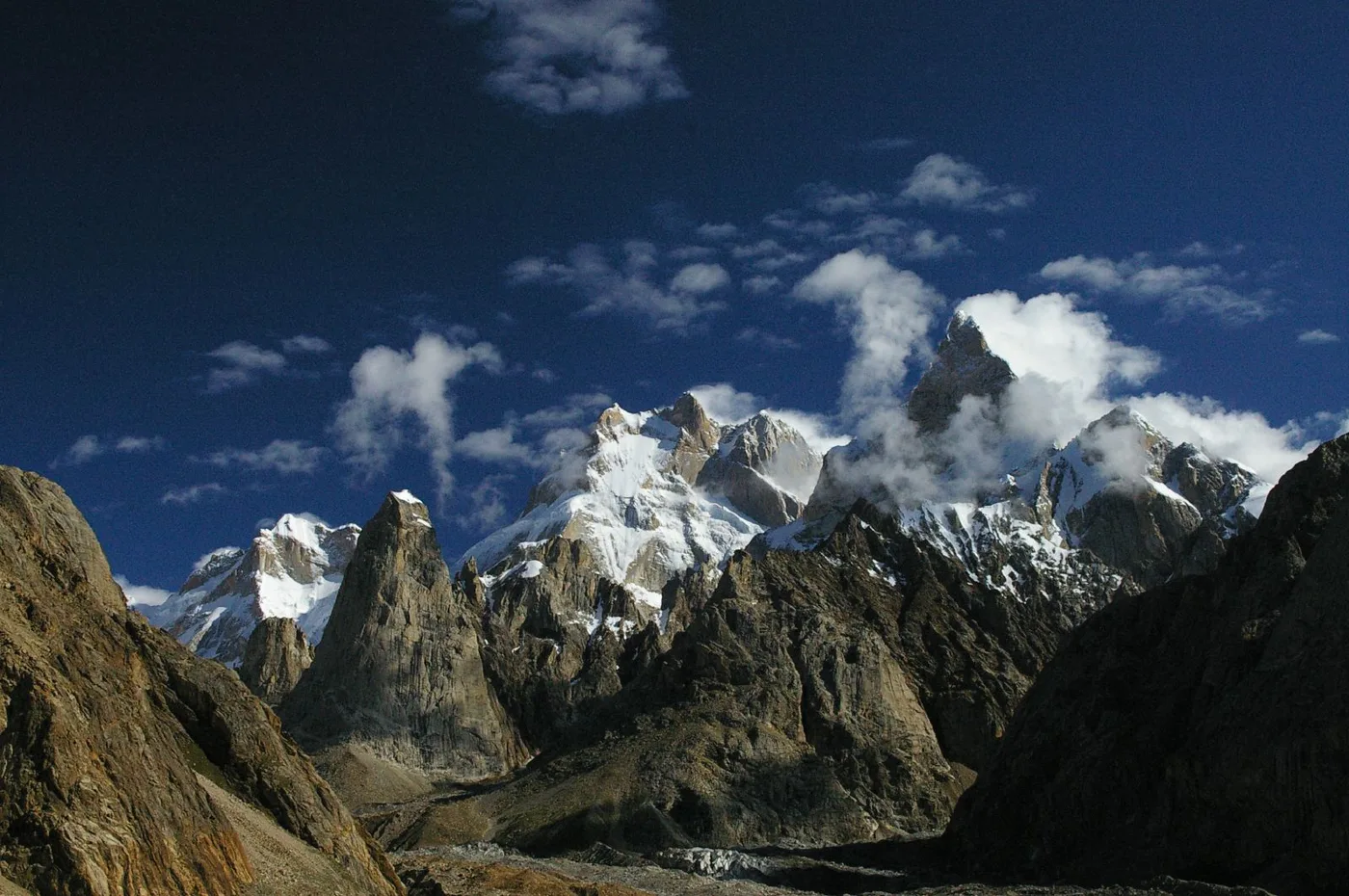

Baintha Brakk
Baintha Brakk, famously known as 'The Ogre', is a colossal 7,285-meter (23,901 ft) granite mountain in the Panmah Muztagh subrange of the Karakoram. Widely regarded as one of the most perilous and technically difficult mountains in the world, its sheer vertical granite towers rise steeply above the Biafo Glacier. Following its epic 1977 first ascent by British climbers Doug Scott and Chris Bonington—during which Scott broke both legs and crawled for over a week down the mountain—The Ogre repelled more than twenty international expeditions over twenty-four years before seeing a second ascent in 2001.
Featured Expedition Climbers
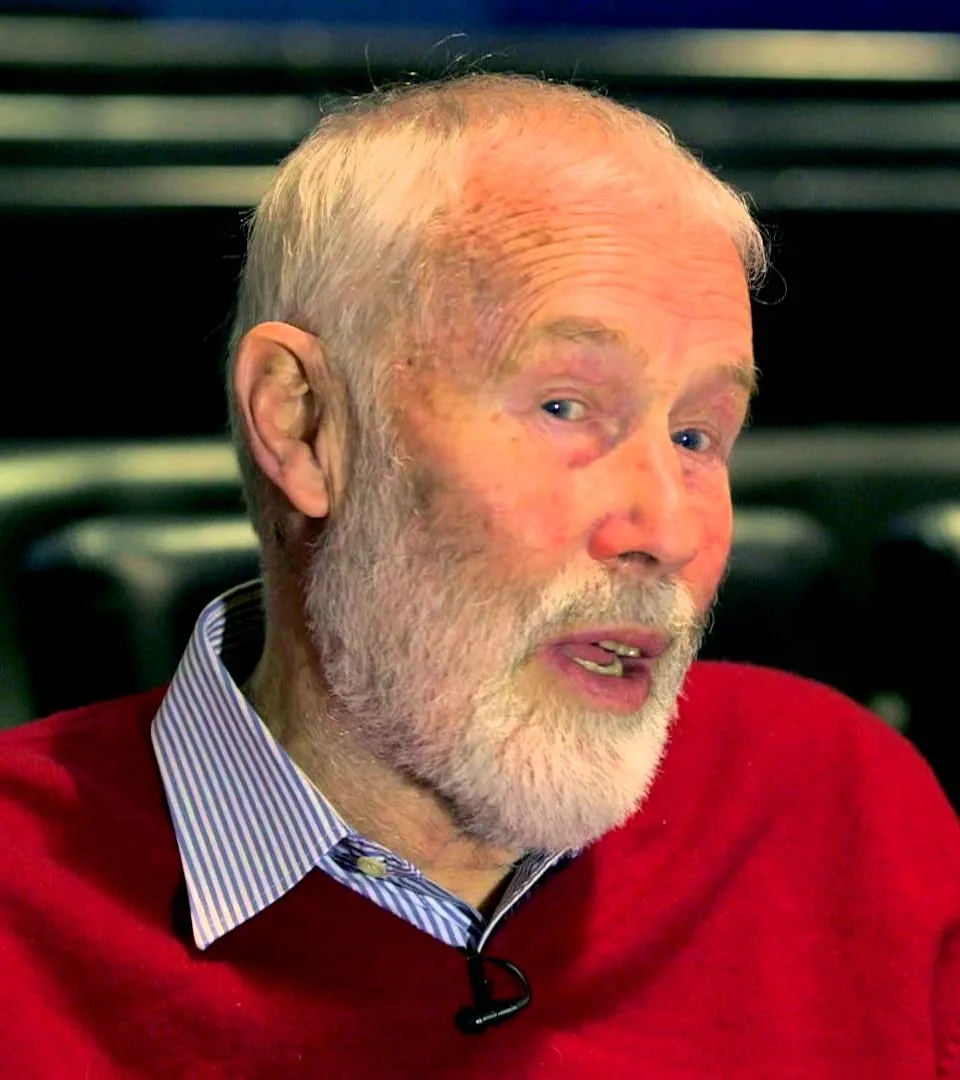
Sir Chris Bonington
Christian John Storey Bonington was born on August 6, 1934, in Hampstead, London. Educated at University College School and the Royal Military Academy Sandhurst, Bonington was commissioned into the Royal Tank Regiment, serving for three years in North Germany before resigning his commission to pursue a full-time life of exploratory climbing and photojournalism. Blessed with exceptional organizational intellect, strategic vision, and media acumen, Bonington bridged the gap between military-style logistics and cutting-edge alpine climbing. In 1962, Bonington and Ian Clough made the first British ascent of the dreaded North Face of the Eiger (Heckmair Route) under difficult summer storm conditions. In 1963, he teamed with Don Whillans to make the historic first ascent of the vertical granite Central Tower of Paine in Chilean Patagonia. Moving to the Himalayas, Bonington recognized that all 8,000-meter peaks had been climbed via their easiest lines, leaving the colossal technical faces as the ultimate frontier. In spring 1970, he organized and led the British Annapurna South Face Expedition. In a monumental tactical breakthrough, team members Don Whillans and Dougal Haston unlocked the vertical 3,000-meter face, proving that extreme modern big-wall tactics could succeed on an 8,000-meter giant. Bonington's finest organizational triumph was the 1975 British Mount Everest Southwest Face Expedition. Marshaling top British climbing talent and Sherpa support, Bonington masterminded the logistical siege that saw Doug Scott and Dougal Haston make the first British ascent of Everest on September 24, followed by Peter Boardman and Pertemba Sherpa. In 1977, Bonington joined Doug Scott, Mo Anthoine, and Clive Rowland in the Karakoram to attempt Baintha Brakk (The Ogre, 7,285m). After an exhausting summit push, Bonington and Scott stood on top of The Ogre on July 13. When Scott broke both legs on the descent and Bonington fractured two ribs in an abseil fall, Bonington's composure and team leadership were vital in orchestrating their miraculous eight-day survival retreat. In 1981, Bonington led an expedition to Xinjiang, China, completing the first ascent of Kongur Tagh (7,649m) alongside Peter Boardman, Joe Tasker, and Al Rouse. In 1985, at age fifty, Bonington fulfilled a personal dream by summiting Mount Everest (8,848m) via the South Col as part of Arne Næss Jr.'s Norwegian Expedition, becoming at the time the oldest person to stand on the roof of the world. Bonington's bestselling books, including 'Annapurna South Face', 'Everest the Hard Way', and 'The Next Horizon', introduced millions around the globe to the drama and human dimension of high-altitude exploration. He served as President of the Alpine Club, President of the British Mountaineering Council (BMC), and Chancellor of Lancaster University. He was knighted by Queen Elizabeth II in 1996 for services to mountaineering and received the Lifetime Achievement Piolet d'Or (Piolet d'Or Carrière) in 2015. Sir Chris Bonington remains the preeminent elder statesman of world mountaineering.
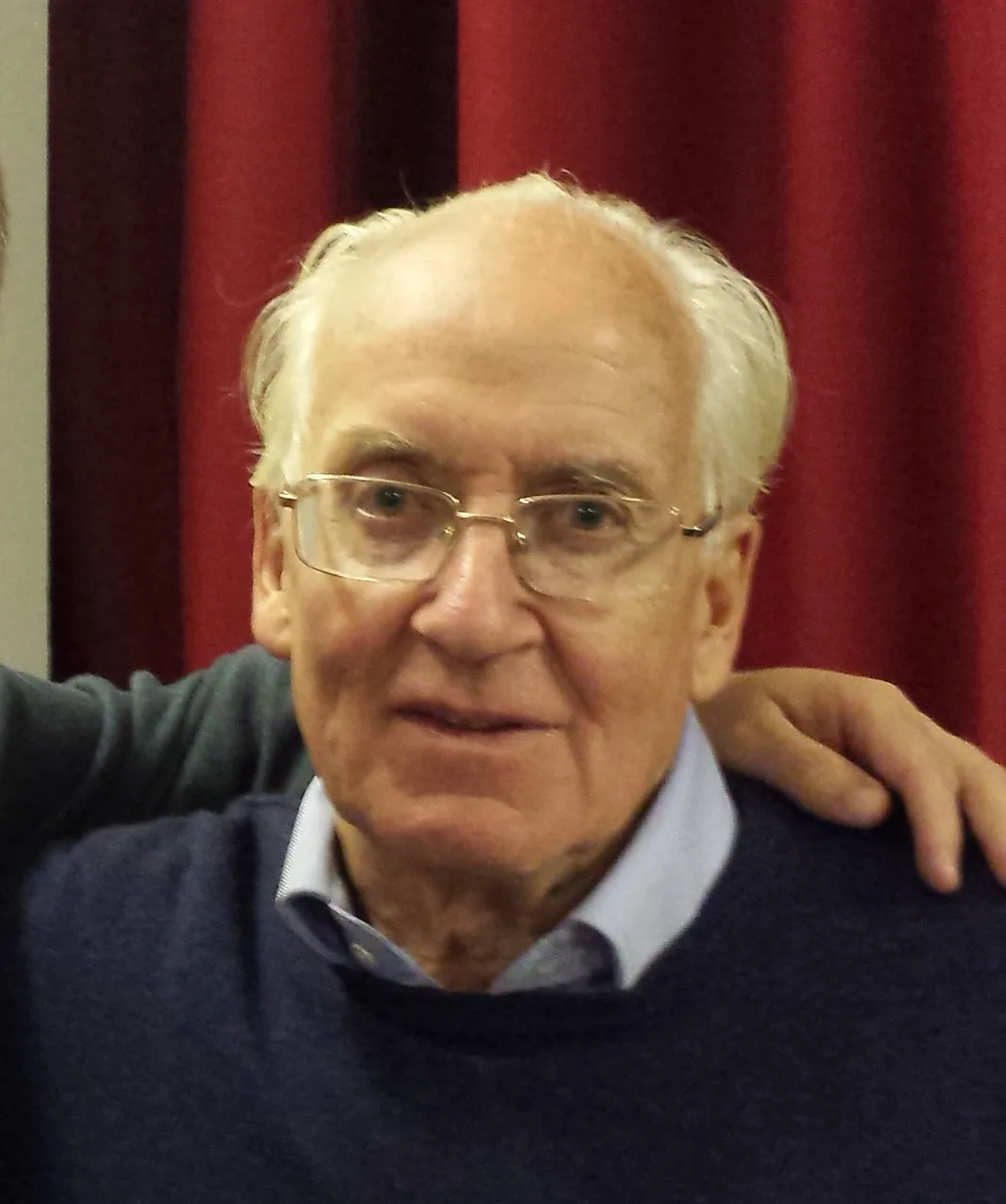
Doug Scott
Douglas Keith Scott was born on May 29, 1941, in Nottingham, England. Introduced to climbing at age twelve in the gritstone outcrops of Derbyshire and the Black Rocks of Cromford, Scott trained as a geography and physical education teacher before dedicating his life to exploratory mountaineering. Tall, physically powerful, and philosophically drawn to Eastern mysticism and Buddhist concepts of mindfulness, Scott quickly distinguished himself on vertical granite big walls, making the first ascent of the Tarso Tiroko in Chad's Tibesti Mountains and scaling the South Face of Mount Asgard on Baffin Island in 1972. In autumn 1975, Scott joined the British Mount Everest Southwest Face Expedition organized by Chris Bonington. The 2,300-meter face had defeated six previous international attempts due to the formidable, overhanging 300-meter yellow limestone 'Rock Band' at 8,200–8,500 meters. On September 24, 1975, Scott and Scottish climber Dougal Haston pushed out from Camp VI, breached the Rock Band gully, and surmounted the South Summit. Battling deep drifts in failing light, they reached the summit of Mount Everest at 6:00 PM, becoming the first Britons to conquer Everest. Descending in pitch darkness, they ran out of oxygen and were forced into an emergency bivouac at 8,760 meters—the highest bivouac in history at the time. Digging a shallow snow cave beneath the South Summit, they survived the sub-zero night without sleeping bags, stove, or frostbite through continuous muscular isometric movement and meditation. In July 1977, Scott and Bonington made the first ascent of Baintha Brakk (The Ogre, 7,285m) in Pakistan's Karakoram. Standing atop the vertical summit tower on July 13, Scott prepared for the first abseil. In the twilight, he pendulum-swung across an icy granite corner, lost his footing, and slammed violently into the rock, snapping both fibulas and talus bones just above the ankles. Unfazed, Scott crawled on his hands and knees over jagged granite ledges, rappelled down vertical cliffs, and dragged himself across the Biafo Glacier for eight agonizing days through a blizzard. His survival and refusal to give up remains one of the greatest legends of self-rescue in mountaineering history. Scott became one of the foremost advocates of pure alpine style on Himalayan giants. In 1979, he, Peter Boardman, and Joe Tasker climbed the unclimbed North Ridge of Kangchenjunga (8,586m) in lightweight style without supplemental oxygen. In 1982, Scott, Alex MacIntyre, and Roger Baxter-Jones scaled the 2,200-meter South Face of Shishapangma (8,027m) in a pure three-day alpine blitz. Over his career, Scott completed forty-five expeditions across the Himalaya, Karakoram, and Hindu Kush, summiting over forty peaks. Deeply grateful to the Sherpa and indigenous mountain communities who supported his climbs, Scott founded Community Action Nepal (CAN) in 1991. Over three decades, CAN established and funded more than sixty schools, health posts, and porter rescue shelters across remote Nepalese mountain valleys. In 2011, Scott was awarded the Lifetime Achievement Piolet d'Or (Piolet d'Or Carrière). He passed away at his home in the Lake District on December 7, 2020, remembered as a giant of British adventure, compassionate humanitarianism, and uncompromising alpine ethics.
Associated Historical Chronicles & Stories
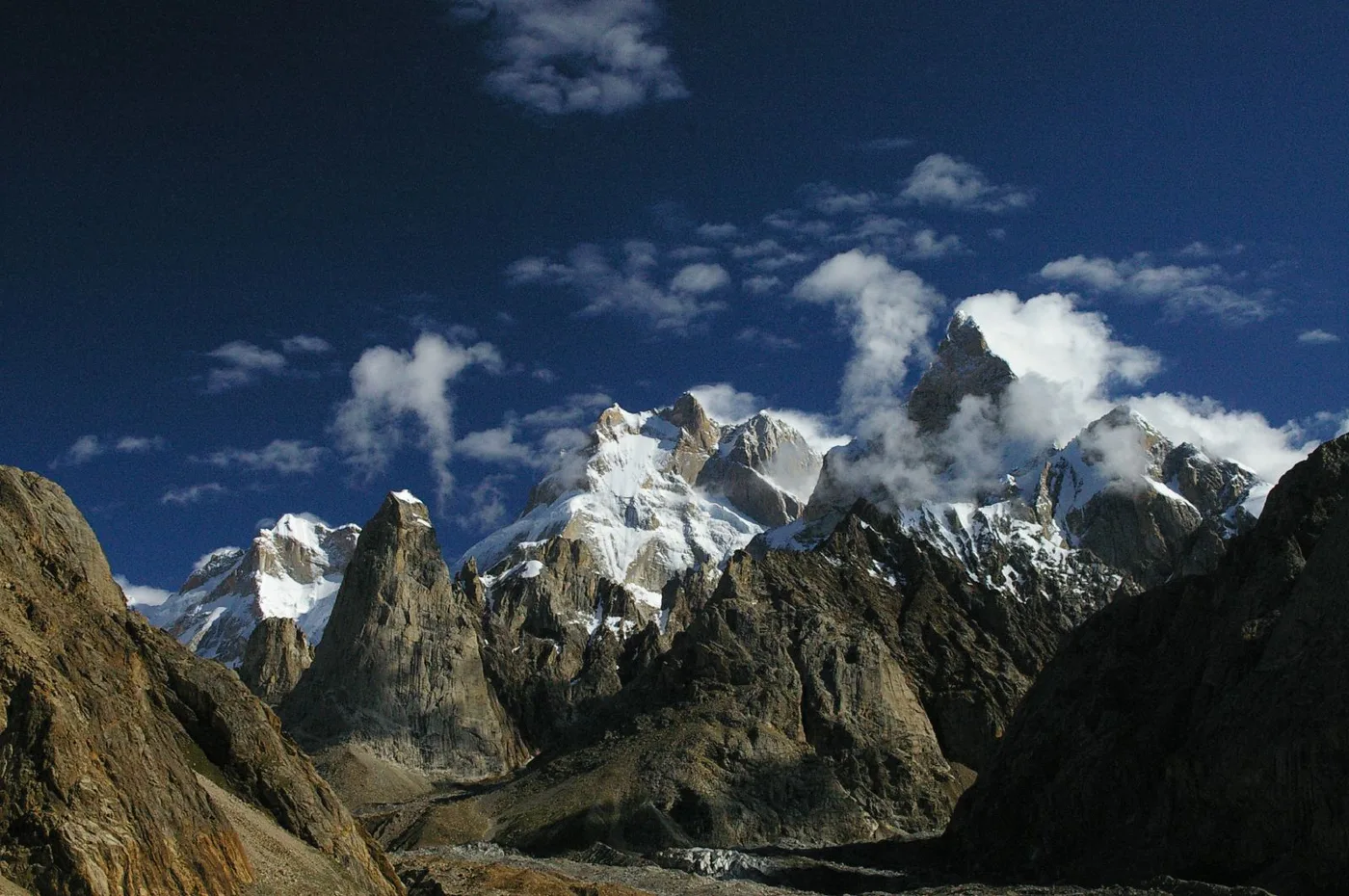
The Ogre 1977: Doug Scott's Heroic Eight-Day Crawl with Two Broken Legs
In July 1977, Doug Scott and Chris Bonington made the first ascent of Baintha Brakk (The Ogre). When Scott shattered both legs in an abseil accident, it triggered an epic eight-day crawl to survival.
Documented Sources & Archival Citations
- The Ogre: The Extraordinary Story of the First Ascent(Doug Scott / Vertebrate Publishing)
Supporting claim: Detailed firsthand memoir of the climb, fracture, and eight-day crawl to safety
Accessed/Documented: 2017 - American Alpine Journal: Ogre First Ascent(Chris Bonington / American Alpine Club)
Supporting claim: Official expedition chronicle and rescue report
Accessed/Documented: 1978