The Unfinished Symphony: The 1978 American Epic on the North Ridge of Latok I
In the summer of 1978, Jim Donini, Michael Kennedy, George Lowe, and Jeff Lowe climbed within 150 metres of the summit of Latok I (7,145m) along its formidable North Ridge before surviving a legendary six-day blizzard retreat.
Mountain Safety & Conditions Disclaimer: High-altitude climbing, glacial travel, and technical ascents entail severe objective risks including avalanches, serac collapses, rapid weather collapse, and altitude illness. Historical route descriptions and summit claims on Mountanity reflect documented archival sources and must not be used as live operational safety assessments. Local regulations, permits, and physical glacial topography change continuously.
Peer Review: Senior Editorial Board & Historical Reviewers • Editorial Standards
The Razor Spine of the Choktoi
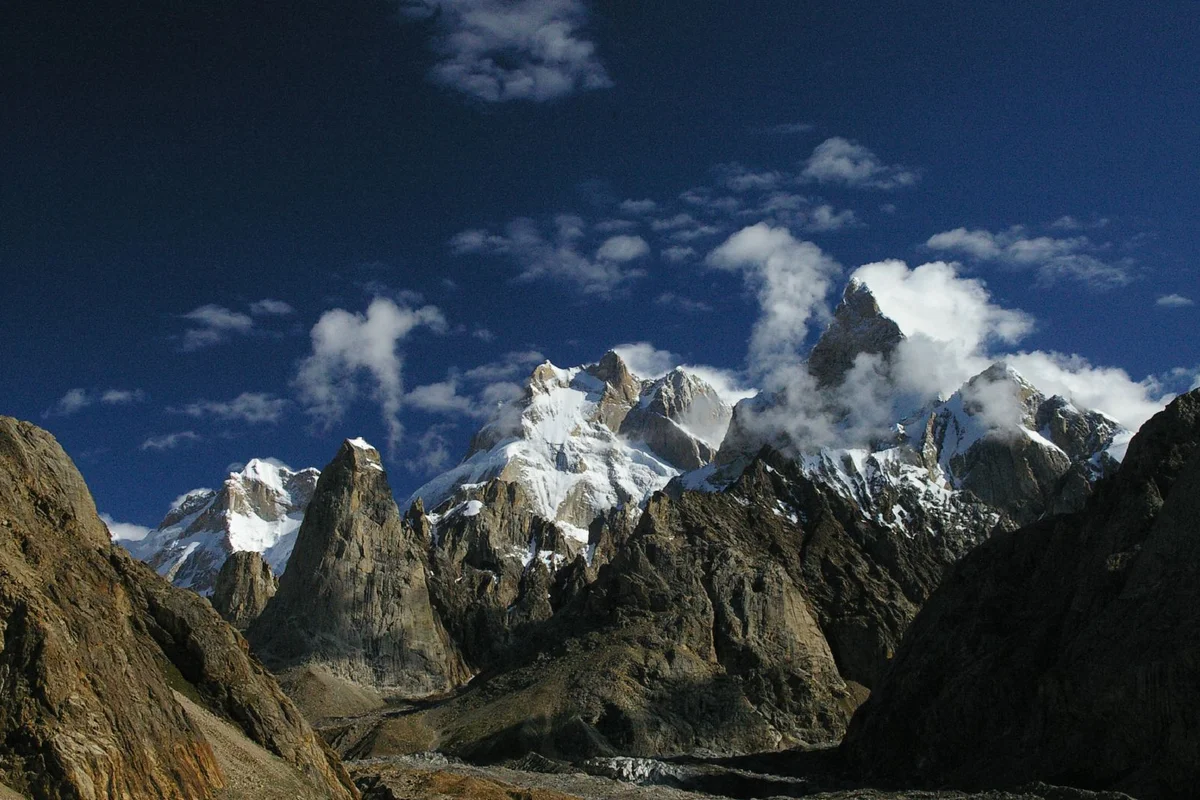
In the heart of Pakistan’s Karakoram Range, rising above the fractured icefalls of the Choktoi Glacier, stands the North Ridge of Latok I (7,145m). Viewed in profile, it is breathtaking in its purity and ferocity: a colossal, knife-edge spine of vertical granite, hanging ice mushrooms, and sheer fluted snow rising unbroken for 2,500 vertical metres. Unlike traditional Himalayan routes that wind through gentler avalanche couloirs and snow slopes, the North Ridge is a direct, vertical big wall at extreme altitude, directly exposed to the violent jet-stream weather systems of Central Asia.
In 1978, four of the most visionary alpinists in North American history—Jim Donini, Michael Kennedy, George Lowe, and his cousin Jeff Lowe—set their sights upon this titanic line. At a time when major Karakoram ascents still relied heavily on massive military-style sieges with dozens of porters and miles of fixed rope, this four-man team resolved to climb the North Ridge in pure, lightweight alpine style: carrying their food, fuel, and tents on their backs, fixing only essential gear, and leaving the glacier behind.
Twenty-One Days Above the Abyss
Beginning their assault in late June 1978, the climbers encountered sustained, world-class difficulties from the opening pitches. The lower sections presented over one thousand metres of steep ice and broken mixed ground. Above 5,800 metres, the ridge sharpened into an impossibly narrow granite knife-edge, interspersed with sheer rock towers plastered in delicate verglas and loose powder snow.
The team climbed continuously for three weeks, leading more than eighty pitches of technical Grade VI mixed ground (5.9, A2, WI5). With food and stove fuel strictly rationed, they carved tiny bivouac ledges into the frozen crest, huddling four across in two tiny two-man tents pitched over thousand-metre drops. Whenever storms struck, they waited out the howling winds, shivering in their sleeping bags as spindrift avalanches buried their nylon shelters.
By July 20, after twenty-one days on the mountain, their endurance and teamwork had brought them to 7,000 metres. The formidable difficulties of the North Ridge were behind them; only an estimated 150 vertical metres of moderate summit snow slopes separated them from the 7,145-metre peak. A triumphant first ascent was within their grasp.
The Strike of Fate at 7,000 Metres
Then, within hours, catastrophe unfolded. Jeff Lowe, one of the greatest technical ice climbers of his generation, was suddenly incapacitated by acute high-altitude illness. His lungs filled with fluid from high-altitude pulmonary edema, his temperature plummeted into severe hypothermia, and he began coughing up blood. Within a matter of hours, he lost the ability to stand or speak coherently.
Simultaneously, the sky turned a bruised, menacing purple as a massive Karakoram blizzard slammed into Latok I. Hurricane-force winds roared across the ridge, accompanied by torrential snowfall and temperatures plunging far below freezing.
The team faced the most profound moral choice in mountaineering: continue the remaining 150 metres to secure personal glory and the first ascent, or abandon the summit immediately to save their dying friend. For Donini, Kennedy, and George Lowe, there was not a second of hesitation. The summit was immediately forgotten; saving Jeff Lowe became the singular mission.
The Eighty-Five Rappels of Salvation
What followed over the next six days remains one of the most heroic chapters in the history of alpine survival. In blinding whiteouts and relentless spindrift avalanches, the three climbers began lowering Jeff Lowe down the vertical ridge.
With Lowe barely conscious, they had to rig tandem rappel systems down frozen rock walls, driving pitons and cutting snow bollards with numb fingers. The ridge offered no easy escape; every metre lost had to be fought for down the same knife-edge crest they had ascended. Spindrift avalanches repeatedly swept over them, nearly ripping anchors from the rock.
Their food was completely exhausted, and their fuel ran out on the fourth day of descent, leaving them unable to melt snow for water. Dehydrated, frostbitten, and hallucinating from physical exhaustion, they continued downward through sheer determination and unwavering brotherhood.
On July 26, after eighty-five separate rappels down 2,500 vertical metres of frozen rock and ice, they staggered off the bergschrund and onto the flat ice of the Choktoi Glacier. Jeff Lowe was alive.
An Unbroken Standard
Though the summit of Latok I was not reached, the 1978 North Ridge expedition is universally celebrated as a masterpiece of alpinism. The four climbers pushed the boundaries of alpine style to the absolute physical limit, surviving twenty-six consecutive days on one of the most technical lines in the world.
For the next forty years, the North Ridge of Latok I resisted more than thirty expeditions by the world’s finest climbers—including elite Russian, British, American, and French teams—solidifying its reputation as the “Holy Grail” of Karakoram alpinism. It was not until August 2018 that Aleš Česen, Luka Stražar, and Tom Livingstone finally reached the summit via the North Ridge and North Face, earning the prestigious Piolet d’Or.
Yet in the hearts of mountaineers, the 1978 expedition remains the gold standard of alpine courage—a testament that the ultimate measure of an expedition lies not in the summit attained, but in the brotherhood that brought everyone home alive.
Key Statistics & Topographic Figures
- Category
- High-Altitude Survival & Endurance
Archival Subject
- Reading Time
- 14 min read
Narrative Length
- Key Mountain
- latok-1
Objective
- Ascent Route
- latok-1-north-ridge
Topography
- Verification
- Editorially Verified
Archival Standard
Archival Primary Source Quotations
“In the mountains, truth is etched in ice and granite; every step requires unwavering respect for the heights.”
Defined Alpine Terminology & Concepts
- Summit Push
- The final continuous climbing effort from the highest established camp to the mountain apex and back.
- Death Zone Chronicle
- A verified, research-backed historical narrative documenting the human, technical, and environmental realities of an alpine expedition.
Frequently Asked Questions: The Unfinished Symphony: The 1978 American Epic on the North Ridge of Latok I
What is the core chronicle and subject of "The Unfinished Symphony: The 1978 American Epic on the North Ridge of Latok I"?
In the summer of 1978, Jim Donini, Michael Kennedy, George Lowe, and Jeff Lowe climbed within 150 metres of the summit of Latok I (7,145m) along its formidable North Ridge before surviving a legendary six-day blizzard retreat.
Which mountain peaks and routes are featured in "The Unfinished Symphony: The 1978 American Epic on the North Ridge of Latok I"?
This narrative documents climbs on latok-1 along the latok-1-north-ridge in Pakistan.
Which documented expedition is chronicled in this story?
This historical chronicle captures the events of the 1978-latok-1-north-ridge-epic, verified through contemporary journals and archival records.
Who authored and researched this archival chronicle?
Authored and researched by Mountainity Historical Research Desk, drawing on primary eyewitness testimonies, alpine club registries, and verified summit logs.
What makes this high-altitude chronicle historically significant?
Categorized under "High-Altitude Survival & Endurance", this chronicle preserves critical lessons in alpine leadership, survival, tactical speed, and human endurance in the death zone.
Related Mountains

Latok I
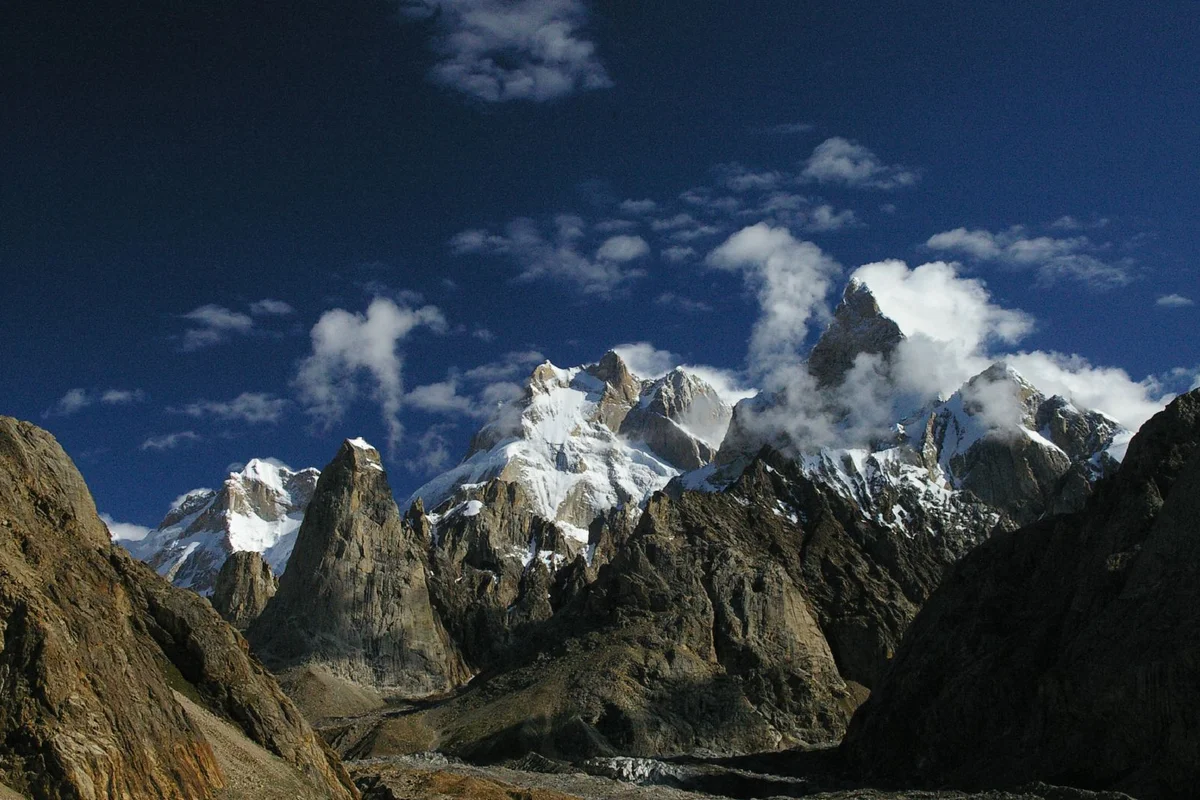
Latok I is a formidable 7,145-metre granite spire situated in the Panmah Muztagh subrange of the Karakoram in Gilgit-Baltistan, Pakistan. Rising steeply above the Choktoi and Baintha Lukpar glaciers, Latok I is internationally celebrated for its sheer 2,500-metre North Ridge, widely regarded as one of the most demanding alpine challenges on Earth.
Documented Sources & Archival Citations
- American Alpine Journal: The North Ridge of Latok I (1979)(American Alpine Club)
Supporting claim: Official expedition journal by Jim Donini documenting the 1978 climb and rescue
Accessed/Documented: 2026 - Alpinist Magazine: Latok I and the Unclimbed Ridge(Alpinist)
Supporting claim: Historical retrospective on the 1978 alpine-style push and its global legacy
Accessed/Documented: 2026