Latok I
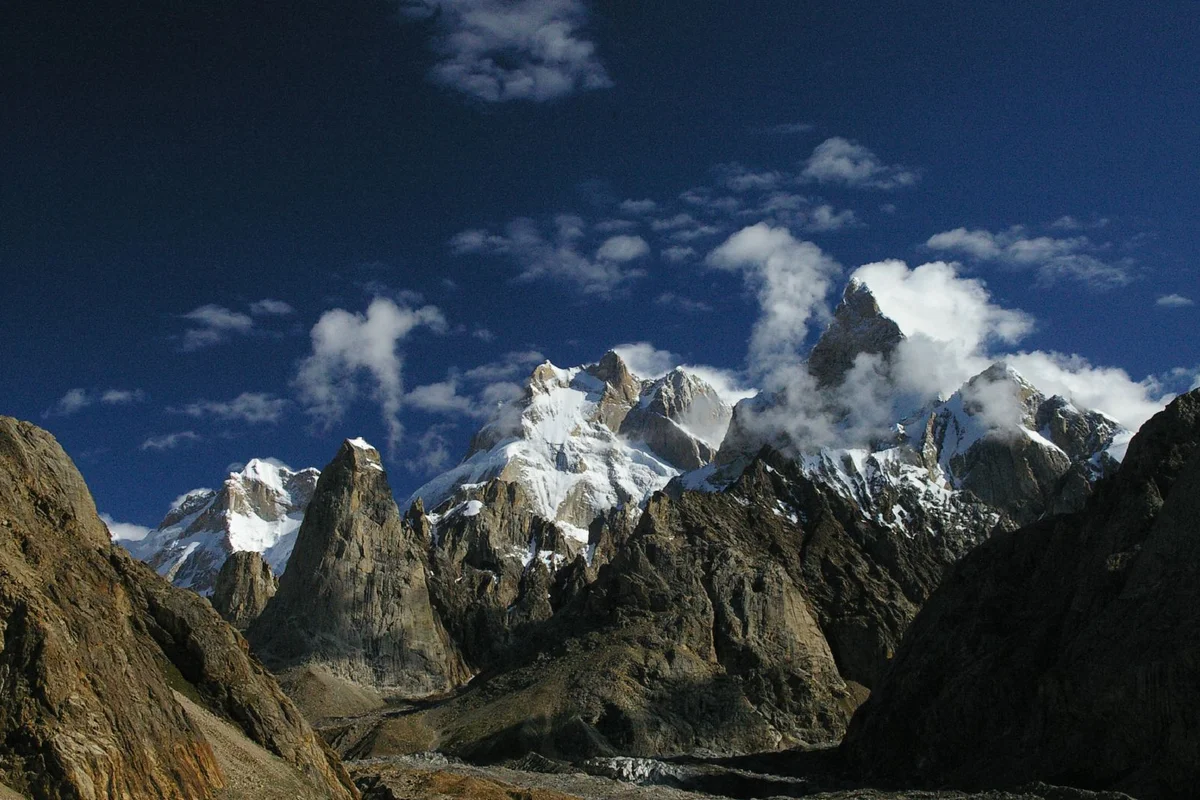
Latok I is a formidable 7,145-metre granite spire situated in the Panmah Muztagh subrange of the Karakoram in Gilgit-Baltistan, Pakistan. Rising steeply above the Choktoi and Baintha Lukpar glaciers, Latok I is internationally celebrated for its sheer 2,500-metre North Ridge, widely regarded as one of the most demanding alpine challenges on Earth.

Mountain Safety & Conditions Disclaimer: High-altitude climbing, glacial travel, and technical ascents entail severe objective risks including avalanches, serac collapses, rapid weather collapse, and altitude illness. Historical route descriptions and summit claims on Mountanity reflect documented archival sources and must not be used as live operational safety assessments. Local regulations, permits, and physical glacial topography change continuously.
Peer Review: Senior Editorial Board & Historical Reviewers • Editorial Standards
Geographical Setting & Topography
Latok I stands as the highest summit of the four-peak Latok group, positioned directly east of the Baintha Brakk massif (The Ogre). The mountain is characterized by dramatic vertical granite faces, hanging seracs, and persistent storm systems channeled across the central Karakoram glaciers.
Historic First Ascent
Date: 1979-08-19
Ascent Team: Tsuneo Shigehiro, Junichi Matsuzaka, and Satoshi Chiba (Japanese Expedition led by Naoki Takada)
Key Statistics & Topographic Figures
- Official Elevation
- 7,145 metres
- Topographic Prominence
- 1,475 metres
- First Ascent Date
- August 19, 1979
- North Ridge Height
- 2,500 vertical metres
- Mountain Range
- Karakoram (Panmah Muztagh)
Archival Primary Source Quotations
“The North Ridge of Latok I is the Holy Grail of alpine climbing, an unbroken vertical line that demands absolute commitment.”
Defined Alpine Terminology & Concepts
- Knife-Edge Ridge
- A razor-thin mountain crest where steep precipices drop away vertically on both sides simultaneously.
- Spindrift
- Fine, powdery snow swept off mountain ridges by hurricane-force winds, producing blinding conditions and suffocating avalanches.
Latok I Mountain Weather Forecast
Detailed 14-Day Summit Window & Weather Timeline
Explore day-by-day summit push safety windows, wind shear analysis, and extended multi-day forecasts for Latok I.
Explore Latok I (7,145 m) in Interactive 3D
Inspect steep glacial walls, hanging seracs, ridge approaches, and elevation relief with 360° rotation and terrain tilt in WebGL.
Documented Climbing Routes (1)
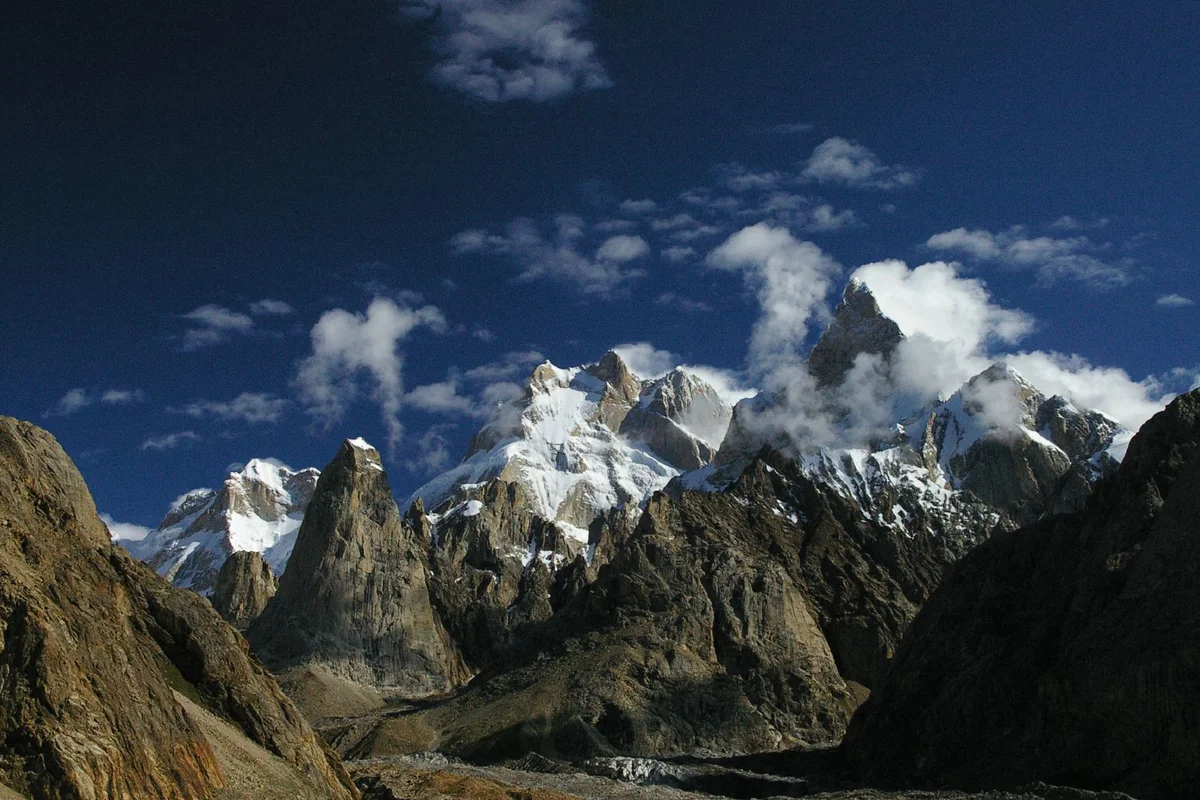
Latok I North Ridge
The North Ridge of Latok I (7,145m) is widely regarded as one of the most formidable and iconic alpine objectives in the Karakoram. Rising 2,500 vertical metres from the Choktoi Glacier along an unbroken, knife-edge spine of vertical granite, seracs, and steep mixed ice, it resisted dozens of the world's finest alpine attempts for forty years.
Historical Expeditions (1)
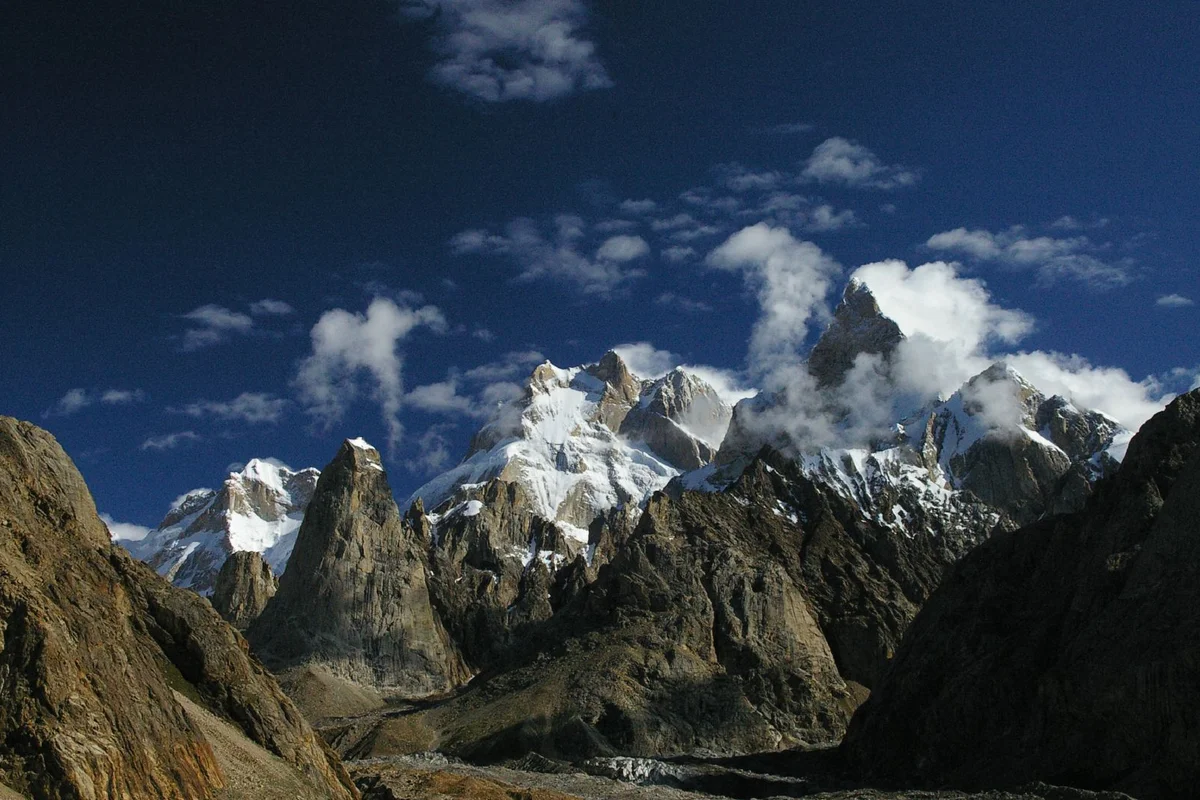
1978 Latok I North Ridge Alpine Expedition
In the summer of 1978, American alpinists Jim Donini, Michael Kennedy, George Lowe, and Jeff Lowe mounted a legendary alpine-style attempt on the 2,500-metre North Ridge of Latok I (7,145m), reaching within 150 metres of the summit before surviving a harrowing six-day blizzard retreat.
Summit Chronicles & Stories (1)
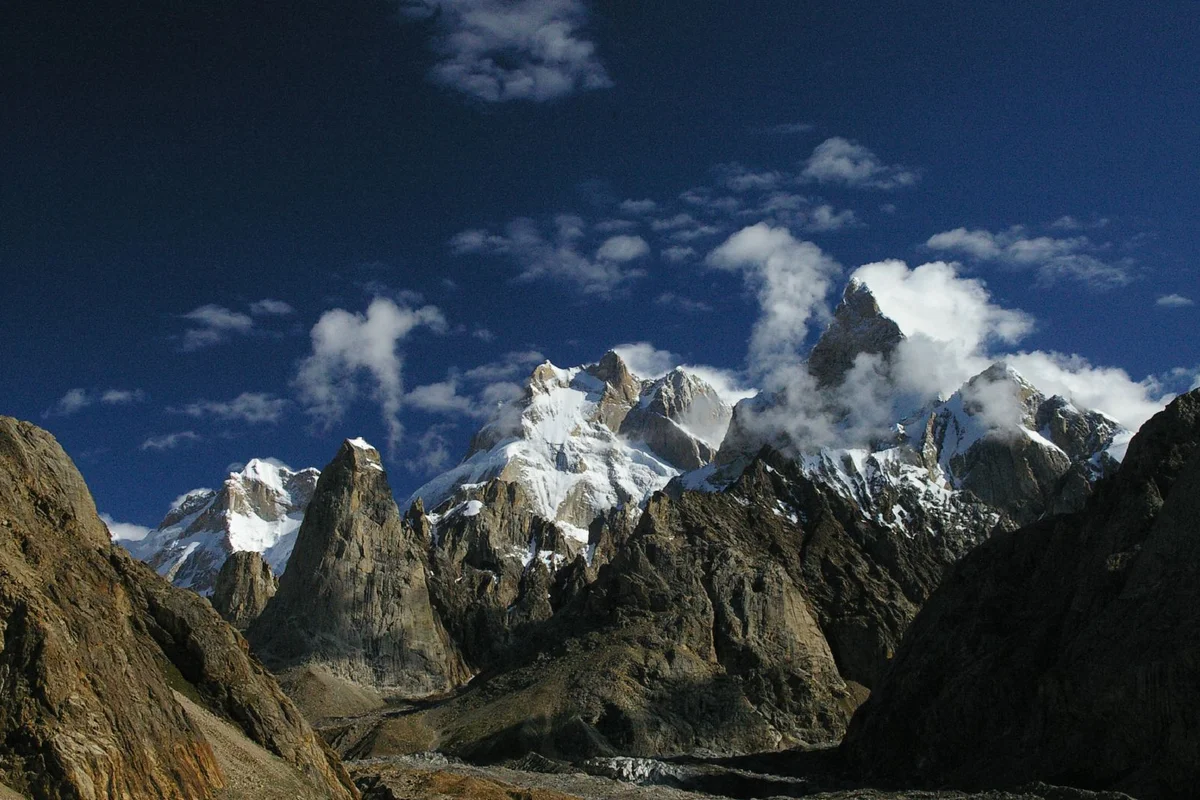
The Unfinished Symphony: The 1978 American Epic on the North Ridge of Latok I
In the summer of 1978, Jim Donini, Michael Kennedy, George Lowe, and Jeff Lowe climbed within 150 metres of the summit of Latok I (7,145m) along its formidable North Ridge before surviving a legendary six-day blizzard retreat.
Frequently Asked Questions: Latok I
What is Latok I and where is it situated?
Latok I is a 7,145-metre glaciated granite peak in the Panmah Muztagh subrange of the Karakoram in Gilgit-Baltistan, Pakistan.
Who made the first ascent of Latok I?
A Japanese expedition led by Naoki Takada achieved the first ascent on August 19, 1979, via the South Face and Southeast Ridge.
Why is the North Ridge of Latok I legendary in alpinism?
The North Ridge is a vertical 2,500-metre knife-edge spine of granite and ice that resisted more than thirty international attempts over forty years.
What happened on Latok I in 1978?
American climbers Jim Donini, Michael Kennedy, George Lowe, and Jeff Lowe climbed within 150 metres of the summit before a blizzard and severe illness forced a legendary six-day retreat.
Who finally climbed the North Ridge or North Face of Latok I?
In August 2018, Aleš Česen, Luka Stražar, and Tom Livingstone reached the summit via the North Ridge and North Face, earning the Piolet d'Or.
What is the elevation and prominence of Latok I?
Latok I stands at an elevation of 7,145 metres with a prominence of 1,475 metres above the surrounding glacial cols.
What glacier provides access to the North Face of Latok I?
The Choktoi Glacier provides direct access to the sheer northern aspect and towering North Ridge of Latok I.
What makes climbing Latok I uniquely perilous?
Unstable hanging seracs, violent Karakoram storms, falling rock from warming granite buttresses, and extreme technical mixed difficulties.
Documented Sources & Archival Citations
- American Alpine Journal: Latok I and the North Ridge Odyssey(American Alpine Club)
Supporting claim: Documentation of the 1978 American attempt and subsequent expeditions on Latok I
Accessed/Documented: 2026 - Himalayan Index(Alpine Club of Great Britain)
Supporting claim: Elevation, geographical coordinates, and first ascent data
Accessed/Documented: 2026