Carnets of the Solitary: Nicolas Jaeger's Sixty Days at 6,700 Metres
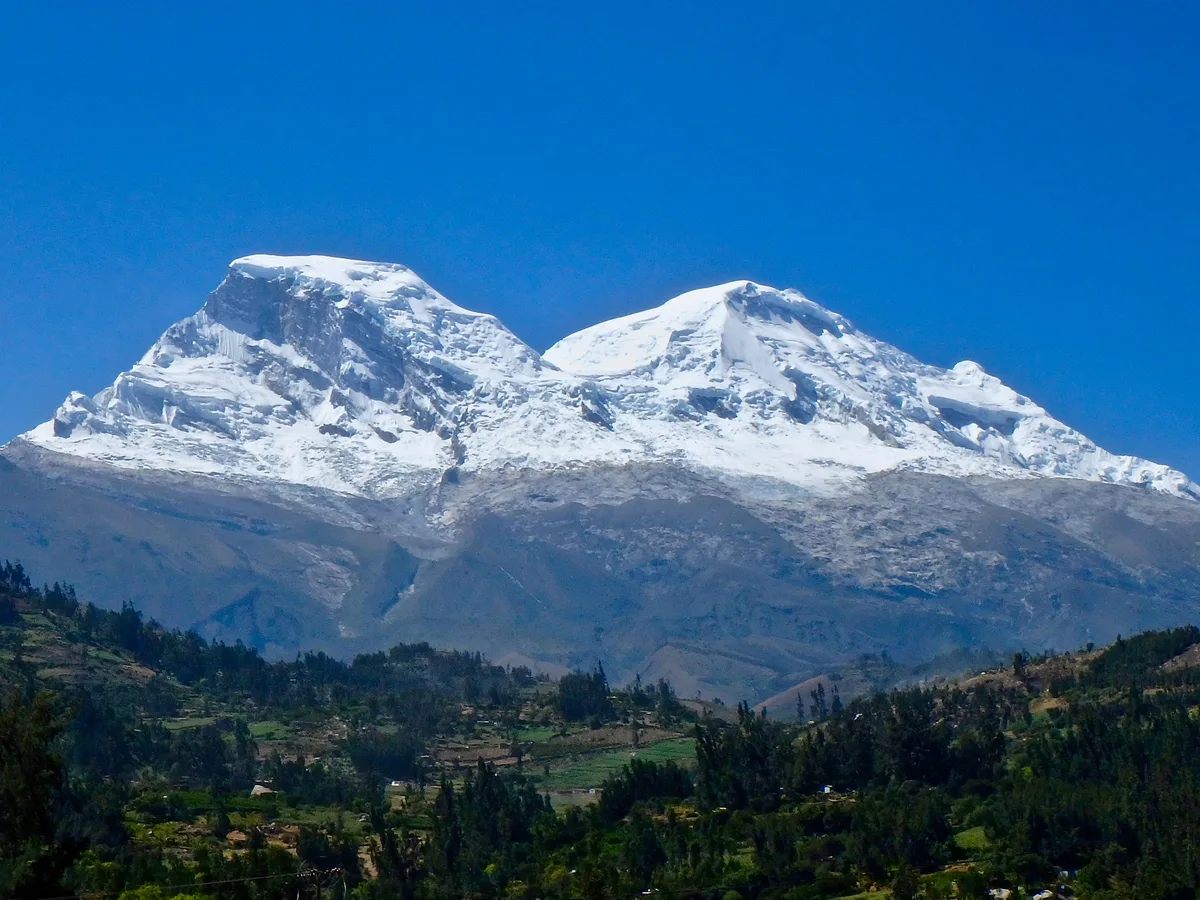
From July to September 1979, French doctor and extreme soloist Nicolas Jaeger lived alone for sixty days on the summit ice of Huascarán Sur, turning his body into a living laboratory.
Mountain Safety & Conditions Disclaimer: High-altitude climbing, glacial travel, and technical ascents entail severe objective risks including avalanches, serac collapses, rapid weather collapse, and altitude illness. Historical route descriptions and summit claims on Mountanity reflect documented archival sources and must not be used as live operational safety assessments. Local regulations, permits, and physical glacial topography change continuously.
Peer Review: Senior Editorial Board & Historical Reviewers • Editorial Standards
Carnets of the Solitary: Nicolas Jaeger’s Sixty Days at 6,700 Metres
On July 27, 1979, high on the glaciated shoulder of Huascarán Sur, a small group of Peruvian porters and French friends embraced thirty-two-year-old physician Nicolas Jaeger. One by one, they turned their backs and began the descent down the perilous icefalls of the Garganta, their figures rapidly shrinking against the white vastness.
Jaeger was left standing alone at 6,700 metres—just sixty-eight vertical metres below the highest summit in Peru. Beside him sat a tiny, double-walled geodesic tent, several cartons of freeze-dried rations, bottles of kerosene, medical testing kits, books, and a notebook. He would not hear another human voice or see another human face for the next two months.
In the annals of mountaineering and extreme medicine, Jaeger’s experiment remains completely unmatched. He had not climbed Huascarán merely to touch its summit and retreat; he had come to inhabit the “Death Zone,” transforming his own mind and flesh into a living laboratory to discover what happens when a human being chooses to make the edge of space their home.
The Physician of the Heights
Born into a family of Parisian intellectuals and artists, Nicolas Jaeger was an extraordinary polymath: an MD specializing in high-altitude pulmonary physiology, an elite Chamonix mountain guide, and one of the finest solo alpinists of his generation. In 1895, Annie Smith Peck had climbed Huascarán Norte with guides; in 1977, Jaeger had climbed the direct South Face of Huascarán Sur completely solo, without a rope, in twenty-four hours.
In 1978, Jaeger summitted Mount Everest without bottled oxygen alongside Pierre Mazeaud and Jean Afanassieff. While other climbers viewed the high peaks as arenas for rapid athletic triumphs, Jaeger was captivated by the medical and psychological mystery of prolonged hypoxia. Most physicians believed that continuous exposure to altitudes above 6,500 metres resulted in irreversible physiological deterioration, brain cell loss, and death. Jaeger was determined to test that assumption against his own life.
The Routine of Survival
Living at 6,700 metres required relentless self-discipline. Every morning, Jaeger crawled from his sub-zero sleeping bag into the bitter air of the tent. Temperatures frequently dipped below minus thirty degrees Celsius, coating the nylon walls with thick rime frost.
Before eating, he methodically conducted his medical battery: pricking his fingertips to draw capillary blood, recording his haematocrit levels (which climbed steadily from forty-five to a perilous sixty-five percent as his bone marrow pumped out excess red blood cells to capture scarce oxygen molecules), measuring his resting pulse and blood pressure, and blowing into a handheld spirometer to test lung capacity.
To survive, he had to melt kilograms of hard glacial firn every day using an unpredictable kerosene stove that filled the tent with noxious fumes. At that altitude, water boiled at barely seventy-eight degrees Celsius, requiring hours to soften freeze-dried stew.
The Mental Crucible
As the weeks dragged on into August and September, the physical hardships were eclipsed by the psychological weight of absolute isolation. Trapped for days during ferocious Andean blizzards that bent the tent poles flat against his chest, Jaeger fought waves of profound lethargy and existential despair.
In his diary, later published as the classic Carnets de Solitude, Jaeger recorded his shifting perceptions with raw poetic honesty. Time lost its linear rhythm. He began to experience vivid auditory and visual hallucinations—phantom voices whispering in the roar of the wind, familiar faces shimmering in the folds of the glacier.
Yet alongside the madness came moments of luminous clarity. Sitting outside his tent during calm twilight hours, looking out over the curve of the Earth as the sun dipped into the Pacific Ocean hundreds of kilometres away, Jaeger experienced a transcendent unity with the mountain: “I am no longer a stranger here. The mountain does not tolerate tourists, but she accepts a hermit. My pulse beats with the rhythm of the wind.”
The Return: September 27, 1979
On September 27, 1979—exactly sixty days after his friends had left him—Jaeger packed his scientific data, camera film, and sleeping gear. His body was emaciated, having shed fifteen kilograms of muscle, his heart rate was erratic, and his fingers were blackened by superficial frostbite. Yet his mind was sharp and victorious.
Stepping onto the crisp morning snow, he shouldered his heavy rucksack and began the solo descent down the Garganta. Arriving at the Musho village base camp where astonished friends waited, Jaeger walked into the sunlight—the first human in history to have lived two full months above 6,700 metres.
His clinical data provided world medicine with unprecedented insights into human adaptation to extreme hypoxia, influencing future astronaut training, high-altitude military operations, and extreme climbing ethics. Six months later, in April 1980, Jaeger vanished near 8,200 metres while attempting an audacious solo ascent of the South Face of Lhotse Shar in the Himalayas. He left behind in the snow of Huascarán a testament to human courage, scientific devotion, and the solitary beauty of the high mountains.
Key Statistics & Topographic Figures
- Category
- Extreme Expeditions
Archival Subject
- Reading Time
- 16 min read
Narrative Length
- Key Mountain
- huascaran
Objective
- Ascent Route
- huascaran-garganta-normal-route
Topography
- Verification
- Editorially Verified
Archival Standard
Archival Primary Source Quotations
“In the mountains, truth is etched in ice and granite; every step requires unwavering respect for the heights.”
Defined Alpine Terminology & Concepts
- Summit Push
- The final continuous climbing effort from the highest established camp to the mountain apex and back.
- Death Zone Chronicle
- A verified, research-backed historical narrative documenting the human, technical, and environmental realities of an alpine expedition.
Frequently Asked Questions: Carnets of the Solitary: Nicolas Jaeger's Sixty Days at 6,700 Metres
What is the core chronicle and subject of "Carnets of the Solitary: Nicolas Jaeger's Sixty Days at 6,700 Metres"?
From July to September 1979, French doctor and extreme soloist Nicolas Jaeger lived alone for sixty days on the summit ice of Huascarán Sur, turning his body into a living laboratory.
Which mountain peaks and routes are featured in "Carnets of the Solitary: Nicolas Jaeger's Sixty Days at 6,700 Metres"?
This narrative documents climbs on huascaran along the huascaran-garganta-normal-route in Peru.
Which documented expedition is chronicled in this story?
This historical chronicle captures the events of the 1979-nicolas-jaeger-huascaran-60-days-solo, verified through contemporary journals and archival records.
Who authored and researched this archival chronicle?
Authored and researched by Mountainity Historical Research Desk, drawing on primary eyewitness testimonies, alpine club registries, and verified summit logs.
What makes this high-altitude chronicle historically significant?
Categorized under "Extreme Expeditions", this chronicle preserves critical lessons in alpine leadership, survival, tactical speed, and human endurance in the death zone.
Related Mountains

Huascarán
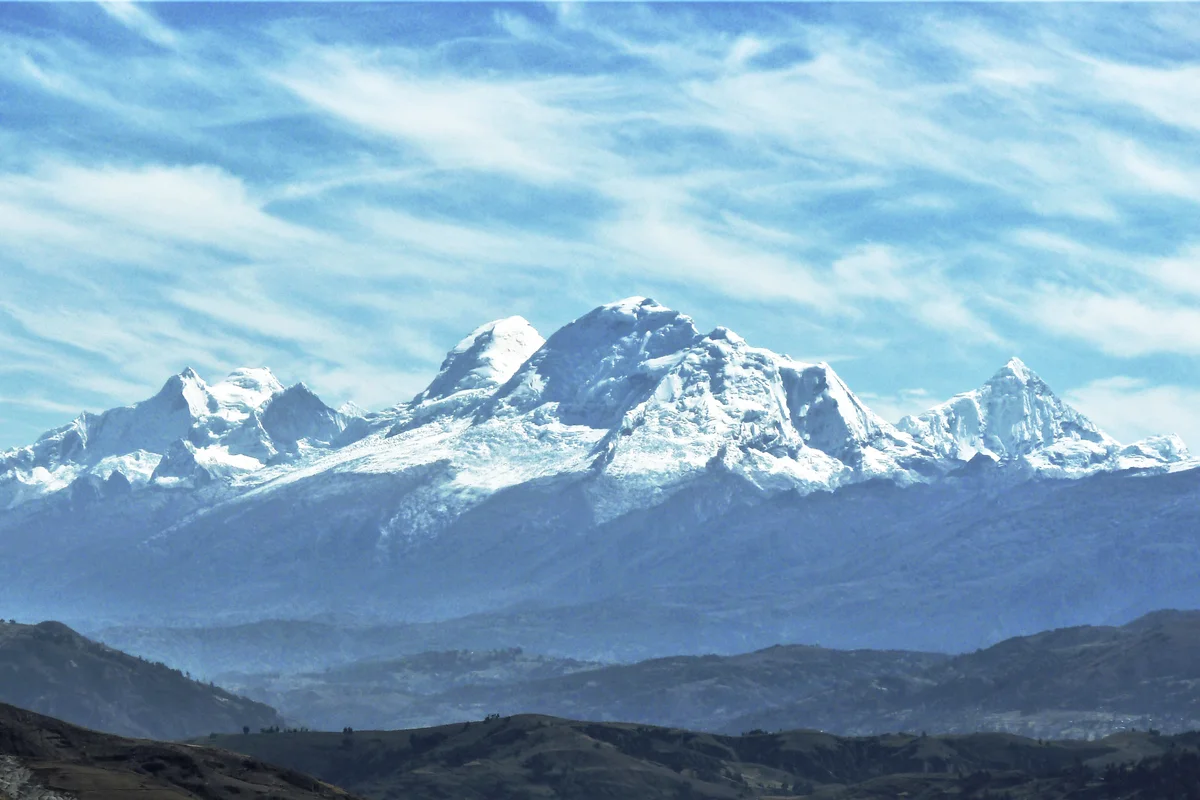
Huascarán is the highest mountain in Peru and the highest peak in the entire tropical zone of Earth, rising to 6,768 metres in the Cordillera Blanca. Its twin glaciated summits—Huascarán Sur (6,768 m) and Huascarán Norte (6,655 m)—tower over the Callejón de Huaylas with colossal icefalls and sheer vertical walls.
Documented Sources & Archival Citations
- Carnets de Solitude: 60 Jours Seul à 6,700 Mètres(Nicolas Jaeger / Éditions Denoël)
Supporting claim: Primary autobiographical journal documenting physiological tests, weather extremes, and solitary survival
Accessed/Documented: 1979 - High Altitude Medicine & Biology: The Long-Term Hypoxia Experiment of Nicolas Jaeger(Mary Ann Liebert, Inc.)
Supporting claim: Clinical retrospective analyzing the hematological and psychological data of the 1979 Huascarán stay
Accessed/Documented: 2026