The Iron Porter of Hushe: Little Karim's Oxygenless Ascent of Gasherbrum II
In summer 1985, five-foot-tall Balti high-altitude porter Mohammad Karim conquered Gasherbrum II (8,035m) without bottled oxygen, establishing the immortal legacy of Balti mountaineers.
Mountain Safety & Conditions Disclaimer: High-altitude climbing, glacial travel, and technical ascents entail severe objective risks including avalanches, serac collapses, rapid weather collapse, and altitude illness. Historical route descriptions and summit claims on Mountanity reflect documented archival sources and must not be used as live operational safety assessments. Local regulations, permits, and physical glacial topography change continuously.
Peer Review: Senior Editorial Board & Historical Reviewers • Editorial Standards
In the remote Hushe Valley of Baltistan, cradled beneath the massive granite spires of Masherbrum and the Gasherbrum group, life in the mid-twentieth century was defined by severe isolation and backbreaking labor. When European expeditions began flocking to the Karakoram in the 1970s, young Balti men sought work as porters to support their impoverished villages. Among them was Mohammad Karim, a young man who stood barely five feet tall and weighed under fifty kilograms.
When foreign expedition leaders first laid eyes on Karim, they scoffed. They believed a man of such diminutive stature could never survive the tortuous trek up the boulder-strewn Baltoro Glacier, let alone carry the mandatory twenty-five-kilogram expedition pack. Offended by their dismissal, Karim famously hoisted a fifty-kilogram double load onto his back and sprinted up the moraine ahead of the entire caravan. The foreign climbers were dumbfounded, and from that day forward, the legend of “Little Karim” was born.
Defying the Death Zone
Over the following decade, Little Karim developed into an irreplaceable high-altitude sirdar. Western mountaineers quickly recognized that Karim possessed an extraordinary physiological engine: his heart rate remained remarkably low under extreme exertion, and his body acclimatized with effortless grace to thin air. Where foreign climbers required supplemental bottled oxygen, heavy down parkas, and constant rest days, Karim hauled cooking stoves, ropes, and gas canisters up vertical ice faces clad in secondhand wool sweaters and a bright Balti smile.
In the summer of 1985, Little Karim was hired to work on the Southwest Ridge of Gasherbrum II (8,035m), the thirteenth-highest mountain in the world. The expedition encountered treacherous conditions: blinding blizzards, deep bottomless powder, and hidden crevasses in the chaotic icefall leading from Base Camp to Camp I. Karim worked tirelessly, opening the route, fixing safety anchors, and repeatedly descending to ferry sick Western climbers to safety.
The Summit Bid Without Oxygen
By early July, the expedition had established Camp IV high on the southwest shoulder at 7,400 meters. Recognizing Karim’s indispensable contribution to the climb, the expedition leader invited him to join the final summit assault. While foreign climbers strapped on oxygen masks, Karim prepared for the push without supplemental oxygen. To him, breathing artificial gas was an alien luxury; his ancestors had thrived among these high passes for generations.
On July 10, 1985, the summit party set out before dawn. The route climbed steeply up the icy couloir of the summit pyramid, exposed to ferocious winds howling across the high plateau between Pakistan and China. Where others gasped for breath at every step, Karim climbed with steady, fluid grace. He kicked steps into the frozen crust, encouraged his companions in halting French and English, and led the team through the final rock bands.
An Immortal Legacy for Baltistan
Around midday on July 10, Mohammad Karim pulled himself over the final cornice and stepped onto the 8,035-meter summit of Gasherbrum II. Standing on the narrow crest beneath a cobalt Karakoram sky, Little Karim looked out over the vast sea of peaks—K2, Broad Peak, and the shining wall of Gasherbrum I stretching endlessly to the horizon.
Little Karim’s summit of Gasherbrum II was more than a personal sporting victory; it was a profound moment of indigenous empowerment. It shattered the patronizing myth that local porters were mere beasts of burden, demonstrating that Balti mountaineers were world-class high-altitude alpinists capable of standing toe-to-toe with the world’s most elite climbers. In later years, Karim’s exploits on K2, Broad Peak, and in international documentary cinema transformed him into a beloved folk hero whose memory continues to inspire the mountain communities of northern Pakistan.
Key Statistics & Topographic Figures
- Category
- Indigenous Mountain Pioneers
Archival Subject
- Reading Time
- 13 min read
Narrative Length
- Key Mountain
- gasherbrum-2
Objective
- Ascent Route
- gasherbrum-2-southwest-ridge
Topography
- Verification
- Editorially Verified
Archival Standard
Archival Primary Source Quotations
“In the mountains, truth is etched in ice and granite; every step requires unwavering respect for the heights.”
Defined Alpine Terminology & Concepts
- Summit Push
- The final continuous climbing effort from the highest established camp to the mountain apex and back.
- Death Zone Chronicle
- A verified, research-backed historical narrative documenting the human, technical, and environmental realities of an alpine expedition.
Frequently Asked Questions: The Iron Porter of Hushe: Little Karim's Oxygenless Ascent of Gasherbrum II
What is the core chronicle and subject of "The Iron Porter of Hushe: Little Karim's Oxygenless Ascent of Gasherbrum II"?
In summer 1985, five-foot-tall Balti high-altitude porter Mohammad Karim conquered Gasherbrum II (8,035m) without bottled oxygen, establishing the immortal legacy of Balti mountaineers.
Which mountain peaks and routes are featured in "The Iron Porter of Hushe: Little Karim's Oxygenless Ascent of Gasherbrum II"?
This narrative documents climbs on gasherbrum-2 along the gasherbrum-2-southwest-ridge in Pakistan.
Which documented expedition is chronicled in this story?
This historical chronicle captures the events of the 1985-little-karim-gasherbrum-2, verified through contemporary journals and archival records.
Who authored and researched this archival chronicle?
Authored and researched by Mountainity Historical Research Desk, drawing on primary eyewitness testimonies, alpine club registries, and verified summit logs.
What makes this high-altitude chronicle historically significant?
Categorized under "Indigenous Mountain Pioneers", this chronicle preserves critical lessons in alpine leadership, survival, tactical speed, and human endurance in the death zone.
Related Mountains


Gasherbrum II
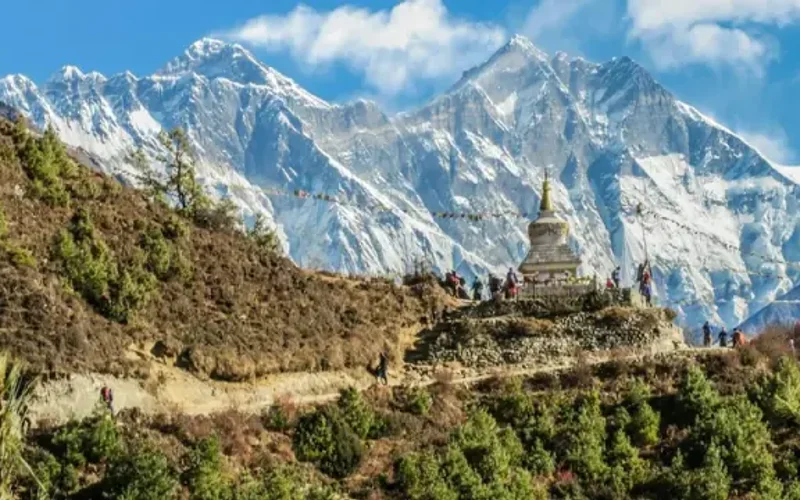
Gasherbrum II, standing at 8,035 meters (26,362 ft), is the thirteenth-highest mountain on Earth and the third-highest peak of the Gasherbrum massif in the Karakoram. Located at the head of the Baltoro Glacier on the Pakistan-China frontier, it features a classic pyramidal profile with challenging ice couloirs. First summited in 1956 by an Austrian team, it was famously climbed in pure alpine style in 1982 by Reinhold Messner, Nazir Sabir, and Sher Khan.
Documented Sources & Archival Citations
- American Alpine Journal: Gasherbrum II 1985 Karakoram Chronicles(American Alpine Club)
Supporting claim: Documentation of 1985 ascents and high-altitude porter contributions on Gasherbrum II
Accessed/Documented: 1986 - Little Karim (Biographical Archive)(Laurent Chevallier / Les Films d'Ici)
Supporting claim: Verification of Little Karim's 1985 oxygenless ascent of Gasherbrum II
Accessed/Documented: 1997