Touching the Void: Simpson & Yates on Siula Grande's West Face
In June 1985, British alpinists Joe Simpson and Simon Yates conquered the unclimbed 1,000-metre West Face of Siula Grande (6,344 m), triggering mountaineering's greatest survival drama.
Mountain Safety & Conditions Disclaimer: High-altitude climbing, glacial travel, and technical ascents entail severe objective risks including avalanches, serac collapses, rapid weather collapse, and altitude illness. Historical route descriptions and summit claims on Mountanity reflect documented archival sources and must not be used as live operational safety assessments. Local regulations, permits, and physical glacial topography change continuously.
Peer Review: Senior Editorial Board & Historical Reviewers • Editorial Standards
Touching the Void: Simpson & Yates on Siula Grande’s West Face
In May 1985, two young British alpinists—25-year-old Joe Simpson and 21-year-old Simon Yates—hiked into the wild, roadless heart of the Cordillera Huayhuash. With them was a non-climbing companion, Richard Hawking, whom they recruited in Lima to guard their base camp tents beside the turquoise waters of Laguna Sarapococha.
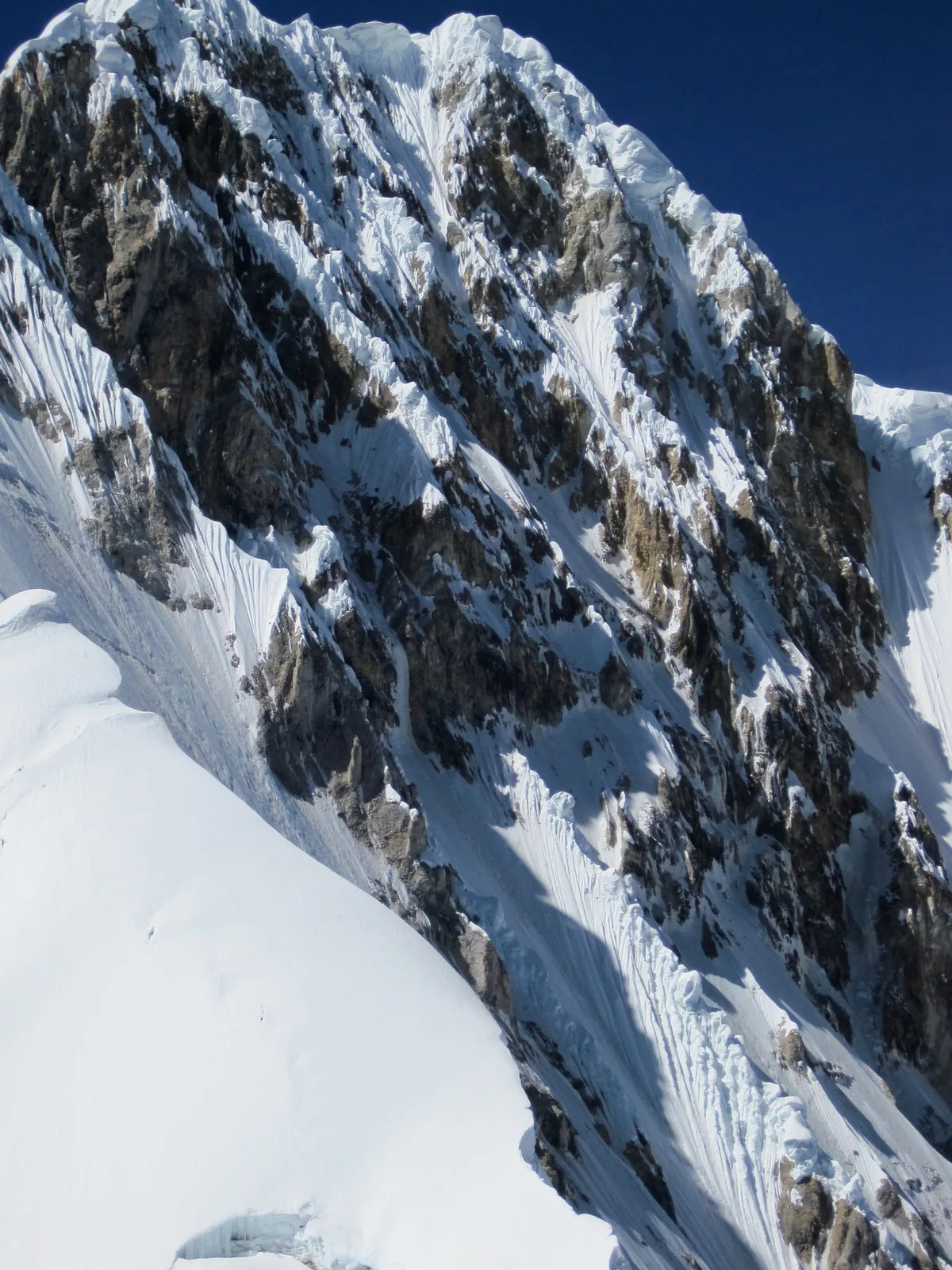
Their objective was breathtakingly audacious: the unclimbed 1,000-metre (3,300-foot) West Face of Siula Grande (6,344 m). A shimmering wall of vertical ice flutings, fragile powder snow mushrooms, and loose rock, the face had repulsed every previous attempt. Simpson and Yates chose to tackle it in lightweight alpine style—carrying all their equipment on their backs, without fixed ropes, support camps, or radios.
The Alpine Triumph
Starting in darkness from the glacier beneath the wall, Simpson and Yates launched up the central face. Pitch after pitch demanded total commitment on 80-degree water ice, where blunt ice tools had to be gently placed into brittle flutings. Above, they encountered bizarre overhanging powder snow mushrooms that crumbled under foot, requiring heart-stopping balance.
Scooping out tiny bivouac caves in the ice, they climbed for three relentless days through biting Andean cold. On June 8, 1985, battered by fierce winds, Simpson and Yates hauled themselves over the summit cornice onto the 6,344-metre crest. They had completed one of the most brilliant alpine-style first ascents in South American history.
Catastrophe on the North Ridge
Their triumph turned to tragedy almost immediately. Running out of fuel and water, they attempted to descend via the corniced North Ridge in a raging blizzard. Trapped on a knife-edge crest in zero visibility, Simpson slipped off an ice cliff, landing heavily on his right leg. The impact drove his tibia straight up through the knee joint, shattering the bone into pieces.
In the high, remote Andes, a broken leg at 6,000 metres was universally considered a death sentence.
Simon Yates refused to abandon his friend. Improvising a desperate rescue system, Yates tied their two 150-foot climbing ropes together. Digging a snow seat with his boots, Yates lowered Simpson down 300 feet of storm-swept mountain at a time. Simpson, screaming in agony every time his mangled leg struck the slope, would dig into the snow at the end of each pitch, allowing Yates to descend and repeat the process.
Over thousands of feet in the freezing dark, the system miraculously worked—until disaster struck.
The Cutting of the Rope
At approximately 5,800 metres, Simpson was lowered over an unseen, vertical serac cliff. He slipped into free space, dangling helplessly on the end of the rope above a colossal crevasse. In the screaming wind, neither man could hear the other.
Up above, seated in an unanchored snow seat on a precarious slope, Yates was being pulled inexorably toward the cliff edge by Simpson’s dead weight. For an hour and a half, his hands freezing, Yates held the strain with superhuman endurance. Slowly, his snow anchor began to collapse. Convinced that staying tied meant both men would plunge to their deaths, Yates pulled out a Swiss army knife and cut the taut rope.
Simpson plummeted 150 feet through the freezing darkness into the belly of the crevasse.
The Crawl from the Abyss
Believing his friend was dead, Yates dug a snow hole for the night and descended to base camp the following day, consumed by grief and exhaustion.
Miraculously, Simpson had survived the fall. Landing on a subterranean snow bridge inside the crevasse, he regained consciousness alone in the pitch-black abyss. Rather than giving in to despair, he looked down and saw a narrow shaft of light filtering from below. Lowering himself further into the depths, he found an exit hole that opened onto the glacier surface.
Emerging into the daylight with a shattered leg and no food or water, Simpson was five miles from base camp, separated by a labyrinth of crevassed glaciers and brutal boulder moraines.
Over the next three and a half days, fueled by raw survival instinct, Simpson hopped on one foot, crawled on his elbows, and slid down scree slopes. Delirious with fever, dehydration, and pain, he inched forward hour by hour.
In the middle of the night on the fourth day, just hours before Yates and Hawking were scheduled to pack up camp and leave, Yates was awakened by a faint voice calling his name outside the tent. Crawling out into the dark, he found Joe Simpson lying in the dust—emaciated, frostbitten, but alive.
The story, immortalized in Simpson’s 1988 book Touching the Void and later adapted into an acclaimed film, stands as mountaineering’s ultimate chronicle of courage, brotherhood, and the unconquerable human spirit.
Key Statistics & Topographic Figures
- Category
- Andean Pioneers
Archival Subject
- Reading Time
- 18 min read
Narrative Length
- Key Mountain
- siula-grande
Objective
- Ascent Route
- siula-grande-west-face
Topography
- Verification
- Editorially Verified
Archival Standard
Archival Primary Source Quotations
“In the mountains, truth is etched in ice and granite; every step requires unwavering respect for the heights.”
Defined Alpine Terminology & Concepts
- Summit Push
- The final continuous climbing effort from the highest established camp to the mountain apex and back.
- Death Zone Chronicle
- A verified, research-backed historical narrative documenting the human, technical, and environmental realities of an alpine expedition.
Frequently Asked Questions: Touching the Void: Simpson & Yates on Siula Grande's West Face
What is the core chronicle and subject of "Touching the Void: Simpson & Yates on Siula Grande's West Face"?
In June 1985, British alpinists Joe Simpson and Simon Yates conquered the unclimbed 1,000-metre West Face of Siula Grande (6,344 m), triggering mountaineering's greatest survival drama.
Which mountain peaks and routes are featured in "Touching the Void: Simpson & Yates on Siula Grande's West Face"?
This narrative documents climbs on siula-grande along the siula-grande-west-face in Peru.
Which documented expedition is chronicled in this story?
This historical chronicle captures the events of the 1985-simpson-yates-siula-grande-touching-the-void, verified through contemporary journals and archival records.
Who authored and researched this archival chronicle?
Authored and researched by Mountainity Historical Research Desk, drawing on primary eyewitness testimonies, alpine club registries, and verified summit logs.
What makes this high-altitude chronicle historically significant?
Categorized under "Andean Pioneers", this chronicle preserves critical lessons in alpine leadership, survival, tactical speed, and human endurance in the death zone.
Related Mountains

Siula Grande
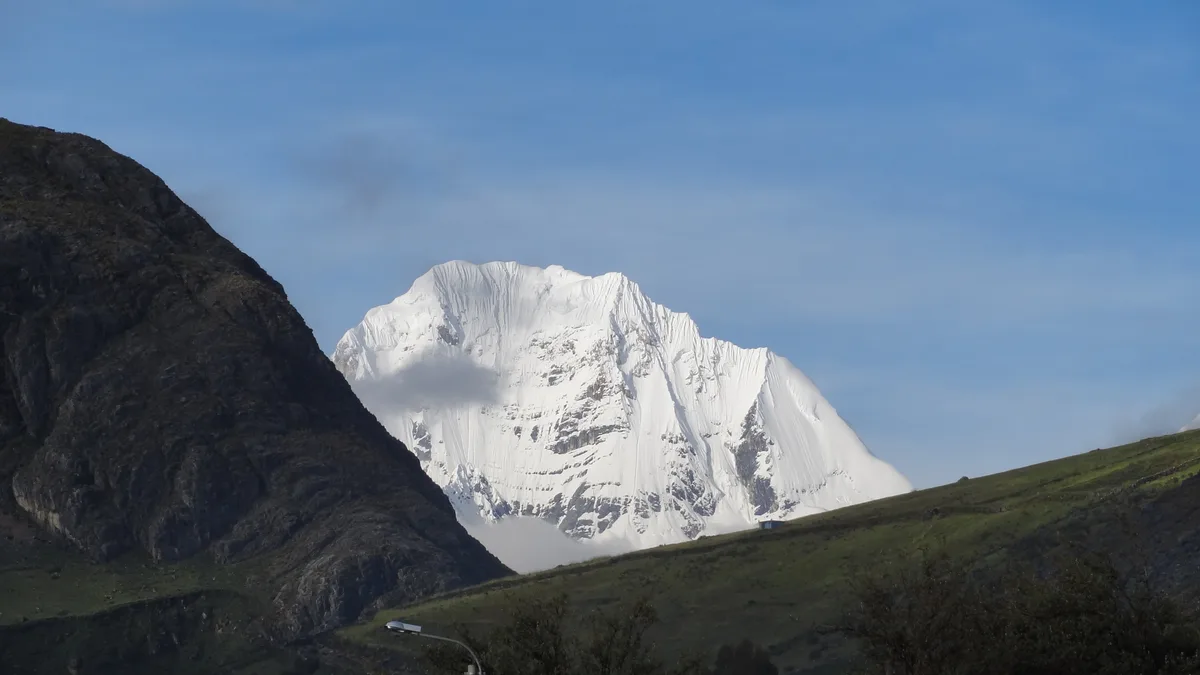
Siula Grande is a majestic 6,344-metre mountain in the Cordillera Huayhuash of the Peruvian Andes, renowned for its sheer western precipice, knife-edge corniced ridges, and one of mountaineering's greatest survival sagas. First climbed in July 1936 by Austrian alpinists Erwin Schneider and Arnold Awerzger via the North Ridge, the peak earned worldwide fame from Joe Simpson and Simon Yates' harrowing 1985 first ascent of the West Face, chronicled in Touching the Void.
Documented Sources & Archival Citations
- Touching the Void(Joe Simpson / Jonathan Cape)
Supporting claim: Firsthand autobiographical chronicle of the 1985 Siula Grande ascent, descent catastrophe, and survival
Accessed/Documented: 1988 - Alpine Journal: Siula Grande West Face(Simon Yates / Alpine Club)
Supporting claim: Official expedition report detailing the technical climbing pitches, gear, and descent chronology
Accessed/Documented: 1986