The Golden Standard: Štremfelj and Prezelj on Kangchenjunga South Ridge
In October 1991, Slovenian alpinists Andrej Štremfelj and Marko Prezelj made an audacious alpine-style first ascent of Kangchenjunga's South Ridge, winning the inaugural Piolet d'Or.
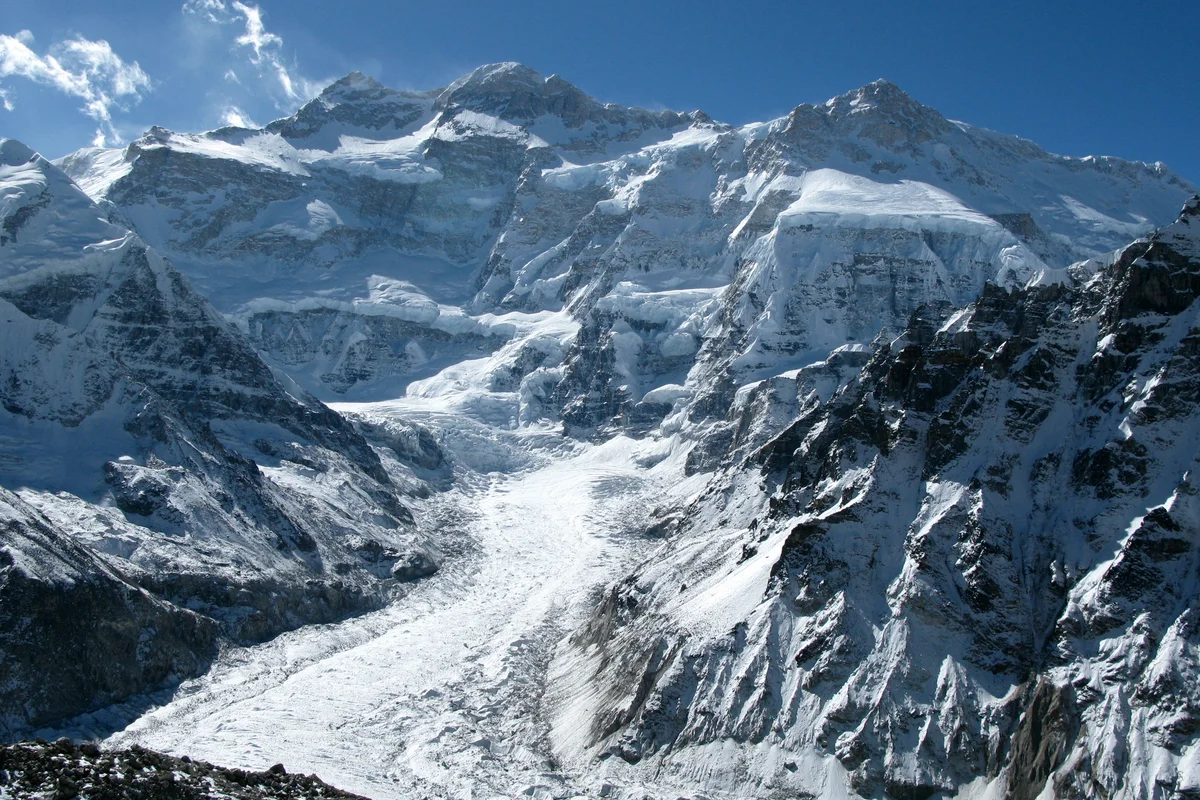
Mountain Safety & Conditions Disclaimer: High-altitude climbing, glacial travel, and technical ascents entail severe objective risks including avalanches, serac collapses, rapid weather collapse, and altitude illness. Historical route descriptions and summit claims on Mountanity reflect documented archival sources and must not be used as live operational safety assessments. Local regulations, permits, and physical glacial topography change continuously.
Peer Review: Senior Editorial Board & Historical Reviewers • Editorial Standards
By the early 1990s, high-altitude mountaineering was experiencing a deep philosophical identity crisis. Massive national sieges using thousands of meters of fixed ropes, legions of high-altitude porters, and hundreds of oxygen bottles had turned Himalayan climbing into heavy industrial campaigns. Many purists lamented that the true soul of alpinism—self-reliance, lightweight speed, and the vulnerability of human beings facing vast mountain walls on equal terms—was being extinguished in the death zone.
Then, in October 1991, two Slovenian climbers arrived at the foot of Kangchenjunga (8,586m) in eastern Nepal. Thirty-four-year-old Andrej Štremfelj, already an immortal hero for his 1979 first ascent of Everest’s complete West Ridge, joined forces with twenty-six-year-old rising phenomenon Marko Prezelj. Their objective was monumental: the unclimbed, 3,000-meter South Ridge leading to the South Peak of Kangchenjunga (8,476m). Their style would be uncompromising: pure alpine style, carrying all their survival gear in their backpacks, with no supplemental oxygen, no fixed lines, and no safety net.
Into the Vertical Wilderness
Departing from the Yalung Glacier on October 15, 1991, Štremfelj and Prezelj carried forty-pound packs containing only minimal dehydrated food, stove fuel, a tiny two-man bivouac tent, and a single climbing rope. As soon as they stepped onto the lower granite ribs of the South Ridge, there was no retreat. Every pitch required total commitment.
Over the next four days, the climbers worked through technical mixed rock buttresses up to Grade V and 65-degree flutings of hard blue ice. Unlike standard Himalayan routes where climbers retreat to comfortable camps each night, Štremfelj and Prezelj carved tiny bivouac ledges into knife-edge snow crests at 7,200 meters, 7,600 meters, and 7,900 meters. The cold was searing, and their bodies burned immense calories simply maintaining core temperature against sub-zero Himalayan jet stream squalls.
The Death Zone on Natural Lungs
Above 8,000 meters, technical rock climbing on natural lung capacity is an extraordinary test of physical conditioning and willpower. Every move required delicate balance on crumbly granite footholds while fighting the suffocating hypoxia of the death zone. Prezelj, possessing immense youth and ferocious drive, alternated leading pitches with the seasoned, methodical Štremfelj.
On the morning of October 19, 1991, after five continuous days of ascending into the sky, the two men breached the final corniced snow shoulder. Moving together along the razor ridge, Andrej Štremfelj and Marko Prezelj stepped onto the 8,476-meter summit of Kangchenjunga South. Below them stretched the boundless mists of Nepal and Sikkim, with the colossal pyramid of the main summit towering nearby.
The Inaugural Piolet d’Or
After a harrowing two-day descent down the Southwest Face, the climbers returned to Base Camp safe, frostbite-free, and triumphant. In 1992, when the French Groupe de Haute Montagne established the Piolet d’Or—mountaineering’s equivalent of the Academy Award—Štremfelj and Prezelj were unanimously chosen as the inaugural laureates. Their climb stood as an unassailable declaration that the highest peaks on Earth could be climbed in pure alpine style, ushering in the modern era of visionary Himalayan exploration.
Key Statistics & Topographic Figures
- Category
- Alpine Style Breakthroughs
Archival Subject
- Reading Time
- 14 min read
Narrative Length
- Key Mountain
- kangchenjunga
Objective
- Ascent Route
- kangchenjunga-southwest-face
Topography
- Verification
- Editorially Verified
Archival Standard
Archival Primary Source Quotations
“In the mountains, truth is etched in ice and granite; every step requires unwavering respect for the heights.”
Defined Alpine Terminology & Concepts
- Summit Push
- The final continuous climbing effort from the highest established camp to the mountain apex and back.
- Death Zone Chronicle
- A verified, research-backed historical narrative documenting the human, technical, and environmental realities of an alpine expedition.
Frequently Asked Questions: The Golden Standard: Štremfelj and Prezelj on Kangchenjunga South Ridge
What is the core chronicle and subject of "The Golden Standard: Štremfelj and Prezelj on Kangchenjunga South Ridge"?
In October 1991, Slovenian alpinists Andrej Štremfelj and Marko Prezelj made an audacious alpine-style first ascent of Kangchenjunga's South Ridge, winning the inaugural Piolet d'Or.
Which mountain peaks and routes are featured in "The Golden Standard: Štremfelj and Prezelj on Kangchenjunga South Ridge"?
This narrative documents climbs on kangchenjunga along the kangchenjunga-southwest-face in Nepal.
Which documented expedition is chronicled in this story?
This historical chronicle captures the events of the 1991-stremfelj-prezelj-kangchenjunga-south-ridge, verified through contemporary journals and archival records.
Who authored and researched this archival chronicle?
Authored and researched by Mountainity Historical Research Desk, drawing on primary eyewitness testimonies, alpine club registries, and verified summit logs.
What makes this high-altitude chronicle historically significant?
Categorized under "Alpine Style Breakthroughs", this chronicle preserves critical lessons in alpine leadership, survival, tactical speed, and human endurance in the death zone.
Related Mountains
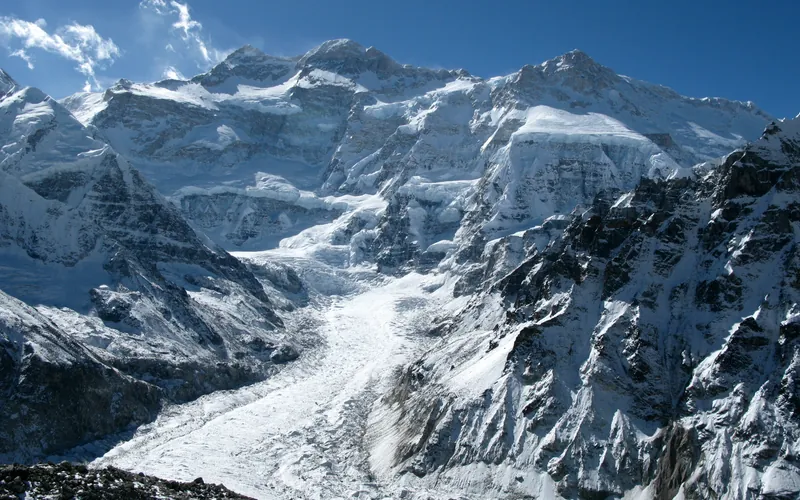


Kangchenjunga
Kangchenjunga, at 8,586 meters (28,169 ft), is the third-highest mountain on Earth, rising on the border between Nepal and Sikkim, India. Honored as sacred by locals, early ascent teams respected local beliefs by stopping short of the actual highest crest. It features immense vertical relief and notorious storm cycles.
Documented Sources & Archival Citations
- American Alpine Journal: Kangchenjunga South Ridge Alpine Style by Marko Prezelj(American Alpine Club)
Supporting claim: Official expedition report verifying the October 19, 1991 alpine-style summit of Kangchenjunga South
Accessed/Documented: 1992 - Piolets d'Or Archive: 1992 Inaugural Laureates(Groupe de Haute Montagne (GHM))
Supporting claim: Official citation honoring the purest alpine-style climb on an eight-thousander
Accessed/Documented: 1992