The Queen of the Ogre: Catherine Destivelle's Historic Solo Winter Ascent of the Eiger North Face
On March 9–10, 1992, French mountaineer Catherine Destivelle made history as the first woman to solo the 1,800-meter North Face of the Eiger in winter, conquering the Heckmair Route in 17 hours.
Mountain Safety & Conditions Disclaimer: High-altitude climbing, glacial travel, and technical ascents entail severe objective risks including avalanches, serac collapses, rapid weather collapse, and altitude illness. Historical route descriptions and summit claims on Mountanity reflect documented archival sources and must not be used as live operational safety assessments. Local regulations, permits, and physical glacial topography change continuously.
Peer Review: Senior Editorial Board & Historical Reviewers • Editorial Standards
In the early 1990s, high-altitude mountaineering was still dominated by a conservative, male-centric culture that routinely relegated women to secondary roles or treated their achievements with patronizing skepticism. While female climbers like Wanda Rutkiewicz were shattering records in the Himalaya, solo winter alpinism on the great north faces of the Alps was still widely considered an exclusive brotherhood of extreme male climbers.
On March 9, 1992, a 31-year-old Frenchwoman from Paris stepped alone onto the frozen scree beneath the 1,800-meter North Face of the Eiger and shattered that illusion forever.
Her name was Catherine Destivelle.
From Fontainebleau to the Big Walls
Destivelle had already lived several extraordinary athletic lives. By the mid-1980s, she was the world’s most famous sport climber, having won the prestigious Sportroccia competitions in Italy and become the first woman in history to redpoint an 8a+ (5.13c) pitch. But the sanitized world of bolting limestone cliffs and competition podiums soon felt hollow to her. Destivelle craved absolute commitment, wild mountain exposure, and solitude.
Moving to the Mont Blanc massif, she astonished the Chamonix alpine elite. In 1990, she soloed the legendary Bonatti Pillar on the Petit Dru in just four hours. In 1991, she spent eleven grueling days alone on the sheer granite of the Dru opening a formidable new direct line—the Voie Destivelle—carrying heavy haul bags and braving rockfall alone.
Yet there was one supreme test that haunted her imagination: the North Face of the Eiger in the dead of winter.
Stepping Into the Winter Ogre
Winter on the Eigerwand is a realm of terrifying hostility. Temperatures plunge beneath minus twenty degrees Celsius. Daylight is fleeting, lasting barely nine hours. The limestone cracks are choked with brittle black verglas, and sudden spindrift avalanches pour relentlessly down the gullies like waterfalls of frozen powder.
On the morning of March 9, 1992, carrying a single 50-meter rope, a light rack of pitons, ice screws, and a compact bivouac sack, Destivelle began climbing the classic 1938 Heckmair Route.
Her strategy was a masterclass in calculated alpine efficiency: she free-soloed the moderate lower snowfields and ice aprons without rope or belay to move swiftly, pulling out her rope and self-belaying only on the most precarious technical crux sections—the Difficult Crack and the sheer polished rock of the Hinterstoisser Traverse.
By late afternoon, having traversed the Second Icefield and navigated The Ramp, Destivelle arrived at the famous Death Bivouac. As dusk settled over the Bernese Oberland and the twinkling lights of Grindelwald appeared thousands of feet below, she carved out a narrow perch in the snow, crawled into her sleeping bag, and brewed hot tea under a brilliant canopy of cold winter stars.
The Summit Triumph
At dawn on March 10, Destivelle resumed her ascent. Climbing with fluid precision, she traversed the delicate rock slabs of the Traverse of the Gods and tackled the White Spider. Despite stinging spindrift cascading over her shoulders and freezing wind biting at her cheeks, she remained totally composed, placing her crampon frontpoints onto tiny edges of rock with surgical accuracy.
She pulled through the steep, dripping chimneys of the Exit Cracks, climbed past the final icy gully, and stepped out onto the sunlit Mittellegi summit ridge at 3,967 meters.
Total climbing time: 17 hours.
With that final stride, Catherine Destivelle became the first woman in history to conquer the Eiger North Face solo in winter. Over the next two years, she went on to solo the Walker Spur on the Grandes Jorasses (1993) and the Bonatti Route on the Matterhorn (1994) in winter, completing the legendary ‘Winter Alpine Trilogy’ alone.
Destivelle did not just climb the Eiger; she proved with undeniable mastery, grace, and courage that in the ultimate cathedral of mountaineering, the only true measures of an alpinist are skill, vision, and heart.
Key Statistics & Topographic Figures
- Category
- Modern Alpine Style Pioneers
Archival Subject
- Reading Time
- 11 min read
Narrative Length
- Key Mountain
- eiger
Objective
- Ascent Route
- eiger-north-face-heckmair
Topography
- Verification
- Editorially Verified
Archival Standard
Archival Primary Source Quotations
“In the mountains, truth is etched in ice and granite; every step requires unwavering respect for the heights.”
Defined Alpine Terminology & Concepts
- Summit Push
- The final continuous climbing effort from the highest established camp to the mountain apex and back.
- Death Zone Chronicle
- A verified, research-backed historical narrative documenting the human, technical, and environmental realities of an alpine expedition.
Frequently Asked Questions: The Queen of the Ogre: Catherine Destivelle's Historic Solo Winter Ascent of the Eiger North Face
What is the core chronicle and subject of "The Queen of the Ogre: Catherine Destivelle's Historic Solo Winter Ascent of the Eiger North Face"?
On March 9–10, 1992, French mountaineer Catherine Destivelle made history as the first woman to solo the 1,800-meter North Face of the Eiger in winter, conquering the Heckmair Route in 17 hours.
Which mountain peaks and routes are featured in "The Queen of the Ogre: Catherine Destivelle's Historic Solo Winter Ascent of the Eiger North Face"?
This narrative documents climbs on eiger along the eiger-north-face-heckmair in Switzerland.
Which documented expedition is chronicled in this story?
This historical chronicle captures the events of the 1992-destivelle-eiger-winter-solo, verified through contemporary journals and archival records.
Who authored and researched this archival chronicle?
Authored and researched by Mountainity Historical Research Desk, drawing on primary eyewitness testimonies, alpine club registries, and verified summit logs.
What makes this high-altitude chronicle historically significant?
Categorized under "Modern Alpine Style Pioneers", this chronicle preserves critical lessons in alpine leadership, survival, tactical speed, and human endurance in the death zone.
Related Mountains

Eiger
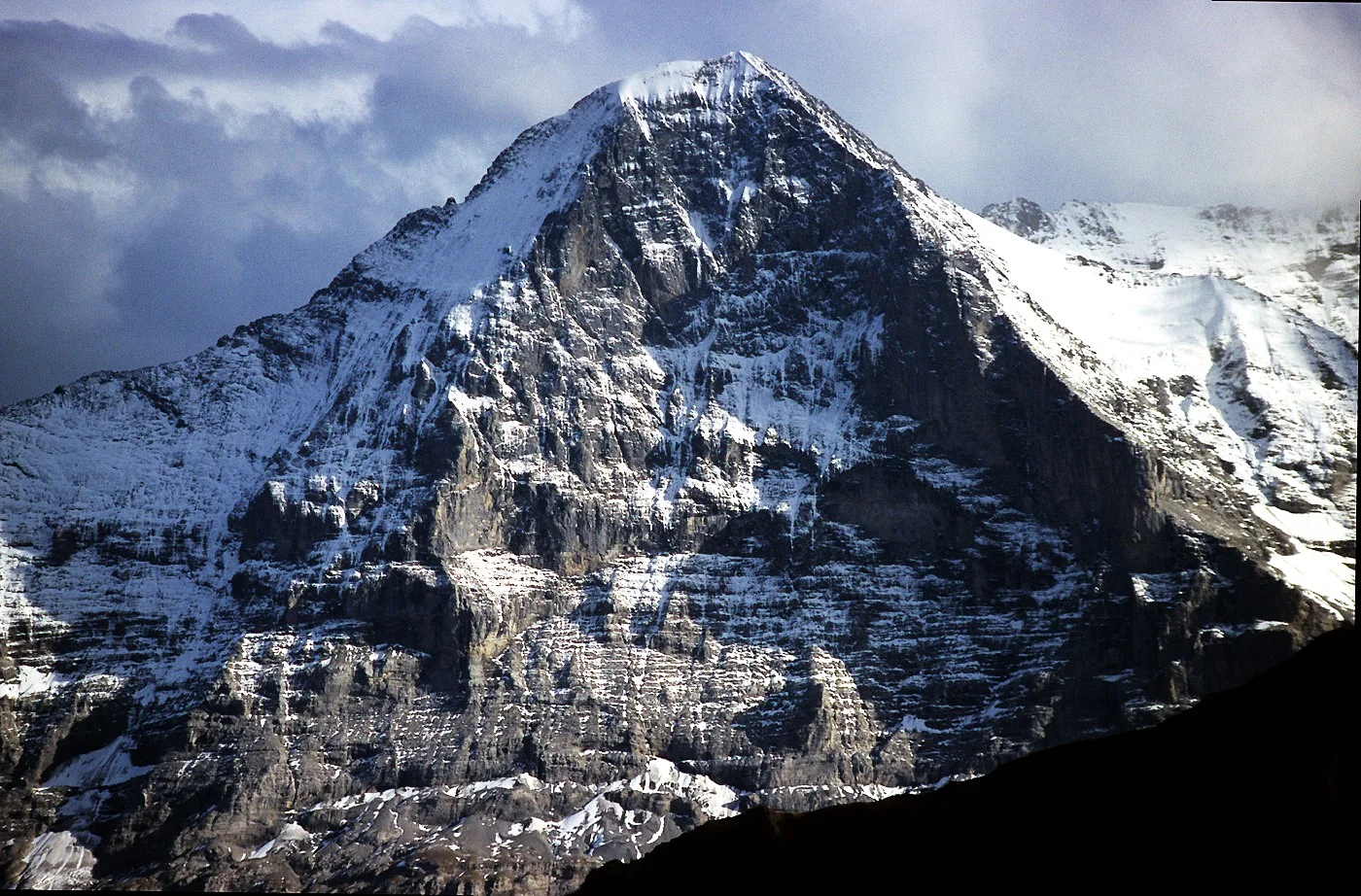
The Eiger, standing at 3,967 meters (13,015 ft) in the Bernese Alps of Switzerland, is globally renowned for its monstrous 1,800-meter (5,900 ft) sheer vertical North Face (the *Eiger-Nordwand*). Feared as the *Mordwand* ('Murder Wall') following catastrophic climbing tragedies in the 1930s, it remained the last great problem of the Alps until conquered in July 1938 by Anderl Heckmair, Ludwig Vörg, Heinrich Harrer, and Fritz Kasparek.
Documented Sources & Archival Citations
- American Alpine Journal: Catherine Destivelle's Winter Solo on the Eiger(American Alpine Club)
Supporting claim: Official verification of the first female solo winter ascent of the Eiger North Face on March 9-10, 1992
Accessed/Documented: 1993 - Piolets d'Or: Catherine Destivelle Alpine Retrospective(Piolets d'Or)
Supporting claim: Documentation of the winter solo trilogy and historical significance of the 17-hour climb
Accessed/Documented: 2020 - Montagnes Magazine: Destivelle, la première femme en solo hivernal sur l'Eiger(Montagnes Magazine)
Supporting claim: Contemporaneous French alpine reporting and technical route breakdown
Accessed/Documented: 1992