The Ghost of Yalung: Kinga Baranowska Conquers Kangchenjunga
On May 18, 2009, Kinga Baranowska became the first Polish woman to conquer Kangchenjunga without bottled oxygen, fulfilling the uncompleted dream of pioneer Wanda Rutkiewicz.
Mountain Safety & Conditions Disclaimer: High-altitude climbing, glacial travel, and technical ascents entail severe objective risks including avalanches, serac collapses, rapid weather collapse, and altitude illness. Historical route descriptions and summit claims on Mountanity reflect documented archival sources and must not be used as live operational safety assessments. Local regulations, permits, and physical glacial topography change continuously.
Peer Review: Senior Editorial Board & Historical Reviewers • Editorial Standards
On May 12, 1992, Polish mountaineering pioneer Wanda Rutkiewicz was last seen sheltering in a shallow snow cave at 8,300 meters on the Northwest Face of Kangchenjunga (8,586m). Refusing to descend without the summit, the greatest female climber of the twentieth century vanished into the swirling spindrift, leaving behind an unfinished legacy that haunted Polish alpinism for nearly two decades. No Polish woman had ever stood atop Kangchenjunga—until thirty-three-year-old Kinga Baranowska arrived at the base of the mountain in the spring of 2009.
Baranowska, born in the Kashubian region of northern Poland, had already stunned the mountaineering world in 2008 by becoming the first Polish woman to climb both Dhaulagiri and Manaslu in a single year. She climbed according to the strict, purist traditions of Polish Himalayan exploration: carrying her own equipment and refusing supplemental bottled oxygen. On Kangchenjunga, the world’s third highest mountain, that purism would require unprecedented psychological fortitude.
The Endless Ascent of the Yalung Face
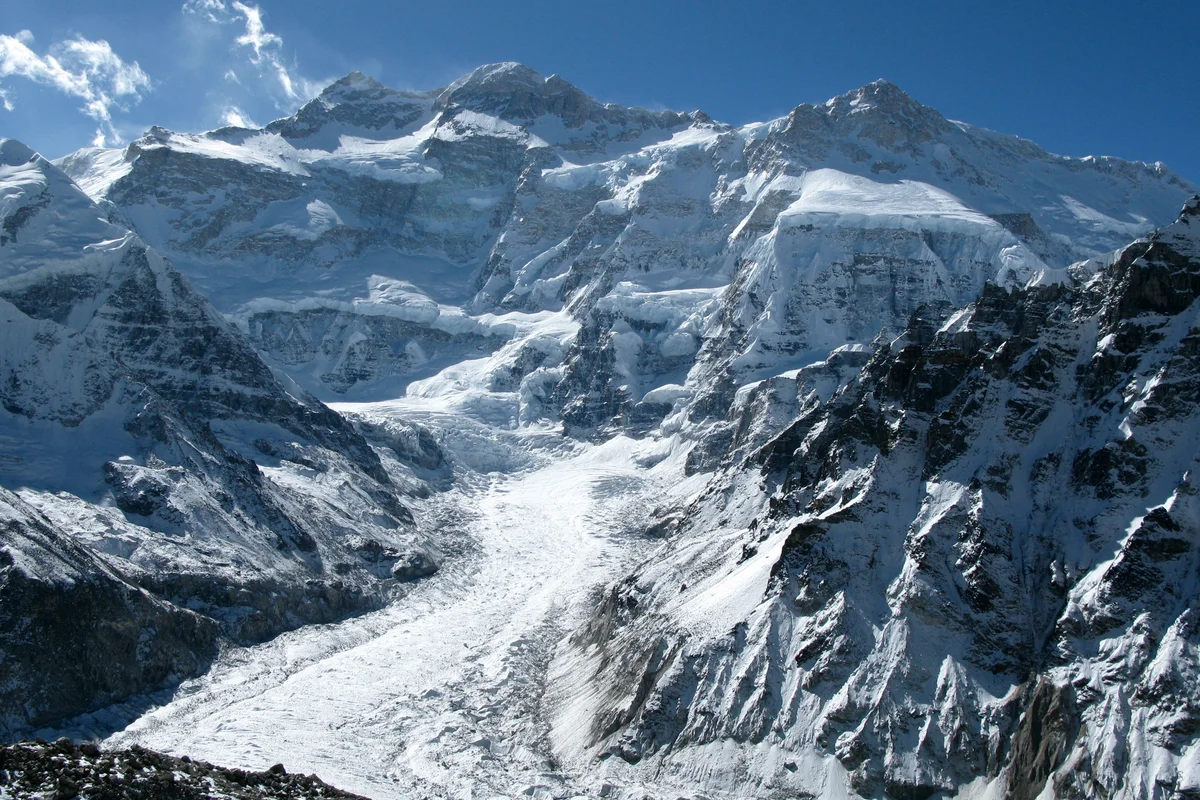
Baranowska approached Kangchenjunga from the remote, wild valleys of eastern Nepal, establishing her base camp on the Yalung Glacier. The Southwest Face was an immense, sprawling wall of rock and hanging glaciers, rising more than three vertical kilometers above the glacier floor. Unlike the commercial highways of Everest, Kangchenjunga remained isolated, demanding self-reliance and continuous technical awareness.
Throughout April 2009, Baranowska worked through the hazardous Lower and Upper Icefalls, establishing Camp II at 6,400 meters and Camp III at 7,100 meters. The mountain tested her with relentless spring storms, sweeping powder avalanches, and temperatures plummeting below -30°C. Climbing without supplemental oxygen meant her body felt every drop in barometric pressure; simple tasks like strapping crampons or lighting a stove took agonizing minutes.
The Night Bid Through the Death Zone
On May 17, Baranowska moved up to Camp IV at 7,700 meters, perched precariously on a windswept snow shelf below the final rock buttresses. The wind screamed across the summit ridges, but local weather forecasts promised a temporary drop in wind speeds around noon the following day. Taking a calculated risk, Baranowska departed Camp IV at 2:00 AM on May 18, entering the death zone in total darkness.
The climb through the Great Couloir was agonizingly steep. Deep, unconsolidated sugar snow threatened to slide with every step, forcing Baranowska to kick deep steps into the slope. As dawn broke, she entered the technical crux—the Upper Rock Band, a series of loose, slabby granite gullies that required delicate mixed rock-and-ice climbing with thick mitts and crampons at 8,400 meters. Without oxygen, her brain pounded with severe hypoxia, but she pressed forward with unrelenting rhythm.
A Historic Summit and Sacred Tribute
At 1:30 PM on May 18, 2009, Kinga Baranowska traversed the final snow arête and stepped onto the summit of Kangchenjunga (8,586m). Surrounded by a boundless sea of Himalayan peaks stretching across Nepal, Sikkim, and Tibet, she realized that seventeen years after Wanda Rutkiewicz had disappeared on the slopes below, a Polish woman had finally conquered the mountain.
Overcome with emotion, Baranowska knelt in the summit snow and dedicated her historic triumph to the memory of Wanda Rutkiewicz. The climb was hailed as a magnificent triumph of fair-means alpinism, cementing Baranowska’s place among the elite mountaineers of her generation. She would go on to summit Annapurna, Lhotse, and Gasherbrum II, completing nine eight-thousanders without bottled oxygen and proving that the indomitable spirit of Polish high-altitude climbing burned as brightly as ever.
Key Statistics & Topographic Figures
- Category
- Women Pioneers
Archival Subject
- Reading Time
- 14 min read
Narrative Length
- Key Mountain
- kangchenjunga
Objective
- Ascent Route
- kangchenjunga-southwest-face
Topography
- Verification
- Editorially Verified
Archival Standard
Archival Primary Source Quotations
“In the mountains, truth is etched in ice and granite; every step requires unwavering respect for the heights.”
Defined Alpine Terminology & Concepts
- Summit Push
- The final continuous climbing effort from the highest established camp to the mountain apex and back.
- Death Zone Chronicle
- A verified, research-backed historical narrative documenting the human, technical, and environmental realities of an alpine expedition.
Frequently Asked Questions: The Ghost of Yalung: Kinga Baranowska Conquers Kangchenjunga
What is the core chronicle and subject of "The Ghost of Yalung: Kinga Baranowska Conquers Kangchenjunga"?
On May 18, 2009, Kinga Baranowska became the first Polish woman to conquer Kangchenjunga without bottled oxygen, fulfilling the uncompleted dream of pioneer Wanda Rutkiewicz.
Which mountain peaks and routes are featured in "The Ghost of Yalung: Kinga Baranowska Conquers Kangchenjunga"?
This narrative documents climbs on kangchenjunga along the kangchenjunga-southwest-face in Nepal.
Which documented expedition is chronicled in this story?
This historical chronicle captures the events of the 2009-kinga-baranowska-kangchenjunga, verified through contemporary journals and archival records.
Who authored and researched this archival chronicle?
Authored and researched by Mountainity Historical Research Desk, drawing on primary eyewitness testimonies, alpine club registries, and verified summit logs.
What makes this high-altitude chronicle historically significant?
Categorized under "Women Pioneers", this chronicle preserves critical lessons in alpine leadership, survival, tactical speed, and human endurance in the death zone.
Related Mountains


Kangchenjunga
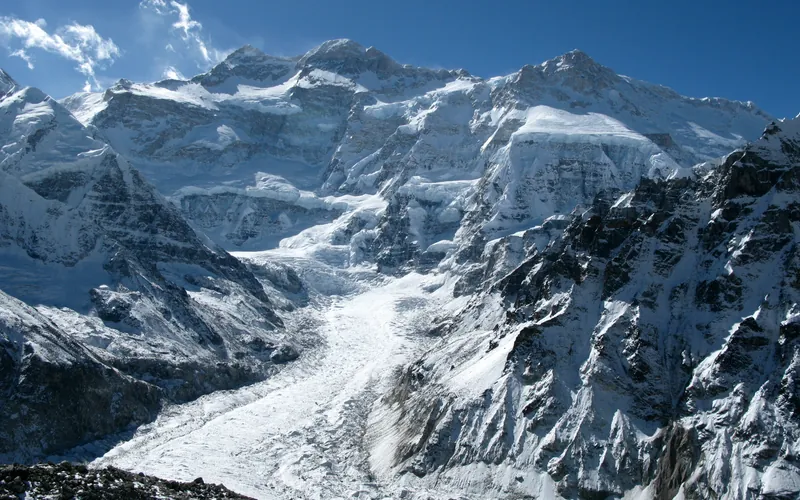
Kangchenjunga, at 8,586 meters (28,169 ft), is the third-highest mountain on Earth, rising on the border between Nepal and Sikkim, India. Honored as sacred by locals, early ascent teams respected local beliefs by stopping short of the actual highest crest. It features immense vertical relief and notorious storm cycles.
Documented Sources & Archival Citations
- American Alpine Journal: Kangchenjunga, First Polish Woman Ascent by Kinga Baranowska(American Alpine Club)
Supporting claim: Official climb report and summit verification for the May 18, 2009 oxygenless ascent of Kangchenjunga
Accessed/Documented: 2010 - Taternik: Polish Women on the 8000ers: Kinga Baranowska(Polish Mountaineering Association (PZA))
Supporting claim: Comprehensive chronicle of the Southwest Face ascent and emotional tribute to Wanda Rutkiewicz
Accessed/Documented: 2016