Cold: The Historic First Winter Ascent of Gasherbrum II
On February 2, 2011, Simone Moro, Denis Urubko, and Cory Richards made history with the first winter ascent of Gasherbrum II, surviving a near-fatal avalanche on descent.
Mountain Safety & Conditions Disclaimer: High-altitude climbing, glacial travel, and technical ascents entail severe objective risks including avalanches, serac collapses, rapid weather collapse, and altitude illness. Historical route descriptions and summit claims on Mountanity reflect documented archival sources and must not be used as live operational safety assessments. Local regulations, permits, and physical glacial topography change continuously.
Peer Review: Senior Editorial Board & Historical Reviewers • Editorial Standards
For more than two decades, the Karakoram mountains in northern Pakistan remained an impregnable winter fortress. While the Polish ‘Ice Warriors’ had conquered eight of the Nepalese eight-thousanders during winter in the 1980s, the five giants of Pakistan—K2, Nanga Parbat, Gasherbrum I, Broad Peak, and Gasherbrum II—resisted every single winter expedition. Located further north at higher latitude, the Karakoram in winter is colder, drier, and far more turbulent than the Himalaya, with ambient temperatures plummeting past -50°C and storms that rage for weeks without pause.
In December 2010, an elite international trio assembled to challenge this unyielding record: Italian winter specialist Simone Moro, Kazakh mountaineer Denis Urubko, and American climber and National Geographic photographer Cory Richards. Their target was Gasherbrum II (8,035m), the thirteenth-highest peak in the world.
The Baltoro Icebox
Trekking up the frozen Baltoro Glacier in January was itself an epic of endurance. Accompanied by hardy Balti porters walking over snow-covered moraines in sub-zero frost, the team reached Gasherbrum Base Camp at 5,100 meters in deep winter. Operating in pure alpine style without high-altitude porters or supplemental bottled oxygen, they began working their way through the treacherous Gasherbrum Icefall.
The icefall was a chaotic labyrinth of fragile séracs and bottomless crevasses concealed under fragile wind-blown snow bridges. Moro, Urubko, and Richards navigated these objective hazards with caution, fixing light ropes across the most dangerous chasms and establishing Camp I at 5,900 meters and Camp II at 6,500 meters.
The Sprint Through -45°C
On January 30, 2011, meteorologist Karl Gabl alerted them to a fleeting 48-hour calm before a colossal Himalayan blizzard was forecast to slam the Karakoram. The trio immediately packed their light packs and climbed to Camp III at 6,900 meters, perched precariously on the Southwest Ridge.
The morning of February 2, 2011, dawned crystal clear and devastatingly cold. Ambient temperatures were measured at -46°C, with winds adding a crippling chill. Climbing without supplemental oxygen, the three men moved in lockstep. Urubko, whose high-altitude physical power was legendary, broke trail through unconsolidated sugar snow, while Moro navigated and Richards documented the ascent with frozen camera equipment.
At 11:30 AM local time, Simone Moro, Denis Urubko, and Cory Richards reached the 8,035-meter summit of Gasherbrum II. They had broken the psychological barrier that had stood for 24 years: the first winter ascent of an eight-thousander in Pakistan and the entire Karakoram range. Cory Richards became the first American in history to summit an 8,000-meter peak in winter.
The Avalanche and the Miraculous Escape
Their triumph nearly turned into disaster on the descent. As they navigated back toward Camp I, the predicted blizzard slammed the mountain with ferocity, obliterating visibility in a total whiteout. Suddenly, the entire mountainside fractured above them. A colossal class-four powder avalanche swept down the slope, hitting all three climbers with freight-train velocity and dragging them hundreds of meters down the glacier.
Buried under heavy snowdrifts and suffocating, Denis Urubko managed to free his arm and dig himself to the surface. He frantically clawed through the snow to unearth Simone Moro and Cory Richards, who were completely encased beneath the avalanche debris. Gaspers for breath and miraculously unbroken, the three men gathered their remaining gear and staggered into Base Camp through the blizzard. The photograph Cory Richards took of his own tear-streaked, frostbitten face moments after emerging from the snow became an iconic symbol of modern high-altitude survival.
Key Statistics & Topographic Figures
- Category
- Winter Himalayan Pioneers
Archival Subject
- Reading Time
- 15 min read
Narrative Length
- Key Mountain
- gasherbrum-2
Objective
- Ascent Route
- gasherbrum-2-southwest-ridge
Topography
- Verification
- Editorially Verified
Archival Standard
Archival Primary Source Quotations
“In the mountains, truth is etched in ice and granite; every step requires unwavering respect for the heights.”
Defined Alpine Terminology & Concepts
- Summit Push
- The final continuous climbing effort from the highest established camp to the mountain apex and back.
- Death Zone Chronicle
- A verified, research-backed historical narrative documenting the human, technical, and environmental realities of an alpine expedition.
Frequently Asked Questions: Cold: The Historic First Winter Ascent of Gasherbrum II
What is the core chronicle and subject of "Cold: The Historic First Winter Ascent of Gasherbrum II"?
On February 2, 2011, Simone Moro, Denis Urubko, and Cory Richards made history with the first winter ascent of Gasherbrum II, surviving a near-fatal avalanche on descent.
Which mountain peaks and routes are featured in "Cold: The Historic First Winter Ascent of Gasherbrum II"?
This narrative documents climbs on gasherbrum-2 along the gasherbrum-2-southwest-ridge in Pakistan.
Which documented expedition is chronicled in this story?
This historical chronicle captures the events of the 2011-gasherbrum-2-winter-first-ascent, verified through contemporary journals and archival records.
Who authored and researched this archival chronicle?
Authored and researched by Mountainity Historical Research Desk, drawing on primary eyewitness testimonies, alpine club registries, and verified summit logs.
What makes this high-altitude chronicle historically significant?
Categorized under "Winter Himalayan Pioneers", this chronicle preserves critical lessons in alpine leadership, survival, tactical speed, and human endurance in the death zone.
Related Mountains
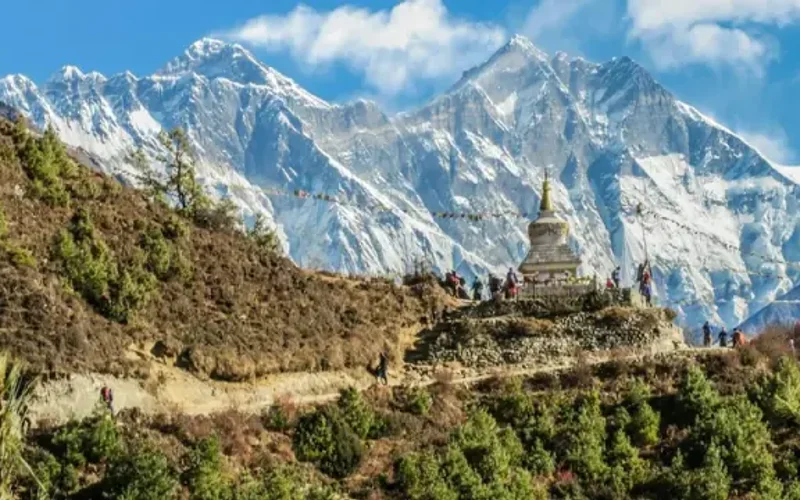


Gasherbrum II
Gasherbrum II, standing at 8,035 meters (26,362 ft), is the thirteenth-highest mountain on Earth and the third-highest peak of the Gasherbrum massif in the Karakoram. Located at the head of the Baltoro Glacier on the Pakistan-China frontier, it features a classic pyramidal profile with challenging ice couloirs. First summited in 1956 by an Austrian team, it was famously climbed in pure alpine style in 1982 by Reinhold Messner, Nazir Sabir, and Sher Khan.
Documented Sources & Archival Citations
- American Alpine Journal: Gasherbrum II, First Winter Ascent(American Alpine Club)
Supporting claim: Official account and comprehensive climb analysis of the first Karakoram winter ascent
Accessed/Documented: 2012 - The North Face: Cold Documentary Archive(Anson Fogel and Cory Richards)
Supporting claim: Original video documentation and audio recordings from the summit push and avalanche escape
Accessed/Documented: 2011