Cold Steel: The Historic First Winter Ascent of Gasherbrum I
On March 9, 2012, Polish Ice Warriors Adam Bielecki and Janusz Gołąb completed the first winter ascent of Gasherbrum I in the Karakoram at -38°C without supplemental oxygen.
Mountain Safety & Conditions Disclaimer: High-altitude climbing, glacial travel, and technical ascents entail severe objective risks including avalanches, serac collapses, rapid weather collapse, and altitude illness. Historical route descriptions and summit claims on Mountanity reflect documented archival sources and must not be used as live operational safety assessments. Local regulations, permits, and physical glacial topography change continuously.
Peer Review: Senior Editorial Board & Historical Reviewers • Editorial Standards
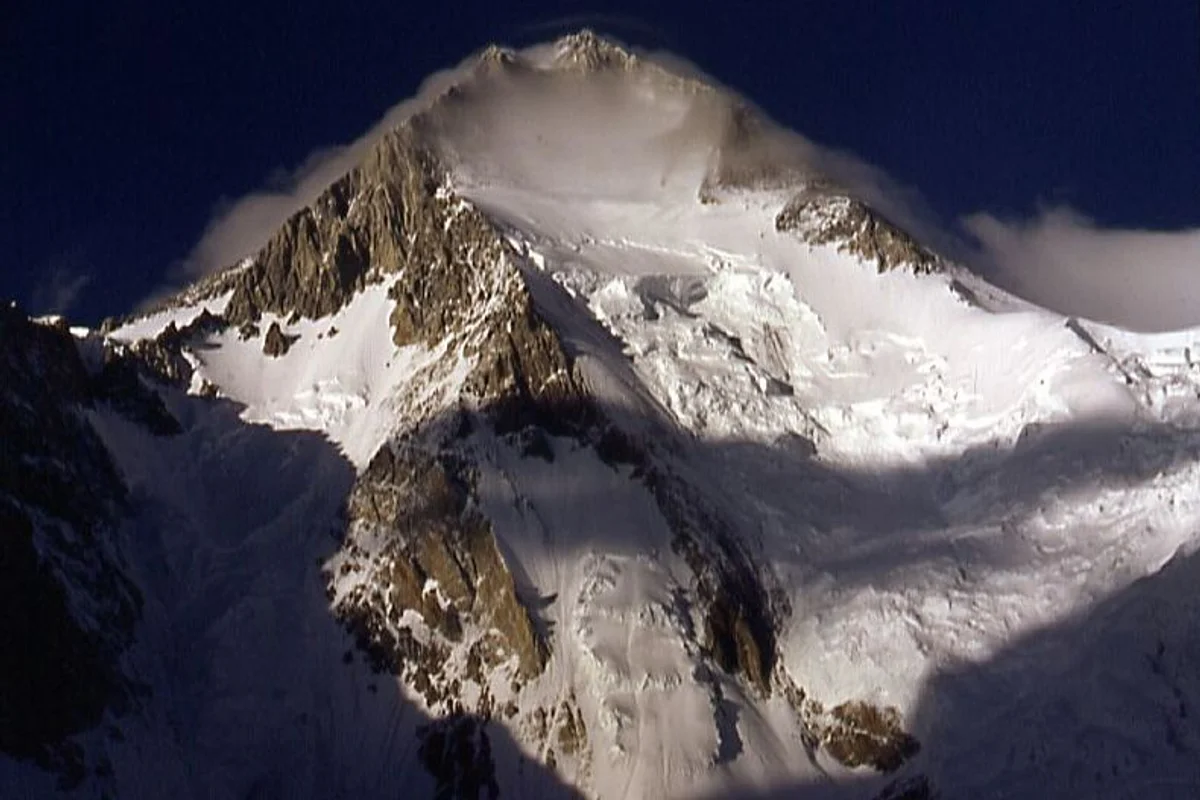
For more than a quarter of a century, Gasherbrum I (8,080m)—known as Hidden Peak for its remote redoubt tucked deep behind the high walls of the upper Baltoro Glacier—stood as an impregnable winter bastion. While international teams had attempted the peak in winter since 1987, none had managed to break through its ferocious defense of blue ice, bone-chilling sub-Arctic jet streams, and temperatures that routinely crashed beneath -45°C.
In January 2012, under the visionary directorship of veteran alpinist Artur Hajzer and the state-backed Polski Himalaizm Zimowy 2010–2015 program, a elite Polish national team arrived at Gasherbrum Base Camp (5,150m). Hajzer assembled a formidable partnership: twenty-eight-year-old high-altitude powerhouse Adam Bielecki, renowned for phenomenal cold tolerance and aerobic speed, and forty-four-year-old Janusz Gołąb, one of Poland’s most technically gifted big-wall masters.
The War of Attrition on the Baltoro
Operating in lightweight alpine style without high-altitude porters or supplemental bottled oxygen, the climbers confronted brutal conditions from day one. Hurricane-force gales repeatedly tore tents from their rock moorings, and the lower Gasherbrum icefall was a chaotic labyrinth of fragile snow bridges and gaping crevasses.
Methodically navigating the Japanese Couloir—a forty-five-degree chute of hard blue ice swept by continuous spindrift—the team established Camp I at 5,900 meters and Camp II at 6,400 meters. By early March, after enduring weeks of sub-zero blizzards inside frosted nylon shelters, their weather forecasts from Innsbruck, Austria, indicated a brief, forty-eight-hour drop in jet stream velocity.
The Dash from the High Camp
On March 8, 2012, Bielecki and Gołąb pushed up to Camp III at 7,100 meters, clinging to a narrow snow ledge under bitter gales. Ambient temperatures hovered near -40°C, and their toes and fingers required constant, rhythmic movement to stave off frostbite. Sleep was impossible as sub-zero spindrift penetrated the tent fabric, covering their down suits in sheets of white ice.
Setting out at midnight on March 9 into pitch darkness, the two men entered the upper couloir. Moving without supplemental oxygen, each breath sounded like a raspy gasp in the freezing atmosphere. Bielecki broke trail through hard-packed wind slab, while Gołąb navigated technical rock bands and ice steps with surgical precision.
Standing on Hidden Peak
As the sun broke over the jagged horizon of Tibet and the Karakoram, ambient temperatures were measured at -38°C, with wind chill plummeting past -55°C. Breaching the final rocky ridge, Adam Bielecki and Janusz Gołąb stepped onto the 8,080-meter summit of Gasherbrum I at 8:30 AM local time on March 9, 2012.
Standing on the summit, they radioed Base Camp leader Artur Hajzer: “We are on top! Gasherbrum I has been climbed in winter!” Their triumph marked the historic first winter ascent of Gasherbrum I and Poland’s eleventh first winter ascent of an eight-thousander, reaffirming the enduring greatness of the Polish Ice Warriors on the world stage.
Key Statistics & Topographic Figures
- Category
- Winter Himalayan Pioneers
Archival Subject
- Reading Time
- 15 min read
Narrative Length
- Key Mountain
- gasherbrum-1
Objective
- Ascent Route
- gasherbrum-1-normal
Topography
- Verification
- Editorially Verified
Archival Standard
Archival Primary Source Quotations
“In the mountains, truth is etched in ice and granite; every step requires unwavering respect for the heights.”
Defined Alpine Terminology & Concepts
- Summit Push
- The final continuous climbing effort from the highest established camp to the mountain apex and back.
- Death Zone Chronicle
- A verified, research-backed historical narrative documenting the human, technical, and environmental realities of an alpine expedition.
Frequently Asked Questions: Cold Steel: The Historic First Winter Ascent of Gasherbrum I
What is the core chronicle and subject of "Cold Steel: The Historic First Winter Ascent of Gasherbrum I"?
On March 9, 2012, Polish Ice Warriors Adam Bielecki and Janusz Gołąb completed the first winter ascent of Gasherbrum I in the Karakoram at -38°C without supplemental oxygen.
Which mountain peaks and routes are featured in "Cold Steel: The Historic First Winter Ascent of Gasherbrum I"?
This narrative documents climbs on gasherbrum-1 along the gasherbrum-1-normal in Pakistan.
Which documented expedition is chronicled in this story?
This historical chronicle captures the events of the 2012-polish-gasherbrum-1-winter, verified through contemporary journals and archival records.
Who authored and researched this archival chronicle?
Authored and researched by Mountainity Historical Research Desk, drawing on primary eyewitness testimonies, alpine club registries, and verified summit logs.
What makes this high-altitude chronicle historically significant?
Categorized under "Winter Himalayan Pioneers", this chronicle preserves critical lessons in alpine leadership, survival, tactical speed, and human endurance in the death zone.
Related Mountains


Gasherbrum I
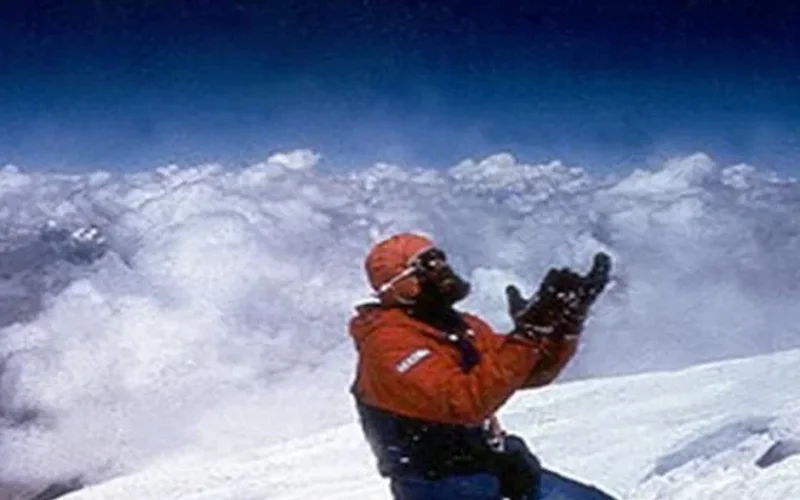
Gasherbrum I, at 8,068 meters (26,470 ft), is the eleventh-highest mountain in the world. Named 'Hidden Peak' by explorer William Martin Conway due to its concealment behind surrounding Karakoram giants, it stands on the border between Pakistan and China. The peak was first climbed in 1958 by an American team led by Nick Clinch, and in 1992 Nazir Sabir summited it with Rajab Shah and Mehrban Shah, marking his fourth Pakistani eight-thousander.
Documented Sources & Archival Citations
- American Alpine Journal: Gasherbrum I First Winter Ascent(American Alpine Club)
Supporting claim: Official climb report and chronological evaluation of the March 9, 2012 winter ascent
Accessed/Documented: 2013 - Spod Zmarzniętych Powiek (From Beneath Frozen Eyelids)(Adam Bielecki and Dominik Szczepański / Agora Publishing)
Supporting claim: Detailed personal account of the sub-zero climb, frostbite management, and summit push
Accessed/Documented: 2017