Two Hours and Twenty-Two Minutes: Ueli Steck's Unbelievable Solo Sprint Up the Eiger North Face
On November 16, 2015, Swiss speed climbing master Ueli Steck soloed the 1,800-meter Heckmair Route on the North Face of the Eiger in an astonishing 2 hours, 22 minutes, and 50 seconds.
Mountain Safety & Conditions Disclaimer: High-altitude climbing, glacial travel, and technical ascents entail severe objective risks including avalanches, serac collapses, rapid weather collapse, and altitude illness. Historical route descriptions and summit claims on Mountanity reflect documented archival sources and must not be used as live operational safety assessments. Local regulations, permits, and physical glacial topography change continuously.
Peer Review: Senior Editorial Board & Historical Reviewers • Editorial Standards
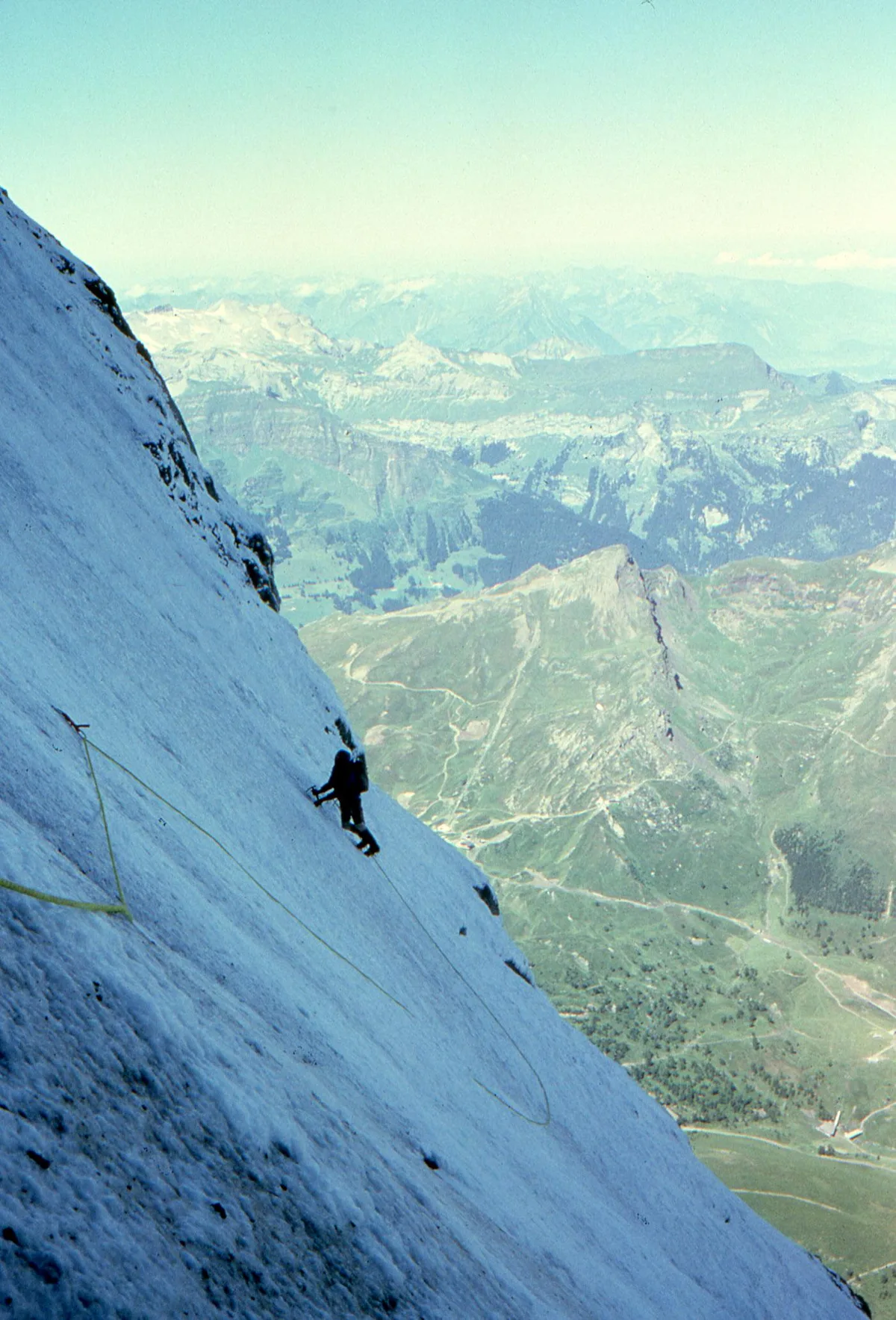
In the summer of 1938, when Anderl Heckmair, Heinrich Harrer, Fritz Kasparek, and Ludwig Vörg made the historic first ascent of the North Face of the Eiger, it required three and a half days of desperate, life-or-death struggle against avalanches, falling boulders, and freezing tempests. For decades afterwards, the 1,800-meter wall of crumbling limestone and brittle black ice was known across Europe as the Mordwand—the “Murder Wall”—a vertical arena where any minor slip or unexpected squall spelled instant death.
Seventy-seven years later, on November 16, 2015, a 39-year-old Swiss carpenter-turned-athlete named Ueli Steck walked to the base of that exact same wall.
He wore running tights under light softshell pants, carried two lightweight ice tools, wore minimal aluminum-steel hybrid crampons, and carried no rope, no harness, and no bivouac gear. He pressed the start button on his Suunto wristwatch, began climbing, and reached the summit in 2 hours, 22 minutes, and 50 seconds.
The Swiss Machine
Steck did not simply climb mountains; he revolutionized how humans interacted with vertical terrain. Nicknamed “The Swiss Machine”, Steck treated alpinism as an elite physiological sport. He trained under Olympic endurance coaches, monitoring heart rate zones, lactate thresholds, and VO2 max. He weighed every piece of equipment down to the single gram, slicing straps off rucksacks and wearing custom-molded climbing boots.
Steck had already held the Eiger speed record several times: in 2007 (3 hours 54 minutes), in 2008 (2 hours 47 minutes), and had watched fellow Swiss climber Dani Arnold shave it down to 2 hours 28 minutes in 2011. Steck wanted the record back, but he wanted it with absolute athletic perfection.
On November 16, conditions on the Eigerwand were pristine. Cold autumn temperatures had frozen loose rock in place, and a continuous ribbon of hard, compacted snow and ice filled the gullies and couloirs.
The Two-Hour Symphony
From the moment his crampons bit into the first snow slope, Steck moved with an effortless, hypnotic rhythm. There was no hesitation, no testing of holds three times, no resting on ice screws. His brain processed the complex geometry of rock, rime, and ice in real time, executing thousands of technical moves without a single error.
He surged past the Difficult Crack and danced across the famous Hinterstoisser Traverse—where Andreas Hinterstoisser and Toni Kurz had died in 1936—in less than sixty seconds. He flew up the First Icefield, scaled the Ice Hose, and ascended the Second Icefield. In under fifty minutes, Steck was standing at the Death Bivouac, where early pioneers huddled for freezing nights.
Moving into the upper face, Steck negotiated the steep mixed rock of The Ramp, crossed the exposed Traverse of the Gods, and entered the White Spider—the steep, funnel-shaped icefield that directs rockfall and avalanches directly into climbing routes. Steck moved through the Spider with mechanical calm, pulled through the fragile, dripping Exit Cracks, and reached the summit snowfield.
An Unsurpassed Benchmark
When Ueli Steck took his final stride onto the 3,967-meter summit ridge and stopped his watch, the display read: 2:22:50.
He had taken twenty-five minutes off the previous record. He had ascended one of the most feared, complex big walls in the world at an average vertical speed of over 750 meters per hour—on terrain graded up to UIAA V and Scottish mixed 5.
Steck’s performance remains the ultimate symbol of the modern fast-and-light alpine revolution. Though Steck tragically perished in 2017 while preparing for an ambitious Everest-Lhotse traverse without oxygen, his 2-hour 22-minute sprint on the Eiger stands forever as an artistic and athletic masterpiece of human physical potential.
Key Statistics & Topographic Figures
- Category
- Modern Alpine Style Pioneers
Archival Subject
- Reading Time
- 10 min read
Narrative Length
- Key Mountain
- eiger
Objective
- Ascent Route
- eiger-north-face-heckmair
Topography
- Verification
- Editorially Verified
Archival Standard
Archival Primary Source Quotations
“In the mountains, truth is etched in ice and granite; every step requires unwavering respect for the heights.”
Defined Alpine Terminology & Concepts
- Summit Push
- The final continuous climbing effort from the highest established camp to the mountain apex and back.
- Death Zone Chronicle
- A verified, research-backed historical narrative documenting the human, technical, and environmental realities of an alpine expedition.
Frequently Asked Questions: Two Hours and Twenty-Two Minutes: Ueli Steck's Unbelievable Solo Sprint Up the Eiger North Face
What is the core chronicle and subject of "Two Hours and Twenty-Two Minutes: Ueli Steck's Unbelievable Solo Sprint Up the Eiger North Face"?
On November 16, 2015, Swiss speed climbing master Ueli Steck soloed the 1,800-meter Heckmair Route on the North Face of the Eiger in an astonishing 2 hours, 22 minutes, and 50 seconds.
Which mountain peaks and routes are featured in "Two Hours and Twenty-Two Minutes: Ueli Steck's Unbelievable Solo Sprint Up the Eiger North Face"?
This narrative documents climbs on eiger along the eiger-north-face-heckmair in Switzerland.
Which documented expedition is chronicled in this story?
This historical chronicle captures the events of the 2015-ueli-steck-eiger-speed-solo, verified through contemporary journals and archival records.
Who authored and researched this archival chronicle?
Authored and researched by Mountainity Historical Research Desk, drawing on primary eyewitness testimonies, alpine club registries, and verified summit logs.
What makes this high-altitude chronicle historically significant?
Categorized under "Modern Alpine Style Pioneers", this chronicle preserves critical lessons in alpine leadership, survival, tactical speed, and human endurance in the death zone.
Related Mountains

Eiger
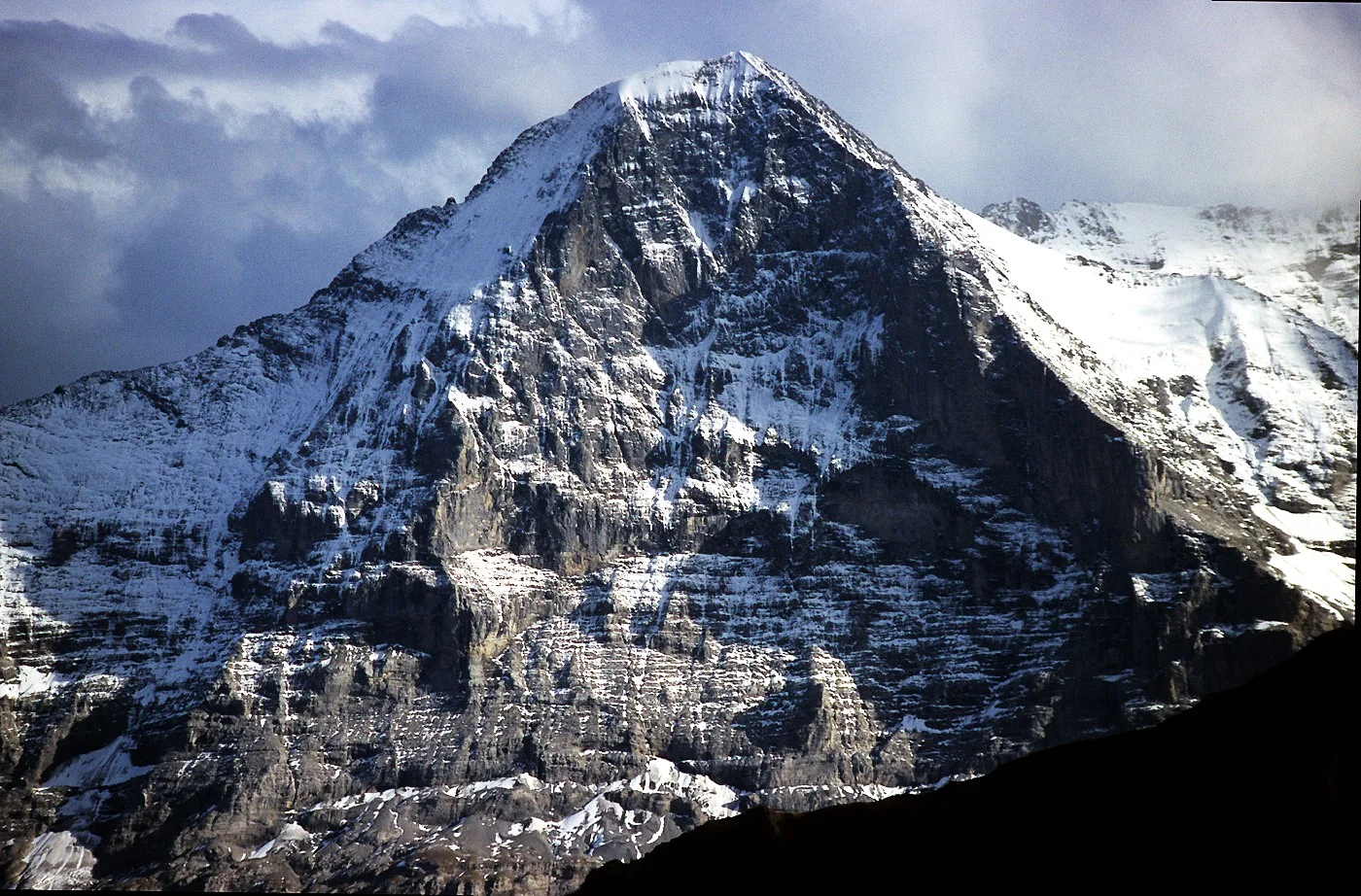
The Eiger, standing at 3,967 meters (13,015 ft) in the Bernese Alps of Switzerland, is globally renowned for its monstrous 1,800-meter (5,900 ft) sheer vertical North Face (the *Eiger-Nordwand*). Feared as the *Mordwand* ('Murder Wall') following catastrophic climbing tragedies in the 1930s, it remained the last great problem of the Alps until conquered in July 1938 by Anderl Heckmair, Ludwig Vörg, Heinrich Harrer, and Fritz Kasparek.
Documented Sources & Archival Citations
- Swiss Alpine Club (CAS): Ueli Steck Eigerwand Speed Record(Die Alpen / Swiss Alpine Club)
Supporting claim: Official verification of the 2 hours, 22 minutes, 50 seconds solo ascent on November 16, 2015
Accessed/Documented: 2015 - National Geographic: Ueli Steck Reclaims Eiger Speed Record(National Geographic)
Supporting claim: In-depth interview and GPS tracking verification of the historic Heckmair Route sprint
Accessed/Documented: 2015-11-18 - Climbing Magazine: Steck Smashes Eiger Record in 2:22(Climbing Magazine)
Supporting claim: Technical breakdown of equipment, gear choices, and conditions during the speed ascent
Accessed/Documented: 2015-11-17