Gasherbrum I: Navigating the Icefall to Hidden Peak
Nirmal Purja climbs Gasherbrum I via the Japanese Couloir, conquering the remote Hidden Peak on the Baltoro Glacier.
Mountain Safety & Conditions Disclaimer: High-altitude climbing, glacial travel, and technical ascents entail severe objective risks including avalanches, serac collapses, rapid weather collapse, and altitude illness. Historical route descriptions and summit claims on Mountanity reflect documented archival sources and must not be used as live operational safety assessments. Local regulations, permits, and physical glacial topography change continuously.
Peer Review: Senior Editorial Board & Historical Reviewers • Editorial Standards
Deep in the Baltoro Glacier
Trekking for days across the moraines of the Baltoro Glacier, Nirmal Purja reached Concordia and the Gasherbrum Base Camp on July 8, 2019. Standing at 8,080 meters, Gasherbrum I—historically known as Hidden Peak—is tucked behind a fortress of surrounding ridges, protected by the chaotic, serac-laden Gasherbrum Icefall.
With summer temperatures creating dangerous wet-snow avalanches in the lower icefall, Purja adopted nighttime operational hours. Moving between midnight and sunrise, Purja, Mingma David Sherpa, and Geljen Sherpa navigated gaping crevasses to establish Camp 2 on the high plateau.
The Japanese Couloir
The defining section of Gasherbrum I is the Japanese Couloir—a sustained 50-degree ice chute ascending directly to the upper ridge. Purja led the climbing through hard blue ice and loose scree, driving ice screws and establishing fixed ropes under severe physical strain.
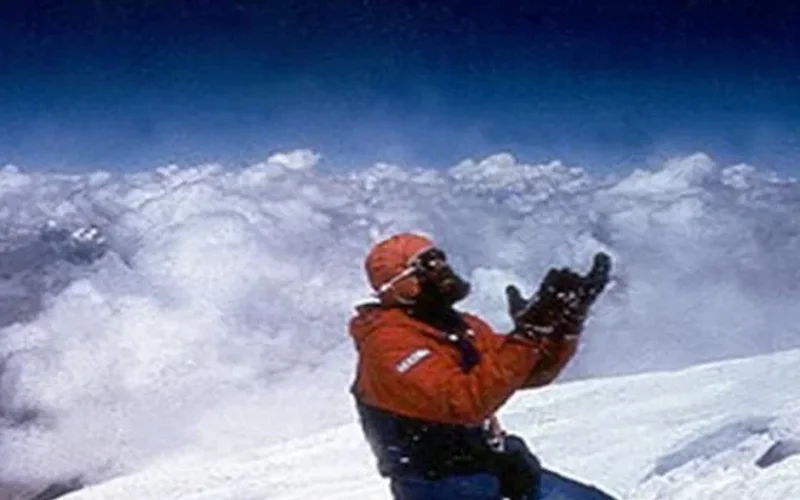
On the morning of July 15, 2019, Purja and his Nepali squad breached the upper cornice and stood on the summit of Hidden Peak. It was his eighth 8,000-meter peak of the year, achieved just twelve days after Nanga Parbat.
Eyes on Gasherbrum II
Descending directly to the high camp, Purja did not celebrate. Across the glaciated col stood the symmetrical pyramid of Gasherbrum II. Project Possible’s tactical playbook demanded an immediate follow-up strike.
Key Statistics & Topographic Figures
- Category
- Karakoram Expeditions
Archival Subject
- Reading Time
- 7 min read
Narrative Length
- Key Mountain
- gasherbrum-1
Objective
- Ascent Route
- gasherbrum-1-normal
Topography
- Verification
- Editorially Verified
Archival Standard
Archival Primary Source Quotations
“In the mountains, truth is etched in ice and granite; every step requires unwavering respect for the heights.”
Defined Alpine Terminology & Concepts
- Summit Push
- The final continuous climbing effort from the highest established camp to the mountain apex and back.
- Death Zone Chronicle
- A verified, research-backed historical narrative documenting the human, technical, and environmental realities of an alpine expedition.
Frequently Asked Questions: Gasherbrum I: Navigating the Icefall to Hidden Peak
What is the core chronicle and subject of "Gasherbrum I: Navigating the Icefall to Hidden Peak"?
Nirmal Purja climbs Gasherbrum I via the Japanese Couloir, conquering the remote Hidden Peak on the Baltoro Glacier.
Which mountain peaks and routes are featured in "Gasherbrum I: Navigating the Icefall to Hidden Peak"?
This narrative documents climbs on gasherbrum-1 along the gasherbrum-1-normal in Pakistan.
Which documented expedition is chronicled in this story?
This historical chronicle captures the events of the 2019-purja-gasherbrum-1, verified through contemporary journals and archival records.
Who authored and researched this archival chronicle?
Authored and researched by Mountanity Research Desk, drawing on primary eyewitness testimonies, alpine club registries, and verified summit logs.
What makes this high-altitude chronicle historically significant?
Categorized under "Karakoram Expeditions", this chronicle preserves critical lessons in alpine leadership, survival, tactical speed, and human endurance in the death zone.
Related Mountains


Gasherbrum I
Gasherbrum I, at 8,068 meters (26,470 ft), is the eleventh-highest mountain in the world. Named 'Hidden Peak' by explorer William Martin Conway due to its concealment behind surrounding Karakoram giants, it stands on the border between Pakistan and China. The peak was first climbed in 1958 by an American team led by Nick Clinch, and in 1992 Nazir Sabir summited it with Rajab Shah and Mehrban Shah, marking his fourth Pakistani eight-thousander.