1895 Mummery Nanga Parbat Expedition
The groundbreaking 1895 expedition led by British climbing pioneer Albert F. Mummery that mounted the world's first-ever attempt to ascend an 8,000-meter peak, reaching 6,100 meters on Nanga Parbat (8,126m) before Mummery and two Gurkhas vanished crossing the Diama Pass.
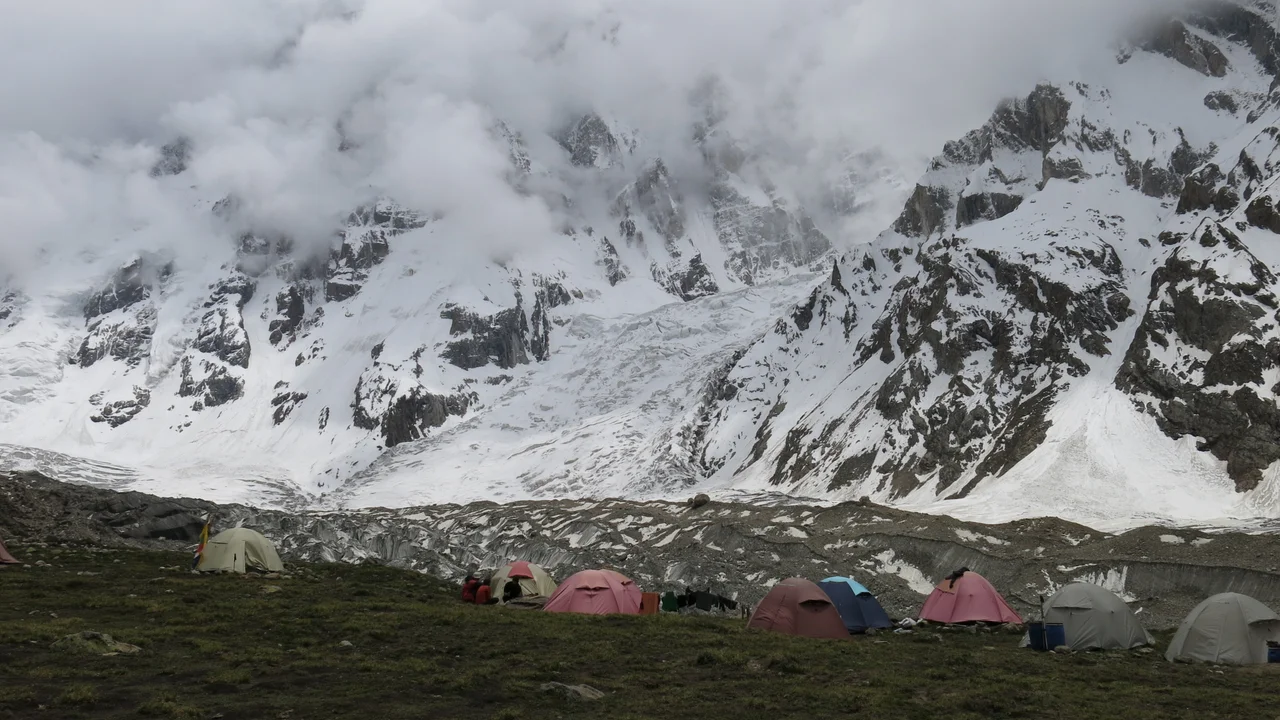
Mountain Safety & Conditions Disclaimer: High-altitude climbing, glacial travel, and technical ascents entail severe objective risks including avalanches, serac collapses, rapid weather collapse, and altitude illness. Historical route descriptions and summit claims on Mountanity reflect documented archival sources and must not be used as live operational safety assessments. Local regulations, permits, and physical glacial topography change continuously.
Peer Review: Senior Editorial Board & Historical Reviewers • Editorial Standards
Official Expedition Narrative & Archival Record
In the summer of 1895, visionary British mountaineer Albert Frederick Mummery launched the most audacious enterprise in early mountaineering history: an attempt to climb Nanga Parbat (8,126m) in northern Kashmir, marking humanity's first expedition directed against an 8,000-meter mountain. Accompanied by chemist-climber J. Norman Collie, Geoffrey Hastings, and two Gurkha soldiers, Ragobir Thapa and Goman Singh (facilitated by Major C.G. Bruce), Mummery fundamentally rejected the heavy military siege tactics of his era. Instead, he approached the world's ninth-highest mountain in pure, lightweight alpine style, carrying minimal rations, light canvas tents, and standard hemp climbing ropes. Establishing base camp in the Diamir Valley, Mummery pioneered a direct line up a prominent rock rib on the colossal 4,000-meter Diamir Face—a line later known as Mummery's Rib. Climbing with Ragobir Thapa, Mummery surmounted technical rock and ice pitches to reach approximately 6,100 meters (20,000 feet), setting an astonishing world altitude record on an eight-thousander. However, severe altitude sickness suffered by his companions and devastating wet-snow avalanches sweeping down the couloirs forced a tactical retreat. Unwilling to abandon the mountain, Mummery resolved to scout the northern Rakhiot Flank by crossing the unmapped, high-altitude Diama Pass (approx. 6,200m). On August 24, 1895, Mummery, Ragobir, and Goman Singh departed the Diamir camp, planning to rendezvous with Collie and Hastings on the Rakhiot side. They never arrived. Mummery and his companions were almost certainly engulfed and buried by a massive hanging-glacier ice avalanche while traversing the upper Diama Glacier. Despite search efforts by Collie and Hastings, no trace was ever recovered. Mummery's bold foray opened the high-altitude Himalayan frontier and established the modern philosophy of alpine-style mountaineering.
Documented Team Composition
- Albert F. Mummery (Expedition Leader, Disappeared)
- J. Norman Collie (Mountaineer & Photographer)
- Geoffrey Hastings (Mountaineer)
- Major Charles Granville Bruce (Liaison & Organizer)
- Ragobir Thapa (Gurkha Rifleman & Climber, Disappeared)
- Goman Singh (Gurkha Rifleman & Climber, Disappeared)
Key Statistics & Topographic Figures
- Expedition Year
- 1895 (June–August)
First 8,000m Assault
- High Point Reached
- ~6,100 meters (20,000 ft)
Diamir Face
- Historical Milestone
- Birth of Himalayan Alpine Style
Pre-Siege Era
- Peak Elevation
- 8,126 meters (26,660 ft)
Nanga Parbat
Archival Primary Source Quotations
“The essence of the sport lies in combating difficulties, not in reaching summits by easy stairs.”
Defined Alpine Terminology & Concepts
- Mummery’s Rib
- The prominent central rock buttress dividing the couloirs of Nanga Parbat’s Diamir Face, climbed by Albert Mummery to 6,100m in 1895.
- Guideless Climbing
- The revolutionary philosophy promoted by Mummery in which amateur climbers took full charge of leading, route-finding, and safety without professional mountain guides.
Frequently Asked Questions: 1895 Mummery Nanga Parbat Expedition
What was the first 8,000-meter peak ever attempted?
Nanga Parbat (8,126m) was the first 8,000-meter mountain ever attempted by human climbers, when British mountaineer Albert F. Mummery mounted an expedition in the summer of 1895.
Who led the first attempt to climb Nanga Parbat in 1895?
Albert Frederick Mummery, the visionary British rock climber and pioneer of guideless climbing, led the 1895 expedition accompanied by J. Norman Collie, Geoffrey Hastings, and two Gurkha soldiers.
How high did Albert F. Mummery climb on Nanga Parbat in 1895?
Mummery and Gurkha rifleman Ragobir Thapa reached an altitude of approximately 6,100 meters (20,000 feet) on the colossal 4,000-meter Diamir Face via the central rock rib now known as Mummery’s Rib.
How did Albert F. Mummery die on Nanga Parbat?
On August 24, 1895, Mummery and two Gurkha companions (Ragobir Thapa and Goman Singh) disappeared while attempting to cross the unmapped 6,200m Diama Pass toward the Rakhiot side, presumed killed by a massive ice avalanche.
Why was Albert Mummery’s climbing style revolutionary?
Mummery rejected heavy military siege logistics, excessive porters, and fixed ropes, pioneering pure alpine style: moving fast with lightweight gear, relying on personal technical skill, and taking total responsibility for route-finding.
What route did Mummery attempt on Nanga Parbat?
Mummery attempted the colossal Diamir Face, ascending a prominent rock buttress (Mummery’s Rib) flanked by massive avalanche couloirs, an astonishingly technical line for 1895.
Who accompanied Albert Mummery on Nanga Parbat in 1895?
Mummery climbed with scientist J. Norman Collie, climber Geoffrey Hastings, organizer Major Charles Granville Bruce, and Gurkha soldiers Ragobir Thapa and Goman Singh.
Was Albert Mummery’s body ever found on Nanga Parbat?
No. Extensive searches by J. Norman Collie and Geoffrey Hastings on the Diama Glacier revealed only massive fresh avalanche debris. No trace of Mummery or the two Gurkhas was ever recovered.
Ascent Route & Topography
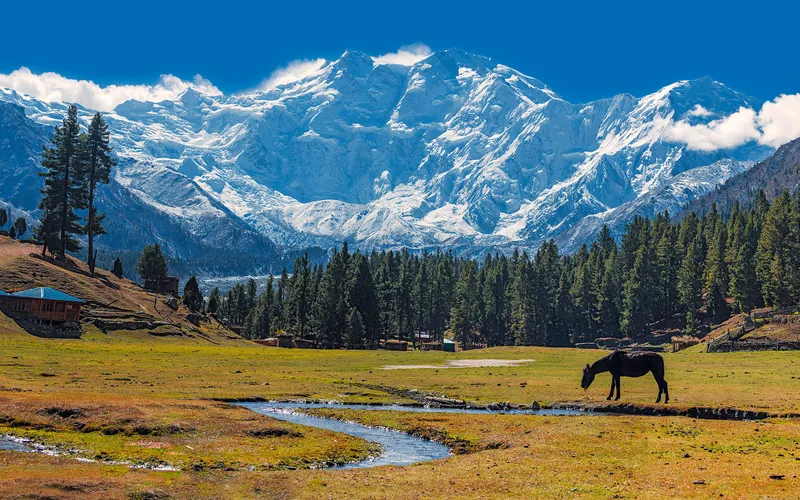
Rakhiot Flank & East Ridge (Original 1953 Route)
The historic original route on Nanga Parbat (8,126m), ascending from the Rakhiot Glacier over the heavily crevassed Rakhiot Icefall to reach the colossal Silbersattel (Silver Saddle) at 7,450 meters. From the saddle, the route traverses an immense high snow plateau for over three kilometers before negotiating the Bazhin Gap and climbing steep mixed rock ribs up the summit pyramid. Immortalized by Hermann Buhl's epic 41-hour solo summit without supplemental oxygen in July 1953.
Target Objective Peak


Nanga Parbat
Nanga Parbat, at 8,126 meters (26,660 ft), is the ninth-highest mountain on Earth and the western anchor of the Himalayas in Pakistan. It boasts the Rupal Face, the highest vertical precipice in the world at 4,600 meters from valley floor to summit. Known for profound climbing history, highlighted by Hermann Buhl's legendary solo summit without supplemental oxygen in 1953.
Featured Expedition Climber
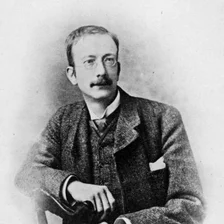
Albert F. Mummery
Albert Frederick Mummery was born on September 10, 1855, in Dover, England. An accomplished political economist and tanner by trade, Mummery completely revolutionized European mountaineering in the late 19th century. Rejecting the heavy, guide-dependent conventions of the Victorian era, Mummery insisted on 'guideless climbing'—relying entirely on his own route-finding, technical gymnastics, and minimal gear. Between 1879 and 1894, Mummery established some of the most daring rock climbs in the Alps. In 1881, alongside Swiss guide Alexander Burgener, he conquered the sheer granite needle of the Aiguille du Grépon in Chamonix via the legendary jam crack now bearing his name ('Mummery's Crack', UIAA Grade V), an ascent widely considered the birth of modern extreme rock climbing. In 1888, Mummery traveled to the Central Caucasus, achieving the historic first ascent of Dych-Tau (5,205m) via a severe mixed rock and ice ridge. In 1895, Mummery turned his vision toward the Karakoram and Himalayas, organizing the first expedition in human history aimed at summiting an 8,000-meter mountain: Nanga Parbat (8,126m) in northern Kashmir. Accompanied by J. Norman Collie, Geoffrey Hastings, and two Gurkha soldiers, Ragobir Thapa and Goman Singh, Mummery rejected military siege tactics, attempting the mountain in ultra-light alpine style. Operating on the colossal Diamir Face, Mummery pushed up a steep rock and ice rib to an altitude of approximately 6,100 meters—an astonishing altitude record on a virgin eight-thousander in 1895. Recognizing that snow conditions on the upper Diamir were increasingly dangerous, Mummery decided to cross a high, unmapped col (the Diama Pass) to inspect the Rakhiot Flank on the mountain's northern side. On August 24, 1895, Mummery and his two Gurkha companions set out across the upper glacier and were never seen again, presumed swept away by a catastrophic ice avalanche. His classic book *My Climbs in the Alps and Caucasus* (1895) remains the holy scripture of pure, ethical alpinism.
Associated Historical Chronicles & Stories
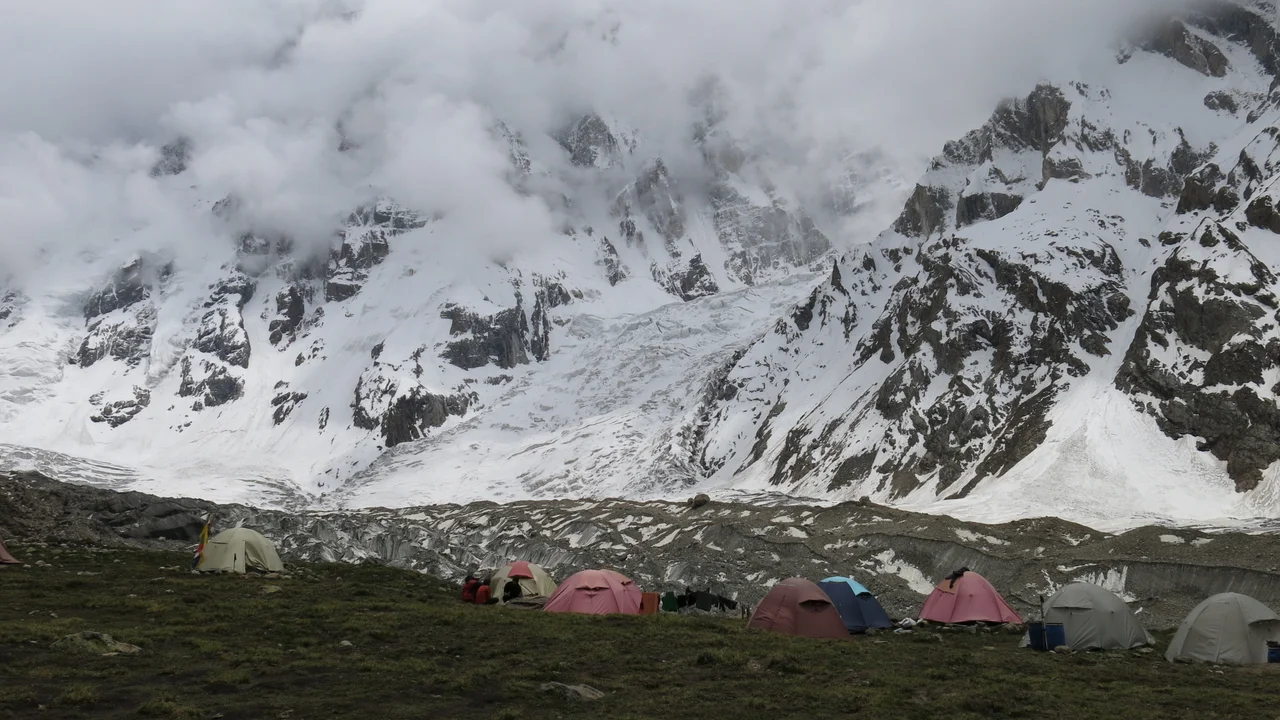
Nanga Parbat 1895: Albert Mummery and the First Assault on an Eight-Thousander
In the summer of 1895, visionary British climber Albert F. Mummery mounted the world's first-ever expedition against an 8,000-meter peak on Nanga Parbat (8,126m), pioneering modern alpine style before vanishing forever into the mountain's mists.
Documented Sources & Archival Citations
- From the Himalaya to the Skye(J. Norman Collie / David Douglas)
Supporting claim: Eyewitness expedition diary, map of Diamir Face camps, and the search for Mummery on the Diama Pass
Accessed/Documented: 1902 - The Alpine Journal: In Memoriam - Albert Frederick Mummery(The Alpine Club UK)
Supporting claim: Official obituary, analysis of the 6,100m high point, and technical assessment of the 1895 disaster
Accessed/Documented: 1896