1903 Enos Mills Longs Peak Winter Night Solo Ascent
In February 1903, pioneer naturalist and guide Enos Mills completed an extraordinary solo winter night ascent of Longs Peak, navigating through the frozen Keyhole in darkness.
Mountain Safety & Conditions Disclaimer: High-altitude climbing, glacial travel, and technical ascents entail severe objective risks including avalanches, serac collapses, rapid weather collapse, and altitude illness. Historical route descriptions and summit claims on Mountanity reflect documented archival sources and must not be used as live operational safety assessments. Local regulations, permits, and physical glacial topography change continuously.
Peer Review: Senior Editorial Board & Historical Reviewers • Editorial Standards
Official Expedition Narrative & Archival Record
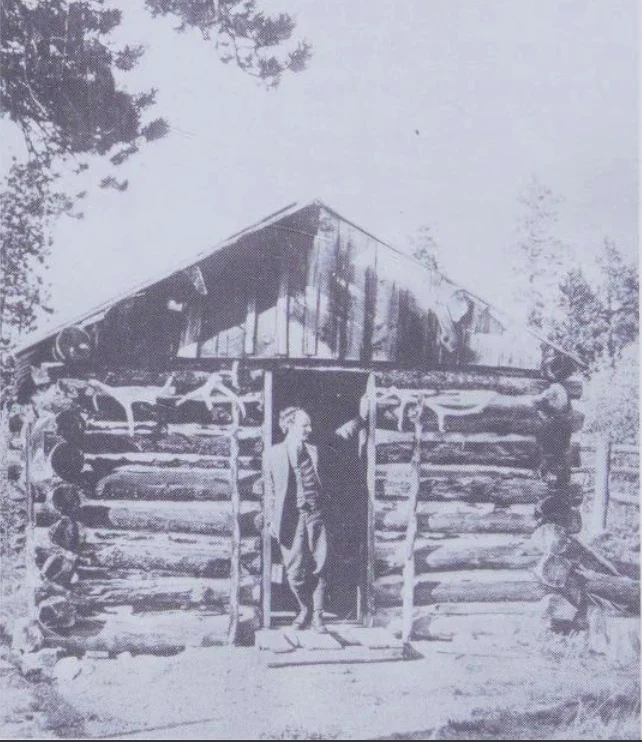
In mid-February 1903, amid bitter midwinter conditions in the Colorado Rockies, pioneer guide and naturalist Enos Mills set out from his rustic cabin in the Tahosa Valley on an audacious solo campaign: to climb the fourteen-thousand-foot summit of Longs Peak alone in darkness and deep winter cold. Leaving his hearth at ten in the evening equipped with snowshoes, an iron-pointed staff, and candles in tin lanterns, Mills snowshoed through the silent timberline forest of lodgepole pine into the wind-scoured alpine tundra of the Boulderfield. Navigating entirely by starlight and intimate topographical memory, he reached the imposing natural notch of the Keyhole at nearly 4,000 metres around three in the morning. Stepping through the Keyhole onto the western precipice, he was met by gale-force arctic winds hurtling over the Continental Divide. Edging along the treacherous, ice-glazed shelves of the Ledges with thousands of feet of darkness plunging into Glacier Gorge below, Mills climbed cautiously through the frozen couloir of the Trough, where deep snowdrifts alternated with verglas. Creeping across the dizzying traverse of the Narrows, he ascended the steep granite ramps of the Homestretch using friction and handholds chipped in hard windpack. Mills stepped onto the flat, four-acre tabletop summit of Longs Peak (4,346 m) just before sunrise. Enduring temperatures estimated at minus twenty degrees Fahrenheit, he witnessed the first rays of red sunlight break across the vast frozen expanse of the Great Plains, later calling it the most profound spiritual experience of his life before descending safely to the valley.
Documented Team Composition
- Enos Mills (Solo Climber, United States)
Key Statistics & Topographic Figures
- Ascent Date
- Mid-February 1903 (Summit at dawn)
- Mountain Elevation
- 4,346 metres (14,259 feet)
- Climber
- Enos Mills (Solo)
- Temperature
- -20°F (Windchill below -50°F)
- Route
- Keyhole Route in winter darkness
Archival Primary Source Quotations
“The sunrise from that arctic summit was a vision of creation; the frozen plains awoke in waves of crimson fire.”
Defined Alpine Terminology & Concepts
- Verglas
- A thin, transparent coating of extremely slick ice formed on rock when freezing rain, mist, or melting snow freezes rapidly.
- Wind Slab
- A dense, hard-packed layer of snow deposited by strong winds on mountain leeward slopes that can fracture into avalanches.
Frequently Asked Questions: 1903 Enos Mills Longs Peak Winter Night Solo Ascent
What was Enos Mills' 1903 solo winter night ascent of Longs Peak?
In mid-February 1903, pioneer Colorado naturalist Enos Mills completed an extraordinary solo climb of Longs Peak (4,346 m) in total winter darkness, summiting at dawn.
Why did Enos Mills attempt Longs Peak in the middle of a winter night?
Mills wanted to witness the rebirth of the sun over the Great Plains from the highest point of northern Colorado in extreme arctic solitude.
What gear did Enos Mills carry on his 1903 winter night climb?
Mills carried only ash-wood snowshoes, a spiked iron-tipped staff, and candles in tin lanterns, climbing without crampons or safety ropes.
What route did Enos Mills follow during his 1903 solo ascent?
He followed the Keyhole Route, navigating the frozen Boulderfield, crossing the wind-whipped Keyhole, edging along the Ledges, and scaling the icy Homestretch.
What temperatures did Enos Mills endure on the summit of Longs Peak in 1903?
Summit temperatures dropped to minus twenty degrees Fahrenheit, with windchills approaching minus fifty under gale-force arctic winds.
How did Enos Mills navigate through the Boulderfield in the dark?
He navigated purely by starlight, intimate topographical memory from dozens of prior climbs, and feeling rock textures with his staff.
What did Enos Mills see from the summit at dawn?
Mills witnessed golden sunrise wash across hundreds of miles of frozen Great Plains and illuminate the snowy peaks of the Continental Divide.
How did this climb influence the creation of Rocky Mountain National Park?
Mills' vivid writings about this climb captured national attention, inspiring public passion for protecting the wilderness of the Front Range.
Target Objective Peak
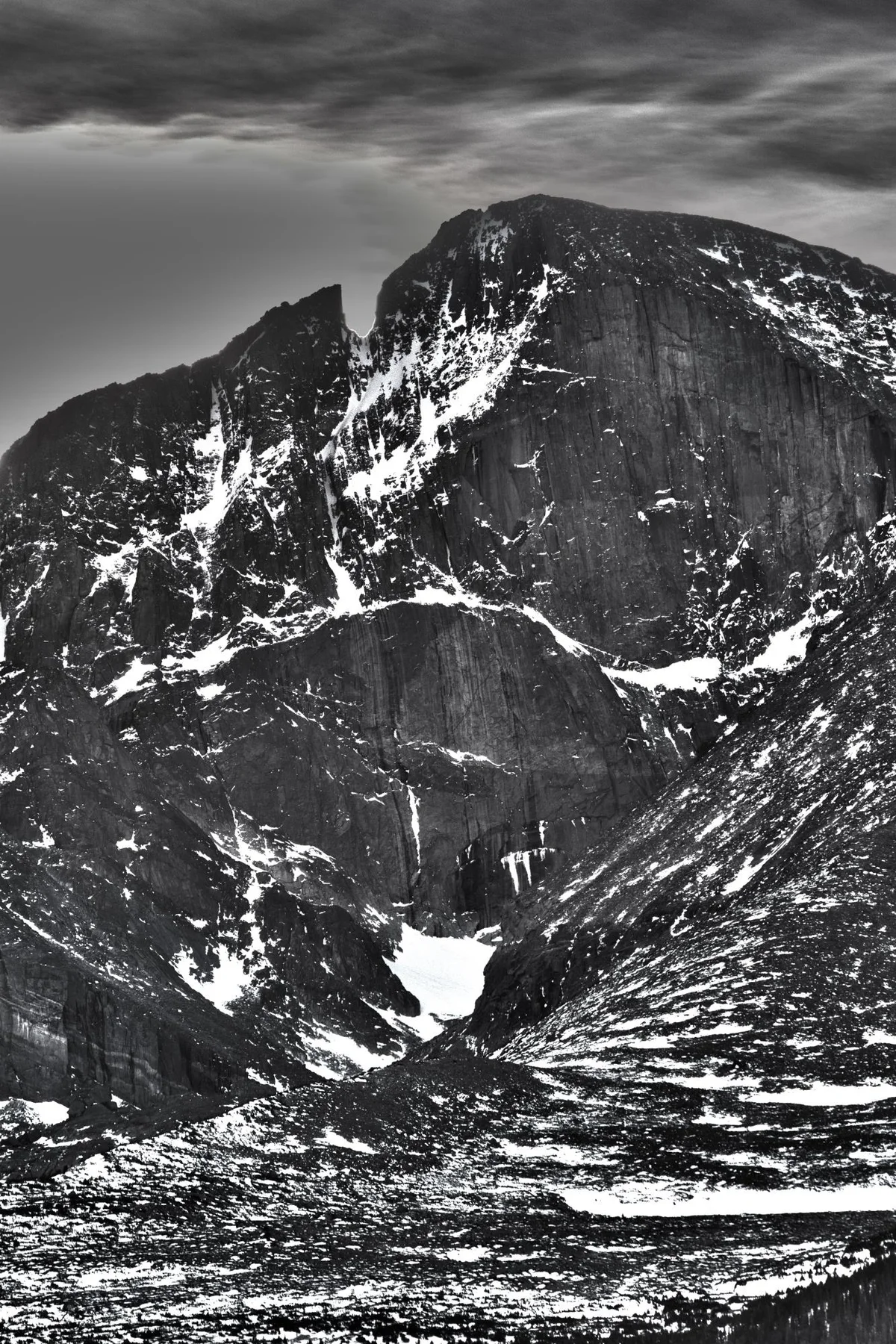

Longs Peak
Longs Peak is the undisputed monarch of northern Colorado's Front Range, rising to an elevation of 4,346 metres as the only fourteen-thousand-foot mountain in Rocky Mountain National Park. Celebrated worldwide for its sheer 1,000-foot vertical granite East Face known as 'The Diamond', Longs Peak stands as an enduring monument to early Rocky Mountain exploration, alpine endurance, and the birth of American wilderness conservation.
Featured Expedition Climber
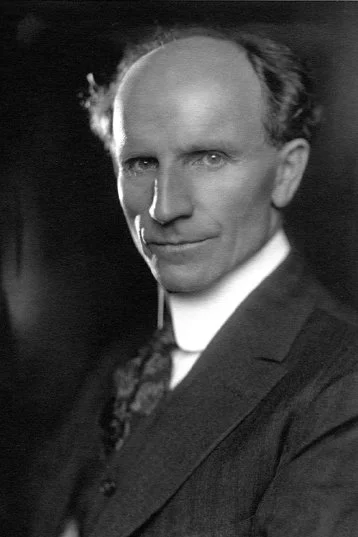
Enos Mills
Born on April 22, 1870, in Kansas, Enos Mills suffered from chronic frail health as a child, prompting his physician to recommend high-altitude mountain air. At the age of fourteen in 1884, Mills traveled entirely alone to the Colorado Rockies, homesteading in the high Tahosa Valley in the shadow of Longs Peak and building a hand-hewn log cabin by the age of fifteen. In 1889, during a visit to San Francisco, Mills had a chance encounter with iconic conservationist John Muir on a Pacific beach. Muir immediately recognized the young mountaineer's observational gifts and urged him to dedicate his life to learning, defending, and interpreting the high wilderness. Returning to Estes Park, Mills established the Longs Peak Inn and became the foremost mountain guide on Longs Peak, summiting the 4,346-metre peak more than forty times in all seasons. He pioneered the practice of nature-guiding, eschewing dry scientific lectures in favor of awakening wonder and curiosity in his clients. In February 1903, Mills completed an audacious solo winter night ascent of Longs Peak, navigating through the treacherous Keyhole, the frozen Ledges, and the windswept Homestretch in darkness to witness the sunrise over the Great Plains from the arctic summit. Appointed Colorado State Snow Observer in 1907, Mills spent three winters traversing thousands of miles alone on ten-foot wooden skis across the Continental Divide to measure high-altitude snowpack. For six years, Mills campaigned across the United States, lecturing in hundreds of cities and writing passionate articles advocating for permanent preservation of the Front Range. His efforts bore fruit on January 26, 1915, when President Woodrow Wilson signed legislation creating Rocky Mountain National Park. Mills passed away at his home near Longs Peak on September 21, 1922, at the age of fifty-two.
Associated Historical Chronicles & Stories
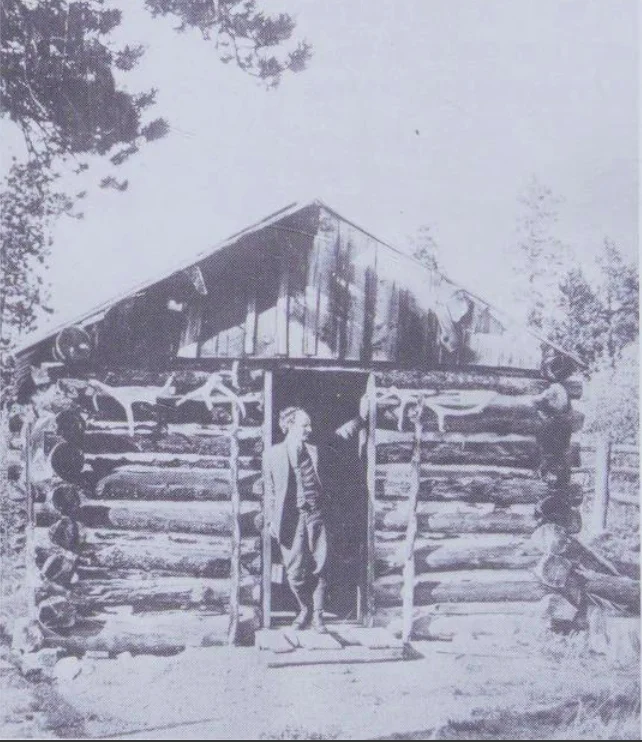
Starlight on the Keyhole: Enos Mills' 1903 Winter Night Ascent of Longs Peak
In February 1903, pioneer Colorado naturalist Enos Mills embarked on a solo midwinter night ascent of Longs Peak. Navigating through the frozen Keyhole, the icy Ledges, and the gale-swept Homestretch in total darkness, he greeted sunrise from the arctic summit.
Documented Sources & Archival Citations
- The Story of Longs Peak(Enos Mills / The Rocky Mountain Wonderland)
Supporting claim: Primary first-hand account of Mills' winter solo night ascents on Longs Peak
Accessed/Documented: 2026 - Enos Mills of the Rockies(Hildegarde Hawthorne and Esther B. Mills / Houghton Mifflin)
Supporting claim: Detailed biographical record of Mills' mountaineering exploits and winter climbs
Accessed/Documented: 2026