1954 Austrian Cho Oyu Expedition
Organized on a modest private budget by Austrian geologist Herbert Tichy, this landmark small-team expedition made the first ascent of Cho Oyu (8,188m) on October 19, 1954, without supplemental oxygen, pioneering lightweight post-monsoon Himalayan climbing.
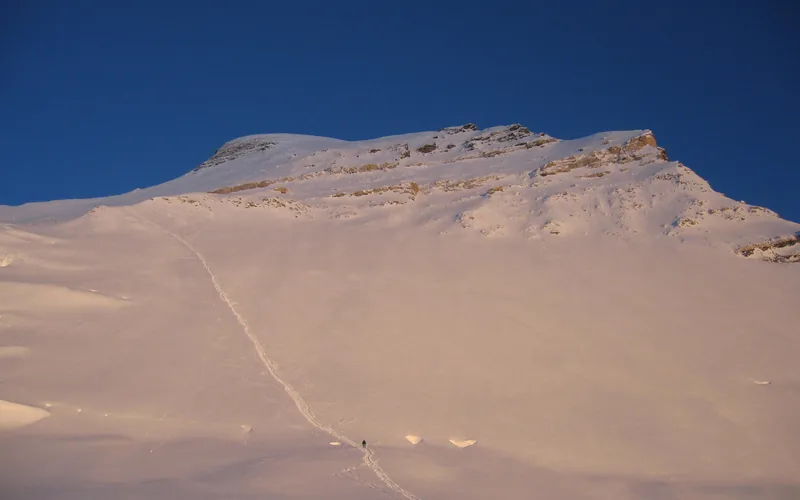
Mountain Safety & Conditions Disclaimer: High-altitude climbing, glacial travel, and technical ascents entail severe objective risks including avalanches, serac collapses, rapid weather collapse, and altitude illness. Historical route descriptions and summit claims on Mountanity reflect documented archival sources and must not be used as live operational safety assessments. Local regulations, permits, and physical glacial topography change continuously.
Peer Review: Senior Editorial Board & Historical Reviewers • Editorial Standards
Official Expedition Narrative & Archival Record
In late August 1954, Austrian writer and geologist Dr. Herbert Tichy departed Kathmandu with an unpretentious, low-budget climbing party consisting of Tyrolean master climber Sepp Jöchler, geographer Helmut Heuberger, and Sherpa Sirdar Pasang Dawa Lama. In stark contrast to the militaristic, multi-ton national expeditions attacking Everest and K2, Tichy embraced a philosophy of minimal equipment, high mobility, and absolute partnership with his Sherpa companions. Crossing the glaciated Nangpa La trade pass into Tibet, the team established Base Camp on the Gyabrag Glacier at 5,700 meters. Climbing without bottled oxygen, Jöchler and Pasang Dawa Lama established Camp I at 6,400 meters and navigated the steep, shattered Ice Cliff at 6,700 meters to set Camp III. However, on October 4, an unrelenting hurricane struck Camp IV at 7,000 meters. While fighting to keep their tent from blowing into the abyss, Tichy suffered severe frostbite in both hands. With provisions depleted, the climb appeared finished. Yet Pasang Dawa Lama refused defeat; he undertook a superhuman solo sprint across the Nangpa La to Namche Bazaar and returned with food, fuel, and fresh Sherpa porters in just three days. Reinvigorated, the three climbers launched their second summit bid on October 18, pitching a high assault tent at 7,500 meters beneath the Yellow Band rock steps. On the morning of October 19, 1954, beneath deep azure skies and biting autumn winds, Tichy (with heavily bandaged hands), Jöchler, and Pasang climbed through the Yellow Band and emerged onto the sweeping summit plateau. At 3:00 PM, all three men stood on the 8,188-meter summit of Cho Oyu. Their triumph was monumental: it was the first time an eight-thousander was climbed in autumn, the first achieved by a small private team, and the fourth 8,000-meter peak in human history to be conquered.
Documented Team Composition
- Dr. Herbert Tichy (Expedition Leader & Summit Climber)
- Sepp Jöchler (Lead Climber & Summit Climber)
- Pasang Dawa Lama (Sirdar & Summit Climber)
- Dr. Helmut Heuberger (Geographer & Cartographer)
Key Statistics & Topographic Figures
- First Ascent Date
- October 19, 1954
First Autumn 8,000m Ascent
- Summit Climbers
- Herbert Tichy, Sepp Jöchler, Pasang Dawa Lama
3-Man Alpine Team
- Peak Elevation
- 8,188 meters (26,864 ft)
World 6th Highest
- Oxygen Apparatus
- None (Zero Supplemental O2)
Alpine Purity
Archival Primary Source Quotations
“We reached the summit not because we were strong or conquerors, but because the mountain, in its infinite mercy, allowed us to pass.”
Defined Alpine Terminology & Concepts
- Nangpa La
- A glaciated 5,716-meter mountain pass linking the Khumbu region of Nepal with the Tibetan plateau, used by the 1954 team to approach Cho Oyu.
- Gyabrag Glacier
- The glaciated valley north of Nangpa La where the 1954 expedition established Base Camp beneath Cho Oyu’s northwest flank.
Frequently Asked Questions: 1954 Austrian Cho Oyu Expedition
Who made the first ascent of Cho Oyu in 1954?
Austrian geologist Dr. Herbert Tichy, Tyrolean climber Sepp Jöchler, and Nepalese Sherpa Sirdar Pasang Dawa Lama made the historic first ascent of Cho Oyu (8,188m) on October 19, 1954.
Did the 1954 Cho Oyu expedition use supplemental bottled oxygen?
No, the 1954 Austrian expedition climbed Cho Oyu completely without supplemental bottled oxygen, relying purely on acclimatization and natural human endurance.
Why was the 1954 Cho Oyu expedition considered a revolution in mountaineering?
It proved that 8,000-meter peaks could be conquered by small, three-man teams operating on minimal budgets without siege tactics, and marked the first successful post-monsoon autumn summit of an eight-thousander.
How did Pasang Dawa Lama save the 1954 Cho Oyu expedition?
When a hurricane battered Camp IV, severely frostbiting Tichy’s hands and destroying rations, Pasang completed an extraordinary 3-day round-trip sprint over the Nangpa La to Namche Bazaar and back with fresh food and porters.
What route did the 1954 Austrian team forge on Cho Oyu?
They pioneered the Northwest Face and Ridge route from the Gyabrag Glacier in Tibet, which remains the standard normal route on the mountain today.
Ascent Route & Topography
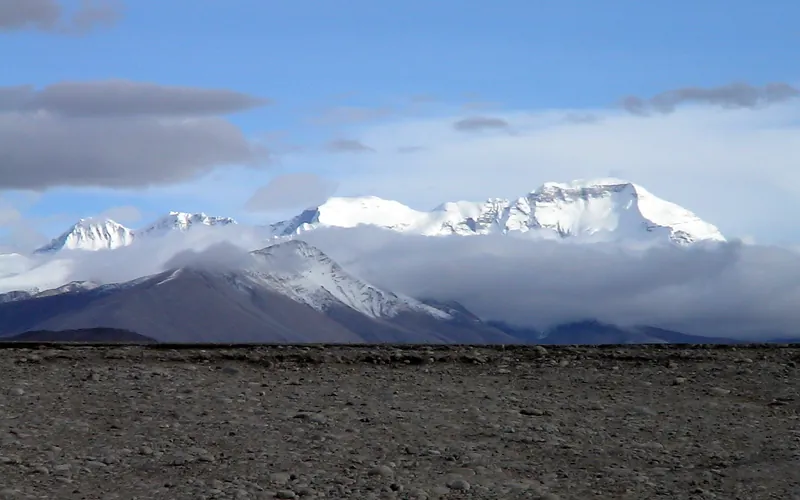
Cho Oyu Northwest Face & Ridge (Normal Route)
The Northwest Ridge is the standard and most climbed route on Cho Oyu, approached from the Tibetan plateau via the Gyabrag Glacier. First climbed in 1954 by an Austrian expedition, the route features relatively moderate snow slopes of 30 to 40 degrees, punctuated by a single prominent technical crux known as the Ice Cliff at 6,700m. Above Camp 3, climbers cross the Yellow Band and emerge onto a vast, gently rising summit plateau.
Target Objective Peak
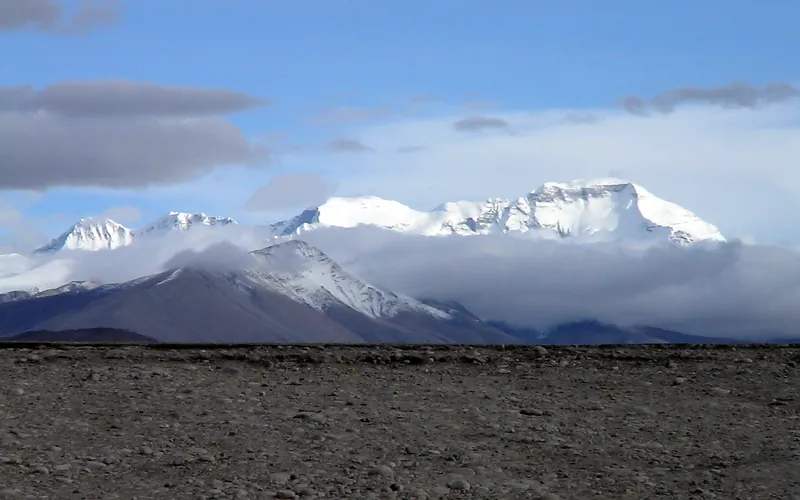


Cho Oyu
Cho Oyu, at 8,188 meters (26,864 ft), is the sixth-highest mountain in the world, situated 20 km west of Mount Everest. Meaning 'Turquoise Goddess' in Tibetan, it stands on the glaciated Nangpa La trade route between Nepal and Tibet. Its moderate northwest slopes make it the most accessible 8,000-meter peak.
Featured Expedition Climbers
Herbert Tichy
Herbert Tichy was born on June 1, 1912, in Vienna, Austria. From his youth, Tichy was animated by an insatiable wanderlust and curiosity for remote cultures and unexplored mountain ranges. He studied geology at the University of Vienna, earning his doctorate in 1937 with a groundbreaking dissertation on Himalayan geology. Even before completing his formal studies, Tichy gained international acclaim in 1933 by undertaking an audacious overland journey from Vienna to Bombay on a Puch motorcycle alongside companion Max Reisch. In 1935, Tichy returned to the Himalayas. Disguised as a Hindu pilgrim, he walked hundreds of miles across the forbidden borderlands of western Tibet to complete the sacred kora (circumambulation) of Mount Kailash. During that journey, he launched an alpine-style attempt on Gurla Mandhata (7,728m), reaching 7,200 meters without high-altitude porters or oxygen equipment. His deep affection and respect for the mountain peoples of Asia defined his philosophy: he rejected colonial, military-style siege expeditions in favor of small, culturally respectful partnerships with local Sherpas. In the autumn of 1954, while massive national teams were spending fortunes on Mount Everest and K2, Tichy organized a minimalist expedition to Cho Oyu (8,188m), the world's sixth-highest peak. Operating on a shoestring budget of just 200,000 Austrian schillings, his entire climbing party consisted of only three men: himself, elite Tyrolean alpinist Sepp Jöchler, and the legendary Sherpa Sirdar Pasang Dawa Lama. They carried no supplemental bottled oxygen, relying purely on acclimatization and natural human endurance. During an initial summit push, a violent hurricane struck Camp IV at 7,000 meters. Tichy's hands were severely frostbitten while trying to secure their flapping tent in sub-zero blizzard winds. Refusing to abandon the climb, Tichy descended to recover while Pasang Dawa Lama rushed back down to Namche Bazaar and returned with fresh provisions in record time. On October 19, 1954, with heavily bandaged hands, Tichy stepped onto the broad, windswept 8,188-meter summit plateau of Cho Oyu alongside Jöchler and Pasang Dawa Lama. It marked the first time an 8,000-meter peak was climbed during the autumn season and without oxygen, setting the blueprint for modern alpine-style high-altitude climbing. Tichy chronicled the adventure in his acclaimed classic Cho Oyu: Gnade der Götter (Cho Oyu: By Favor of the Gods), translated into dozens of languages. He dedicated the rest of his life to travel literature, geographic exploration, and cultural research across Asia and Africa. He was awarded the Grand Golden Decoration of Honour for Services to the Republic of Austria. Herbert Tichy passed away in Vienna on September 26, 1987, revered as a visionary mountaineer who humanized Himalayan exploration.
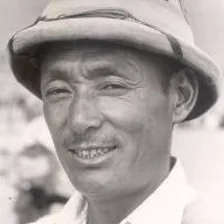
Pasang Dawa Lama
Pasang Dawa Lama was born in 1912 in the high Khumbu region of eastern Nepal. Like many young Sherpas of his generation, he relocated to Darjeeling, India, the historic staging ground for British Himalayan exploration, where he was initiated as a Buddhist lama and began working as a high-altitude porter and guide. Endowed with extraordinary physical stamina, calm tactical judgment, and deep spiritual reverence for the sacred mountains, Pasang quickly established himself as an elite high-altitude climber. In 1939, Pasang Dawa Lama achieved international fame on the American Karakoram Expedition to K2 led by Fritz Wiessner. Climbing without supplemental oxygen in heavy woolens and primitive nailed boots, Pasang partnered with Wiessner on a brilliant summit assault via the Abruzzi Spur. Overcoming extreme technical rock pitches, the pair climbed to 8,370 meters (27,460 ft)—just 240 meters below the virgin summit—before turning back due to falling darkness. Their 8,370-meter mark stood as the highest point reached on K2 for fifteen years until the 1954 Italian ascent. In autumn 1954, Austrian explorer Dr. Herbert Tichy appointed Pasang Dawa Lama as Sirdar and equal climbing partner for the three-man Austrian expedition to Cho Oyu (8,188m). When an intense hurricane crippled their high camp at 7,000 meters and frostbite struck Tichy's hands, food supplies ran dangerously low. Demonstrating astonishing endurance, Pasang descended all the way to Namche Bazaar and returned with fresh porters, food, and supplies in an unbelievable three days—a round-trip journey that normally required ten days. Reinvigorated, the three climbers launched their summit bid without supplemental oxygen. On October 19, 1954, Pasang Dawa Lama, Herbert Tichy, and Sepp Jöchler reached the broad 8,188-meter summit of Cho Oyu, marking the first time an 8,000-meter giant had been conquered during the autumn season. Four years later, on May 15, 1958, Pasang proved his mastery once again by summiting Cho Oyu a second time alongside Sonam Gyatso on the Indian Cho Oyu Expedition led by Keki Bunshah. Pasang also led pioneering attempts on Dhaulagiri I (1953, 1958, 1959) and served as mentor to generations of Sherpa mountaineers. He passed away in September 1982 in Darjeeling, forever celebrated as a foundational titan of Himalayan climbing.
Sepp Jöchler
Josef 'Sepp' Jöchler was born on May 6, 1923, in Landeck, Tyrol, Austria. Trained as a master builder (Baumeister), Jöchler emerged in the post-World War II era as one of the most technically gifted and fearless extreme rock and ice climbers in the Austrian Alps. Based in the rugged mountains of the Verwall and Karwendel ranges, Jöchler pioneered severe routes that pushed the boundaries of alpine difficulty. In 1951, alongside his brother Hans Jöchler, Sepp made the first ascent of the steep East Face of the Rugglespitze, establishing the first Grade VI route in the Verwall Alps. The following year, in the summer of 1952, Jöchler joined fellow Tyrolean climbing icon Hermann Buhl and Swiss brothers Sepp and Otto Maag on the notorious Eiger North Face in the Bernese Alps. Caught in an apocalyptic summer blizzard with cascading rockfalls and avalanches scouring the wall, Jöchler's composure and technical power helped guide the team safely up the sheer 1,800-meter wall to complete the eighth ascent in history. One year later, in 1953, Jöchler followed this triumph with the eighth ascent of the formidable Matterhorn North Face. In 1954, Viennese writer and geologist Herbert Tichy recruited Jöchler as the sole Austrian technical climber for a minimalist three-man expedition to Cho Oyu (8,188m). Unburdened by the bureaucratic apparatus of national expeditions, Jöchler took charge of route-finding across the chaotic icefalls of the Gyabrag Glacier. Facing sub-zero temperatures dropping below -30°C and ferocious autumn gales, Jöchler led the technical crux above 6,700 meters, overcoming a menacing 25-meter vertical ice wall without fixed ropes or bottled oxygen. On October 19, 1954, climbing into the Death Zone through biting winds, Sepp Jöchler stood on the summit crest of Cho Oyu alongside Tichy and Pasang Dawa Lama. Their triumph marked the first time an 8,000-meter peak was climbed without oxygen and in autumn, setting an enduring benchmark for alpine style. Throughout his life, Jöchler remained a humble craftsman and committed alpinist, later climbing the Piz Badile Northeast Face (1971) and Cima Canali (1973). In his honor, the alpine connecting trail between the Darmstädter Hütte and Niederelbehütte in the Verwall Alps is officially named the Sepp-Jöchler-Weg. He passed away in 1994, leaving an indelible legacy in Himalayan and Alpine history.
Associated Historical Chronicles & Stories
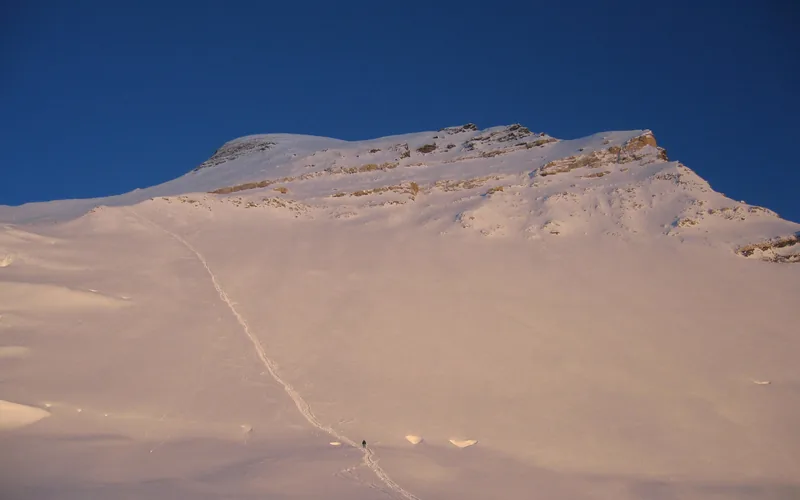
Cho Oyu 1954: The Lightweight Triumph of Tichy, Jöchler, and Pasang Dawa Lama
On October 19, 1954, a tiny three-man Austrian team conquered Cho Oyu (8,188m) without supplemental oxygen in autumn, proving 8,000-meter giants could be climbed in lightweight alpine style.
Documented Sources & Archival Citations
- Cho Oyu: By Favour of the Gods(Herbert Tichy / Methuen & Co)
Supporting claim: Primary autobiographical narrative of the 1954 expedition, logistics, and summit push
Accessed/Documented: 1957 - The Himalayan Database: Autumn 1954 Cho Oyu Expedition(Elizabeth Hawley Archive)
Supporting claim: Official expedition records, member rosters, and summit timestamps
Accessed/Documented: 2026 - Alpinismus der Fünfzigerjahre: Cho Oyu 1954(Österreichischer Alpenverein Archive)
Supporting claim: Historical analysis of lightweight alpine-style ethics on 8,000-meter peaks
Accessed/Documented: 2026