1955 French Makalu Expedition
Led by Jean Franco, the 1955 French expedition achieved the historic first ascent of Makalu (8,485m) on May 15, 1955, when Lionel Terray and Jean Couzy reached the summit, followed over the next two days by every single climbing member.
Mountain Safety & Conditions Disclaimer: High-altitude climbing, glacial travel, and technical ascents entail severe objective risks including avalanches, serac collapses, rapid weather collapse, and altitude illness. Historical route descriptions and summit claims on Mountanity reflect documented archival sources and must not be used as live operational safety assessments. Local regulations, permits, and physical glacial topography change continuously.
Peer Review: Senior Editorial Board & Historical Reviewers • Editorial Standards
Official Expedition Narrative & Archival Record
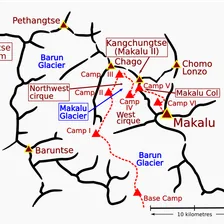
In the spring of 1955, the Fédération Française de la Montagne mounted a major national expedition to Makalu (8,485m), the fifth-highest mountain on Earth, under the leadership of Jean Franco. Benefiting from extensive reconnaissance conducted in autumn 1954, the team marched through the pristine, rain-drenched jungles of the Arun and Barun valleys to establish Base Camp at 5,300 meters beneath the towering south face. Demonstrating unprecedented team harmony and meticulous logistical execution, Franco's party forged a route across the heavily broken seracs of the upper glacier to reach the Makalu La (7,400m), the colossal saddle separating Makalu from Kangchungtse. Establishing Camp VI at 7,800 meters beneath the final summit pyramid, the lead pair—Lionel Terray and aeronautical engineer Jean Couzy—launched their assault on May 15 using open-circuit oxygen apparatus. Navigating mixed snow gullies and a steep 50-degree ice face, Terray and Couzy stood on the narrow, airy summit of Makalu at 3:00 PM, achieving the first confirmed conquest of the mountain. In a feat never before seen in Himalayan history, the expedition repeated the ascent over the next forty-eight hours without a single accident or frostbite case. On May 16, expedition leader Jean Franco, Guido Magnone, and Nepalese Sherpa Sirdar Gyalzen Norbu reached the summit. On May 17, the third wave consisting of Jean Bouvier, Serge Coupé, Pierre Leroux, and André Vialatte also summited. In total, all nine climbing members and one Sherpa stood on the 8,485-meter apex, setting a standard for flawless high-altitude teamwork that remains legendary.
Documented Team Composition
- Jean Franco (Expedition Leader & Summit Climber)
- Lionel Terray (Lead Climber & Summit Climber, May 15)
- Jean Couzy (Lead Climber & Summit Climber, May 15)
- Guido Magnone (Summit Climber, May 16)
- Gyalzen Norbu (Sirdar & Summit Climber, May 16)
- Jean Bouvier (Summit Climber, May 17)
- Serge Coupé (Summit Climber, May 17)
- Pierre Leroux (Summit Climber, May 17)
- André Vialatte (Summit Climber, May 17)
- Michel Latreille (Geologist)
- Dr. André Lapras (Doctor)
Key Statistics & Topographic Figures
- Summit Dates
- May 15, 16 & 17, 1955
Three Consecutive Summit Waves
- Summiters
- 10 Climbers (100% of Assault Team)
Unprecedented Expedition Success
- Peak Elevation
- 8,485 meters (27,838 ft)
World 5th Highest Mountain
- Safety Record
- Zero Fatalities, Zero Frostbite
Gold Standard of Alpine Safety
Archival Primary Source Quotations
“The sky was of an incredible dark blue, almost black. We had asked of our bodies the ultimate effort, and the mountain had given us its ultimate reward.”
Defined Alpine Terminology & Concepts
- Makalu La
- A high, glaciated saddle at 7,400 meters linking Makalu with Kangchungtse, serving as the crucial high-altitude staging platform.
- Barun Valley
- A remote, untamed glacial gorge in eastern Nepal providing the wilderness approach route to Makalu.
Frequently Asked Questions: 1955 French Makalu Expedition
Who made the first ascent of Makalu in 1955?
French climbers Lionel Terray and Jean Couzy achieved the historic first ascent of Makalu (8,485m) on May 15, 1955, as part of the French expedition led by Jean Franco.
How many climbers reached the summit during the 1955 French Makalu expedition?
In an unprecedented feat of alpine teamwork, all nine French climbing members and Sherpa Sirdar Gyalzen Norbu summited Makalu over three consecutive days (May 15, 16, and 17, 1955) without a single accident or frostbite case.
What route was forged on Makalu in 1955?
The team forged the North Face and Makalu La route, climbing out of the Barun valley to the 7,400-meter col before ascending the northwest flank to the summit.
Who led the 1955 French Makalu expedition?
Jean Franco, a respected French mountaineer and author, led the expedition with exemplary democratic leadership and logistical precision.
Did the 1955 Makalu climbers use supplemental oxygen?
Yes, the summit assault teams used open-circuit oxygen apparatus to safely climb the upper headwall above Camp V.
Ascent Route & Topography
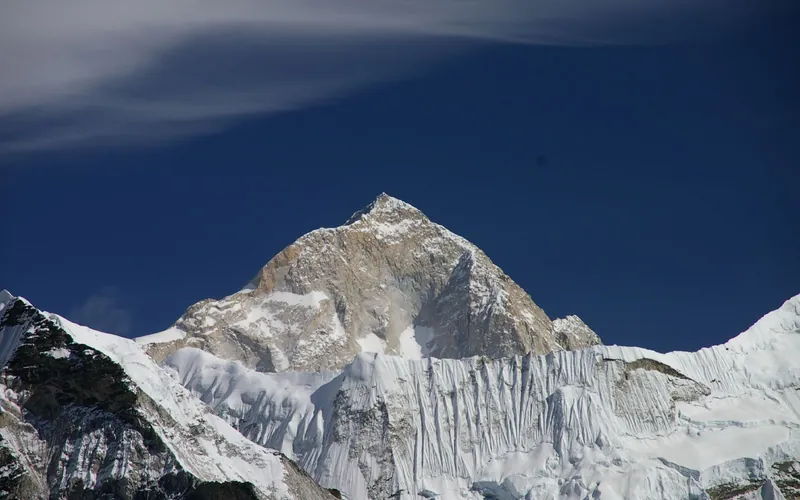
Makalu Northwest Ridge (French Route)
The Northwest Ridge is the classic pioneering line on Makalu, first opened by the historic French expedition of 1955. From Advanced Base Camp on the Chago Glacier, climbers ascend steep snow and ice fields to gain Makalu La (7,400m), a high, wind-blasted col connecting Makalu to Kangchungtse. Above Makalu La, the route climbs through the technical French Couloir—a mixed corridor of steep ice and broken granite—before emerging onto the exposed summit crest.
Target Objective Peak
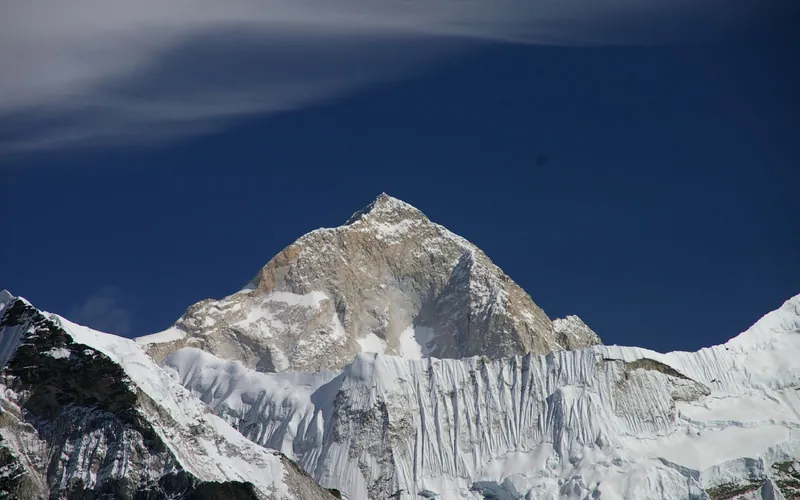


Makalu
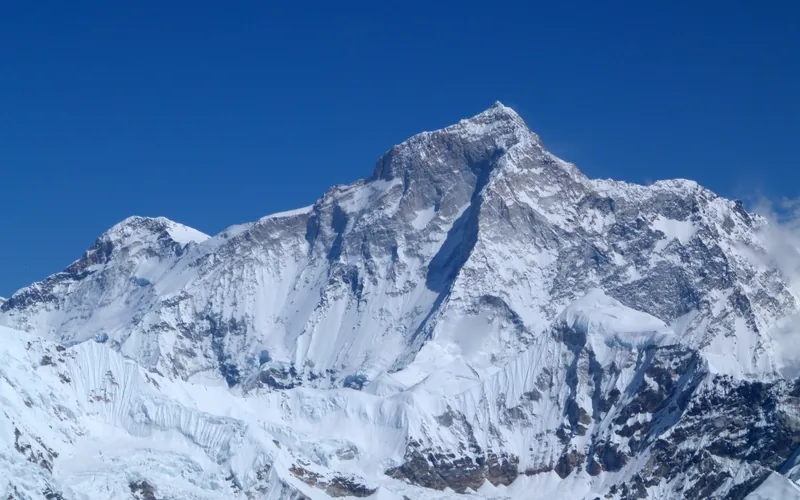
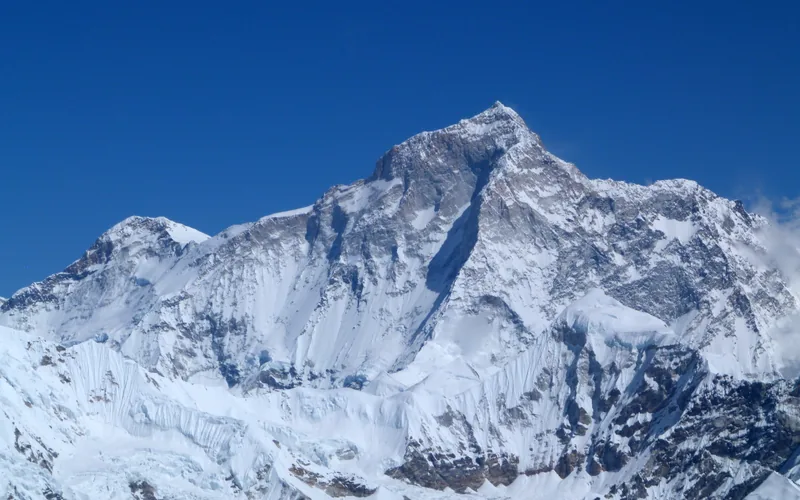
Makalu, at 8,485 meters (27,838 ft), is the fifth-highest mountain on Earth, located 19 km southeast of Mount Everest. An isolated four-sided granite pyramid, it is known for technical knife-edge ridges, severe exposure, and punishing weather, making it one of the most challenging eight-thousanders.
Featured Expedition Climbers
Gyalzen Norbu
Gyalzen Norbu was born around 1918 in the high valleys of the Solukhumbu district in eastern Nepal. Endowed with immense physical stamina, unshakeable courage, and sharp tactical leadership, Gyalzen established himself in the post-World War II era as one of the most elite and sought-after Sherpa Sirdars in the Greater Ranges. His intimate understanding of Himalayan ice and weather patterns earned him profound respect from European, Asian, and American expedition leaders alike. In the spring of 1955, Gyalzen Norbu served as Sirdar for the French Makalu Expedition led by Jean Franco. Guiding the heavy supply trains across the Barun wilderness and up the treacherous Makalu La icefall, Gyalzen ensured flawless logistical support for the team. On May 16, 1955—the day after Lionel Terray and Jean Couzy claimed the summit—Gyalzen joined the second summit wave alongside Jean Bouvier and Serge Coupé, becoming one of the first human beings to stand atop the 8,485-meter apex of Makalu. Just one year later, in the spring of 1956, Gyalzen took on the Sirdarship for the third Japanese Manaslu Expedition under Aritsune Maki. His diplomatic poise was crucial in bridging cultural divides with the frightened villagers of Sama Gompa, who feared mountain deities. On May 9, 1956, partnered with Japanese climber Toshio Imanishi, Gyalzen Norbu led the final assault up the Northeast Face, conquering the exposed knife-edge summit crest of Manaslu at 8,163 meters. With this triumph, Gyalzen achieved what no other mountaineer in human history has ever matched: he became the first ascender of two virgin eight-thousanders on their maiden climbs. Gyalzen continued to guide international expeditions on the frontiers of high-altitude exploration until his tragic death in an avalanche on an expedition in 1961. Decorated with the prestigious Tiger of the Snows distinction by the Himalayan Club, Gyalzen Norbu stands immortalized as a foundational colossus of Himalayan mountaineering heritage.
Jean Couzy
Jean Couzy was born on July 9, 1923, in Nérac, Lot-et-Garonne, France. A prodigiously gifted student, Couzy graduated as an aeronautical engineer from France's most prestigious science and engineering institution, the École Polytechnique in Paris. Combining rigorous analytical intelligence with extraordinary physical agility, Couzy quickly emerged in the late 1940s as one of the most formidable rock climbers in Europe, forging severe new lines in the Pyrenees, the Mont Blanc massif, and the Dolomites. In 1950, at the age of twenty-seven, Couzy was selected as the youngest mountaineer for the legendary French Himalayan Expedition to Annapurna I led by Maurice Herzog. Assigned to support duties and reconnaissance across uncharted glacier basins, Couzy's relentless high-altitude ferrying established the upper camps that allowed Herzog and Lachenal to reach the virgin summit. During the harrowing monsoon retreat through the jungle, Couzy played an instrumental role in evacuating his crippled companions to safety. Four years later, in the autumn of 1954, Couzy returned to the Himalayas on the French reconnaissance expedition to Makalu (8,485m). Partnering with Lionel Terray, the pair achieved the spectacular first ascent of Makalu's subsidiary peak, Chomo Lonzo (7,804m), and mapped the viable approach route via the Makalu La saddle. In the spring of 1955, Couzy was appointed lead assault climber for the full French Makalu Expedition under Jean Franco. On May 15, 1955, using open-circuit oxygen apparatus, Couzy and Terray climbed the final steep summit headwall to stand atop the 8,485-meter apex—the fifth-highest mountain on Earth. Returning to the European Alps, Couzy pioneered the direct North Face of the Cima Ovest di Lavaredo in the Italian Dolomites alongside René Desmaison in 1956—a breakthrough climb that heralded the modern era of extreme big-wall directissimas. On November 2, 1958, at the peak of his climbing powers, Jean Couzy was tragically struck by falling rock while opening a new route on the Crête des Bergers in the Dévoluy massif, dying at the age of thirty-five. He is celebrated as one of France's purest and most visionary alpine masters.
Lionel Terray
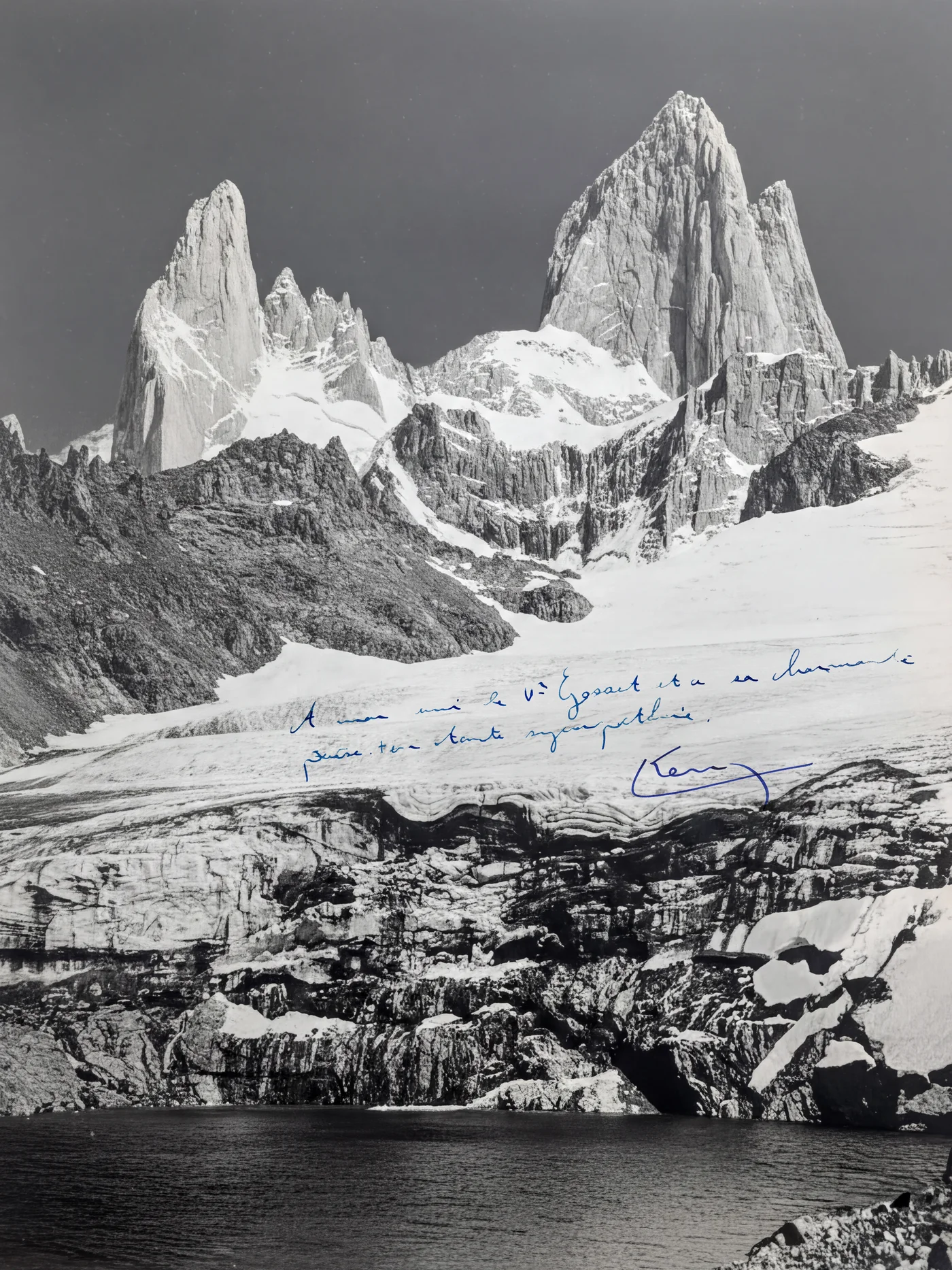
Lionel Terray was born on July 25, 1921, in Grenoble, France. Raised in the shadow of the French Alps, Terray developed an all-consuming passion for extreme skiing and high-angle alpinism from early childhood. During World War II, he fought heroically against Nazi occupation forces in the Battle of the Alps as part of the Compagnie Stéphane ski-troops, winning the Croix de Guerre. In Chamonix after the war, Terray formed an invincible climbing partnership with Louis Lachenal. In 1947, the duo made the celebrated second ascent (and first French ascent) of the dreaded Eiger North Face in Switzerland. In 1950, Terray was chosen as a lead climber for the French Annapurna Expedition. When Maurice Herzog and Louis Lachenal staggered down from the summit severely frostbitten and snow-blind, Terray and Gaston Rébuffat mounted a selfless rescue, sacrificing their own summit ambitions. Trapped in a 7,400-meter crevasse overnight in sub-zero blizzards, Terray gave up his gloves and warm clothing to nurse his comrades, later organizing the grueling jungle litter-carry that saved their lives. Over the following decade, Terray became the premier expedition alpinist of the 20th century. In 1952, he made the audacious first ascent of Patagonia's granite needle, Mount Fitz Roy, alongside Guido Magnone. In May 1955, on the French Makalu Expedition led by Jean Franco, Terray and Jean Couzy forged the normal route up the North Face and Makalu La, reaching the 8,485-meter summit on May 15—the fifth-highest peak on Earth. Terray's leadership was so flawless that all nine members of the expedition reached the summit over three consecutive days without injury. Terray continued his global conquests with the first ascents of Peru's terrifying Chacraraju (6,108m) and Taulliraju in 1956, Nepal's monstrous Jannu (7,710m) in 1962, and Alaska's Mount Huntington in 1964. In 1961, he penned Les Conquérants de l'inutile (Conquistadors of the Useless), universally acclaimed as the greatest philosophical mountaineering autobiography ever written. On September 19, 1965, Lionel Terray died tragically in a climbing fall on the Arêtes du Gerbier in the Vercors at age forty-four. He is buried in Chamonix, forever remembered as the soul of pure, noble alpinism.
Associated Historical Chronicles & Stories
Makalu 1955: The Flawless Triumph of Lionel Terray and Jean Couzy
On May 15, 1955, Lionel Terray and Jean Couzy conquered the terrifying granite pyramid of Makalu (8,485m), launching a legendary three-day assault that placed all nine expedition climbers on the summit.
Documented Sources & Archival Citations
- Makalu: 8,470 Metres(Jean Franco / Jonathan Cape)
Supporting claim: Official expedition leader narrative detailing route strategy, team ethos, and all three summit waves
Accessed/Documented: 1957 - Les Conquérants de l'inutile(Lionel Terray / Victor Gollancz)
Supporting claim: Eyewitness account by first-wave summit climber Lionel Terray of the North Face push
Accessed/Documented: 1963 - The Himalayan Database: Makalu 1955(Elizabeth Hawley Archive)
Supporting claim: Official verification of summit timestamps, team members, and lack of casualties
Accessed/Documented: 2026