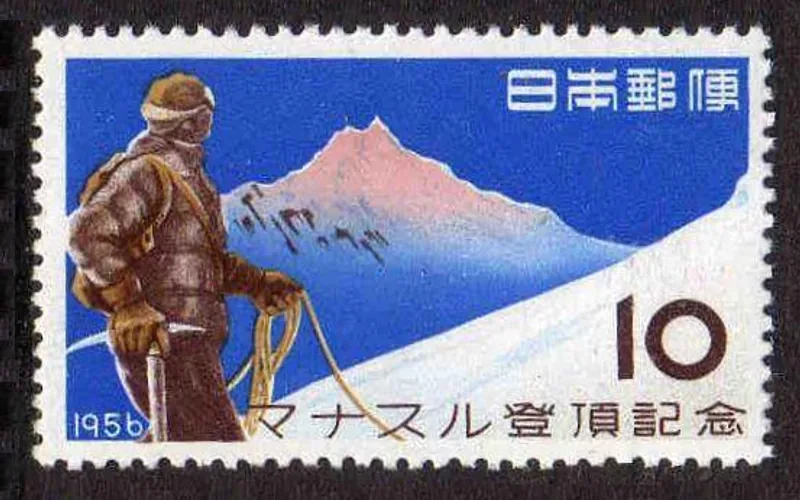
1956 Japanese Manaslu Expedition
Led by Aritsune Maki, this historic Japanese Alpine Club expedition made the first ascent of Manaslu (8,163m) on May 9, 1956, when Toshio Imanishi and Sherpa Sirdar Gyalzen Norbu conquered the Mountain of the Spirit, followed two days later by Kiichiro Kato and Minoru Higeta.
Mountain Safety & Conditions Disclaimer: High-altitude climbing, glacial travel, and technical ascents entail severe objective risks including avalanches, serac collapses, rapid weather collapse, and altitude illness. Historical route descriptions and summit claims on Mountanity reflect documented archival sources and must not be used as live operational safety assessments. Local regulations, permits, and physical glacial topography change continuously.
Peer Review: Senior Editorial Board & Historical Reviewers • Editorial Standards
Official Expedition Narrative & Archival Record
Between 1952 and 1956, the Japanese Alpine Club launched four consecutive expeditions to Manaslu (8,163m) in west-central Nepal, adopting the 'Mountain of the Spirit' as Japan's primary national mountaineering objective. The campaign was nearly thwarted in 1954 when villagers from Sama Gompa barred the expedition, blaming previous climbers for an avalanche that destroyed their ancient monastery. Following delicate negotiations by team leader Aritsune Maki and monetary donations to rebuild the shrine, the expedition received blessings to attempt the peak in spring 1956. Marching from Kathmandu up the rugged Budhi Gandaki gorge, the team established Base Camp on the Manaslu Glacier at 5,000 meters. Over weeks of sustained effort, Japanese climbers and their Sherpa partners fixed ropes through chaotic serac fields and across the avalanche-prone Northeast Face, pitching Camp V at 7,400 meters on the high snow plateau and Camp VI at 7,800 meters. On May 9, 1956, using open-circuit oxygen equipment, Toshio Imanishi and Sherpa Sirdar Gyalzen Norbu set off for the summit. Traversing deep wind-slab snow, they breached the upper rock bands and carefully balanced along an extraordinarily narrow, vertigo-inducing snow crest. At 12:30 PM, both men stood atop the 8,163-meter summit pinnacle. Forty-eight hours later, on May 11, teammates Kiichiro Kato and Minoru Higeta repeated the ascent. In Japan, the conquest of Manaslu sparked immense national celebration, lifting the country's post-war spirits and establishing Japan as a dominant power in world mountaineering.
Documented Team Composition
- Aritsune Maki (Expedition Leader)
- Toshio Imanishi (First Summit Team, May 9)
- Gyalzen Norbu (Sirdar & First Summit Team, May 9)
- Kiichiro Kato (Second Summit Team, May 11)
- Minoru Higeta (Second Summit Team, May 11)
- Katsuro Ohara
- Junjiro Muraki
- Dr. Hirokichi Tatsunuma (Expedition Doctor)
Key Statistics & Topographic Figures
- First Ascent Date
- May 9, 1956
Manaslu Maiden Summit
- First Summit Pair
- Toshio Imanishi & Gyalzen Norbu
Japanese-Sherpa Triumph
- Second Summit Pair
- Kiichiro Kato & Minoru Higeta
May 11, 1956 Repeat
- Peak Elevation
- 8,163 meters (26,781 ft)
World 8th Highest
Archival Primary Source Quotations
“We did not conquer Manaslu. The mountain permitted us to visit its spirit, and in doing so, brought our two cultures together as brothers.”
Defined Alpine Terminology & Concepts
- Sama Gompa
- An ancient Tibetan Buddhist monastery village situated in the valley below Manaslu, home to the local community that worshiped the peak as sacred.
- Mansiri Himal
- The rugged subrange of the Nepalese Himalayas in Gorkha District where Manaslu, Ngadi Chuli, and Himalchuli reside.
Frequently Asked Questions: 1956 Japanese Manaslu Expedition
Who made the first ascent of Manaslu in 1956?
Japanese climber Toshio Imanishi and Nepalese Sherpa Sirdar Gyalzen Norbu made the first ascent of Manaslu (8,163m) on May 9, 1956, followed on May 11 by Kiichiro Kato and Minoru Higeta.
Why did the villagers of Sama Gompa block the Japanese expedition in 1954?
Villagers believed that foreign climbers had angered the mountain deities, causing an avalanche that destroyed their monastery in 1953. The Japanese negotiated peacefully, donated funds to rebuild the shrine, and were granted passage in 1956.
Why was the conquest of Manaslu so important for Japan?
Manaslu was Japan’s first 8,000-meter peak conquest, generating immense post-war national pride and establishing Japan as a premier world power in high-altitude mountaineering.
What unique record did Gyalzen Norbu set on Manaslu?
By summiting Manaslu in 1956 after summiting Makalu in 1955, Gyalzen Norbu became the only human being in history to make the maiden first ascents of two 8,000-meter peaks.
Ascent Route & Topography
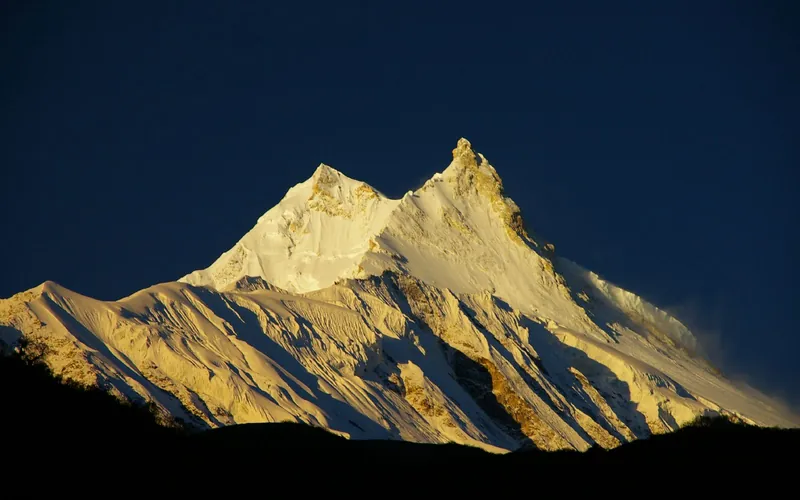
Manaslu Northeast Face (Normal Route)
The Northeast Face is the standard route on Manaslu, first forged in 1956 by a Japanese expedition. Ascending from the Manaslu Glacier above the village of Samagaon, the route climbs through an active, heavily crevassed icefall between Camps 1 and 2, traverses wide snow plateaus up to Camp 4, and culminates in a delicate, exposed knife-edge snow arête leading to the true summit pin.
Target Objective Peak
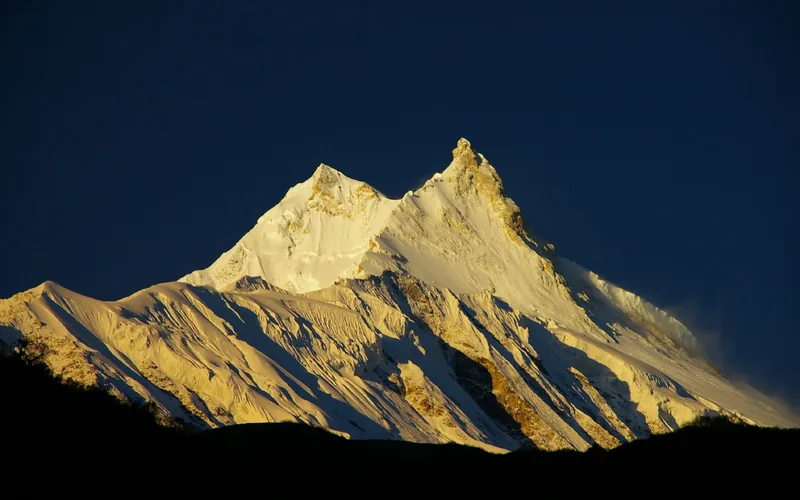

Manaslu
Manaslu, at 8,163 meters (26,781 ft), is the eighth-highest mountain in the world, situated in the Mansiri Himal of west-central Nepal. Known as the 'Mountain of the Spirit', its long ridges and valley glaciers offer dramatic topography culminating in a delicate, exposed knife-edge summit crest.
Featured Expedition Climbers
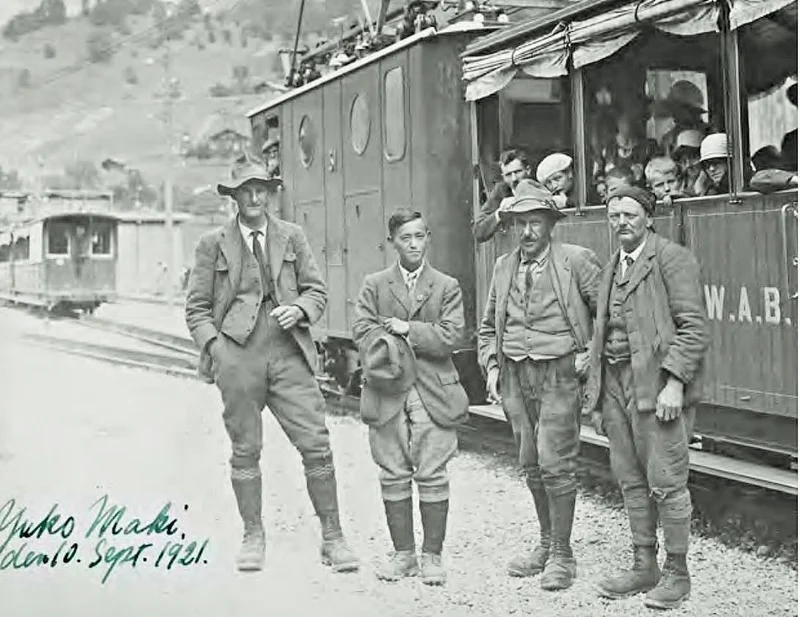
Aritsune Maki
Aritsune Maki (known widely as Maki Yūkō) was born on February 5, 1894, in Sendai, Miyagi Prefecture, Japan. Educated at Keio University, Maki developed into a brilliant technical rock climber in the Japanese Alps before traveling to Europe in 1919 to pursue advanced alpine mountaineering in Switzerland and Great Britain. In the Bernese Oberland, Maki turned his attention to the formidable and unclimbed Mittellegi Ridge of the Eiger—a razor-sharp, heavily corniced limestone crest that had repelled alpine climbers for decades. On September 10, 1921, Maki alongside Swiss guides Fritz Steuri, Samuel Brawand, and Fritz Amatter completed the historic first ascent of the Mittellegi Ridge. In gratitude, Maki donated 10,000 Swiss francs to build the Mittellegi Hut, providing vital refuge for subsequent mountaineers. In 1925, Maki led a groundbreaking expedition of the Japanese Alpine Club to the Canadian Rockies, achieving the first ascent of Mount Alberta (3,619 m), one of North America's most challenging peaks, where the team famously left a silver ice axe on the summit. In 1956, at age 62, Maki served as the visionary general leader of the triumphant Japanese expedition to Manaslu (8,163 m), which achieved Japan's first 8,000-metre summit conquest. Maki served as President of the Japanese Alpine Club from 1944 to 1946 and again from 1957 to 1963. He passed away on May 2, 1989, honored as the greatest international mountaineer in modern Japanese history.
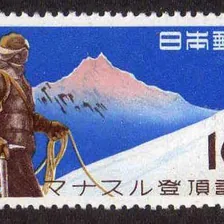
Gyalzen Norbu
Gyalzen Norbu was born around 1918 in the high valleys of the Solukhumbu district in eastern Nepal. Endowed with immense physical stamina, unshakeable courage, and sharp tactical leadership, Gyalzen established himself in the post-World War II era as one of the most elite and sought-after Sherpa Sirdars in the Greater Ranges. His intimate understanding of Himalayan ice and weather patterns earned him profound respect from European, Asian, and American expedition leaders alike. In the spring of 1955, Gyalzen Norbu served as Sirdar for the French Makalu Expedition led by Jean Franco. Guiding the heavy supply trains across the Barun wilderness and up the treacherous Makalu La icefall, Gyalzen ensured flawless logistical support for the team. On May 16, 1955—the day after Lionel Terray and Jean Couzy claimed the summit—Gyalzen joined the second summit wave alongside Jean Bouvier and Serge Coupé, becoming one of the first human beings to stand atop the 8,485-meter apex of Makalu. Just one year later, in the spring of 1956, Gyalzen took on the Sirdarship for the third Japanese Manaslu Expedition under Aritsune Maki. His diplomatic poise was crucial in bridging cultural divides with the frightened villagers of Sama Gompa, who feared mountain deities. On May 9, 1956, partnered with Japanese climber Toshio Imanishi, Gyalzen Norbu led the final assault up the Northeast Face, conquering the exposed knife-edge summit crest of Manaslu at 8,163 meters. With this triumph, Gyalzen achieved what no other mountaineer in human history has ever matched: he became the first ascender of two virgin eight-thousanders on their maiden climbs. Gyalzen continued to guide international expeditions on the frontiers of high-altitude exploration until his tragic death in an avalanche on an expedition in 1961. Decorated with the prestigious Tiger of the Snows distinction by the Himalayan Club, Gyalzen Norbu stands immortalized as a foundational colossus of Himalayan mountaineering heritage.
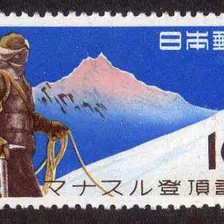
Toshio Imanishi
Toshio Imanishi was born on December 14, 1914, in Kobe, Japan. Educated at Kyoto Imperial University, Imanishi was a dedicated alpinist and founding member of the modern Japanese high-altitude climbing movement. Throughout the 1930s and 1940s, he forged demanding winter routes in the Northern Japanese Alps before focusing his ambition on the unclimbed giants of the Himalayas. Following Nepal’s post-war opening to foreign climbers, the Japanese Alpine Club (JAC) adopted Manaslu (8,163m)—the 'Mountain of the Spirit' in the Mansiri Himal—as Japan's national mountain objective. Imanishi served as a lead climber on the 1953 Japanese reconnaissance and the 1954 expedition. In 1954, the expedition was halted when local villagers from Sama Gompa barred their passage, believing previous foreign intrusions had provoked the mountain gods to unleash a devastating avalanche that destroyed their ancient monastery. Displaying immense cultural tact, patience, and diplomacy, Imanishi and team leader Aritsune Maki negotiated with local lamas, donating funds to rebuild the sacred monastery and securing permission to return. In the spring of 1956, the third Japanese expedition mounted a decisive assault up the Northeast Face. Teaming up with the formidable Nepalese Sherpa Sirdar Gyalzen Norbu, Imanishi established Camp VI at 7,800 meters. On the morning of May 9, 1956, using open-circuit oxygen equipment, Imanishi and Gyalzen Norbu navigated the steep, avalanche-swept snow plateau and climbed an extremely delicate, razor-thin snow crest. At 12:30 PM, both men stepped onto the pinnacle summit of Manaslu at 8,163 meters, claiming the eighth eight-thousander in human history. In Japan, the conquest of Manaslu created an overwhelming national sensation comparable to Britain's euphoria over Mount Everest, inspiring generations of Japanese climbers. Imanishi continued a distinguished industrial career while leading alpine initiatives, eventually serving as President of the Japanese Alpine Club from 1985 to 1989. He passed away on November 13, 1995, revered as one of the founding fathers of Asian high-altitude mountaineering.
Associated Historical Chronicles & Stories
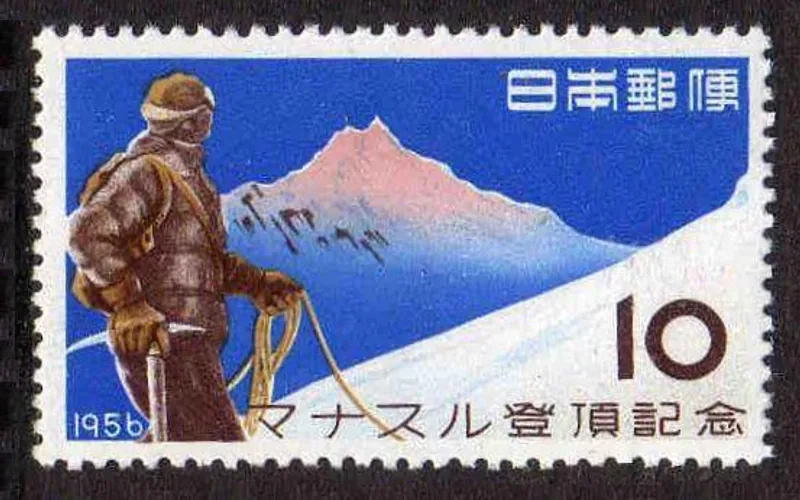
Manaslu 1956: The Japanese Triumph on the Mountain of the Spirit
On May 9, 1956, Toshio Imanishi and Sherpa Sirdar Gyalzen Norbu stood atop Manaslu (8,163m), overcoming years of cultural standoff and extreme high-altitude terrain to claim Japan's first eight-thousander.
Documented Sources & Archival Citations
- Manaslu: 1954-1956(Aritsune Maki / Japanese Alpine Club)
Supporting claim: Official expedition leader narrative detailing logistics, diplomacy, and summit climbs
Accessed/Documented: 1958 - The Himalayan Database: Spring 1956 Manaslu Records(Elizabeth Hawley Archive)
Supporting claim: Official expedition records, summit timestamps, and climber registries
Accessed/Documented: 2026 - Japanese Himalayan Climbing: A Centenary Survey(Japanese Alpine Club)
Supporting claim: Historical assessment of the cultural and alpine significance of the 1956 Manaslu conquest
Accessed/Documented: 2006