1961 Hillary Silver Hut Ama Dablam Expedition
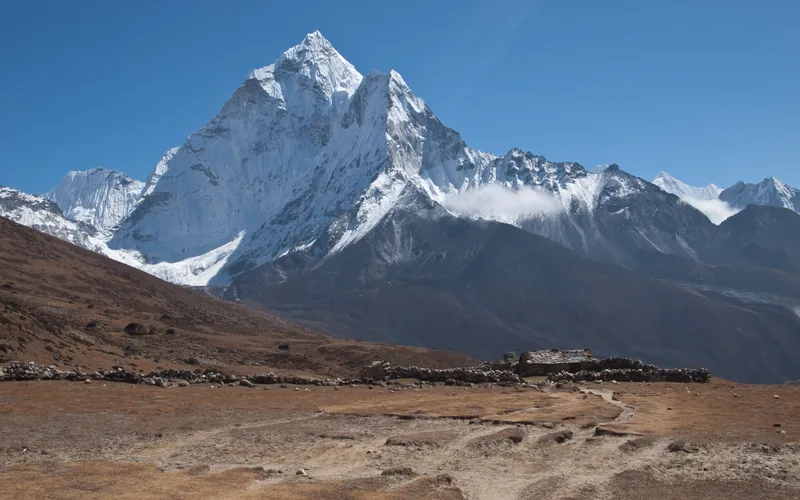
Organized under Sir Edmund Hillary's legendary 1960-61 Silver Hut Scientific Expedition, team members forged the historic first ascent of Ama Dablam (6,812m) via the Southwest Ridge on March 13, 1961.
Mountain Safety & Conditions Disclaimer: High-altitude climbing, glacial travel, and technical ascents entail severe objective risks including avalanches, serac collapses, rapid weather collapse, and altitude illness. Historical route descriptions and summit claims on Mountanity reflect documented archival sources and must not be used as live operational safety assessments. Local regulations, permits, and physical glacial topography change continuously.
Peer Review: Senior Editorial Board & Historical Reviewers • Editorial Standards
Official Expedition Narrative & Archival Record
As part of the multi-month Silver Hut Physiological Expedition studying human adaptation to extreme altitude, Sir Edmund Hillary deployed a high-caliber international climbing team to attempt the formidable granite spire of Ama Dablam (6,812m). Climbing via the delicate Southwest Ridge, team members Mike Gill, Barry Bishop, Mike Ward, and Wally Romanes overcame severe technical mixed pitches, narrow ice flutes, and the precarious hanging glacier (Dablam) to stand on the virgin summit on March 13, 1961.
Documented Team Composition
- Sir Edmund Hillary (Expedition Leader)
- Mike Gill (Summit)
- Barry Bishop (Summit)
- Mike Ward (Summit)
- Wally Romanes (Summit)
Key Statistics & Topographic Figures
- Summit Date
- January 15, 1961
First Ascent of Ama Dablam
- Summit Team
- Gill, Bishop, Ward, Romanes
Four-Nation Assault
- Expedition Director
- Sir Edmund Hillary
Silver Hut Expedition
- Route
- Southwest Ridge
Classic Technical Alpine Ridge
Archival Primary Source Quotations
“Ama Dablam is the Matterhorn of the Himalayas. Climbing its Southwest Ridge in mid-winter was a tour de force of modern technical alpinism.”
Defined Alpine Terminology & Concepts
- Silver Hut
- A portable, insulated scientific laboratory stationed at 5,800 meters beneath Ama Dablam during Hillary’s 1960–61 expedition for high-altitude medical research.
Frequently Asked Questions: 1961 Hillary Silver Hut Ama Dablam Expedition
Who made the first ascent of Ama Dablam in 1961?
The first ascent of Ama Dablam (6,812m) was achieved on January 15, 1961, by Mike Gill (New Zealand), Barry Bishop (USA), Michael Ward (UK), and Wally Romanes (New Zealand), as members of Sir Edmund Hillary’s Silver Hut scientific expedition.
What was the Silver Hut expedition led by Edmund Hillary?
The 1960–1961 Silver Hut expedition was a groundbreaking scientific and mountaineering undertaking that wintered at 5,800 meters in a prefabricated green hut to study human physiological adaptation to high altitude without supplemental oxygen.
Ascent Route & Topography
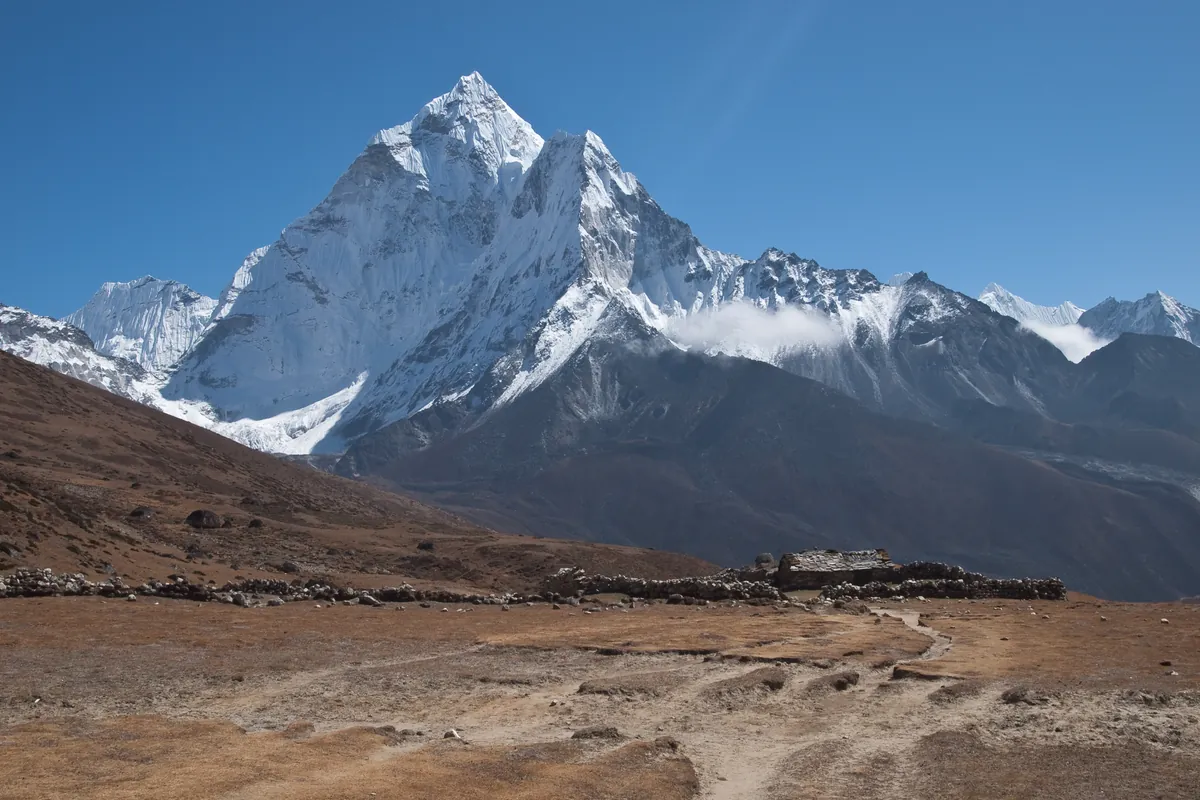
Southwest Ridge of Ama Dablam (Normal Route)
The Southwest Ridge is the iconic classic route on Ama Dablam and one of the finest technical ridge ascents in the Himalayas. First climbed on January 15, 1961, by Sir Edmund Hillary's Silver Hut Expedition team, the route climbs soaring granite towers, knife-edge snow flutings, and steep ice beneath the hanging Dablam glacier. The route features famous technical cruxes including the vertical granite Yellow Tower (UIAA 5.7), the breathtaking exposed Mushroom Ridge, and a steep final ice pitch to the 6,812-meter apex.
Target Objective Peak
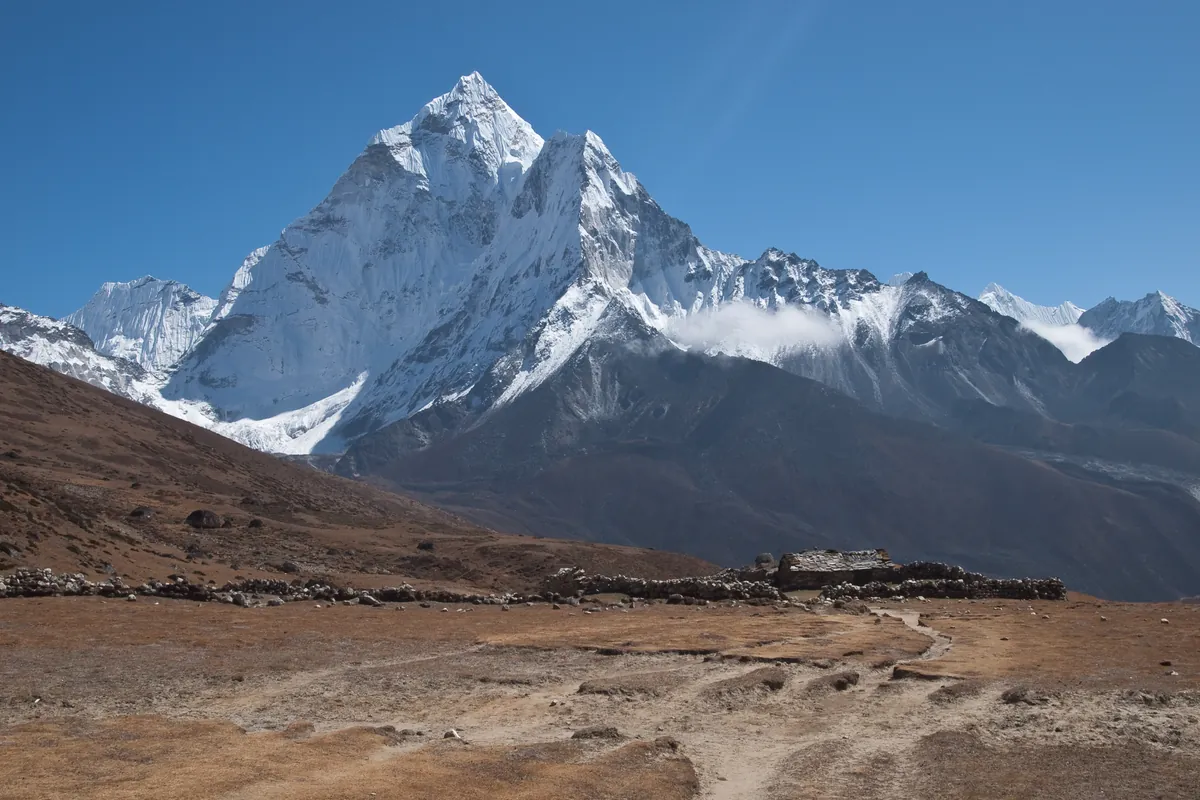

Ama Dablam
Ama Dablam is an iconic 6,812-meter (22,349 ft) mountain in the eastern Himalayan region of Nepal. Renowned worldwide for its soaring granite ridges and hanging glaciers, it is often called the Matterhorn of the Himalayas. Its name translates as 'Mother's Necklace', referring to the hanging serac resembling a traditional Sherpa pendant. Sir Edmund Hillary conceived and led the 1960–1961 Silver Hut Expedition that unlocked the mountain. On January 15, 1961, Hillary's assault team achieved the historic first ascent via the Southwest Ridge. It remains one of the most aesthetic and technically demanding alpine ascents in the world.
Featured Expedition Climber
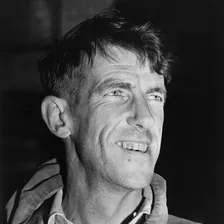
Sir Edmund Hillary
Edmund Percival Hillary was born in Auckland, New Zealand, on July 20, 1919. A school trip to Mount Ruapehu sparked his lifelong passion for alpine climbing. He completed his first major ascent on Mount Ollivier (1,933m) in 1939. During World War II, Hillary served as a navigator in the Royal New Zealand Air Force. Afterward, he trained under master alpine guide Harry Ayres in the Southern Alps. On January 30, 1948, Hillary and Ayres achieved the first ascent of Mount Cook's South Ridge. This demanding technical climb established Hillary as New Zealand's foremost ice climber. In 1951, Eric Shipton recruited Hillary for the British Everest Reconnaissance Expedition. Hillary and George Lowe pioneered a viable route through the chaotic Khumbu Icefall. Their breakthrough unlocked the southern approach into the Western Cwm. Hillary returned to the Himalayas for the 1952 British Cho Oyu Expedition. There, he tested experimental open-circuit oxygen equipment above 6,800 meters. Colonel John Hunt subsequently selected Hillary for the 1953 British Mount Everest Expedition. On May 29, 1953, Hillary and Tenzing Norgay launched their summit push from 8,500 meters. High on the Southeast Ridge, they encountered a formidable 12-meter rock barrier. This vertical cliff between rock and snow is now called the Hillary Step. Hillary jammed his body into a narrow crack and levered upward with crampons. He breached the crux and safely belayed Tenzing up the pitch. At 11:30 AM, both men reached the 8,848.86-meter summit of Mount Everest. They achieved the first confirmed human summit in history. Between 1956 and 1958, Hillary led the New Zealand Trans-Antarctic expedition party. He drove three modified Ferguson farm tractors across treacherous crevassed icefields. On January 4, 1958, Hillary's team successfully reached the South Pole. It was the first overland journey to the pole since Captain Scott in 1912. In 1960, Hillary organized the high-altitude Silver Hut Expedition. His team conducted physiological research and made the first ascent of Ama Dablam. Hillary dedicated decades of his life to helping the Sherpa communities of Nepal. In 1960, he established the Himalayan Trust to fund essential local infrastructure. The foundation built 27 schools, two hospitals, and twelve medical clinics in Solukhumbu. It also constructed the mountain airstrip at Lukla to connect remote villages. Grateful Sherpas honored Hillary with the affectionate title of Burra Sahib. In 2003, Nepal granted Hillary honorary citizenship, making him the first foreign national so recognized. Queen Elizabeth II invested him as a Knight Companion of the Garter in 1995. Hillary passed away in 2008, remembered worldwide as a compassionate explorer.
Associated Historical Chronicles & Stories
1961 Ama Dablam: The Silver Hut Himalayan First Ascent
How Sir Edmund Hillary's Silver Hut team made the historic first ascent of Ama Dablam's Southwest Ridge in March 1961.
Documented Sources & Archival Citations
- Schoolhouse in the Clouds(Sir Edmund Hillary / Hodder & Stoughton)
Supporting claim: Narrative of the 1960-61 Silver Hut Expedition and Ama Dablam first ascent
Accessed/Documented: 1964 - Himalayan Journal Vol. XXIII(Himalayan Club)
Supporting claim: Official technical report of the 1961 Ama Dablam Southwest Ridge climb
Accessed/Documented: 1961