1963 Historic American Mount Everest Expedition: South Col and West Ridge Traverse
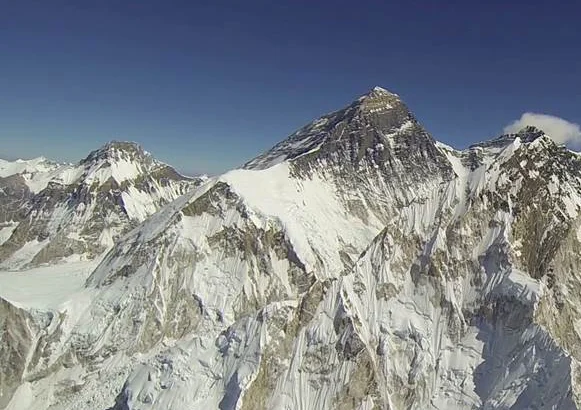
In May 1963, the American Mount Everest Expedition achieved historic triumphs as Jim Whittaker became the first American to summit Everest, followed by Tom Hornbein and Willi Unsoeld's legendary West Ridge traverse.
Mountain Safety & Conditions Disclaimer: High-altitude climbing, glacial travel, and technical ascents entail severe objective risks including avalanches, serac collapses, rapid weather collapse, and altitude illness. Historical route descriptions and summit claims on Mountanity reflect documented archival sources and must not be used as live operational safety assessments. Local regulations, permits, and physical glacial topography change continuously.
Peer Review: Senior Editorial Board & Historical Reviewers • Editorial Standards
Official Expedition Narrative & Archival Record
Organized and led by Norman Dyhrenfurth and backed by the National Geographic Society, the 1963 American Mount Everest Expedition mounted one of the most ambitious and multifaceted high-altitude assaults in history, deploying nineteen American climbers and dozens of Sherpas to tackle Mount Everest from both the standard South Col route and the unexplored West Ridge. Establishing Base Camp at the Khumbu Glacier in March, the team battled extreme cold and high winds. On May 1, 1963, Seattle climber Jim Whittaker and Sherpa Nawang Gombu pushed up from Camp VI at the South Col, enduring ferocious blizzard gusts and dwindling oxygen reserves to reach the 8,848-metre summit at one in the afternoon, planting the American flag as Whittaker became the first American to stand atop Everest. Three weeks later, on May 22, teammates Tom Hornbein and Willi Unsoeld completed what is universally regarded as one of the greatest alpine feats of all time: an all-or-nothing push up the untamed West Ridge. Overcoming the sheer rock band of the Hornbein Couloir at extreme altitude, Hornbein and Unsoeld reached the summit at 6:15 in the evening, completing the first ascent of the West Ridge and the first traverse of an 8,000-metre peak. Descending the South Col in darkness, they reunited with teammates Barry Bishop and Lute Jerstad, surviving an epic open bivouac at 8,500 metres without shelter or supplemental oxygen. The expedition placed six men on the summit of Everest, earning the Hubbard Medal from President John F. Kennedy.
Documented Team Composition
- Norman Dyhrenfurth (Expedition Leader, United States)
- Jim Whittaker (Summit Climber, First American, United States)
- Nawang Gombu (Summit Climber, Nepal)
- Tom Hornbein (West Ridge Summit Climber, United States)
- Willi Unsoeld (West Ridge Summit Climber, United States)
- Barry Bishop (South Col Summit Climber & Photographer, United States)
- Lute Jerstad (South Col Summit Climber, United States)
Key Statistics & Topographic Figures
- First American Summit Date
- May 1, 1963 (Jim Whittaker & Nawang Gombu)
- West Ridge Traverse Date
- May 22, 1963 (Tom Hornbein & Willi Unsoeld)
- Summit Elevation
- 8,848 metres (29,029 feet)
- Open Bivouac Altitude
- 8,500 metres (Highest survival bivouac in history at the time)
- National Honor
- National Geographic Hubbard Medal (1963)
Archival Primary Source Quotations
“It was a strange feeling to look down both sides of the world and know our only way home was across the top.”
Defined Alpine Terminology & Concepts
- Hornbein Couloir
- A steep, narrow snow and ice couloir breaching the upper Yellow Band on Everest's North Face.
- High Traverse
- Climbing a mountain by one route and descending by another, requiring complete self-sufficiency.
Frequently Asked Questions: 1963 Historic American Mount Everest Expedition: South Col and West Ridge Traverse
What was the 1963 American Mount Everest Expedition?
It was the first American expedition to summit Mount Everest, placing six climbers on the summit in May 1963 via two distinct routes.
Who was the first American to summit Mount Everest?
Jim Whittaker became the first American to summit on May 1, 1963, climbing via the South Col with Sherpa Nawang Gombu.
What was the West Ridge traverse of Everest?
On May 22, 1963, Tom Hornbein and Willi Unsoeld achieved the first ascent of Everest's West Ridge and traversed down the South Col route.
What is the Hornbein Couloir?
A steep, narrow gully through the Yellow Band limestone on Everest's North Face, discovered and climbed by Hornbein and Unsoeld.
Where did the West Ridge summit team bivouac on their descent?
In the open air at 8,500 metres with teammates Barry Bishop and Lute Jerstad, surviving without tents or oxygen in sub-zero cold.
Who organized and led the 1963 Everest expedition?
Swiss-American filmmaker and explorer Norman Dyhrenfurth, who secured National Geographic sponsorship.
What award did the expedition receive from President John F. Kennedy?
The Hubbard Medal of the National Geographic Society, presented at the White House Rose Garden in July 1963.
What book documents the historic West Ridge climb?
Everest: The West Ridge by Tom Hornbein, published by Sierra Club Books, universally regarded as a mountaineering classic.
Ascent Route & Topography
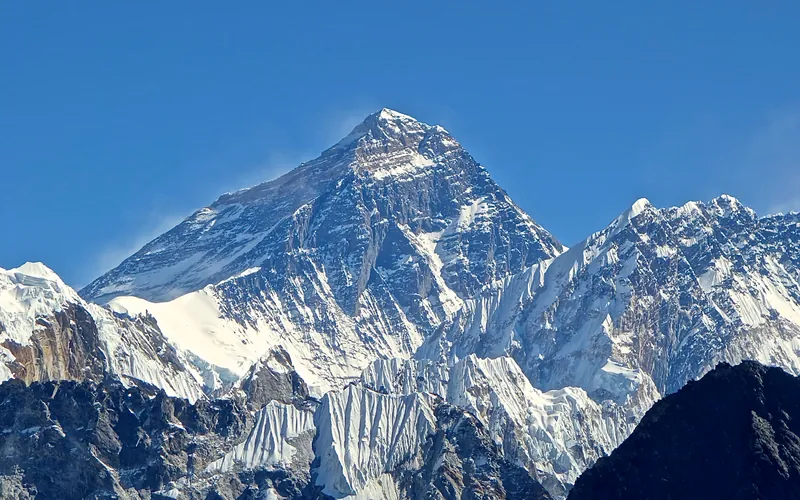
South Col & Southeast Ridge (Normal Route)
The South Col Route along the Southeast Ridge is the historic path of the 1953 first ascent and the most popular route on Mount Everest. Starting from Base Camp on the Khumbu Glacier in Nepal, climbers navigate the shifting seracs of the Khumbu Icefall into the Western Cwm. The route then scales the icy 45-degree slope of the Lhotse Face to the South Col at 7,925 meters, launching the final summit bid through the Balcony, South Summit, and Hillary Step to the summit of Earth at 8,848.86 meters.
Target Objective Peak



Mount Everest
Mount Everest is the highest mountain above sea level on Earth, standing at an official elevation of 8,848.86 meters (29,031.7 ft). Straddling the international frontier between Nepal and China, it is known locally as Sagarmatha in Nepali ('Goddess of the Sky') and Chomolungma in Tibetan ('Mother Goddess of the World'). The peak rises into the extreme upper troposphere, where oxygen levels drop to barely one-third of sea-level pressure. Climbers face hurricane-force jet stream winds, severe frostbite conditions, shifting ice crevasses in the Khumbu Icefall, and the dangerous Death Zone above 8,000 meters.
Featured Expedition Climbers
Jim Whittaker
Born on February 10, 1929, in Seattle, Washington, Jim Whittaker began scaling the peaks of the Pacific Northwest with his twin brother Lou, cutting his teeth on Mount Rainier and the North Cascades. In 1955, Whittaker became the first full-time employee of the outdoor cooperative Recreational Equipment Incorporated, commonly known as REI, eventually serving as its chief executive officer and overseeing its transformation into an international retail cooperative. In 1963, Whittaker was chosen as a lead climber for Norman Dyhrenfurth's historic American Mount Everest Expedition. On May 1, 1963, battling sub-zero gales and depleted oxygen cylinders, Whittaker and Sherpa Nawang Gombu persevered to the 8,848-metre summit of Mount Everest via the South Col, planting the American flag on the highest point on Earth. For this landmark achievement, President John F. Kennedy awarded Whittaker the Hubbard Medal of the National Geographic Society. In 1965, Whittaker guided Senator Robert F. Kennedy to the first ascent of Mount Kennedy in the Saint Elias Mountains of Yukon. In 1978, Whittaker led the first successful American ascent of K2 via the Northeast Ridge, placing Jim Wickwire and Louis Reichardt on the summit. In 1990, Whittaker organized and led the historic Earth Day International Peace Climb, uniting American, Soviet, and Chinese mountaineers to place twenty climbers on Everest's summit while removing two tons of trash from the mountain. Whittaker authored the acclaimed autobiography A Life on the Edge: Memoirs of Everest and Beyond.
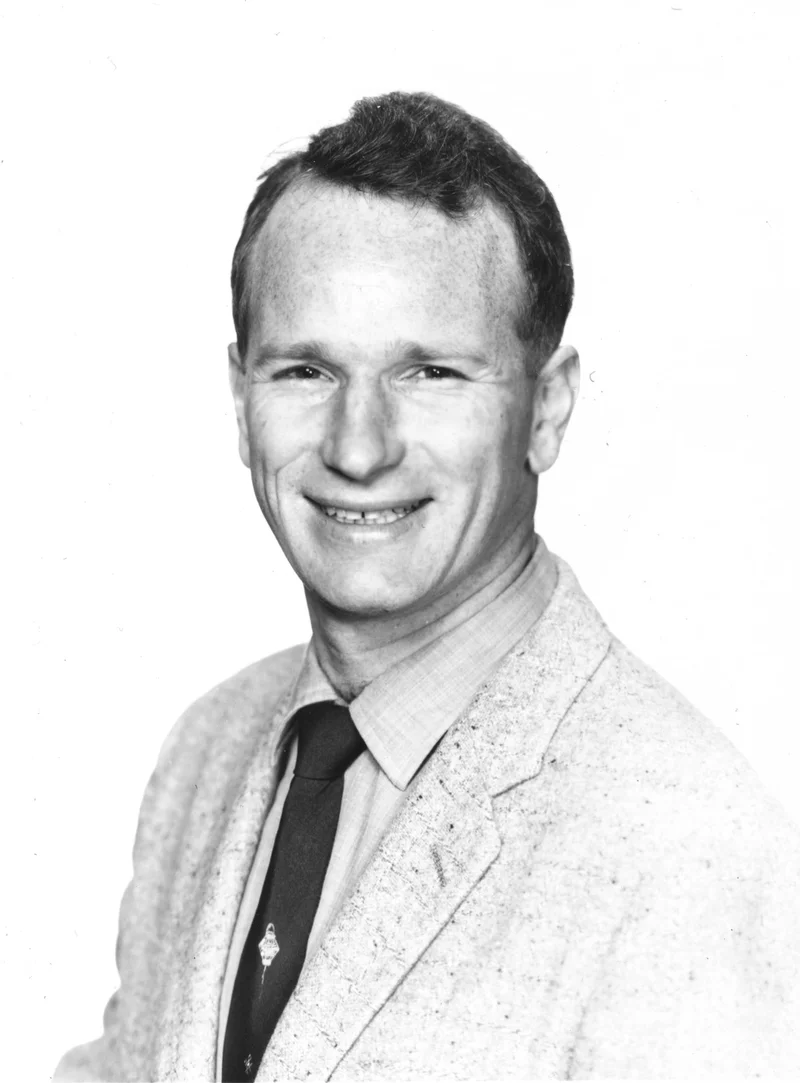
Willi Unsoeld
Born on October 5, 1926, in Arcata, California, Willi Unsoeld discovered mountaineering in the Sierra Nevada and the Tetons, earning a doctorate in philosophy from the University of Washington. Working as a mountain guide on the Grand Teton with the Exum Mountain Guides and on Mount Rainier, Unsoeld blended rigorous physical climbing prowess with existential spiritual philosophy. In 1960, Unsoeld made the first ascent of Masherbrum (7,821 m) in the Karakoram with George Bell. In 1963, Unsoeld joined the American Mount Everest Expedition led by Norman Dyhrenfurth. While teammate Jim Whittaker summited via the South Col route, Unsoeld and anesthesiologist Tom Hornbein embarked on an audacious, committing assault up the untamed West Ridge. Surmounting the treacherous limestone notch now known as the Hornbein Couloir, they reached the summit of Mount Everest at 6:15 in the evening on May 22, 1963, completing the first ascent of the West Ridge and the first traverse of an 8,000-metre peak in history. Descending the unfamiliar South Col route in total darkness, they ran out of oxygen and bivouacked with teammates Barry Bishop and Lute Jerstad in the open at 8,500 metres without shelter or sleeping bags, surviving sub-zero winds. Unsoeld lost nine toes to severe frostbite but returned to teaching, outdoor education with Outward Bound, and founding the Wilderness Program at The Evergreen State College. In 1976, he co-led an expedition to Nanda Devi where his daughter, Devi Unsoeld, tragically perished from altitude complications. Unsoeld died in an avalanche on Mount Rainier on March 4, 1979, during a descent from Camp Muir, leaving a monumental legacy in modern alpine ethics.
Associated Historical Chronicles & Stories
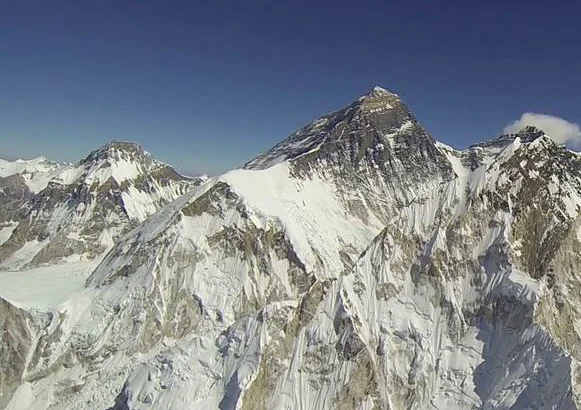
The West Ridge and Beyond: The 1963 American Mount Everest Triumph
In May 1963, the American Mount Everest Expedition achieved historic triumphs on the roof of the world. Jim Whittaker became the first American to summit Everest on May 1, followed on May 22 by Tom Hornbein and Willi Unsoeld's audacious West Ridge traverse and open bivouac at 8,500 metres.
Documented Sources & Archival Citations
- Americans on Everest(James Ramsey Ullman / J.B. Lippincott Company)
Supporting claim: Official narrative chronicle of the 1963 American Mount Everest Expedition
Accessed/Documented: 2026 - Everest: The West Ridge(Thomas F. Hornbein / Sierra Club Books)
Supporting claim: Primary chronicle of the historic West Ridge first ascent and traverse
Accessed/Documented: 2026