
Jim Whittaker
Jim Whittaker is an iconic American mountaineer who became the first American to summit Mount Everest on May 1, 1963, reaching the top via the South Col with Sherpa Nawang Gombu. He served as the first full-time employee and chief executive officer of Recreational Equipment Incorporated. In 1990, he led the historic Earth Day International Peace Climb.
Mountain Safety & Conditions Disclaimer: High-altitude climbing, glacial travel, and technical ascents entail severe objective risks including avalanches, serac collapses, rapid weather collapse, and altitude illness. Historical route descriptions and summit claims on Mountanity reflect documented archival sources and must not be used as live operational safety assessments. Local regulations, permits, and physical glacial topography change continuously.
Peer Review: Senior Editorial Board & Historical Reviewers • Editorial Standards
Biographical Record & Archival Chronicle
Born on February 10, 1929, in Seattle, Washington, Jim Whittaker began scaling the peaks of the Pacific Northwest with his twin brother Lou, cutting his teeth on Mount Rainier and the North Cascades. In 1955, Whittaker became the first full-time employee of the outdoor cooperative Recreational Equipment Incorporated, commonly known as REI, eventually serving as its chief executive officer and overseeing its transformation into an international retail cooperative. In 1963, Whittaker was chosen as a lead climber for Norman Dyhrenfurth's historic American Mount Everest Expedition. On May 1, 1963, battling sub-zero gales and depleted oxygen cylinders, Whittaker and Sherpa Nawang Gombu persevered to the 8,848-metre summit of Mount Everest via the South Col, planting the American flag on the highest point on Earth. For this landmark achievement, President John F. Kennedy awarded Whittaker the Hubbard Medal of the National Geographic Society. In 1965, Whittaker guided Senator Robert F. Kennedy to the first ascent of Mount Kennedy in the Saint Elias Mountains of Yukon. In 1978, Whittaker led the first successful American ascent of K2 via the Northeast Ridge, placing Jim Wickwire and Louis Reichardt on the summit. In 1990, Whittaker organized and led the historic Earth Day International Peace Climb, uniting American, Soviet, and Chinese mountaineers to place twenty climbers on Everest's summit while removing two tons of trash from the mountain. Whittaker authored the acclaimed autobiography A Life on the Edge: Memoirs of Everest and Beyond.
Notable Milestones & Ascents
- First American citizen to reach the summit of Mount Everest (8,848 m) on May 1, 1963, with Nawang Gombu
- Received the National Geographic Society Hubbard Medal from President John F. Kennedy in 1863
- Led the first successful American expedition to the summit of K2 (8,611 m) via the Northeast Ridge in 1978
- Guided Senator Robert F. Kennedy on the 1965 first ascent of Mount Kennedy in Yukon
- Led the 1990 Earth Day International Peace Climb uniting US, Soviet, and Chinese climbers on Everest
- Served as the first full-time employee and chief executive officer of outdoor retail giant REI
Key Statistics & Topographic Figures
- First American Everest Summit
- May 1, 1963 (8,848 metres / 29,029 feet)
- National Geographic Award
- Hubbard Medal (Presented by JFK, 1963)
- K2 Expedition Leader
- 1978 (First American K2 Ascent)
- Peace Climb Leader
- 1990 Earth Day International Peace Climb
- Corporate Leadership
- First employee & CEO of REI
Archival Primary Source Quotations
“You never conquer a mountain. Mountains can't be conquered; you conquer yourself, your fears, your hopes, your limits.”
Defined Alpine Terminology & Concepts
- South Col
- The sharp, wind-scoured mountain pass at 7,906 metres between Mount Everest and Lhotse, serving as the highest launch camp for the standard route.
- Hillary Step
- A nearly vertical 12-metre rock face on the upper Southeast Ridge of Mount Everest at 8,790 metres, overcome on the way to the summit.
Frequently Asked Questions: Jim Whittaker
Who is Jim Whittaker and what was his historic achievement on Mount Everest?
Jim Whittaker is an American mountaineer who became the first American citizen to summit Mount Everest on May 1, 1963, climbing via the South Col with Nawang Gombu.
What award did President John F. Kennedy bestow upon Jim Whittaker in 1963?
President Kennedy awarded Whittaker the prestigious Hubbard Medal of the National Geographic Society at the White House.
What outdoor retail company did Jim Whittaker help build?
He was the first full-time employee and longtime chief executive officer of Recreational Equipment Incorporated (REI), guiding its national growth.
Who did Jim Whittaker guide on the first ascent of Mount Kennedy in 1965?
He guided United States Senator Robert F. Kennedy to the first ascent of Mount Kennedy in the Yukon Territory, named for the late President.
What historic climb did Jim Whittaker lead on K2 in 1978?
Whittaker led the 1978 American K2 Expedition, which achieved the first American ascent of K2 via the unclimbed Northeast Ridge.
What was the 1990 Earth Day International Peace Climb?
An expedition organized and led by Whittaker uniting American, Soviet, and Chinese climbers on Everest, placing 20 climbers on the top and removing two tons of trash.
What is Jim Whittaker's relationship to Lou Whittaker?
Jim and Lou Whittaker were identical twin brothers who learned mountaineering together on the glaciers of Mount Rainier in the 1940s.
What autobiography did Jim Whittaker publish about his career?
He wrote A Life on the Edge: Memoirs of Everest and Beyond, chronicling his mountaineering triumphs, business leadership, and ocean voyages.
Associated Summits (2)
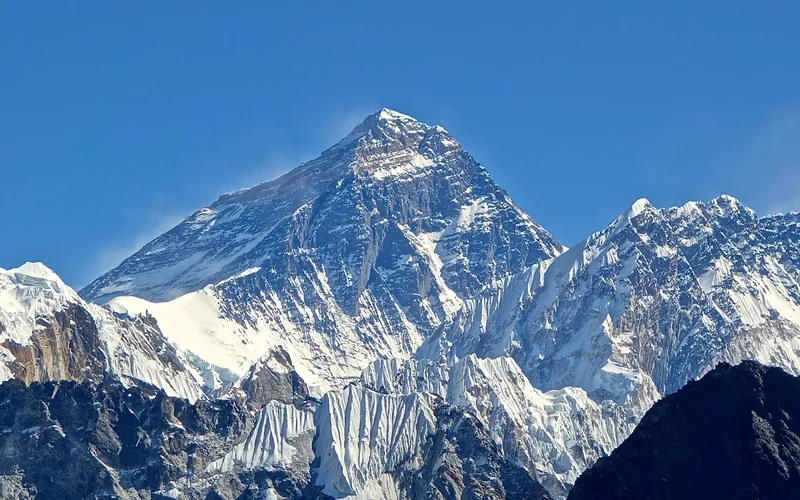


Mount Everest
Mount Everest is the highest mountain above sea level on Earth, standing at an official elevation of 8,848.86 meters (29,031.7 ft). Straddling the international frontier between Nepal and China, it is known locally as Sagarmatha in Nepali ('Goddess of the Sky') and Chomolungma in Tibetan ('Mother Goddess of the World'). The peak rises into the extreme upper troposphere, where oxygen levels drop to barely one-third of sea-level pressure. Climbers face hurricane-force jet stream winds, severe frostbite conditions, shifting ice crevasses in the Khumbu Icefall, and the dangerous Death Zone above 8,000 meters.
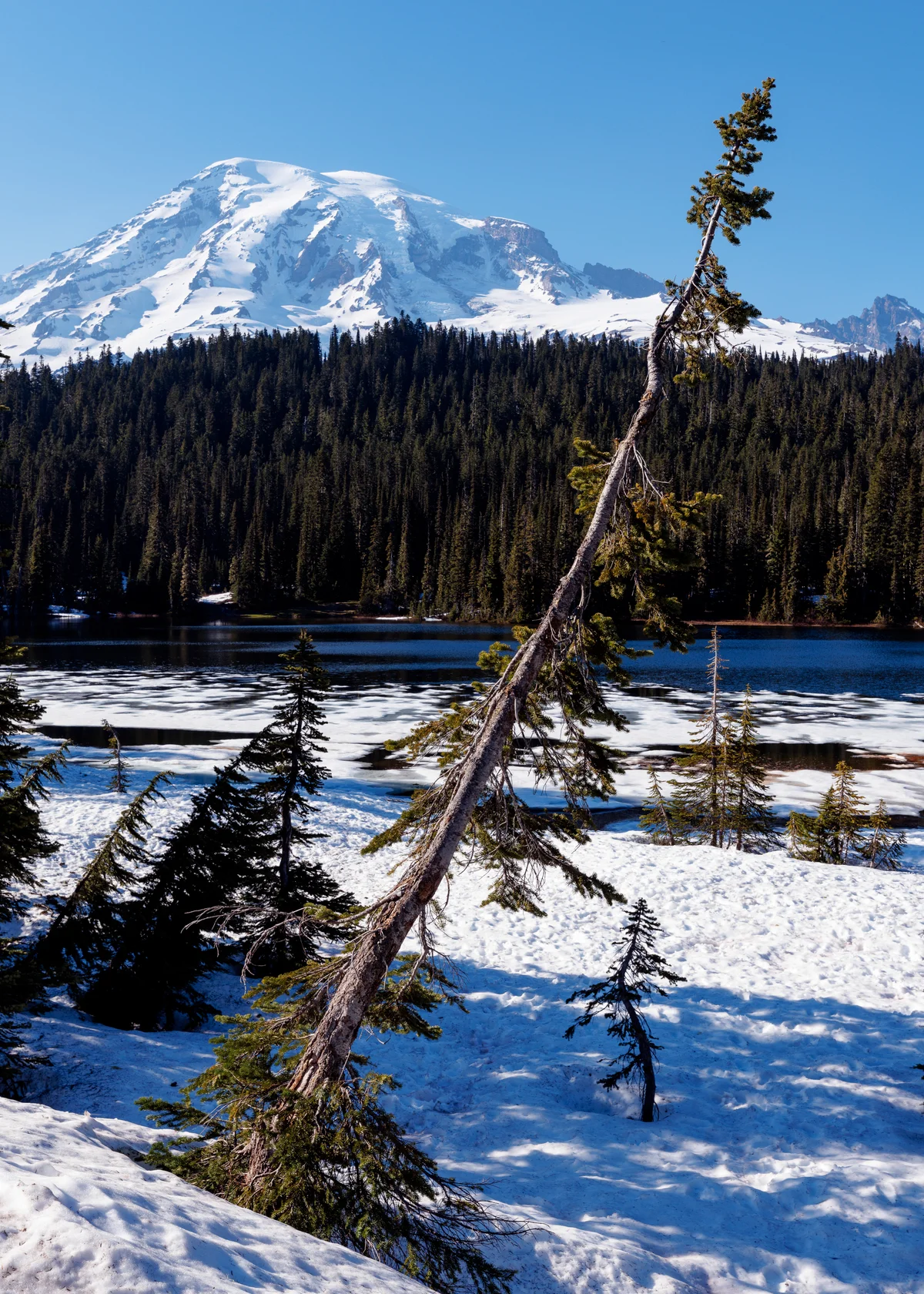

Mount Rainier
Mount Rainier is an episodic active stratovolcano in the Cascade Range of Washington, rising to an elevation of 4,392 metres as the highest peak in Washington and the Cascade Volcanic Arc. Enveloped by twenty-five major named glaciers spanning over thirty-five square miles of perpetual snow and ice, it is the most heavily glaciated peak in the contiguous United States, serving as the proving ground for American high-altitude mountaineering.
Pioneered & Associated Routes (7)
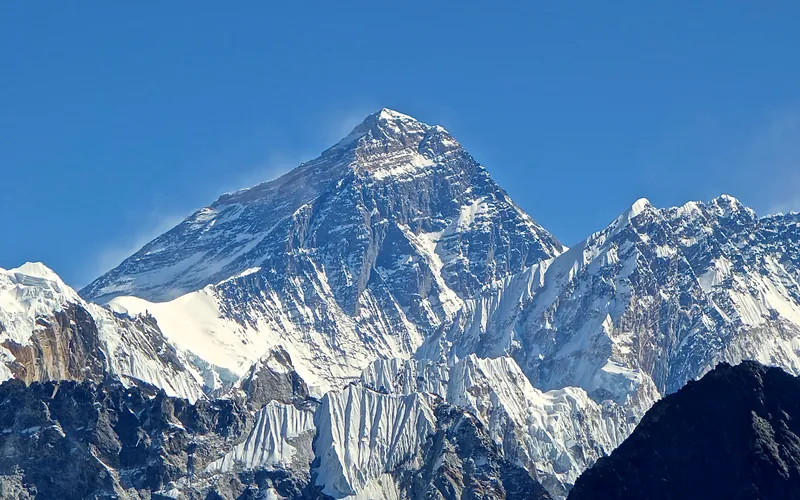
Mount Everest North Face (Hornbein Couloir Direct)
The North Face of Mount Everest via the Japanese Couloir and the sheer Hornbein Couloir is one of the most direct and formidable ice lines in the Himalayas. Rising 3,000 vertical meters from the Rongbuk Glacier to the summit, it funnels through a narrow 60-degree snow-and-ice cleft slicing straight through the Yellow Band and upper limestone cliffs of the North Face. In August 1986, Swiss alpinists Erhard Loretan and Jean Troillet executed one of the most audacious speed climbs in mountain history: climbing the entire face in a single 31-hour push at night without supplemental oxygen, tents, or fixed ropes. After summiting on August 30, they glissaded down the 3,000-meter face on their backs and buttocks in just 3.5 hours, completing the entire round trip in an astonishing 43 hours.
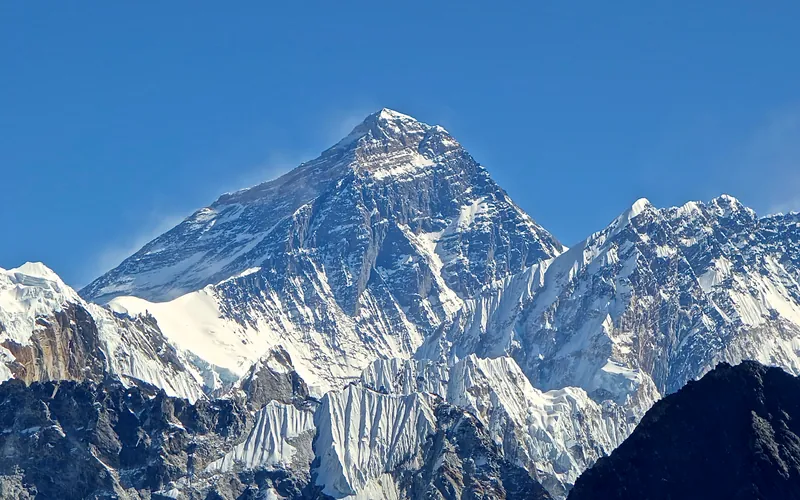
North Col & Northeast Ridge Route
The historic northern route on Mount Everest (8,848.86m), ascending from the Rongbuk and East Rongbuk glaciers to breach the icy wall of the North Col (7,020m). From the col, the route traverses the wind-blasted Northwest Ridge onto the North Face before joining the razor-like Northeast Ridge, navigating the notorious First, Second, and Third Steps in the Death Zone. This was the stage of George Mallory and Andrew Irvine's fateful 1924 climb and was first definitively surmounted on May 25, 1960, by Chinese climbers Wang Fuzhou, Qu Yinhua, and Gongbu.
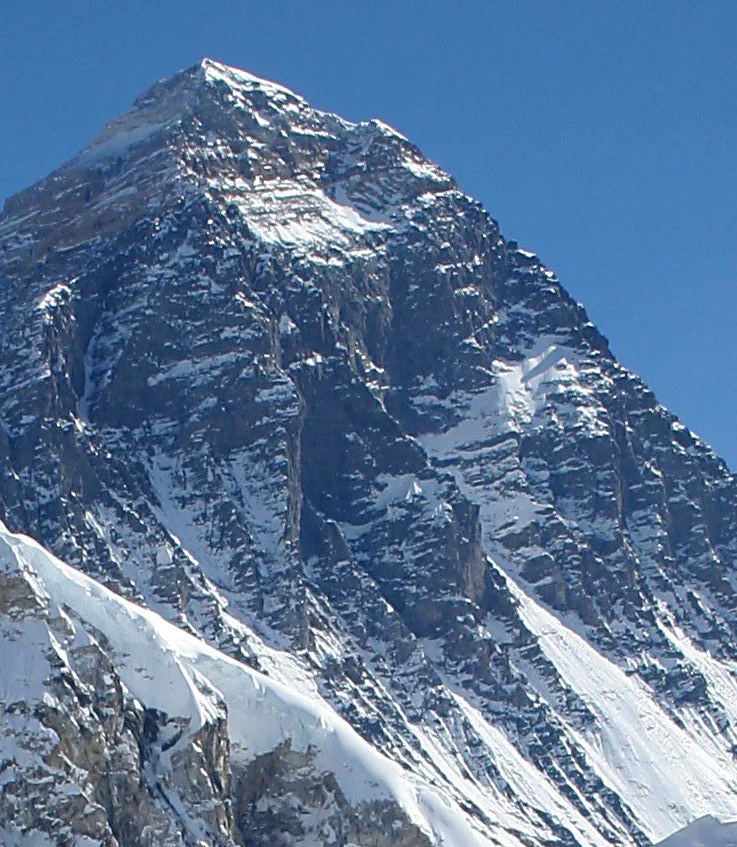
Mount Everest Southwest Face (Bonington Route)
The Southwest Face of Mount Everest (8,848.86m) rises 2,300 vertical meters from the Western Cwm to the summit, presenting one of the largest and most forbidding rock and ice faces in the world. Dominated by the vertical 300-meter 'Rock Band' at 8,200–8,500 meters, the face repelled six international attempts between 1969 and 1974. In autumn 1975, a legendary British expedition led by Chris Bonington breached the face when Paul Braithwaite and Nick Estcourt unlocked the key ramp through the Rock Band. On September 24, 1975, Doug Scott and Dougal Haston climbed to the South Summit and pushed on to the main summit, becoming the first Britons to conquer Everest. Trapped by nightfall during their descent, they survived an epic open bivouac at 8,760 meters without oxygen, sleeping bags, or frostbite.
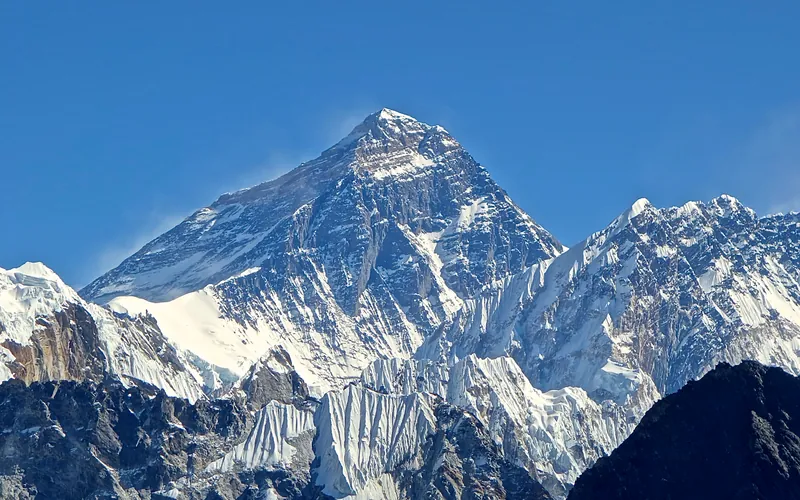
Mount Everest Complete West Ridge (Yugoslav Direct)
The Complete West Ridge of Mount Everest is one of the most formidable and sustained technical routes on the mountain. Pioneered in spring 1979 by an elite Yugoslav expedition led by Tone Škarja, the route tackles the integral knife-edge crest directly from the Lho La col (6,026m) all the way to the 8,848.86m summit. Unlike the 1963 American West Ridge route which diverted into the Hornbein Couloir from the North Face, the Yugoslav line stayed strictly along the razor-edge crest of the West Ridge, surmounting technical rock buttresses up to Grade V+ at extreme altitude before traversing around the Yellow Band. On May 13, 1979, Andrej Štremfelj and Nejc Zaplotnik achieved the first ascent of the complete ridge, followed two days later by Stane Belak, Marjan Manfreda, and Ang Phu Sherpa in one of the greatest feats in Himalayan history.
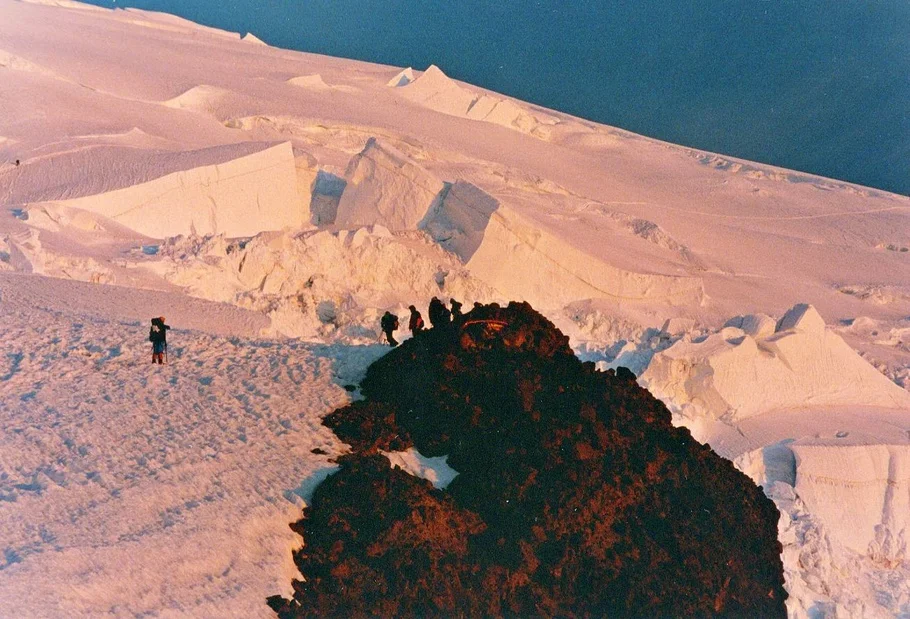
Disappointment Cleaver Route (Mount Rainier)
The Disappointment Cleaver route is the standard and most celebrated climbing route on Mount Rainier, ascending the glaciated south flank of the stratovolcano via the Muir Snowfield, the Cowlitz and Ingraham glaciers, and the rocky buttress of the Cleaver. Graded French F to PD with 2,750 metres of elevation gain from Paradise, it is North America's premier high-altitude mountaineering proving ground, presenting steep crevasse route-finding, serac fall hazards, and rapid maritime storm cycles.
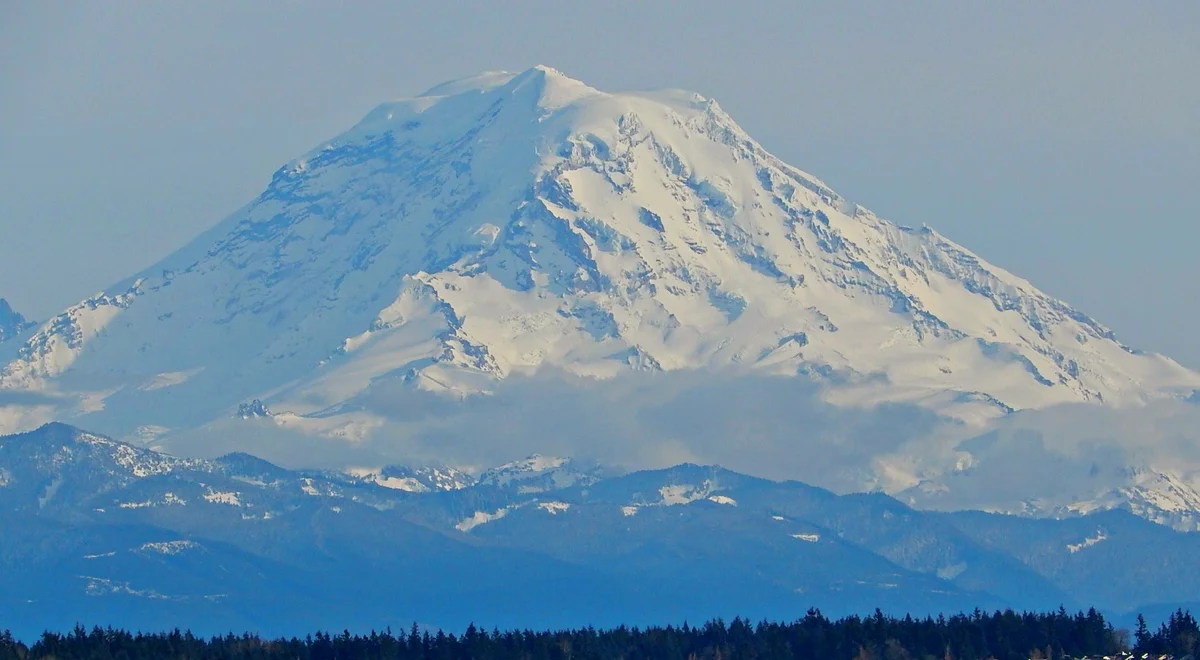
Liberty Ridge (Mount Rainier)
Liberty Ridge is the premier technical alpine classic of Mount Rainier and one of North America's Fifty Classic Climbs, rising dramatically on the mountain's north face between the Carbon and Winthrop glaciers. Ascending 1,200 vertical metres directly up a knife-edge snow, ice, and rock spine bounded by the sheer avalanche-swept walls of the Willis Wall, it is graded French D with sustained 50° to 55° ice and high objective hazards.
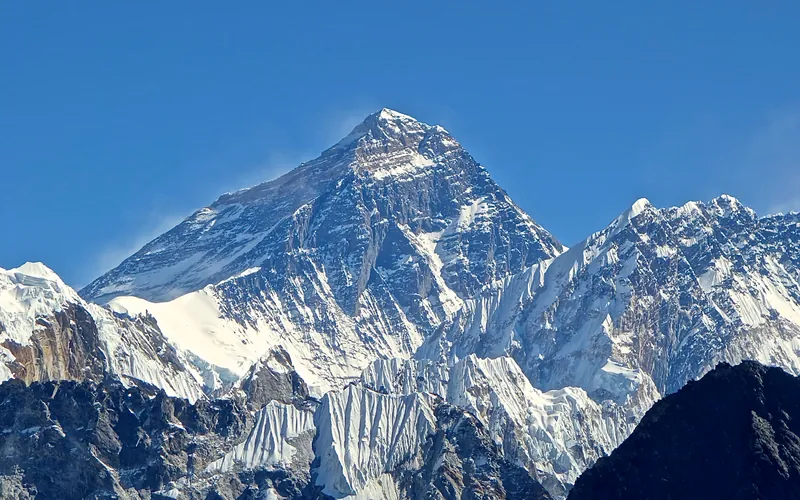
South Col & Southeast Ridge (Normal Route)
The South Col Route along the Southeast Ridge is the historic path of the 1953 first ascent and the most popular route on Mount Everest. Starting from Base Camp on the Khumbu Glacier in Nepal, climbers navigate the shifting seracs of the Khumbu Icefall into the Western Cwm. The route then scales the icy 45-degree slope of the Lhotse Face to the South Col at 7,925 meters, launching the final summit bid through the Balcony, South Summit, and Hillary Step to the summit of Earth at 8,848.86 meters.
Documented Expeditions (1)
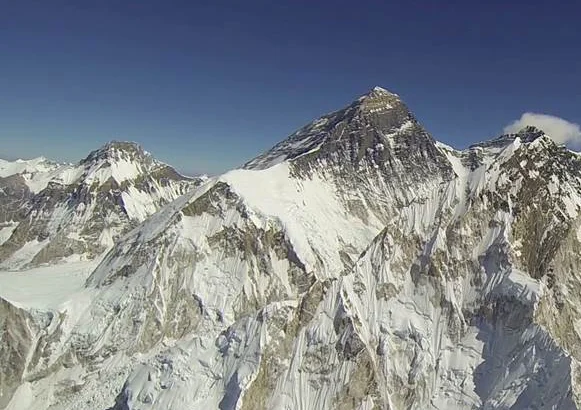
1963 Historic American Mount Everest Expedition: South Col and West Ridge Traverse
In May 1963, the American Mount Everest Expedition achieved historic triumphs as Jim Whittaker became the first American to summit Everest, followed by Tom Hornbein and Willi Unsoeld's legendary West Ridge traverse.
Associated Chronicles & Stories (1)
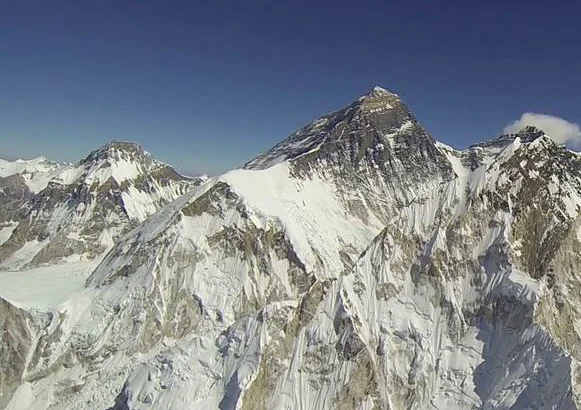
The West Ridge and Beyond: The 1963 American Mount Everest Triumph
In May 1963, the American Mount Everest Expedition achieved historic triumphs on the roof of the world. Jim Whittaker became the first American to summit Everest on May 1, followed on May 22 by Tom Hornbein and Willi Unsoeld's audacious West Ridge traverse and open bivouac at 8,500 metres.
Documented Sources & Archival Citations
- A Life on the Edge: Memoirs of Everest and Beyond(Jim Whittaker / The Mountaineers Books)
Supporting claim: Autobiographical account of the 1963 Everest first American ascent, REI leadership, and K2 expedition
Accessed/Documented: 2026 - Americans on Everest(James Ramsey Ullman / J.B. Lippincott Company)
Supporting claim: Official expedition chronicle of the 1963 American Mount Everest Expedition
Accessed/Documented: 2026