Liberty Ridge (Mount Rainier)
Liberty Ridge is the premier technical alpine classic of Mount Rainier and one of North America's Fifty Classic Climbs, rising dramatically on the mountain's north face between the Carbon and Winthrop glaciers. Ascending 1,200 vertical metres directly up a knife-edge snow, ice, and rock spine bounded by the sheer avalanche-swept walls of the Willis Wall, it is graded French D with sustained 50° to 55° ice and high objective hazards.
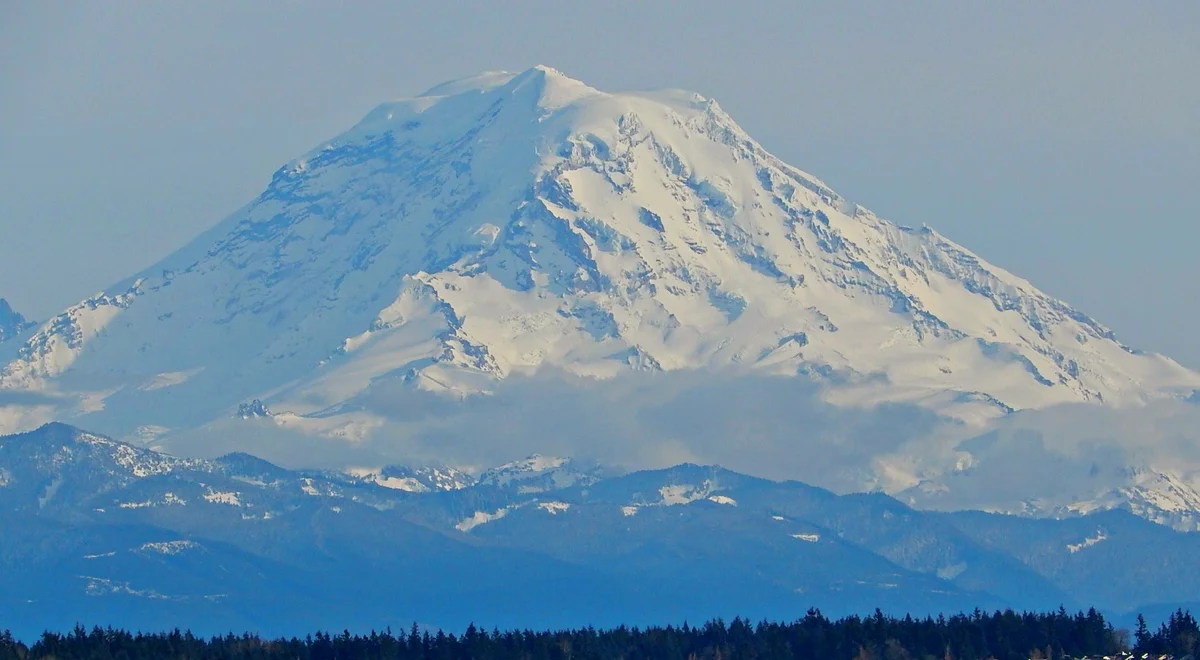
Ascent line, technical cruxes & camp topography profile for Liberty Ridge (Mount Rainier)
Mountain Safety & Conditions Disclaimer: High-altitude climbing, glacial travel, and technical ascents entail severe objective risks including avalanches, serac collapses, rapid weather collapse, and altitude illness. Historical route descriptions and summit claims on Mountanity reflect documented archival sources and must not be used as live operational safety assessments. Local regulations, permits, and physical glacial topography change continuously.
Peer Review: Senior Editorial Board & Historical Reviewers • Editorial Standards
Tactical & Camp Notes
First climbed on September 29, 1935, by Ome Daiber, Arnie Campbell, and Jim Borrow. The route ascends from Ipsut Creek or White River, traverses the crevassed lower Carbon Glacier, establishes a bivouac at the classic rock perch of Thumb Rock (3,280 m), scales the Black Ring and steep upper slopes, breaches the Bergschrund, and crests onto the 4,301-metre summit of Liberty Cap.
Interactive Elevation Profile
Vertical profile, technical cruxes, and camp staging progression for Liberty Ridge (Mount Rainier) on Mount Rainier.
Trailhead staging area on the northeast approach to Mount Rainier.
Camp-by-Camp Topography
Key staging altitudes, technical cruxes, and terrain transitions for Liberty Ridge (Mount Rainier).
White River Trailhead / Glacier Basin
Trailhead staging area on the northeast approach to Mount Rainier.
Lower Carbon Glacier Moraine Camp
Glacial approach camp positioned beneath the towering ice cliffs of the Willis Wall.
Thumb Rock Bivouac
The celebrated knife-edge rock rib providing a sheltered island amid severe ice slopes.
Liberty Cap Summit
The northern volcanic dome summit reached immediately above the Liberty Ridge ice cap.
Topographic Location & Terrain Map
Cartographic datum, massif coordinates, and terrain context for Liberty Ridge (Mount Rainier) on Mount Rainier.
Interactive Topographic Terrain Map
Click below to load live cartographic contours, glacier approaches, and geographic markers for Mount Rainier (46°51′10″ N, 121°45′37″ W).
Key Statistics & Topographic Figures
- Technical Difficulty
- French D (Difficile) / Grade IV Alpine Ice
- Slope Angles
- Sustained 50° to 55° ice and snow
- Face Vertical Rise
- 1,200 metres from Carbon Glacier
- First Ascent Date
- September 29, 1935
- Classic Bivouac
- Thumb Rock (3,280 metres)
Archival Primary Source Quotations
“Liberty Ridge is the monarch of all routes on Rainier: direct, elegant, uncompromising, and demanding everything an alpinist has to give.”
Defined Alpine Terminology & Concepts
- Bergschrund
- A deep, gaping crevasse formed where the moving ice of a glacier pulls away from the stagnant snow or rock wall at the head of a cirque.
- Arête
- A sharp, narrow knife-edge mountain crest separating two glacial valleys or amphitheaters.
Frequently Asked Questions: Liberty Ridge (Mount Rainier)
What is Liberty Ridge on Mount Rainier?
Liberty Ridge is a world-class Grade IV technical alpine ice route on Mount Rainier's north face, ascending 1,200 vertical metres directly between the Carbon and Winthrop glaciers.
Why is Liberty Ridge considered one of North America's Fifty Classic Climbs?
Because of its immense aesthetic beauty, sustained 50-to-55-degree alpine ice climbing, high objective exposure, and commitment on the wild north face.
Who made the first ascent of Liberty Ridge and when?
Pacific Northwest climbing pioneers Ome Daiber, Arnie Campbell, and Jim Borrow achieved the first ascent on September 29, 1935.
What is Thumb Rock on Liberty Ridge?
Thumb Rock is a celebrated rock outcrop at 3,280 metres that provides the primary protected bivouac site on the exposed knife-edge ridge.
What is the Black Ring on Liberty Ridge?
The Black Ring is the mixed rock and steep water ice crux band located at approximately 3,600 metres, requiring precise crampon technique.
Where does the Liberty Ridge route terminate on Mount Rainier?
The route breaches the upper bergschrund and tops out directly onto the northern summit dome of Liberty Cap at 4,301 metres.
What makes Liberty Ridge so objectively dangerous?
The route is flanked by the avalanche-swept Willis Wall, and once committed above Thumb Rock, retreat is nearly impossible, leaving teams vulnerable to storms.
What gear is recommended for climbing Liberty Ridge?
Two technical ice axes or ice tools, steel crampons, ice screws, pickets, lightweight alpine bivouac gear, and helmet.
Mountain Ascended
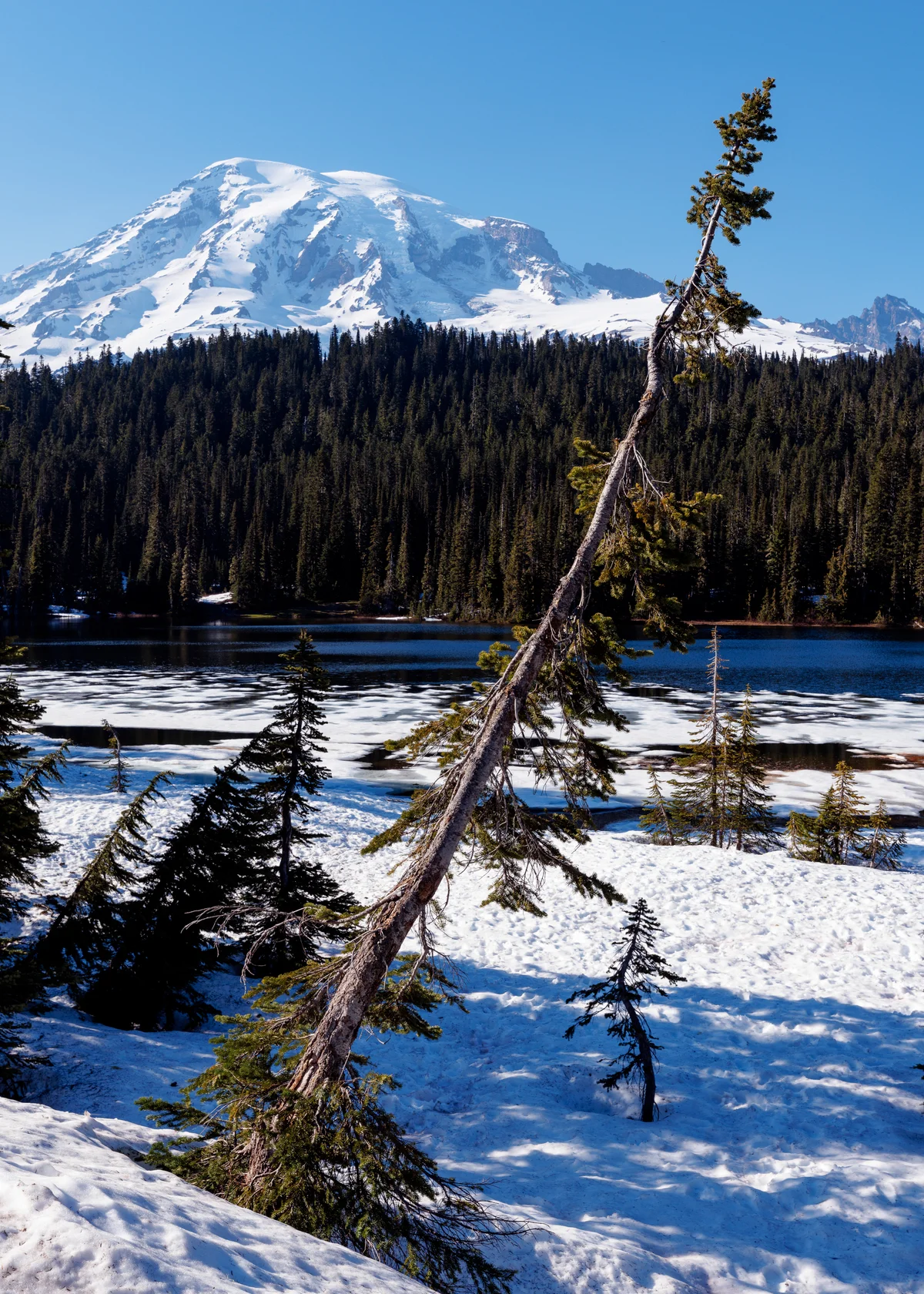

Mount Rainier
Mount Rainier is an episodic active stratovolcano in the Cascade Range of Washington, rising to an elevation of 4,392 metres as the highest peak in Washington and the Cascade Volcanic Arc. Enveloped by twenty-five major named glaciers spanning over thirty-five square miles of perpetual snow and ice, it is the most heavily glaciated peak in the contiguous United States, serving as the proving ground for American high-altitude mountaineering.
Documented Expeditions on this Route (1)
Verified historical summits, siege campaigns, and pioneer attempts recorded on Liberty Ridge (Mount Rainier).
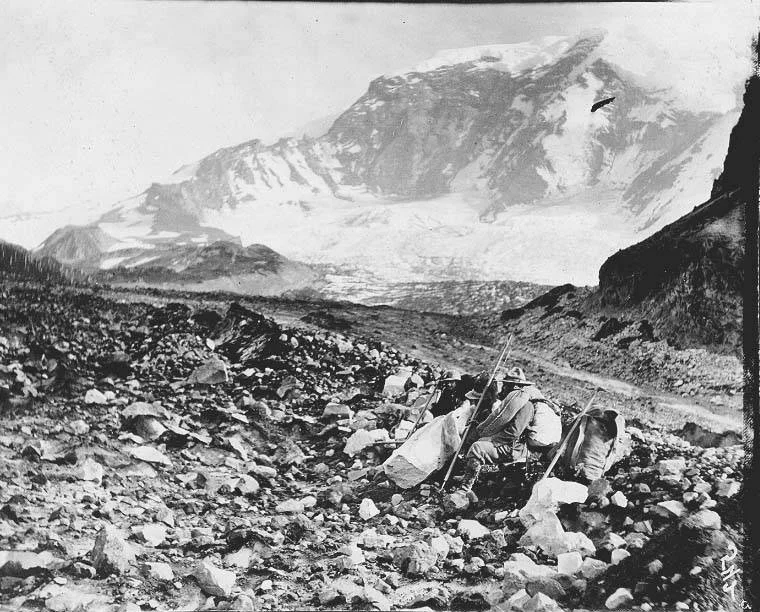
1935 First Ascent of Liberty Ridge on Mount Rainier by Daiber, Campbell, and Borrow
On September 29, 1935, Ome Daiber, Arnie Campbell, and Jim Borrow achieved the bold first ascent of Liberty Ridge on Mount Rainier, pioneering the mountain's north face classic.
Archival Chronicles & Stories on this Route (1)
In-depth longform historical narratives, harrowing survival accounts, and firsthand alpine journals on Liberty Ridge (Mount Rainier).
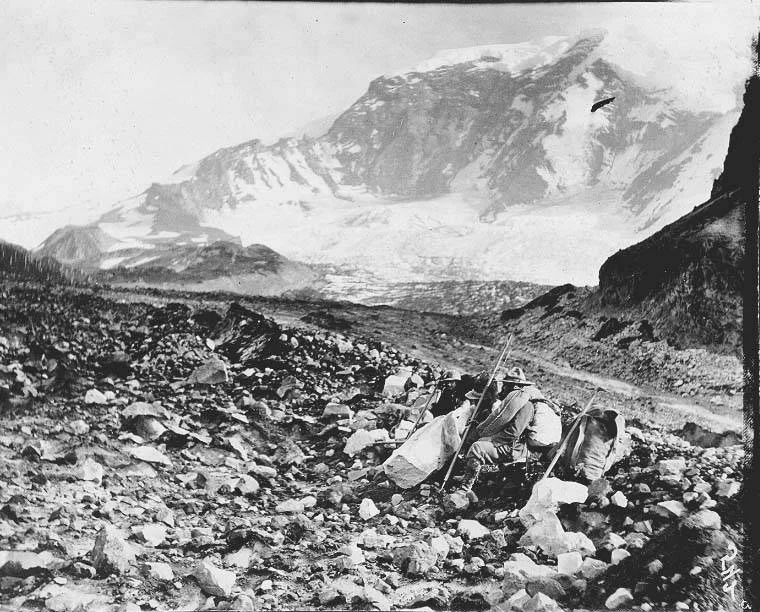
The Frozen Spine of Liberty: Daiber's 1935 North Face Triumph on Rainier
On September 29, 1935, Pacific Northwest climbers Ome Daiber, Arnie Campbell, and Jim Borrow achieved the bold first ascent of Liberty Ridge on Mount Rainier. Ascending 1,200 vertical metres of steep alpine ice and mixed rock flanked by the Willis Wall, they established an enduring North American classic.
Documented Sources & Archival Citations
- Fifty Classic Climbs of North America(Steve Roper and Allen Steck / Sierra Club Books)
Supporting claim: Selection and definitive profile of Liberty Ridge as a classic North American alpine ascent
Accessed/Documented: 2026 - The Challenge of Rainier(Dee Molenaar / The Mountaineers Books)
Supporting claim: Historical chronicle of the 1935 first ascent by Daiber, Campbell, and Borrow
Accessed/Documented: 2026