1935 First Ascent of Liberty Ridge on Mount Rainier by Daiber, Campbell, and Borrow
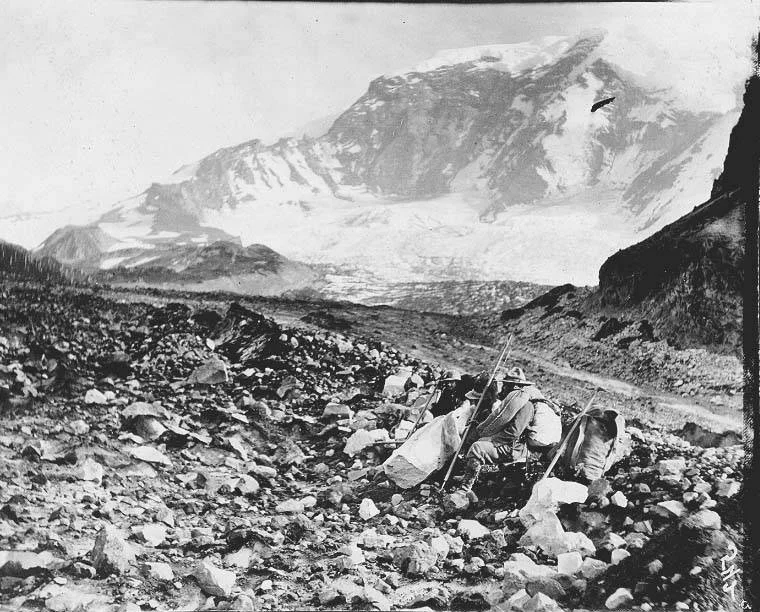
On September 29, 1935, Ome Daiber, Arnie Campbell, and Jim Borrow achieved the bold first ascent of Liberty Ridge on Mount Rainier, pioneering the mountain's north face classic.
Mountain Safety & Conditions Disclaimer: High-altitude climbing, glacial travel, and technical ascents entail severe objective risks including avalanches, serac collapses, rapid weather collapse, and altitude illness. Historical route descriptions and summit claims on Mountanity reflect documented archival sources and must not be used as live operational safety assessments. Local regulations, permits, and physical glacial topography change continuously.
Peer Review: Senior Editorial Board & Historical Reviewers • Editorial Standards
Official Expedition Narrative & Archival Record
In late September 1935, Seattle mountaineering innovators Ome Daiber, Arnie Campbell, and Jim Borrow launched a daring attempt on the imposing north face of Mount Rainier, seeking to establish a direct line up the colossal knife-edge spine separating the Carbon and Winthrop glaciers known as Liberty Ridge. Regarded by contemporary climbers as an impossibly hazardous death route due to the sweeping avalanches and icefalls plunging down the adjacent Willis Wall, the team approached via the lower Carbon Glacier. Moving swiftly with lightweight packs, cutting-edge triconi-nailed boots, and ice axes, the trio reached the prominent rocky prow of Thumb Rock at 3,280 metres, carving out an exposed bivouac ledge in the ice. On September 29, climbing in crisp autumn conditions with firm alpine ice, Daiber led the team across the Black Ring mixed crux, surmounting sustained 50-degree hard ice slopes beneath towering seracs. Breaching the upper bergschrund in late afternoon, they crested onto the northern summit dome of Liberty Cap at 4,301 metres, completing one of the most visionary and daring technical alpine ascents in American mountaineering history.
Documented Team Composition
- Ome Daiber (Lead Climber, United States)
- Arnie Campbell (Climber, United States)
- Jim Borrow (Climber, United States)
Key Statistics & Topographic Figures
- Summit Date
- September 29, 1935 (3:00 PM)
- First Ascent Team
- Ome Daiber, Arnie Campbell, Jim Borrow
- Route Grade
- French D / Grade IV Alpine Ice
- Face Rise
- 1,200 vertical metres above Carbon Glacier
- High Bivouac
- Thumb Rock (3,280 metres)
Archival Primary Source Quotations
“On Liberty Ridge, you look down between your boots and see the Carbon Glacier two thousand feet below. There is no turning back.”
Defined Alpine Terminology & Concepts
- Black Ring
- The steep mixed volcanic rock and glazed ice crux band on the upper crest of Liberty Ridge.
- Arête
- A sharp, narrow knife-edge mountain crest separating two glacial amphitheaters.
Frequently Asked Questions: 1935 First Ascent of Liberty Ridge on Mount Rainier by Daiber, Campbell, and Borrow
What was the 1935 Liberty Ridge climb on Mount Rainier?
It was the pioneering first ascent of Liberty Ridge on Mount Rainier's north face, completed on September 29, 1935, by Daiber, Campbell, and Borrow.
Who made the first ascent of Liberty Ridge?
Seattle climbing pioneers Ome Daiber, Arnie Campbell, and Jim Borrow.
Why was Liberty Ridge feared by early mountaineers?
Because it is flanked on both sides by the avalanche-swept precipice of the Willis Wall, exposing climbers to catastrophic icefall.
Where did the team bivouac on Liberty Ridge?
At Thumb Rock at 3,280 metres, a narrow rock island hacked out of the sheer ice slope above the lower Carbon Glacier.
What is the Black Ring on Liberty Ridge?
The mixed rock and steep water ice crux band located at approximately 3,600 metres, requiring delicate crampon technique.
Where does the Liberty Ridge route terminate?
On Liberty Cap, the 4,301-metre northern volcanic dome of Mount Rainier, above the final bergschrund.
What technical difficulty is Liberty Ridge rated?
French D (Difficile) / Grade IV, featuring sustained 50 to 55-degree alpine ice and severe objective exposure.
Why is Liberty Ridge celebrated in American climbing literature?
It is featured in Fifty Classic Climbs of North America as the premier alpine ice route in the Cascade Range.
Ascent Route & Topography
Liberty Ridge (Mount Rainier)
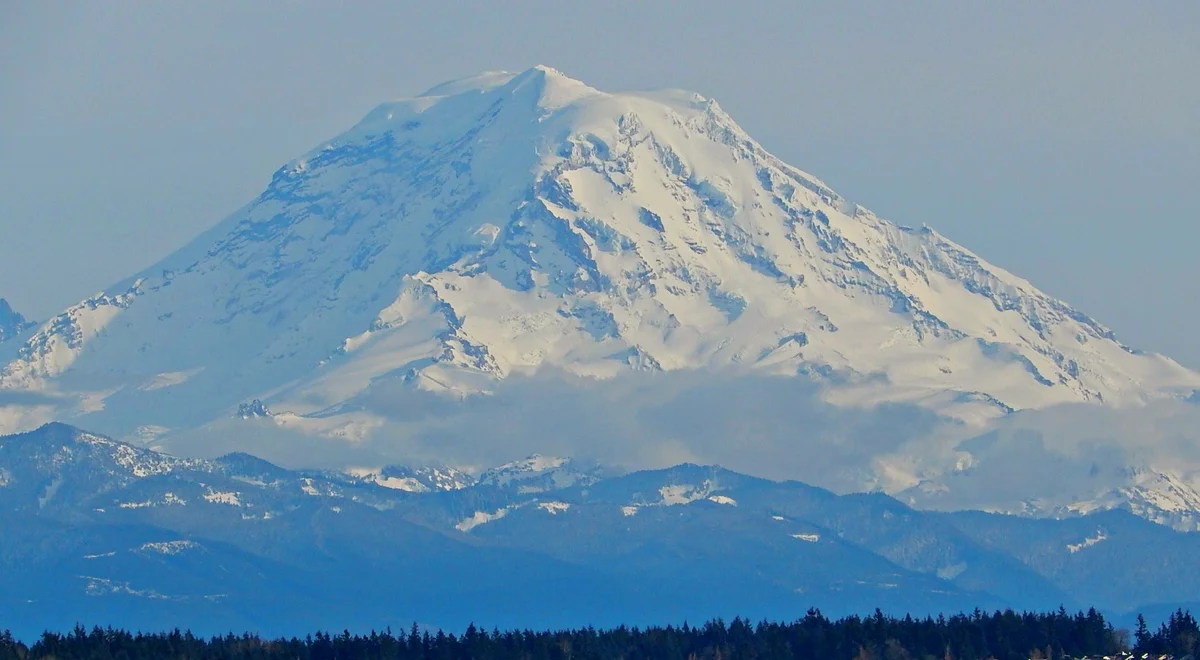
Liberty Ridge is the premier technical alpine classic of Mount Rainier and one of North America's Fifty Classic Climbs, rising dramatically on the mountain's north face between the Carbon and Winthrop glaciers. Ascending 1,200 vertical metres directly up a knife-edge snow, ice, and rock spine bounded by the sheer avalanche-swept walls of the Willis Wall, it is graded French D with sustained 50° to 55° ice and high objective hazards.
Target Objective Peak

Mount Rainier
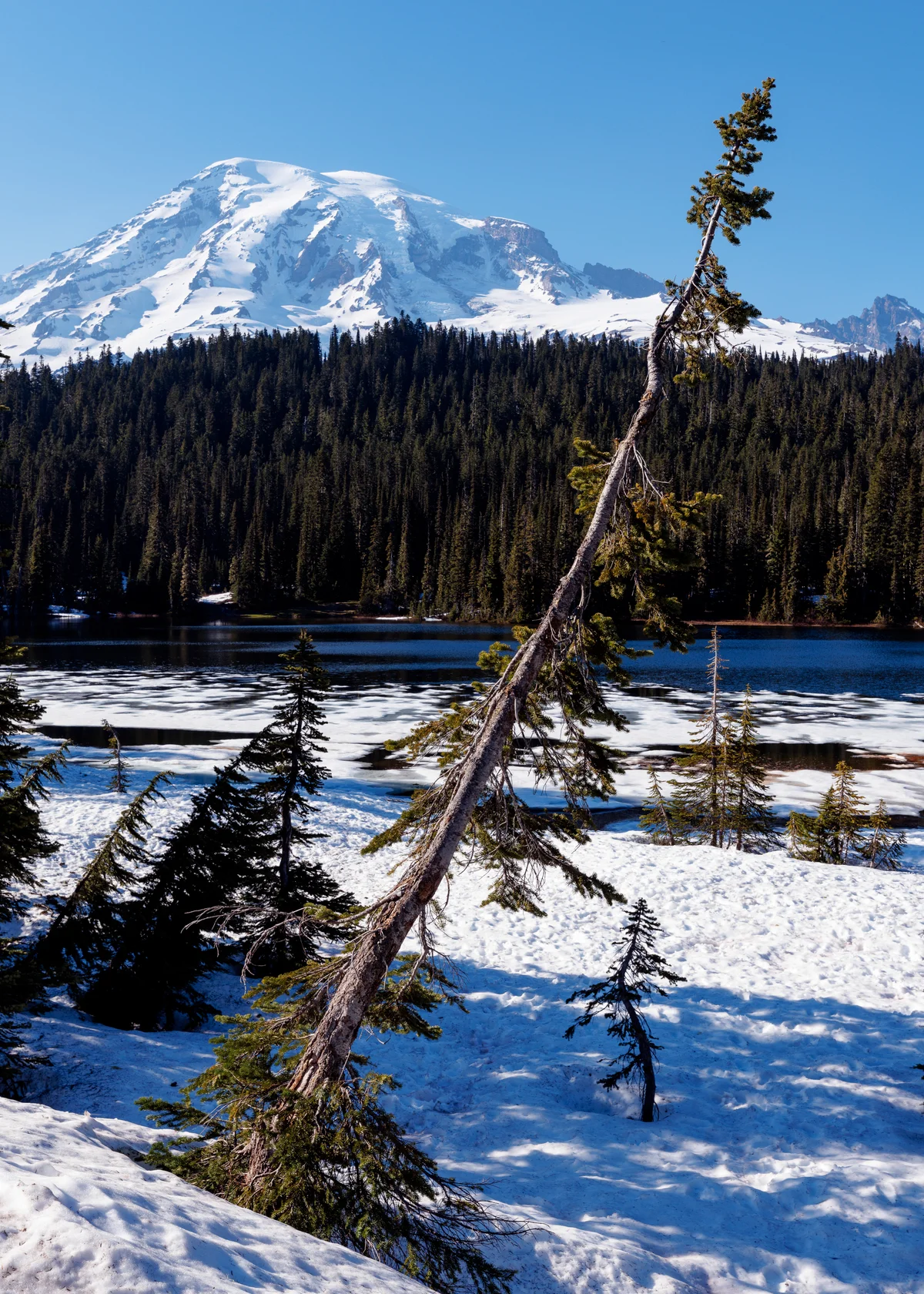
Mount Rainier is an episodic active stratovolcano in the Cascade Range of Washington, rising to an elevation of 4,392 metres as the highest peak in Washington and the Cascade Volcanic Arc. Enveloped by twenty-five major named glaciers spanning over thirty-five square miles of perpetual snow and ice, it is the most heavily glaciated peak in the contiguous United States, serving as the proving ground for American high-altitude mountaineering.
Featured Expedition Climber
Lou Whittaker
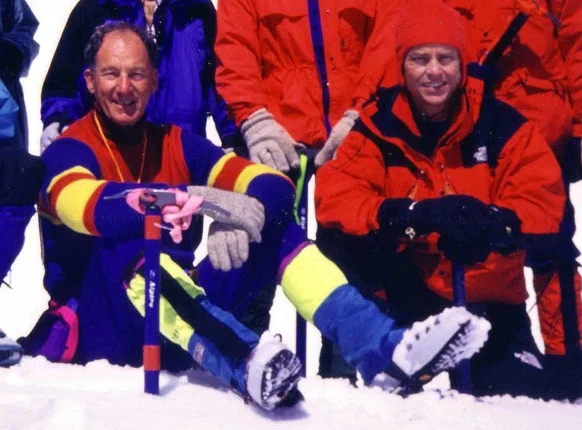
Born on February 10, 1929, in Seattle, Washington, Lou Whittaker grew up exploring the Cascade Range with his identical twin brother, Jim Whittaker. Climbing Mount Rainier as teenagers in 1945, Lou dedicated his life to mountain guiding, mountain rescue, and outdoor leadership. In 1969, Whittaker co-founded Rainier Mountaineering Incorporated, commonly known as RMI, building it into the world's premier commercial mountaineering guide service. Whittaker personally led more than two hundred and fifty summits of Mount Rainier, survived catastrophic avalanches, and pioneered high-altitude rescue techniques on heavily crevassed terrain that saved dozens of lives. Beyond the Cascades, Whittaker led major international expeditions to the Karakoram and Himalayas. In 1984, Whittaker served as expedition leader for the historic American Mount Everest Expedition that achieved the first American ascent of the Great Couloir and North Col via Tibet, placing Phil Ershler on the summit without oxygen after Whittaker coordinated the complex logistics. In 1989, he led an expedition to K2. Whittaker authored the acclaimed memoir Memoirs of a Mountain Guide. Whittaker passed away on March 24, 2024, at the age of ninety-five, revered as the patriarch of American professional mountain guiding.
Associated Historical Chronicles & Stories
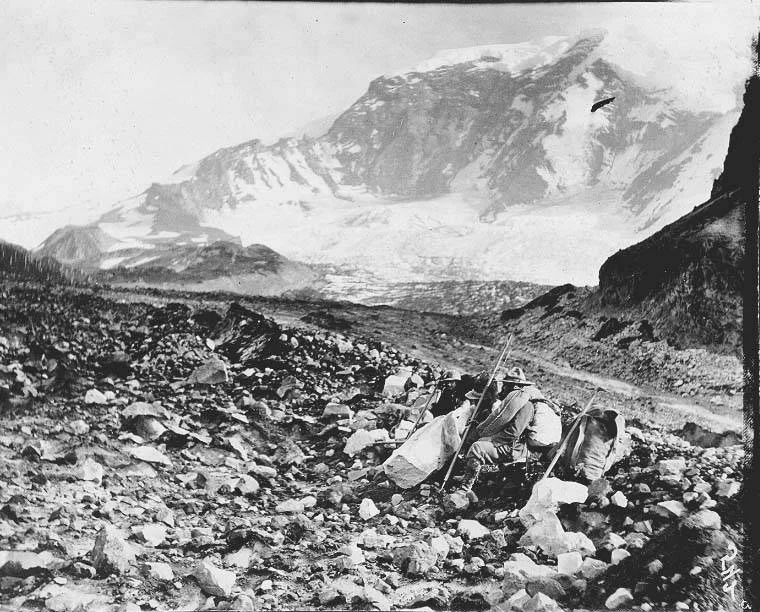
The Frozen Spine of Liberty: Daiber's 1935 North Face Triumph on Rainier
On September 29, 1935, Pacific Northwest climbers Ome Daiber, Arnie Campbell, and Jim Borrow achieved the bold first ascent of Liberty Ridge on Mount Rainier. Ascending 1,200 vertical metres of steep alpine ice and mixed rock flanked by the Willis Wall, they established an enduring North American classic.
Documented Sources & Archival Citations
- The Challenge of Rainier(Dee Molenaar / The Mountaineers Books)
Supporting claim: Detailed historical chronicle of the 1935 first ascent of Liberty Ridge
Accessed/Documented: 2026 - Fifty Classic Climbs of North America(Steve Roper and Allen Steck / Sierra Club Books)
Supporting claim: Official profile of Liberty Ridge as one of the continent's classic alpine routes
Accessed/Documented: 2026