1979 Yugoslav Mount Everest Complete West Ridge Expedition
On May 13, 1979, Slovenian climbers Andrej Štremfelj and Nejc Zaplotnik completed the historic first ascent of Mount Everest's Complete West Ridge Direct from the Lho La col to the 8,848m summit, overcoming extreme Grade V+ rock climbing in the death zone.
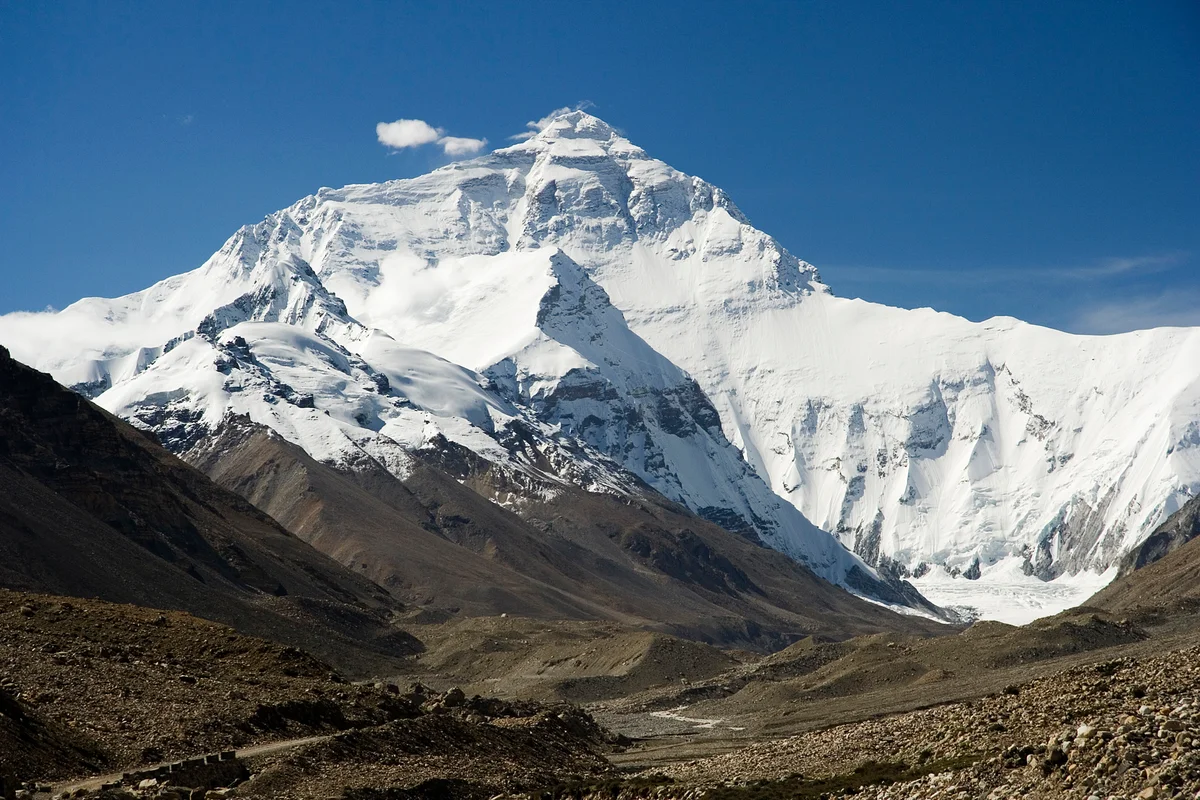
Mountain Safety & Conditions Disclaimer: High-altitude climbing, glacial travel, and technical ascents entail severe objective risks including avalanches, serac collapses, rapid weather collapse, and altitude illness. Historical route descriptions and summit claims on Mountanity reflect documented archival sources and must not be used as live operational safety assessments. Local regulations, permits, and physical glacial topography change continuously.
Peer Review: Senior Editorial Board & Historical Reviewers • Editorial Standards
Official Expedition Narrative & Archival Record
In the spring of 1979, an elite twenty-five-member Yugoslav expedition led by Tone Škarja arrived in the Khumbu to attempt the most sustained and technically demanding unclimbed challenge on Mount Everest: the complete, unbroken West Ridge direct. Ascending a terrifying 700-meter ice wall to gain the Lho La col (6,026m), the team established a succession of high camps directly along the knife-edge crest. The climbers were buffeted continuously by hurricane-force westerly jet stream winds that tore tents from the ridge and caused frostbite. On May 13, 1979, Andrej Štremfelj and Nejc Zaplotnik launched their final assault from Camp V at 8,120 meters. Confronting the vertical crux of the Yellow Band—a steep, crumbly limestone chimney requiring Grade V+ technical rock climbing with thick mitts in the death zone—Zaplotnik climbed the barrier with phenomenal skill. Traversing across 60-degree hard ice into the upper snow slopes, Štremfelj and Zaplotnik stepped onto the 8,848-meter summit of Mount Everest at 1:45 PM. Their audacious climb remains universally celebrated as one of the greatest high-altitude ascents in alpine history.
Documented Team Composition
- Andrej Štremfelj (Slovenia, Summit Climber)
- Nejc Zaplotnik (Slovenia, Summit Climber)
- Tone Škarja (Slovenia, Expedition Leader)
- Stane Belak (Slovenia, Summit Climber)
- Marjan Manfreda (Slovenia, Summit Climber)
- Ang Phu Sherpa (Nepal, Summit Climber)
Key Statistics & Topographic Figures
- Summit Date & Time
- May 13, 1979 (01:45 PM)
Mount Everest (8,848m), Nepal / Tibet
- Historical First
- 1st Complete West Ridge Direct
Never Repeated in Entirety from Lho La Col
- Crux Difficulty
- Grade V+ at 8,250 Metres
Yellow Band Limestone Overhang
- Lead Summit Pair
- Andrej Štremfelj & Nejc Zaplotnik
First Yugoslav Climbers on Everest
- Expedition Leader
- Tone Škarja
25-Climber Slovenian & Yugoslav Team
Archival Primary Source Quotations
“Sitting on the summit of Everest after weeks of battling the West Ridge, we looked down at Tibet and Nepal; the dream of a lifetime had come true.”
Defined Alpine Terminology & Concepts
- Lho La Col
- A 6,026-metre glaciated saddle on the Nepal-Tibet border guarded by a 700-metre vertical icefall providing access to Everest West Ridge.
- Yellow Band Crux
- A prominent layer of shattered yellow limestone cutting across Everest at 8,250m that forms a near-vertical technical barrier on the West Ridge.
Frequently Asked Questions: 1979 Yugoslav Mount Everest Complete West Ridge Expedition
What makes the 1979 Yugoslav Everest West Ridge ascent so legendary?
It completed the entire unclimbed West Ridge direct from Lho La (6,026m) to the 8,848m summit, overcoming Grade V+ rock in the death zone.
When did Andrej Štremfelj and Nejc Zaplotnik reach the summit of Everest?
They reached the 8,848-metre summit at 1:45 PM on May 13, 1979, becoming the first Yugoslavs atop Mount Everest.
Has the 1979 Yugoslav West Ridge direct route ever been repeated?
No, the complete route from the Lho La col directly along the West Ridge crest has never been repeated in its entirety.
What was the crux technical section of the Everest West Ridge?
The Yellow Band at 8,250 metres: a vertical limestone chimney requiring Grade V+ technical rock climbing in heavy mitts.
Who led the historic 1979 Yugoslav Everest expedition?
The twenty-five-member expedition was organized by the Alpine Association of Slovenia and led by Tone Škarja.
How did the Yugoslav climbers reach the start of the West Ridge?
They rigged modified hand winches to haul six tons of supplies up a 700-metre ice wall onto the Lho La col (6,026m).
Who else summited Everest via the West Ridge two days later?
On May 15, Stane Belak, Marjan Manfreda, and Ang Phu Sherpa summited, though Ang Phu tragically fell on descent.
What weather conditions did the climbers face on the West Ridge crest?
They battled continuous westerly jet stream winds exceeding 100 km/h that shredded tents and exposed them to severe frostbite.
Ascent Route & Topography
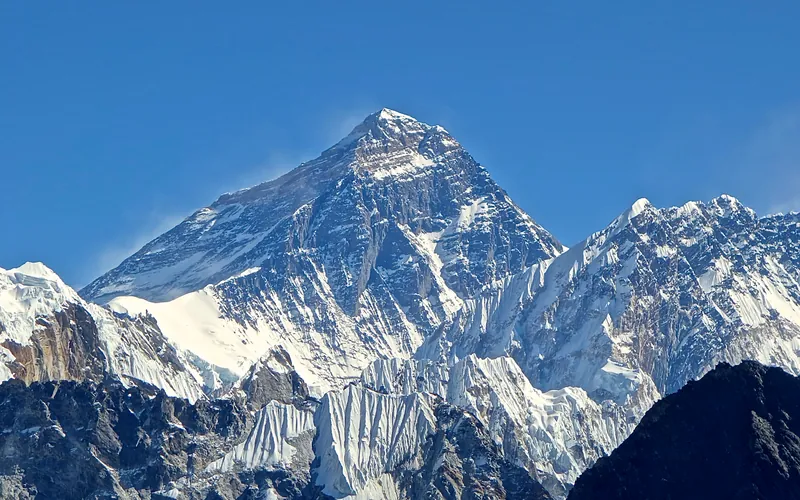
Mount Everest Complete West Ridge (Yugoslav Direct)
The Complete West Ridge of Mount Everest is one of the most formidable and sustained technical routes on the mountain. Pioneered in spring 1979 by an elite Yugoslav expedition led by Tone Škarja, the route tackles the integral knife-edge crest directly from the Lho La col (6,026m) all the way to the 8,848.86m summit. Unlike the 1963 American West Ridge route which diverted into the Hornbein Couloir from the North Face, the Yugoslav line stayed strictly along the razor-edge crest of the West Ridge, surmounting technical rock buttresses up to Grade V+ at extreme altitude before traversing around the Yellow Band. On May 13, 1979, Andrej Štremfelj and Nejc Zaplotnik achieved the first ascent of the complete ridge, followed two days later by Stane Belak, Marjan Manfreda, and Ang Phu Sherpa in one of the greatest feats in Himalayan history.
Target Objective Peak



Mount Everest
Mount Everest is the highest mountain above sea level on Earth, standing at an official elevation of 8,848.86 meters (29,031.7 ft). Straddling the international frontier between Nepal and China, it is known locally as Sagarmatha in Nepali ('Goddess of the Sky') and Chomolungma in Tibetan ('Mother Goddess of the World'). The peak rises into the extreme upper troposphere, where oxygen levels drop to barely one-third of sea-level pressure. Climbers face hurricane-force jet stream winds, severe frostbite conditions, shifting ice crevasses in the Khumbu Icefall, and the dangerous Death Zone above 8,000 meters.
Featured Expedition Climber

Andrej Štremfelj
Andrej Štremfelj was born on December 17, 1956, in Kranj, Slovenia. Beginning his climbing journey in the Julian Alps and Kamnik-Savinja Alps at fifteen, he rapidly became one of the leading figures in the golden generation of Slovenian alpinism. In 1977, at just twenty years of age, he made his Himalayan breakthrough on Gasherbrum I (8,080m) alongside Nejc Zaplotnik, opening a new route on the southwest face. Two years later, in spring 1979, Štremfelj was selected for the landmark Yugoslav Mount Everest Expedition led by Tone Škarja. The team tackled the formidable, unbroken West Ridge of Mount Everest directly from the Lho La col (6,026m). Operating at the absolute outer limit of physical endurance, Štremfelj and Zaplotnik surmounted steep, crumbly limestone bands (Grade V+) and navigated the knife-edge crest in devastating westerly gales. On May 13, 1979, they reached the 8,848-meter summit, completing the first ascent of the complete West Ridge—a line that has never been repeated in its entirety and is celebrated as one of the hardest routes ever climbed on Everest. In October 1991, Štremfelj teamed up with young climbing partner Marko Prezelj to make a pure alpine-style first ascent of the 3,000-meter South Ridge of Kangchenjunga (8,476m South Peak) without supplemental bottled oxygen. The climb was hailed as a benchmark for fair-means Himalayan exploration and earned the duo the inaugural Piolet d'Or in 1992. In 1990, Štremfelj summited Everest again with his wife Marija Štremfelj, becoming the first married couple to stand atop Everest together. In 2018, the international mountaineering community honored him with the Piolet d'Or Carrière (Lifetime Achievement Award).
Associated Historical Chronicles & Stories
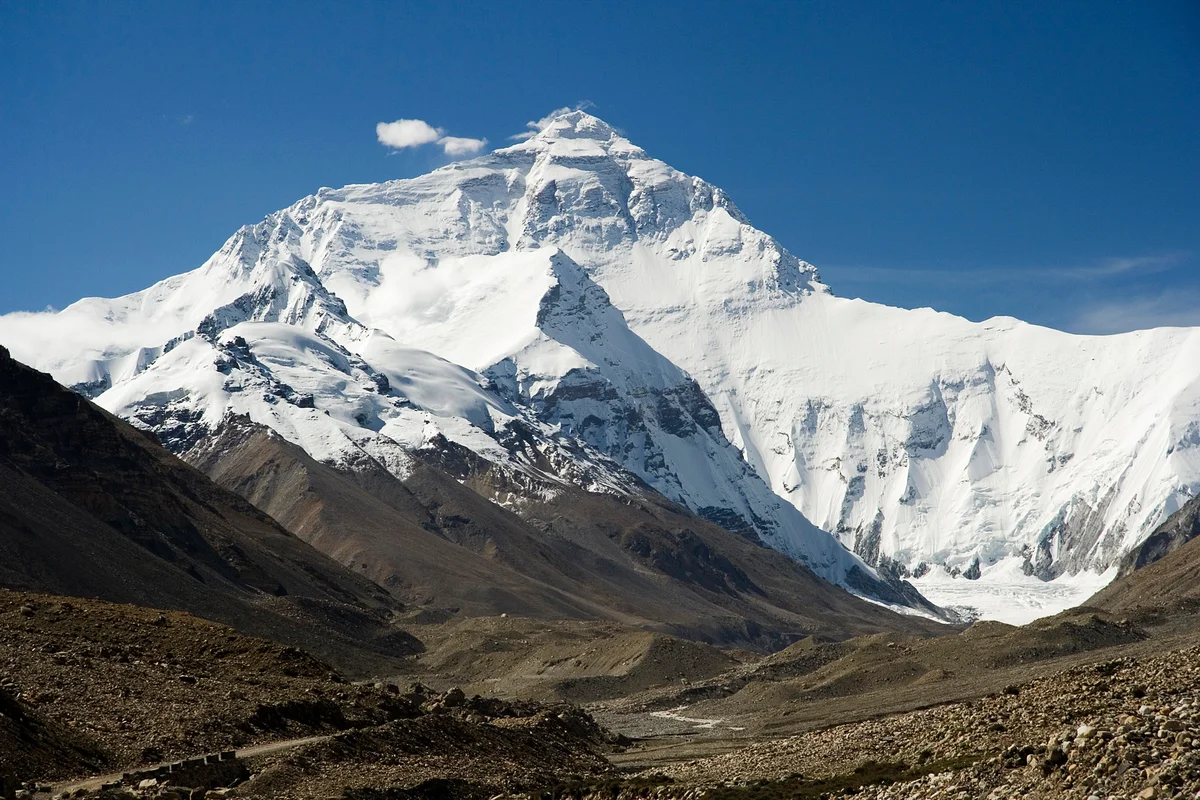
The Razor of the Sky: The 1979 Yugoslav First Ascent of Everest West Ridge
On May 13, 1979, Slovenian mountaineers Andrej Štremfelj and Nejc Zaplotnik conquered Mount Everest via the complete West Ridge direct, overcoming extreme Grade V+ rock in the death zone.
Documented Sources & Archival Citations
- American Alpine Journal: Everest West Ridge Direct by Tone Škarja(American Alpine Club)
Supporting claim: Official expedition record and climb report verifying the May 13, 1979 Yugoslav West Ridge first ascent
Accessed/Documented: 1980 - Pot (The Path): The Everest Story(Nejc Zaplotnik / Cankarjeva Založba)
Supporting claim: Detailed first-hand account of the technical Yellow Band crux, high winds, and summit moment
Accessed/Documented: 1981