2011 Apa Sherpa Eco Everest 21st Summit Expedition
On May 11, 2011, veteran Nepali mountaineer Apa Sherpa summited Mount Everest for an unprecedented twenty-first time, leading the Eco Everest Expedition to remove tons of historical rubbish and advocate for Himalayan climate preservation.
Mountain Safety & Conditions Disclaimer: High-altitude climbing, glacial travel, and technical ascents entail severe objective risks including avalanches, serac collapses, rapid weather collapse, and altitude illness. Historical route descriptions and summit claims on Mountanity reflect documented archival sources and must not be used as live operational safety assessments. Local regulations, permits, and physical glacial topography change continuously.
Peer Review: Senior Editorial Board & Historical Reviewers • Editorial Standards
Official Expedition Narrative & Archival Record
In April 2011, 51-year-old Nepali climbing legend Apa Sherpa returned to Everest Base Camp for the fourth consecutive year as climbing leader of the Eco Everest Expedition, an ambitious initiative founded by Asian Trekking's Dawa Steven Sherpa to blend elite high-altitude guiding with environmental restoration. Operating under the slogan 'Stop Climate Change', the expedition combined standard guiding duties with meticulous ecological cleanup, paying Sherpas extra bonuses to retrieve abandoned oxygen cylinders, crumpled tents, ropes, and trash from the upper camps. On the morning of May 11, 2011, after navigating the perilous seracs of the Khumbu Icefall and ascending the Lhotse Face to the South Col, Apa led his team up the Southeast Ridge. At 9:15 AM, Apa Sherpa reached the 8,848-meter summit, extending his all-time world record to 21 successful ascents of Mount Everest. Standing on the summit with an environmental banner, Apa dedicated his historic achievement to the protection of melting Himalayan glaciers and the empowerment of indigenous Sherpa communities, before announcing his formal retirement from high-altitude climbing to establish the Apa Sherpa Educational Foundation.
Documented Team Composition
- Apa Sherpa (Expedition Climbing Leader & 21-Time Summiteer, Nepal)
- Dawa Steven Sherpa (Expedition Managing Director, Nepal)
- Chris Shumate (Summit Climber, USA)
- Bruno Greindl (Summit Climber, Switzerland)
Key Statistics & Topographic Figures
- Summit Count
- 21st Ascent
All-Time World Record Benchmark in 2011
- Summit Date
- May 11, 2011 (09:15 AM)
Eco Everest Expedition
- Waste Removed
- 4+ Tons in 2011 (14+ Tons Total)
High Camps & South Col Cleanup
- Age at 21st Summit
- 51 Years Old
Exemplary Longevity & Fitness
- Safety Record
- 100% Client Safety
Zero Client Fatalities in 21 Expeditions
Archival Primary Source Quotations
“Everest is a god to us. When we see the ice melting and the rocks coming loose, we must speak out before our homeland disappears.”
Defined Alpine Terminology & Concepts
- Glacial Thinning
- The accelerating loss of ice volume in Himalayan glaciers provoked by global rising temperatures and carbon deposition.
- High-Altitude Cleanup Bonus
- Financial incentives paid to high-altitude workers to safely carry historical waste and trash down from mountain camps.
Frequently Asked Questions: 2011 Apa Sherpa Eco Everest 21st Summit Expedition
When did Apa Sherpa make his 21st summit of Mount Everest?
Apa Sherpa completed his historic twenty-first summit of Mount Everest on May 11, 2011, at 9:15 AM as climbing leader of the Eco Everest Expedition.
What was the primary goal of the 2011 Eco Everest Expedition?
Beyond guiding clients, the expedition focused on cleaning historical rubbish from the Death Zone and raising international awareness for Himalayan climate change.
How much waste was brought down by the Eco Everest Expeditions?
Between 2008 and 2011, Apa Sherpa and the Eco Everest team hauled down more than 14 tons of garbage, discarded tents, and old oxygen cylinders.
Did Apa Sherpa retire after his 21st summit of Everest?
Yes, upon returning from the summit on May 11, 2011, Apa Sherpa announced his permanent retirement from climbing Everest to focus on education and climate advocacy.
Who organized the Eco Everest Expedition?
The Eco Everest Expedition was organized by Asian Trekking, co-founded and managed by environmental advocate Dawa Steven Sherpa.
What route did Apa Sherpa climb for his 21st summit?
He guided via the South Col route from Nepal, ascending through the Khumbu Icefall, Western Cwm, Lhotse Face, and the Southeast Ridge.
What banner did Apa Sherpa display on the summit in 2011?
On the summit, Apa displayed a climate awareness banner bearing the message ‘Stop Climate Change: Let the Himalayas Live!’.
What foundation did Apa Sherpa establish after retiring?
He created the Apa Sherpa Foundation, dedicated to funding schools, providing educational scholarships, and improving healthcare in Thame and Nepal.
Ascent Route & Topography
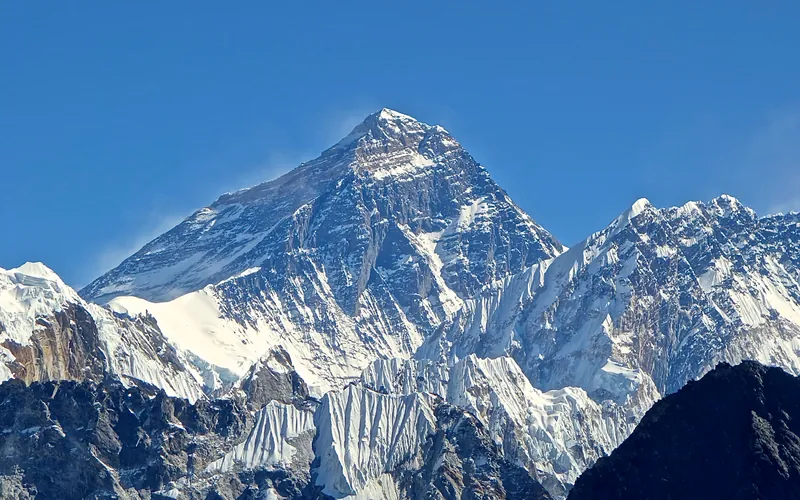
South Col & Southeast Ridge (Normal Route)
The South Col Route along the Southeast Ridge is the historic path of the 1953 first ascent and the most popular route on Mount Everest. Starting from Base Camp on the Khumbu Glacier in Nepal, climbers navigate the shifting seracs of the Khumbu Icefall into the Western Cwm. The route then scales the icy 45-degree slope of the Lhotse Face to the South Col at 7,925 meters, launching the final summit bid through the Balcony, South Summit, and Hillary Step to the summit of Earth at 8,848.86 meters.
Target Objective Peak
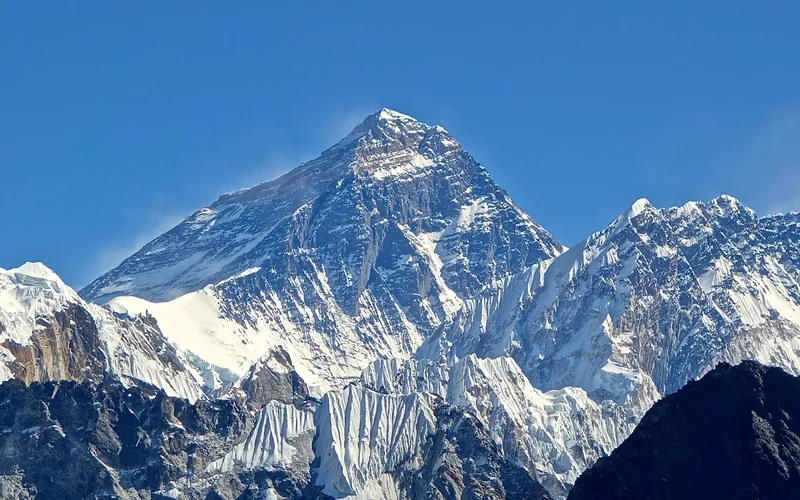


Mount Everest
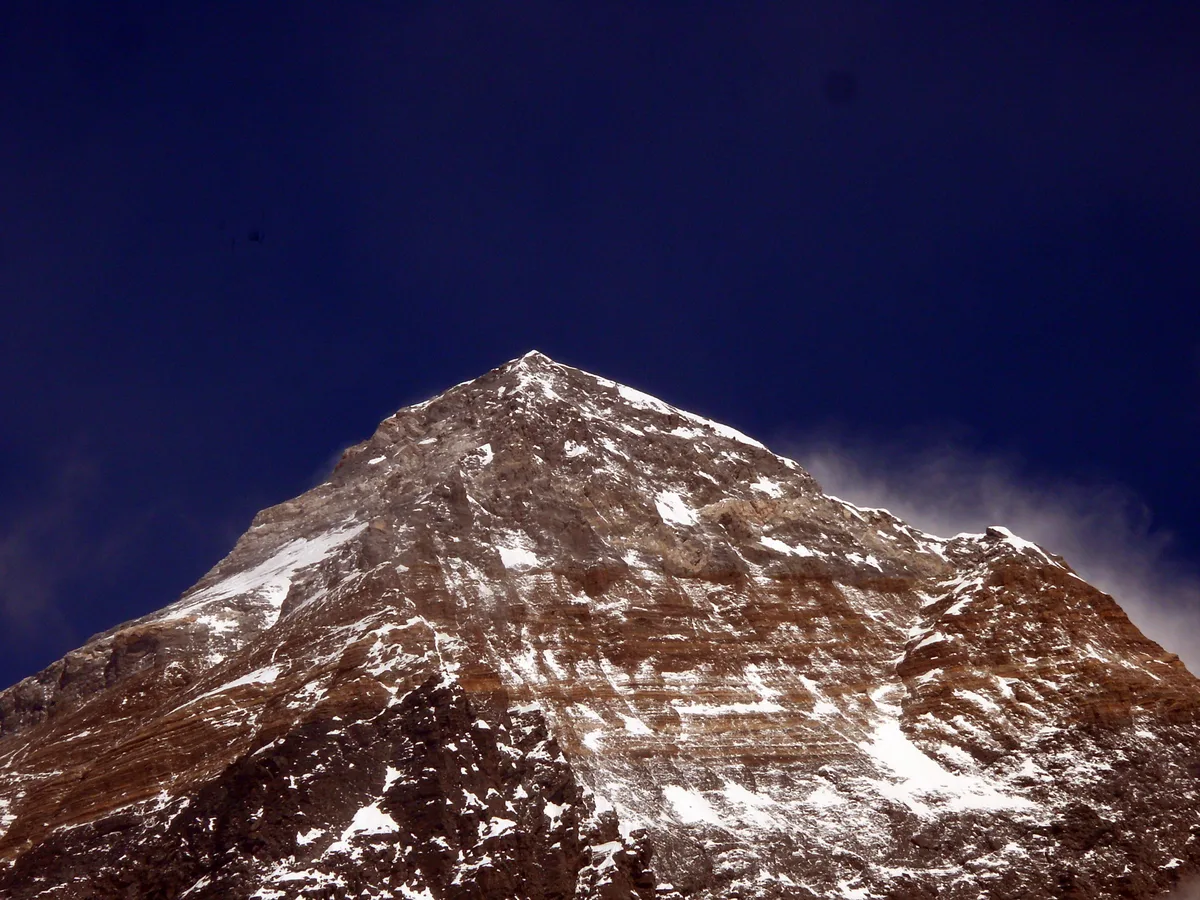
Mount Everest is the highest mountain above sea level on Earth, standing at an official elevation of 8,848.86 meters (29,031.7 ft). Straddling the international frontier between Nepal and China, it is known locally as Sagarmatha in Nepali ('Goddess of the Sky') and Chomolungma in Tibetan ('Mother Goddess of the World'). The peak rises into the extreme upper troposphere, where oxygen levels drop to barely one-third of sea-level pressure. Climbers face hurricane-force jet stream winds, severe frostbite conditions, shifting ice crevasses in the Khumbu Icefall, and the dangerous Death Zone above 8,000 meters.
Featured Expedition Climber
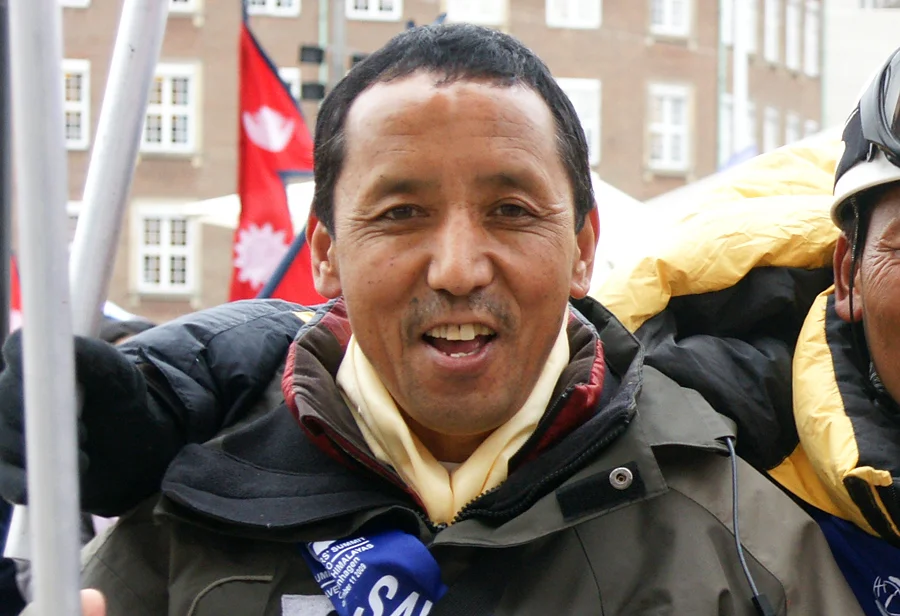
Apa Sherpa
Apa Sherpa, born Lhakpa Tenzing Sherpa in January 1960 in the village of Thame in Nepal's Solukhumbu District, was thrust into mountain labor as a twelve-year-old child following the untimely death of his father. Sacrificing his dreams of becoming a medical doctor to support his widowed mother and five younger siblings, Apa began carrying heavy porter loads over high Himalayan passes. Through quiet fortitude, exceptional physical acclimatization, and methodical technical discipline, he steadily advanced to high-altitude kitchen staff, sirdar, and finally lead climbing guide on Mount Everest. Apa made his first summit of Mount Everest on May 10, 1990, guiding an international team alongside Peter Hillary, son of Sir Edmund Hillary. Over the next two decades, Apa returned to the mountain nearly every single spring, becoming the world's most consistent and reliable high-altitude leader. Between 1990 and 2011, he summitted Everest twenty-one times, setting a world record for total ascents that stood unbeaten for nearly a decade. Even more extraordinary than his summit tallies was his unblemished safety record: across twenty-one grueling summit expeditions in the Death Zone, Apa never lost a single client or fellow Sherpa. In the final chapter of his climbing career, Apa dedicated his summits to environmental conservation. Serving as climbing leader for the Eco Everest Expeditions from 2008 to 2011, he and his team hauled over fourteen tons of historical debris and climbing waste off the upper slopes of Everest, while recovering human remains for dignified burial. In 2012, he completed the grueling Great Himalaya Trail—a 1,500-kilometer trek across the length of Nepal—to spotlight climate-induced glacial lake flooding. Today, the Apa Sherpa Foundation provides educational opportunities and economic alternatives to Himalayan youth, honoring Apa's lifelong conviction that no child should ever be forced into high-risk mountain labor solely for lack of school access.
Associated Historical Chronicles & Stories
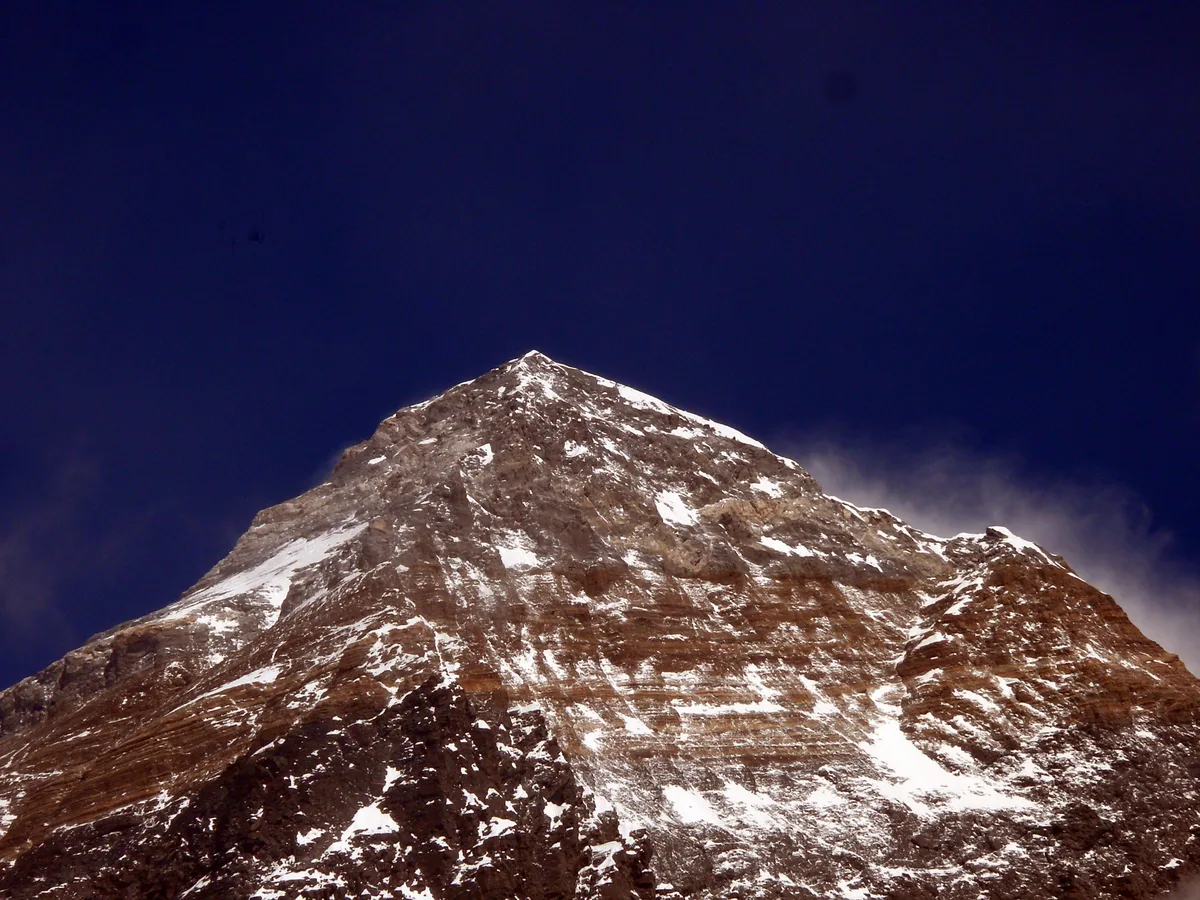
The Humblest Giant: Apa Sherpa's Historic 21st Summit of Mount Everest and the Eco Cleanup Crusade
On May 11, 2011, 'Super Sherpa' Apa Sherpa stood atop Mount Everest for an unprecedented twenty-first time, leading the Eco Everest Expedition to clean tons of trash and champion climate action.
Documented Sources & Archival Citations
- The Himalayan Database: Spring 2011 Eco Everest Ascents(Elizabeth Hawley / The Himalayan Database)
Supporting claim: Official certification of Apa Sherpa's 21st Everest summit on May 11, 2011
Accessed/Documented: 2011 - National Geographic: Super Sherpa Scales Everest for Record 21st Time(National Geographic)
Supporting claim: Coverage of the 21st summit milestone, Eco Everest rubbish clearance, and retirement announcement
Accessed/Documented: 2011-05-11 - BBC News: Climber Apa Sherpa Makes Record 21st Everest Ascent(BBC News)
Supporting claim: International news report documenting the environmental message and record-setting career
Accessed/Documented: 2011-05-11