2012 Polish Gasherbrum I Winter First Ascent Expedition
On March 9, 2012, Polish Ice Warriors Adam Bielecki and Janusz Gołąb completed the historic first winter ascent of Gasherbrum I (8,080m) in the Karakoram range, climbing without supplemental bottled oxygen in temperatures below -38°C.
Mountain Safety & Conditions Disclaimer: High-altitude climbing, glacial travel, and technical ascents entail severe objective risks including avalanches, serac collapses, rapid weather collapse, and altitude illness. Historical route descriptions and summit claims on Mountanity reflect documented archival sources and must not be used as live operational safety assessments. Local regulations, permits, and physical glacial topography change continuously.
Peer Review: Senior Editorial Board & Historical Reviewers • Editorial Standards
Official Expedition Narrative & Archival Record
Gasherbrum I (8,080m), also known as Hidden Peak, stands remote at the eastern head of the Baltoro Glacier and had repelled every winter attempt for over twenty-five years. In January 2012, under the auspices of the Polish Winter Himalayan Mountaineering 2010–2015 program directed by Artur Hajzer, a national expedition led by Hajzer arrived at Base Camp (5,150m). The team included twenty-eight-year-old powerhouse Adam Bielecki and veteran technical specialist Janusz Gołąb. Confronted by savage sub-Arctic storms that dropped temperatures beneath -45°C and ripped tents from the moraines, the team worked up the Japanese Couloir in lightweight alpine style without high-altitude porters or supplemental bottled oxygen. On March 8, Bielecki and Gołąb reached Camp III at 7,100 meters. Setting out before dawn on March 9, 2012, into bitter -38°C chill with wind chill exceeding -55°C, the duo negotiated hard blue ice, serac bands, and deep snowdrifts. At 8:30 AM local time, Adam Bielecki and Janusz Gołąb stepped onto the 8,080-meter summit of Gasherbrum I, completing the historic first winter ascent of the peak and securing Poland's eleventh first winter ascent of an eight-thousander.
Documented Team Composition
- Artur Hajzer (Expedition Leader, Poland)
- Adam Bielecki (Summit Climber, Poland)
- Janusz Gołąb (Summit Climber, Poland)
- Agnieszka Bielecka (Base Camp Manager, Poland)
Key Statistics & Topographic Figures
- Summit Date
- March 9, 2012 (8:30 AM)
Gasherbrum I (8,080m), Karakoram
- Ascent Style
- Alpine Style Without Bottled Oxygen
Two-Man Push by Bielecki and Gołąb
- Summit Temperature
- -38°C (-55°C Wind Chill)
Extreme Sub-Arctic Winter Tempests
- Karakoram Milestone
- 2nd Winter 8,000m Summit in Pakistan
Broke 25-Year Gasherbrum I Winter Barrier
- Polish Record
- Poland’s 11th Winter 8,000m First
Affirmed Polish Ice Warrior Supremacy
Archival Primary Source Quotations
“Gasherbrum I in winter is a wall of ice and howling wind; standing on top was like stepping onto another planet.”
Defined Alpine Terminology & Concepts
- Japanese Couloir (Gasherbrum I)
- A steep, technical 500-metre ice and snow gully on the Northwest Face of Gasherbrum I that breaches the lower rocky bastions.
- Winter Karakoram Jet Stream
- The high-velocity wind stream flowing over northern Pakistan in winter that generates winds exceeding 120 km/h and extreme wind chill.
Frequently Asked Questions: 2012 Polish Gasherbrum I Winter First Ascent Expedition
When was Gasherbrum I first climbed in winter?
Gasherbrum I (8,080m) was first climbed in winter on March 9, 2012, by Polish Ice Warriors Adam Bielecki and Janusz Gołąb.
Who made the first winter ascent of Gasherbrum I?
The summit was achieved by twenty-eight-year-old Adam Bielecki and forty-four-year-old Janusz Gołąb climbing in a two-man assault team.
What were the temperature and wind conditions on Gasherbrum I during the 2012 climb?
Summit temperatures dropped below -38°C, with hurricane jet stream winds creating an effective wind chill factor beneath -55°C.
Did Adam Bielecki and Janusz Gołąb use supplemental oxygen on Gasherbrum I?
No, Bielecki and Gołąb completed the historic winter climb entirely without supplemental bottled oxygen.
What route did the Polish team climb on Gasherbrum I in winter?
They climbed the Japanese Couloir on the Northwest Face, ascending steep forty-five-degree blue ice and technical rock steps.
Who was the overall expedition leader of the 2012 Gasherbrum I winter climb?
Legendary mountaineer Artur Hajzer served as expedition leader, organizing the climb from Base Camp.
How many winter ascents had been achieved in the Karakoram before Gasherbrum I?
Only one eight-thousander in the Karakoram—Gasherbrum II in 2011—had been climbed in winter before Gasherbrum I was conquered in 2012.
What program funded and organized the 2012 Gasherbrum I winter expedition?
The climb was organized under the Polish Winter Himalayan Mountaineering 2010–2015 program supported by the Ministry of Sport and Tourism.
Ascent Route & Topography
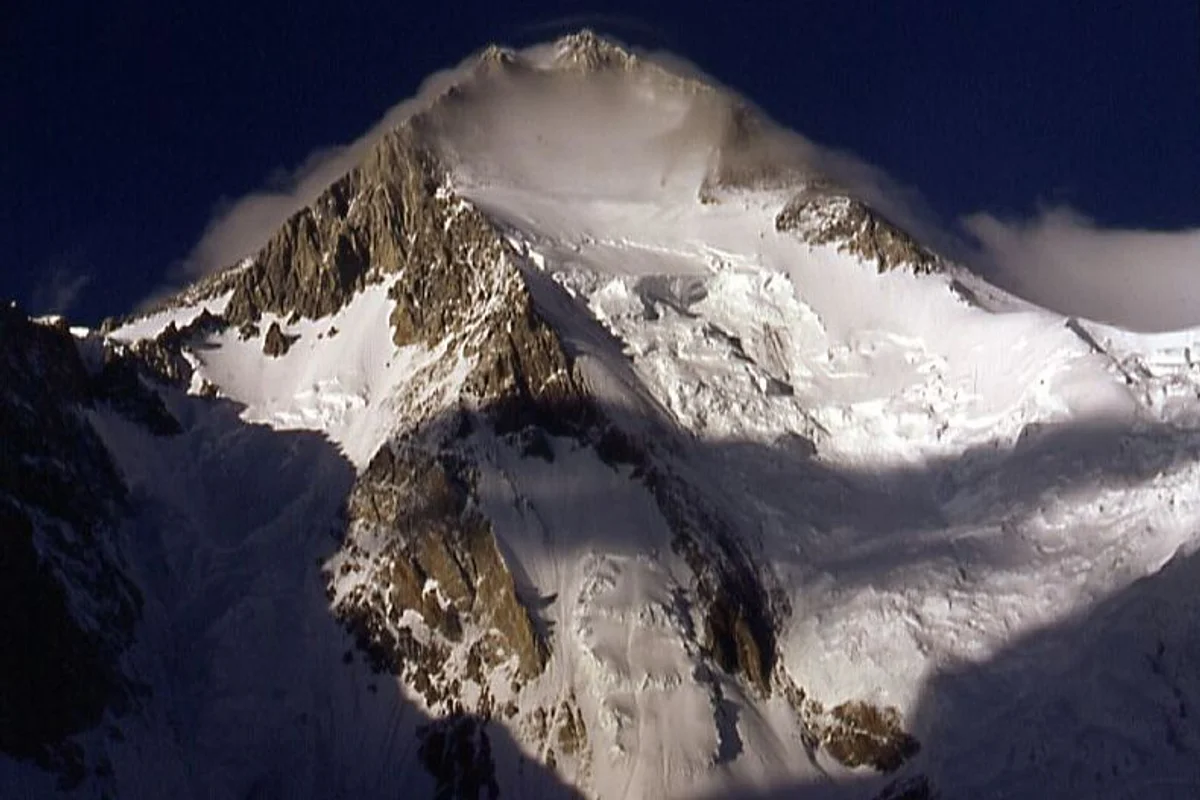
Northwest Face & Japanese Couloir (Normal Route)
The Northwest Face via the Japanese Couloir is the standard and most frequently climbed line on Gasherbrum I (8,068m / Hidden Peak). Starting from the South Gasherbrum Glacier, climbers traverse the shared lower icefall into the Gasherbrum Cwm, then branch southward toward the forbidding northwest wall. The technical centerpiece is the Japanese Couloir—a sustained 50 to 60-degree gully of hard blue ice and shattered rock leading to the high col and summit slopes. First ascended in 1958 by Americans Pete Schoening and Andy Kauffman via the South Ridge, the Japanese Couloir line became the modern benchmark, climbed rapidly in 1992 by Nazir Sabir, Rajab Shah, and Mehrban Shah.
Target Objective Peak
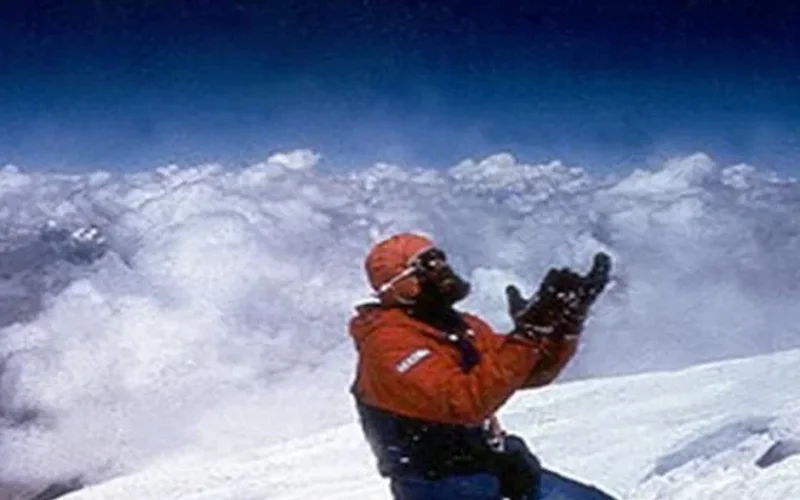


Gasherbrum I
Gasherbrum I, at 8,068 meters (26,470 ft), is the eleventh-highest mountain in the world. Named 'Hidden Peak' by explorer William Martin Conway due to its concealment behind surrounding Karakoram giants, it stands on the border between Pakistan and China. The peak was first climbed in 1958 by an American team led by Nick Clinch, and in 1992 Nazir Sabir summited it with Rajab Shah and Mehrban Shah, marking his fourth Pakistani eight-thousander.
Featured Expedition Climber
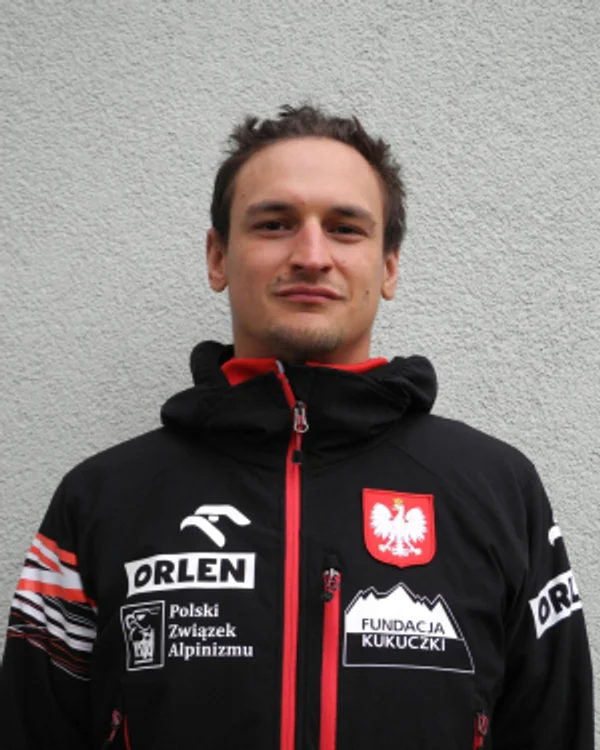
Adam Bielecki
Born on May 12, 1983, in Tychy, Poland, Adam Bielecki demonstrated remarkable climbing talent from adolescence. At age seventeen, he made a solo alpine-style ascent of Khan Tengri (7,010m) in the Tien Shan, setting a record as the youngest person to accomplish the feat. Under the mentorship of Artur Hajzer and the Polish Winter Himalayism program, Bielecki became the vanguard of modern winter exploration. On March 9, 2012, Bielecki and Janusz Gołąb completed the historic first winter ascent of Gasherbrum I (8,068m) without supplemental oxygen, enduring brutal sub-zero temperatures. One year later, on March 5, 2013, Bielecki achieved the historic first winter ascent of Broad Peak (8,047m) alongside Maciej Berbeka, Tomasz Kowalski, and Artur Małek. In January 2018, during the Polish national winter K2 expedition, Bielecki and Denis Urubko were airlifted by Pakistan Army helicopters to Nanga Parbat to mount an emergency rescue of stranded French climber Élisabeth Revol and Polish climber Tomasz Mackiewicz. Climbing 1,200 vertical metres up the treacherous Kinshofer Route in darkness and sub-zero gales in under eight hours, Bielecki and Urubko reached Revol at 6,000 metres and safely lowered her to base camp, earning international accolades including the French Legion of Honour and the Knight's Cross of the Order of Polonia Restituta.
Associated Historical Chronicles & Stories
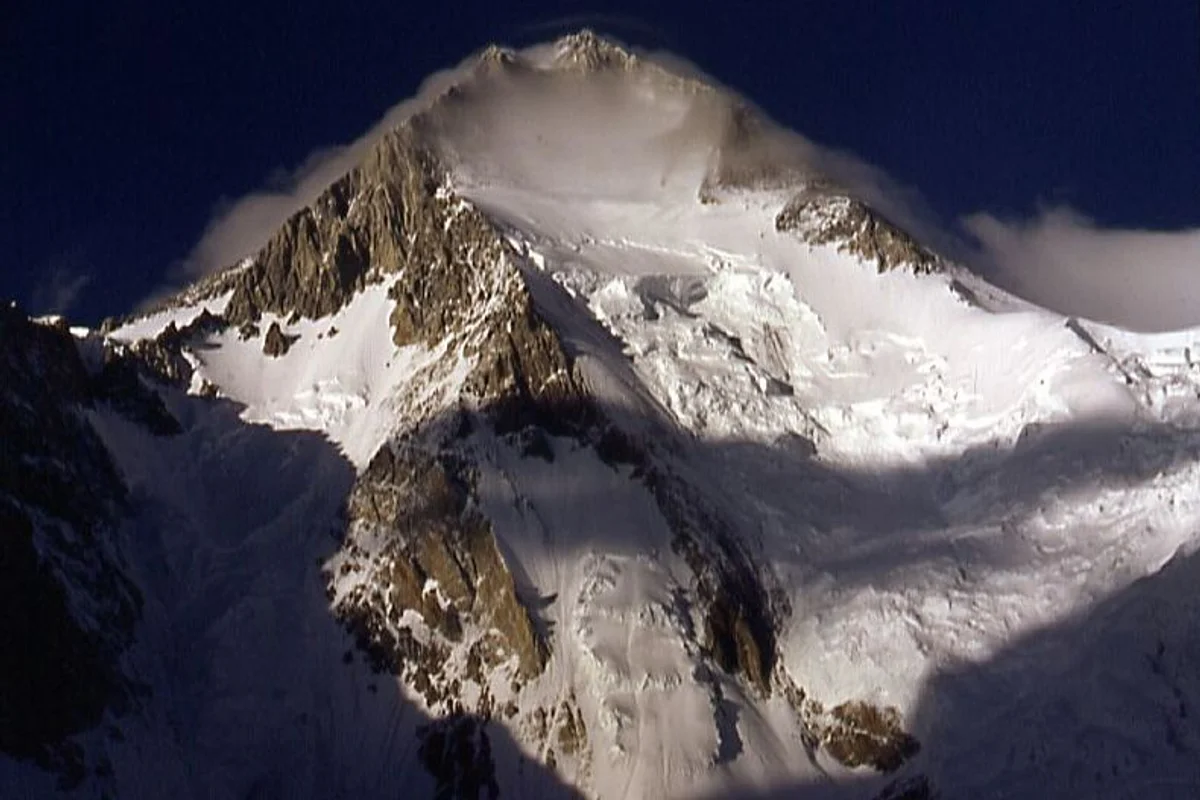
Cold Steel: The Historic First Winter Ascent of Gasherbrum I
On March 9, 2012, Polish Ice Warriors Adam Bielecki and Janusz Gołąb completed the first winter ascent of Gasherbrum I in the Karakoram at -38°C without supplemental oxygen.
Documented Sources & Archival Citations
- American Alpine Journal: Gasherbrum I First Winter Ascent(American Alpine Club)
Supporting claim: Official climb report and chronological evaluation of the March 9, 2012 winter ascent
Accessed/Documented: 2013 - Polish Mountaineering Association: Gasherbrum I Winter Report(Polski Związek Alpinizmu (PZA))
Supporting claim: Official expedition archives and summit time verification
Accessed/Documented: 2012