Everest Triple Crown 2026: Kristin Harila Spring Triumph
How Kristin Harila completed the first female single-season Everest Triple Crown (Nuptse, Lhotse, Everest no-O2) between May 17 and May 27, 2026.
Mountain Safety & Conditions Disclaimer: High-altitude climbing, glacial travel, and technical ascents entail severe objective risks including avalanches, serac collapses, rapid weather collapse, and altitude illness. Historical route descriptions and summit claims on Mountainity reflect documented archival sources and must not be used as live operational safety assessments. Local regulations, permits, and physical glacial topography change continuously.
Peer Review: Senior Editorial Board & Historical Reviewers • Editorial Standards
Between May 17 and May 27, 2026, Kristin Harila completed the Everest Triple Crown: summiting Nuptse (7,861m), Lhotse (8,516m), and Mount Everest (8,849m sans oxygen) in one single spring season.
The Khumbu Horseshoe
The Everest Triple Crown represents the three towering sentinels framing the Western Cwm. Few climbers in history have attempted all three in a single spring season due to the severe physical toll of consecutive death-zone rotations.
The Three Consecutive Ascents
Harila began with the technical cornices of Nuptse on May 17. She moved next to Lhotse on May 21, climbing with supplemental oxygen to preserve her respiratory reserves. Finally, she launched her summit push on Mount Everest on May 27 without supplemental oxygen, becoming the first Norwegian to stand atop Everest without bottled gas.
First Woman to Complete the Triple Crown in One Season
The 2026 achievement established Harila as the first woman in history to complete all three Khumbu giants (Nuptse, Lhotse, and Everest) in a single climbing season, as verified in international alpine registers.
Historical Context & Verification
This individual expedition chronicle forms part of Kristin Harila’s verified Mountainity portfolio. For her comprehensive career biography, joint world records with Tenjen Lama Sherpa, the K2 inquiry findings, and documentary distribution records, explore the central chronicle at Kristin Harila: 92-Day 14 Peaks Record & Modern Alpinism and her official mountaineer profile at Kristin Harila.
Key Statistics & Topographic Figures
- Category
- High-Altitude Mountaineering
Archival Subject
- Reading Time
- 10 min read
Narrative Length
- Key Mountain
- nuptse, lhotse, mount-everest
Objective
- Ascent Route
- nuptse-south-face, lhotse-normal-route, south-col-route
Topography
- Verification
- Editorially Verified
Archival Standard
Defined Alpine Terminology & Concepts
- Summit Push
- The final continuous climbing effort from the highest established camp to the mountain apex and back.
- Death Zone Chronicle
- A verified, research-backed historical narrative documenting the human, technical, and environmental realities of an alpine expedition.
Frequently Asked Questions: Everest Triple Crown 2026: Kristin Harila Spring Triumph
What is the core chronicle and subject of "Everest Triple Crown 2026: Kristin Harila Spring Triumph"?
How Kristin Harila completed the first female single-season Everest Triple Crown (Nuptse, Lhotse, Everest no-O2) between May 17 and May 27, 2026.
Which mountain peaks and routes are featured in "Everest Triple Crown 2026: Kristin Harila Spring Triumph"?
This narrative documents climbs on nuptse, lhotse, mount-everest along the nuptse-south-face, lhotse-normal-route, south-col-route in Nepal.
Which documented expedition is chronicled in this story?
This historical chronicle captures the events of the 2026-harila-everest-triple-crown, verified through contemporary journals and archival records.
Who authored and researched this archival chronicle?
Authored and researched by Mountainity Historical Research Desk, drawing on primary eyewitness testimonies, alpine club registries, and verified summit logs.
What makes this high-altitude chronicle historically significant?
Categorized under "High-Altitude Mountaineering", this chronicle preserves critical lessons in alpine leadership, survival, tactical speed, and human endurance in the death zone.
Related Mountains


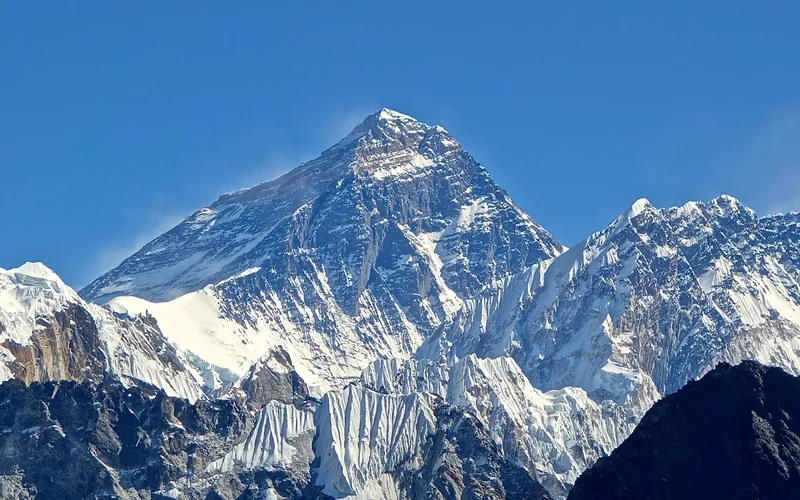
Mount Everest
Mount Everest is the highest mountain above sea level on Earth, standing at an official elevation of 8,848.86 meters (29,031.7 ft). Straddling the international frontier between Nepal and China, it is known locally as Sagarmatha in Nepali ('Goddess of the Sky') and Chomolungma in Tibetan ('Mother Goddess of the World'). The peak rises into the extreme upper troposphere, where oxygen levels drop to barely one-third of sea-level pressure. Climbers face hurricane-force jet stream winds, severe frostbite conditions, shifting ice crevasses in the Khumbu Icefall, and the dangerous Death Zone above 8,000 meters.
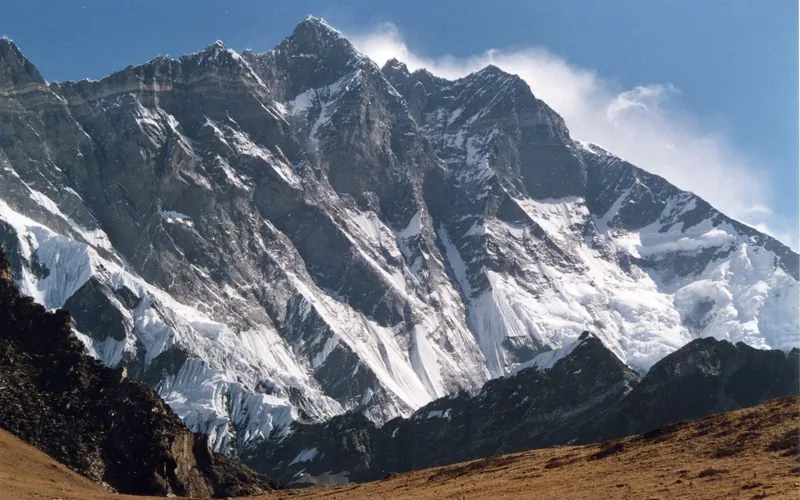
Lhotse
Lhotse, at 8,516 meters (27,940 ft), is the fourth-highest mountain on Earth, connected directly to Mount Everest via the South Col. Renowned for its sheer 3,200-meter South Face, one of the most imposing rock and ice walls in alpinism, the standard route tackles the grueling Lhotse Couloir from the Western Cwm.
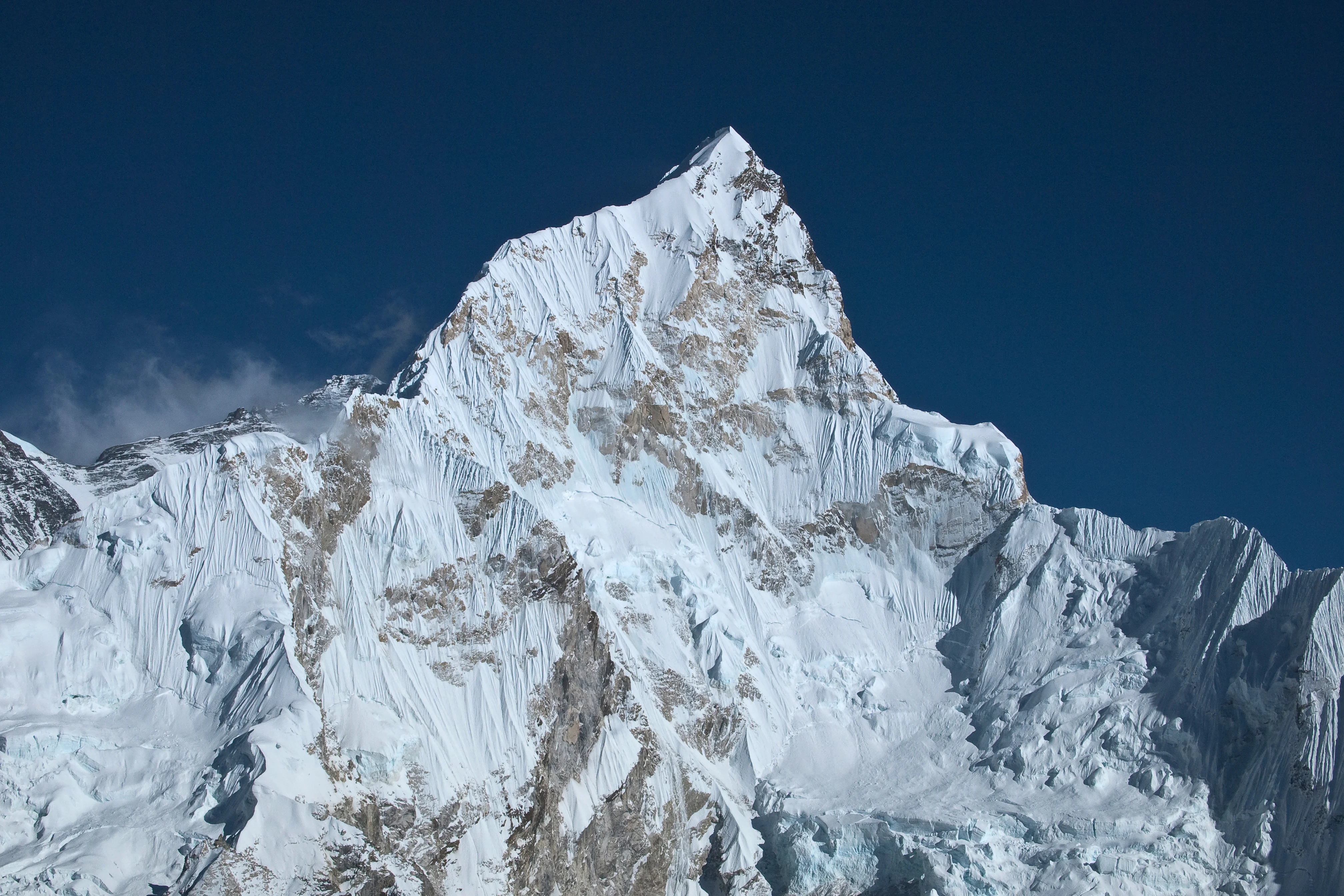
Nuptse
Nuptse is a dramatic 7,861-meter mountain in the Khumbu region of the Nepalese Himalayas, lying two kilometers west-southwest of Mount Everest and forming the formidable southwestern wall of the Western Cwm. In Tibetan, its name translates directly to 'West Peak', signifying its position in the monumental Everest-Lhotse-Nuptse horseshoe. The south face of Nuptse is an extraordinarily steep 2,500-meter wall of ice flutes, vertical rock buttresses, and hanging glaciers that is considered one of the greatest alpine climbing challenges on Earth. The mountain was first climbed on May 16, 1961, by British mountaineer Dennis Davis and Sherpa legend Tashi Sherpa via the North Ridge.
Ascent Route & Topography (3)
View All Routes →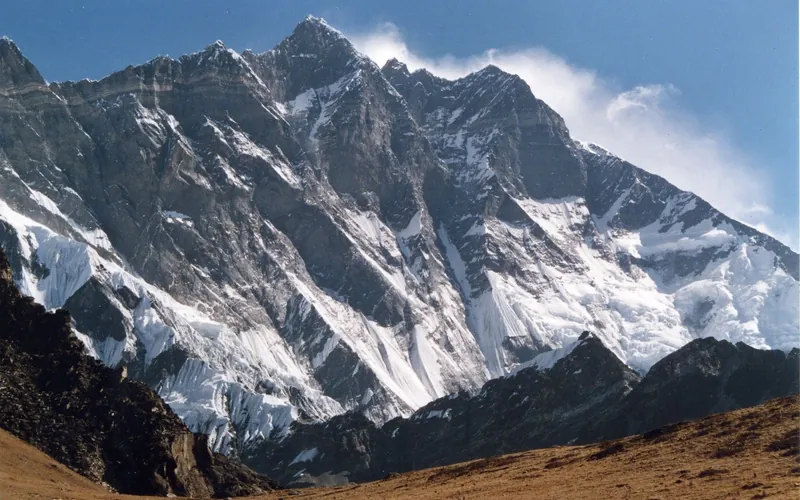
Lhotse Normal Route (West Face & Couloir)
The Normal Route on Lhotse shares the Everest South Col route through the treacherous Khumbu Icefall and across the Western Cwm up to Camp 3 on the Lhotse Face (7,200m). Beyond the Yellow Band, the...
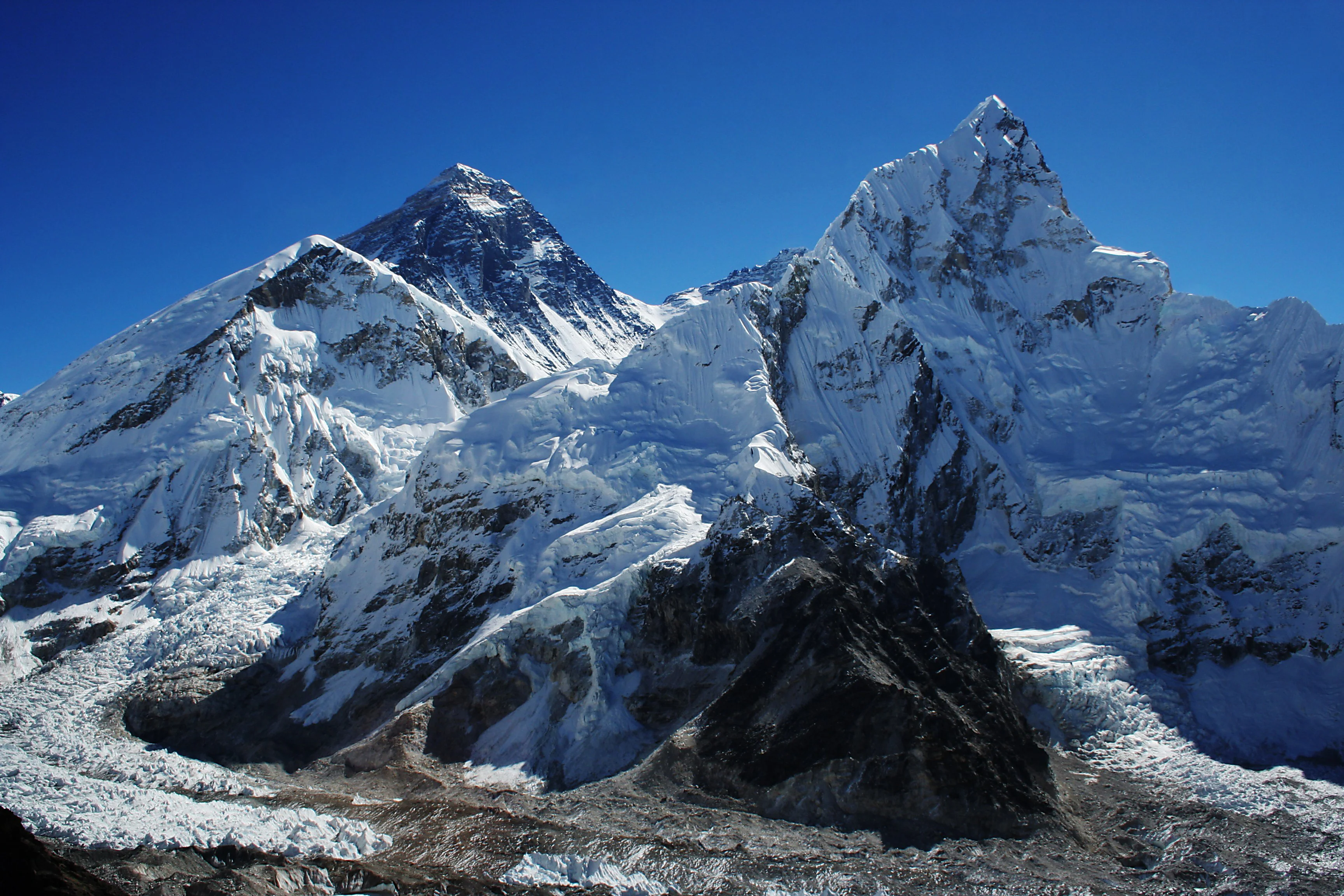
Nuptse South Face
The South Face of Nuptse is an awe-inspiring 2,500-meter wall of mixed ice flutes, vertical granite pillars, and hanging glaciers rising above the Khumbu Glacier. Widely acclaimed as one of the...
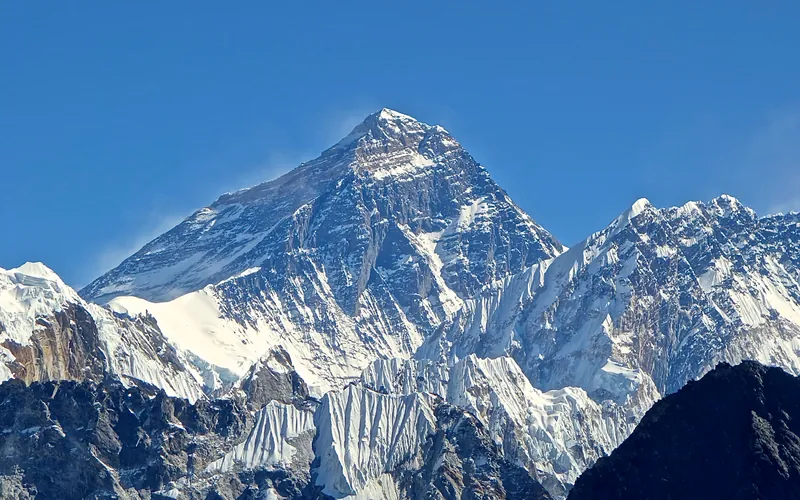
South Col & Southeast Ridge (Normal Route)
The South Col Route along the Southeast Ridge is the historic path of the 1953 first ascent and the most popular route on Mount Everest. Starting from Base Camp on the Khumbu Glacier in Nepal,...
Featured Mountaineers & Pioneers (1)
Browse All Mountaineers →
Kristin Harila
Kristin Jonassen Harila was born on March 28, 1986, in Vadsø, a coastal municipality on the Varanger Peninsula in Finnmark, Norway’s northernmost arctic territory. Deeply proud of her indigenous Sámi roots, Harila grew...
Documented Expeditions (1)
View All Expeditions →2026 Kristin Harila Everest Triple Crown & No-O2 Ascent
In May 2026, Kristin Harila completed the Everest Triple Crown (Nuptse, Lhotse, Everest) in one season, summiting Mount Everest without supplemental oxygen on May 27.
Share Exploration
Global Mountain Intelligence
✓ Link copied to clipboard!