1829 General Georgi Emmanuel and Killar Khashirov Mount Elbrus Imperial Russian Scientific Expedition
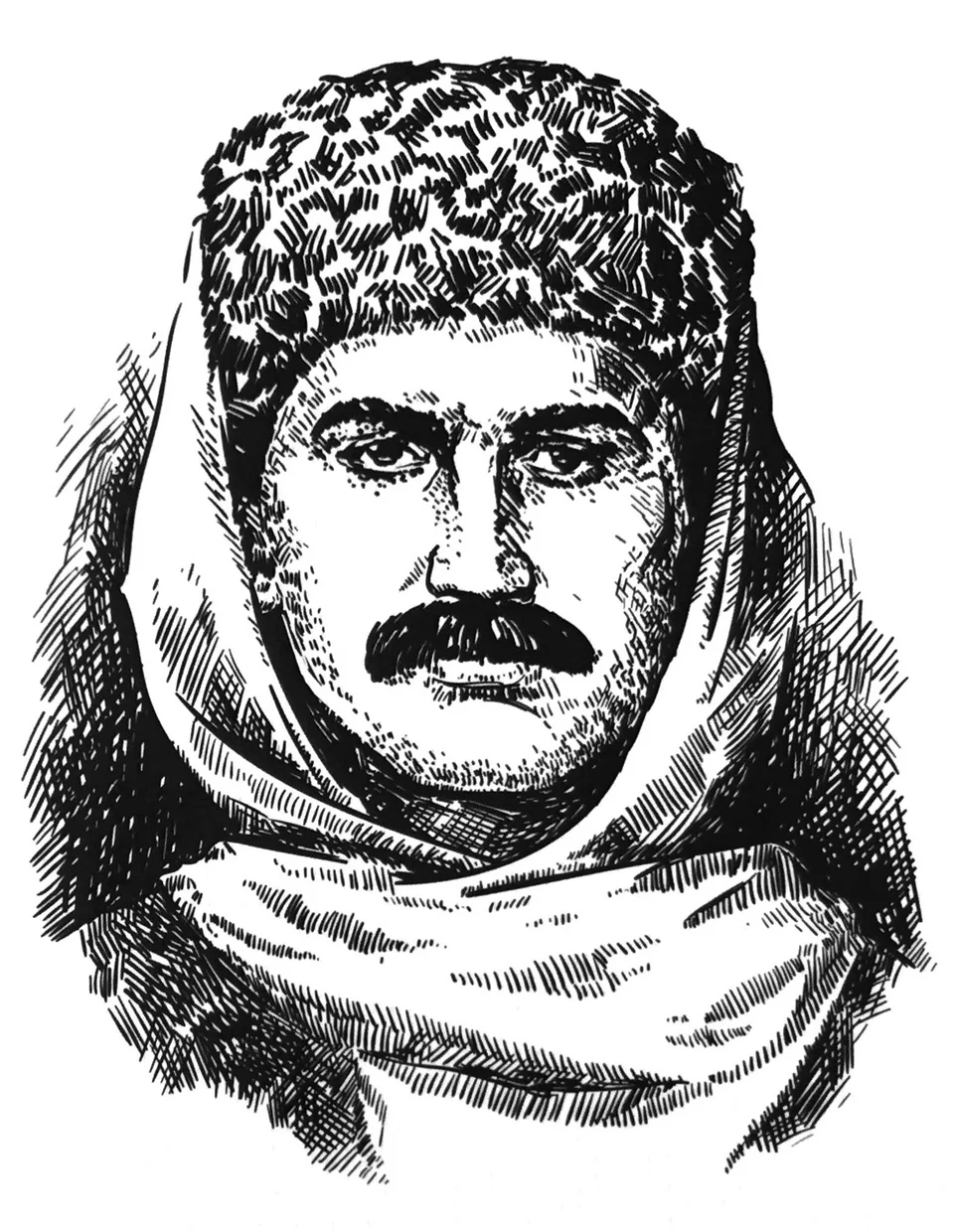
On July 22, 1829, Circassian mountain scout Killar Khashirov achieved the historic maiden first ascent of Mount Elbrus East Peak (5,621 m). Leading the landmark scientific expedition organized by General Georgi Emmanuel for the Russian Imperial Academy of Sciences, Khashirov pressed solo through freezing blizzard winds to become the first human being to stand atop Europe's highest volcanic massif.
Mountain Safety & Conditions Disclaimer: High-altitude climbing, glacial travel, and technical ascents entail severe objective risks including avalanches, serac collapses, rapid weather collapse, and altitude illness. Historical route descriptions and summit claims on Mountanity reflect documented archival sources and must not be used as live operational safety assessments. Local regulations, permits, and physical glacial topography change continuously.
Peer Review: Senior Editorial Board & Historical Reviewers • Editorial Standards
Official Expedition Narrative & Archival Record
In the summer of 1829, General Georgi Emmanuel, commander of the Russian Caucasus Line, organized an unprecedented multidisciplinary scientific expedition to the foothills and glaciers of Mount Elbrus. Sponsored by the Russian Imperial Academy of Sciences, the expedition brought together eminent European scientists, including physicist Heinrich Lenz, astronomer Adolph Theodor Kupffer, botanist Carl Anton von Meyer, and zoologist Édouard Ménétries. The mission aimed to conduct barometric, geological, and magnetic surveys of the highest peak in the Caucasus. General Emmanuel recognized that venturing into the glaciated volcanic labyrinth required expert local scouts. He recruited seasoned Circassian (Kabardian) and Balkar hunters, chief among them Killar Khashirov, known for his extraordinary endurance and instinctive mountain judgment. A base camp was established near the mineral springs of Dzhily-Su at the northern base of the volcano, followed by an assault camp pitched on the moraine at 3,800 metres. On July 22 (July 10 Old Style), 1829, a summit assault team including the European scientists, Cossack escorts, and local guides departed into the freezing morning twilight. As the slope steepened and the thin, oxygen-poor air took its toll, severe altitude sickness struck the party. Physicist Heinrich Lenz managed to ascend past 4,500 metres before utter exhaustion forced his retreat. Undeterred by the howling wind and blinding glare, Killar Khashirov pressed forward entirely alone. Navigating the treacherous snow bridges and ascending the volcanic dome, Khashirov reached the eastern summit crater of Mount Elbrus at 5,621 metres around midday. Back at base camp, General Emmanuel observed Khashirov's tiny figure through a brass telescope standing triumphantly atop the summit. Khashirov erected a stone cairn, retrieved a specimen of volcanic basalt, and descended safely to camp. General Emmanuel celebrated the victory with a 101-gun cannon salute, awarding Khashirov 400 silver rubles and inscribing his achievement onto a memorial rock that remains a shrine of Caucasian mountaineering.
Documented Team Composition
- General Georgi Emmanuel (Expedition Commander, Russia)
- Killar Khashirov (Lead Mountain Scout & Solo Summit Climber, Kabardia)
- Heinrich Lenz (Physicist & Academician, Russia / Germany)
- Adolph Theodor Kupffer (Astronomer & Physicist, Russia)
- Édouard Ménétries (Zoologist, France / Russia)
- Carl Anton von Meyer (Botanist, Russia)
Key Statistics & Topographic Figures
- Summit Elevation
- 5,621 m (East Peak)
- Summit Date
- July 22, 1829
- First Ascender
- Killar Khashirov (Solo)
- Expedition Commander
- General Georgi Emmanuel
- Base Camp
- Dzhily-Su Springs (2,500 m)
Archival Primary Source Quotations
“Khashirov stood upon the summit dome alone, a victorious figure visible through our brass telescope against the Caucasian sky.”
Defined Alpine Terminology & Concepts
- Stratovolcano Caldera
- A large volcanic crater formed by prehistoric eruptive activity and subsequently filled with glacial snow and firn.
- Imperial Russian Scientific Expedition
- A state-sponsored multidisciplinary exploration combining physical, astronomical, and botanical research with territorial reconnaissance.
Frequently Asked Questions: 1829 General Georgi Emmanuel and Killar Khashirov Mount Elbrus Imperial Russian Scientific Expedition
Who was the first person to summit Mount Elbrus in 1829?
Circassian mountain scout Killar Khashirov made the maiden first ascent of Mount Elbrus East Peak at 5,621 metres on July 22, 1829, climbing solo ahead of the imperial expedition.
Who organized the landmark 1829 scientific expedition to Mount Elbrus?
General Georgi Emmanuel, commander of the Russian Caucasus Line, organized the expedition under the sponsorship of the Russian Imperial Academy of Sciences.
Which famous European scientists participated in the 1829 Elbrus expedition?
Distinguished scientists included physicist Heinrich Lenz, astronomer Adolph Theodor Kupffer, zoologist Édouard Ménétries, and botanist Carl Anton von Meyer.
What reward did Killar Khashirov receive for climbing Mount Elbrus in 1829?
General Emmanuel awarded Khashirov a bounty of 400 silver rubles, celebrated with a 101-gun cannon salute, and commemorated the climb on a carved stone monument.
Ascent Route & Topography
Elbrus South Normal Route via Garabashi & Pastukhov Rocks
The classic and most popular climbing route up Mount Elbrus, ascending the southern glaciated volcano flank from the Garabashi huts past Priyut 11 and the historic Pastukhov Rocks (4,700 m). Climbers ascend broad firn fields to the Col at 5,416 metres before climbing the final snow ramp to the 5,642-metre Western Summit.
Target Objective Peak
Mount Elbrus
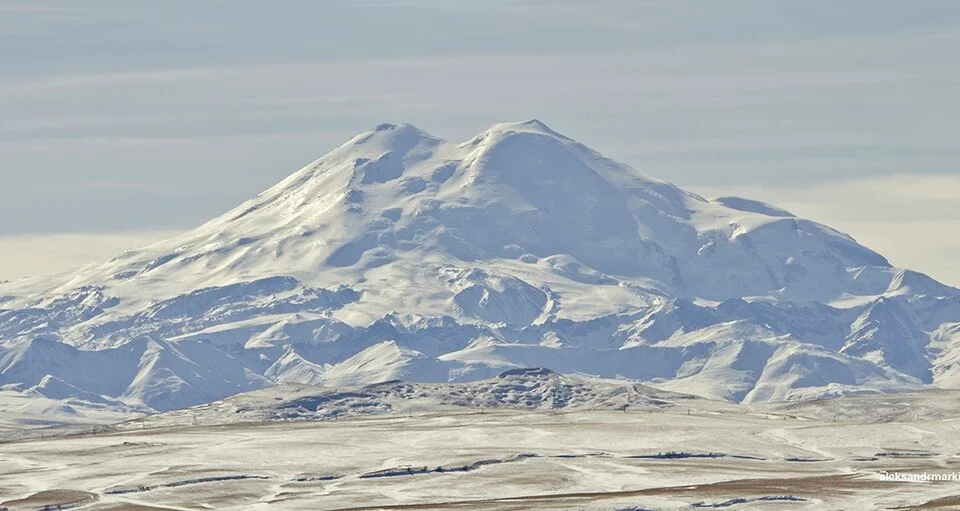
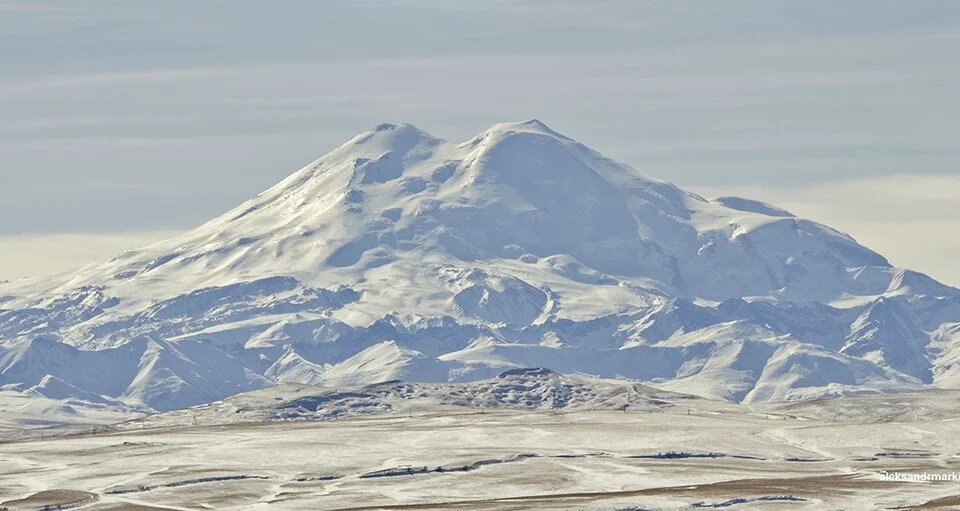
Mount Elbrus is the highest mountain in Russia and Europe, soaring to 5,642 metres as the tenth-most topographically prominent peak on Earth and one of the Seven Summits. Situated in the Russian Caucasus near the Georgian border, this colossal dormant stratovolcano features two ice-capped volcanic domes separated by a high saddle at 5,416 metres. The eastern summit (5,621 m) was first climbed in 1829 by Circassian scout Killar Khashirov, while the true continental high point on the western summit (5,642 m) was conquered in 1874 by Florence Craufurd Grove, Frederick Gardiner, Horace Walker, Peter Knubel, and Balkar guide Ahiya Sottaev.
Featured Expedition Climber
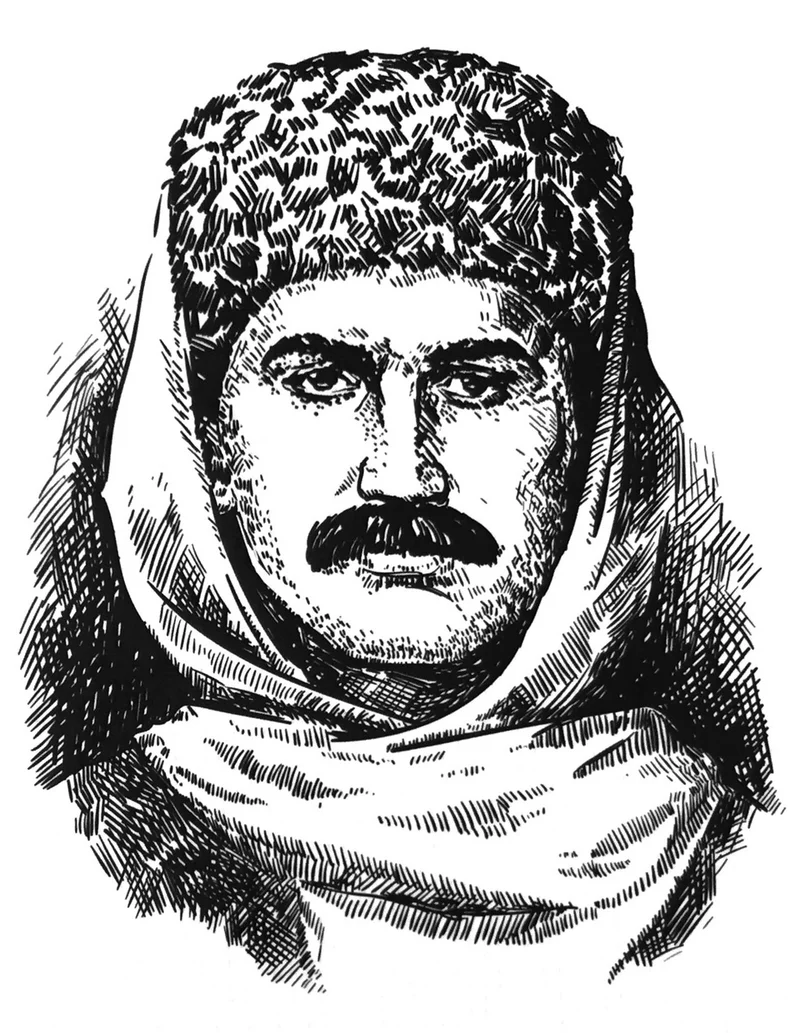
Killar Khashirov
Killar Khashirov was born in the late 18th century in the northern foothills of the Caucasus in Kabardia (modern-day Kabardino-Balkaria, Russia). Renowned throughout the Baksan and Malka river valleys as an intrepid hunter, horseman, and mountain scout intimately familiar with high alpine terrain, Khashirov possessed exceptional physiological resilience and natural route-finding instinct. In the summer of 1829, General Georgi Emmanuel, commander of the Russian Caucasus Line, organized an ambitious scientific expedition sponsored by the Russian Imperial Academy of Sciences to ascend Mount Elbrus. The expedition included distinguished European scientists: physicist Heinrich Lenz, astronomer Adolph Theodor Kupffer, botanist Carl Anton von Meyer, and zoologist Édouard Ménétries. General Emmanuel recruited local Circassian and Balkar mountain hunters to guide the caravan through treacherous glacial moraines. On July 22 (July 10 Old Style), 1829, a summit assault team set out from a high camp at 3,800 metres. As the thin air, biting cold, and steep volcanic ice exhausted the European scientists and Russian soldiers, one by one they turned back. Only Killar Khashirov pressed upward alone through the blinding glacial glare. In the afternoon, while the expedition watched through telescopes from base camp, Khashirov reached the summit of Elbrus East Peak at 5,621 metres. He placed a stone on the summit crater rim and brought back a specimen of volcanic rock to General Emmanuel. For this extraordinary pioneer feat, Khashirov was awarded a reward of 400 silver rubles and immortalized as the very first conqueror of Europe's highest mountain.
Associated Historical Chronicles & Stories
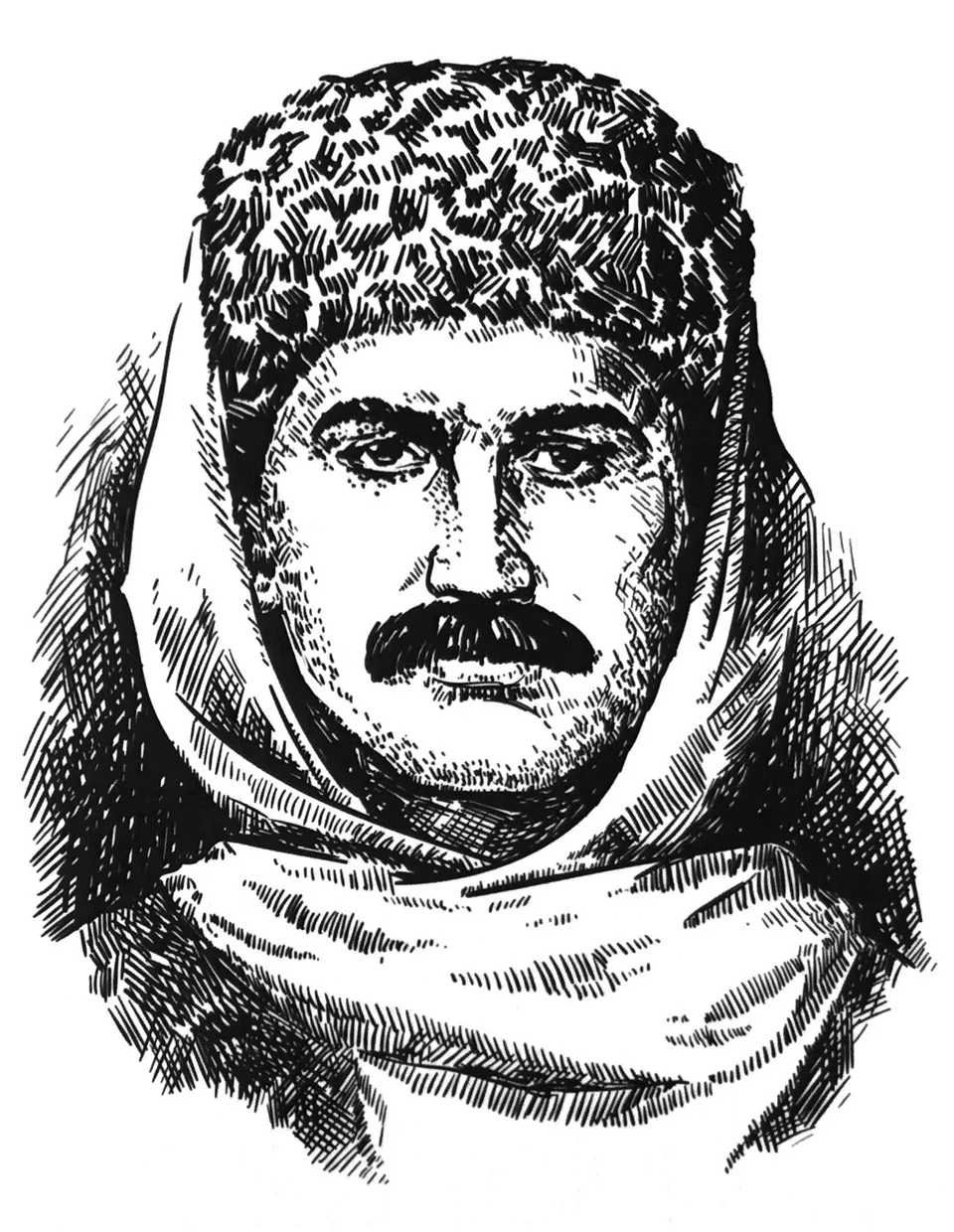
The Solitary Step: Killar Khashirov and the 1829 First Ascent of Mount Elbrus
On July 22, 1829, Circassian scout Killar Khashirov climbed solo through thin Arctic air to become the first human being to stand atop Mount Elbrus (5,621 m).
Documented Sources & Archival Citations
- Voyage au mont Elbrouz et dans le Caucase(General Georgi Emmanuel / Imperial Russian Academy of Sciences)
Supporting claim: Firsthand official report of the 1829 Elbrus expedition
Accessed/Documented: 1829 - The Frosty Caucasus(Florence Craufurd Grove / Longmans, Green, and Co.)
Supporting claim: Historical review of Khashirov's maiden ascent of Mount Elbrus
Accessed/Documented: 1875