1874 Florence Craufurd Grove and Frederick Gardiner Mount Elbrus West Peak Historic First Ascent Expedition
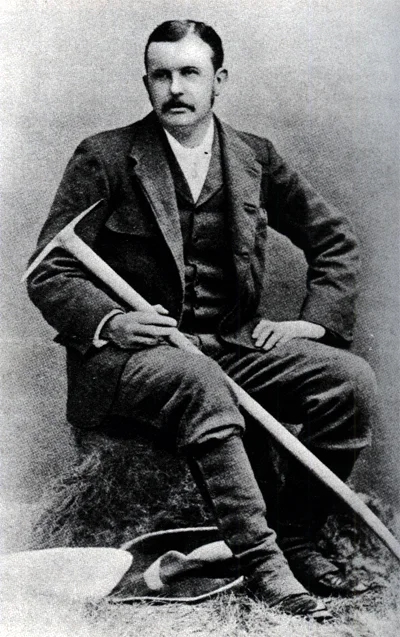
On July 28, 1874, an elite British expedition led by Florence Craufurd Grove alongside Frederick Gardiner, Horace Walker, Swiss guide Peter Knubel, and Balkar guide Ahiya Sottaev completed the first ascent of Mount Elbrus West Peak (5,642 m), officially conquering the supreme continental high point of Europe.
Mountain Safety & Conditions Disclaimer: High-altitude climbing, glacial travel, and technical ascents entail severe objective risks including avalanches, serac collapses, rapid weather collapse, and altitude illness. Historical route descriptions and summit claims on Mountanity reflect documented archival sources and must not be used as live operational safety assessments. Local regulations, permits, and physical glacial topography change continuously.
Peer Review: Senior Editorial Board & Historical Reviewers • Editorial Standards
Official Expedition Narrative & Archival Record
Following Killar Khashirov's 1829 ascent of the Eastern Peak of Mount Elbrus, topographical surveys revealed that the glaciated Western Peak was twenty-one metres higher, standing at 5,642 metres as the true continental high point of Europe. In the summer of 1874, thirty-six-year-old British alpinist Florence Craufurd Grove organized an expedition under the auspices of the Alpine Club to claim this ultimate European prize. Grove assembled an extraordinary climbing roster: Scottish ship-owner and guideless pioneer Frederick Gardiner, veteran Alpine Club explorer Horace Walker (first ascender of Pointe Walker on the Grandes Jorasses), acclaimed Zermatt Swiss master guide Peter Knubel, and Balkar mountain hunter Ahiya Sottaev, whose intimate knowledge of the Baksan Valley glaciers was indispensable. Departing from the village of Terskol in late July, the party established a high bivouac on bare volcanic rocks at approximately 4,200 metres. At 2:00 AM on July 28, 1874, roped in freezing starlight, the team began climbing the broad southern glaciers. Sottaev and Knubel took turns cutting steps across hard volcanic firn, ascending past the Pastukhov Rocks and entering the vast wind-scoured Saddle at 5,416 metres. Suffering from acute mountain sickness and frostbitten fingers in temperatures well below zero, the climbers persevered up the final 35-degree snow dome. At 11:30 AM, Grove, Gardiner, Walker, Knubel, and Sottaev stepped onto the flat, wind-swept summit plateau of the Western Peak at 5,642 metres. They had conquered Europe's highest mountain. Grove later chronicled the epic triumph in his Victorian masterpiece, The Frosty Caucasus (1875), which solidified the Alpine Club's international prestige.
Documented Team Composition
- Florence Craufurd Grove (Expedition Leader & Alpinist, United Kingdom)
- Frederick Gardiner (Alpinist & Guideless Pioneer, United Kingdom)
- Horace Walker (Alpinist, United Kingdom)
- Peter Knubel (Lead Mountain Guide, Zermatt, Switzerland)
- Ahiya Sottaev (Balkar Mountain Guide & Hunter, Russia)
Key Statistics & Topographic Figures
- Summit Elevation
- 5,642 m (Highest Point in Europe)
- Summit Date
- July 28, 1874
- Expedition Leader
- Florence Craufurd Grove
- Key Mountaineer
- Frederick Gardiner (Guideless Pioneer)
- Balkar Guide
- Ahiya Sottaev
Archival Primary Source Quotations
“We stood upon the Western Peak of Elbruz, the undisputed crown of the European continent, beneath a sky of deepest sapphire.”
Defined Alpine Terminology & Concepts
- Pastukhov Rocks
- A prominent rocky ridge at 4,700 metres on Mount Elbrus, named after topographer Andrey Pastukhov and serving as a key navigational landmark.
- Elbrus Saddle (Sedlovina)
- The vast, wind-scoured high glacial col at 5,416 metres separating the eastern and western volcanic domes of Mount Elbrus.
Frequently Asked Questions: 1874 Florence Craufurd Grove and Frederick Gardiner Mount Elbrus West Peak Historic First Ascent Expedition
Who conquered the Western Peak of Mount Elbrus in 1874?
An Alpine Club expedition led by Florence Craufurd Grove, with Frederick Gardiner, Horace Walker, Swiss guide Peter Knubel, and Balkar guide Ahiya Sottaev, conquered the peak on July 28, 1874.
Why is the Western Peak of Mount Elbrus considered Europe's true summit?
At 5,642 metres, the Western Peak is twenty-one metres higher than the Eastern Peak, making it the true continental high point of Europe and a Seven Summit.
Who was Ahiya Sottaev on the 1874 Elbrus expedition?
Ahiya Sottaev was a legendary local Balkar mountain hunter and guide who became the first registered human being to summit both peaks of Mount Elbrus.
What famous book was written about the 1874 Elbrus West Peak ascent?
Florence Craufurd Grove published The Frosty Caucasus in 1875, describing the ascent and establishing Elbrus as the premier high-altitude goal in Eurasia.
Ascent Route & Topography
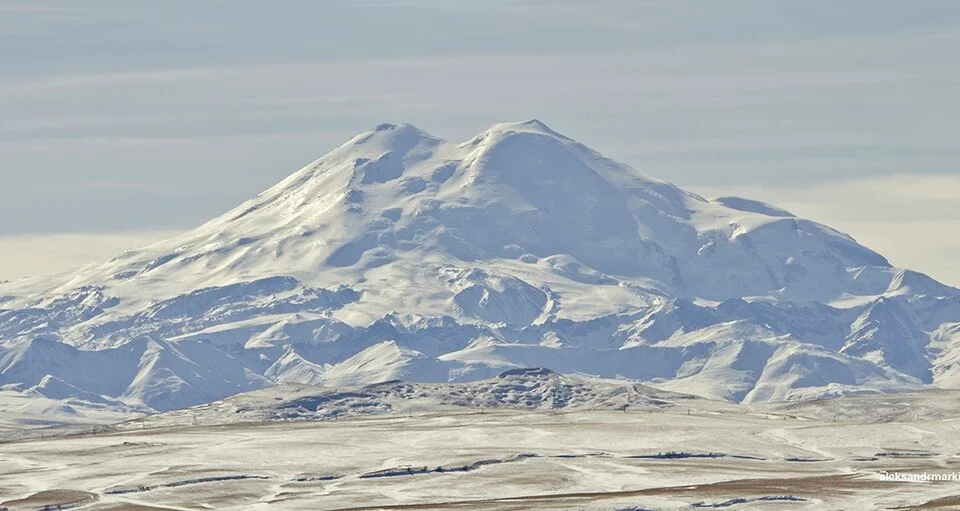
Elbrus South Normal Route via Garabashi & Pastukhov Rocks
The classic and most popular climbing route up Mount Elbrus, ascending the southern glaciated volcano flank from the Garabashi huts past Priyut 11 and the historic Pastukhov Rocks (4,700 m). Climbers ascend broad firn fields to the Col at 5,416 metres before climbing the final snow ramp to the 5,642-metre Western Summit.
Target Objective Peak
Mount Elbrus
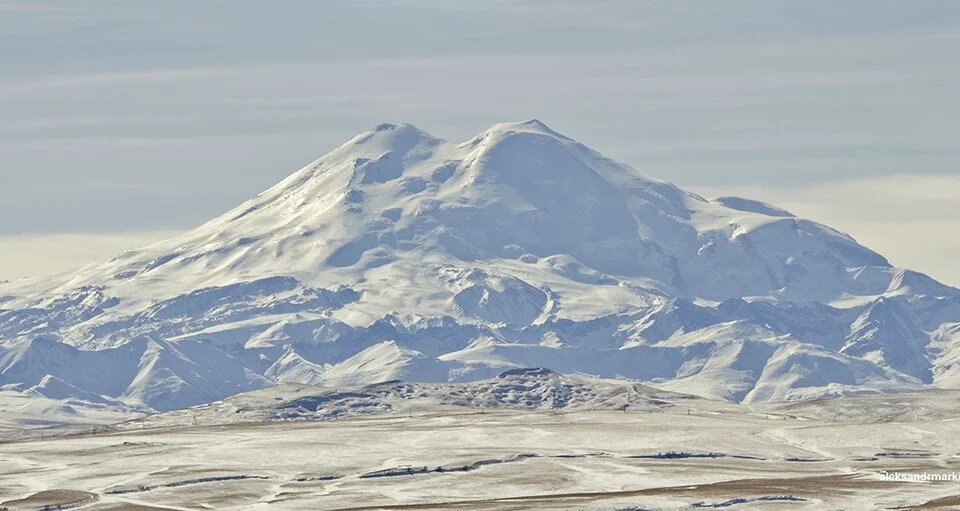
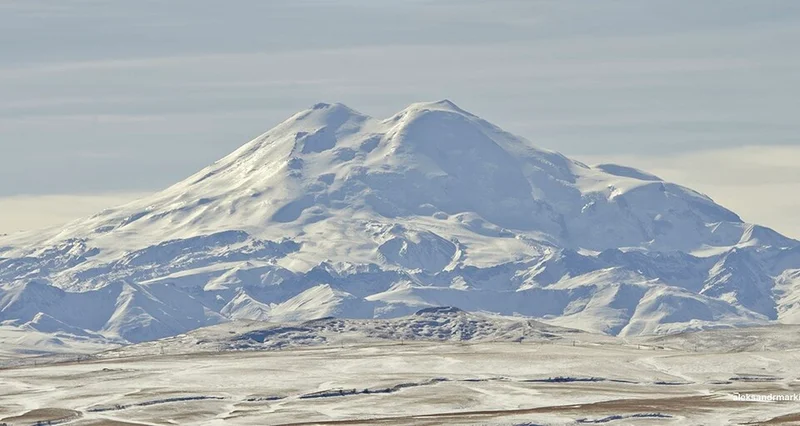
Mount Elbrus is the highest mountain in Russia and Europe, soaring to 5,642 metres as the tenth-most topographically prominent peak on Earth and one of the Seven Summits. Situated in the Russian Caucasus near the Georgian border, this colossal dormant stratovolcano features two ice-capped volcanic domes separated by a high saddle at 5,416 metres. The eastern summit (5,621 m) was first climbed in 1829 by Circassian scout Killar Khashirov, while the true continental high point on the western summit (5,642 m) was conquered in 1874 by Florence Craufurd Grove, Frederick Gardiner, Horace Walker, Peter Knubel, and Balkar guide Ahiya Sottaev.
Featured Expedition Climbers
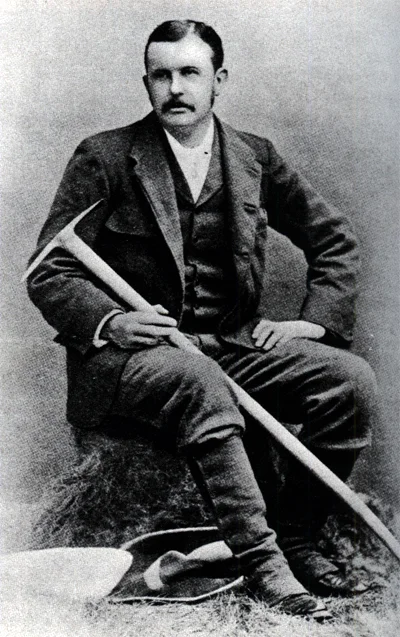
Florence Craufurd Grove
Florence Craufurd Grove was born in 1838 into a distinguished British family and developed a lifelong devotion to high-altitude alpinism during the Golden Age of the 1860s. A core member of the Alpine Club, Grove made notable ascents across the Mont Blanc massif and Valais Alps, establishing himself as a formidable leader and insightful expedition writer. In the summer of 1874, Grove organized a premier British expedition to the Caucasus Mountains with a singular, historic objective: to conquer the unclimbed Western Peak of Mount Elbrus, which surveys indicated was twenty-one metres higher than the Eastern Peak climbed in 1829. Grove assembled a world-class team comprising fellow British alpinists Frederick Gardiner and Horace Walker, legendary Zermatt Swiss mountain guide Peter Knubel, and local Balkar guide Ahiya Sottaev. On July 28, 1874, departing from a high bivouac on the volcanic slopes, Grove led his party across the crevassed upper snowfields and up the steep firn ramps of the Saddle. Battling intense cold, deep powder, and altitude sickness, Grove and his companions reached the 5,642-metre Western Summit, completing the true first ascent of Europe's continental high point. Grove's eloquent expedition account, The Frosty Caucasus (1875), introduced the majestic peaks and peoples of the Caucasus to the Western world. Grove served as President of the Alpine Club from 1884 to 1886, remaining a revered elder statesman of British climbing until his death in 1902.
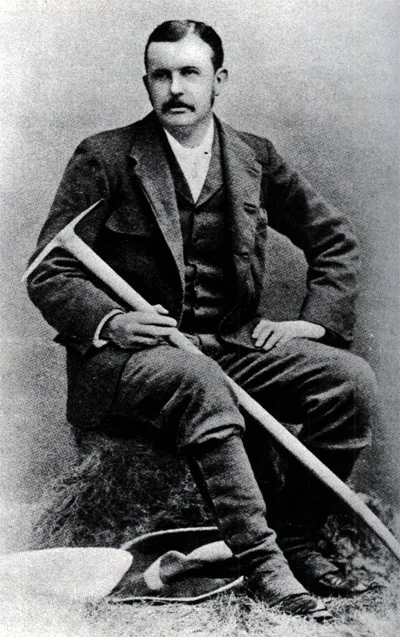
Frederick Gardiner
Born in 1850 in Lancashire, England, Frederick Gardiner combined a highly successful career as a Glasgow ship-owner with a relentless passion for pioneering mountaineering. Throughout the 1870s and 1880s, Gardiner teamed up with Charles and Lawrence Pilkington to pioneer the revolutionary ethic of guideless climbing, demonstrating that amateur climbers could safely plan, lead, and execute severe first ascents without professional guides. In 1874, Gardiner joined Florence Craufurd Grove and Horace Walker on their expedition to the Caucasus. On July 28, 1874, Gardiner successfully conquered the 5,642-metre Western Summit of Mount Elbrus, standing upon Europe's highest point on its maiden first ascent. Gardiner went on to make numerous expeditions back to the Caucasus with Horace Walker, exploring the glaciers of Ushba, Dykhtau, and Koshtan-Tau. Over his extraordinary climbing career, Gardiner logged more than 1,000 mountain ascents, including dozens of new routes in the Dauphiné Alps and Pennine Alps. Widely admired for his modest demeanor, exceptional physical stamina, and alpine ethics, Gardiner passed away in 1919 at the age of 69.
Associated Historical Chronicles & Stories
Conquering the Crown of Europe: The 1874 First Ascent of Mount Elbrus West Peak
On July 28, 1874, Florence Craufurd Grove, Frederick Gardiner, Horace Walker, Peter Knubel, and Ahiya Sottaev stood on Elbrus West Peak (5,642 m), conquering Europe's highest point.
Documented Sources & Archival Citations
- The Frosty Caucasus(Florence Craufurd Grove / Longmans, Green, and Co.)
Supporting claim: Firsthand expedition narrative of the 1874 conquest of Elbrus West Peak
Accessed/Documented: 1875 - The Alpine Journal: The Ascent of Elbruz(The Alpine Club UK)
Supporting claim: Official expedition paper detailing the first ascent of Europe's true summit
Accessed/Documented: 1875