1889 Hans Meyer, Ludwig Purtscheller and Yohani Lauwo Mount Kilimanjaro Historic First Ascent Expedition
On October 6, 1889, German geographer Hans Meyer and Austrian alpine master Ludwig Purtscheller achieved the historic maiden first ascent of Mount Kilimanjaro (5,895 m), Africa's highest summit. Guided through the cloud forests and across the high volcanic saddle by Chagga scout Yohani Lauwo, Purtscheller carved hundreds of steps into the ice wall of Ratzel Glacier to breach the crater rim of Kibo and stand on the highest point in Africa.
Mountain Safety & Conditions Disclaimer: High-altitude climbing, glacial travel, and technical ascents entail severe objective risks including avalanches, serac collapses, rapid weather collapse, and altitude illness. Historical route descriptions and summit claims on Mountanity reflect documented archival sources and must not be used as live operational safety assessments. Local regulations, permits, and physical glacial topography change continuously.
Peer Review: Senior Editorial Board & Historical Reviewers • Editorial Standards
Official Expedition Narrative & Archival Record
In September 1889, German geographer Hans Meyer launched his third expedition to conquer Mount Kilimanjaro, determined to overcome the frozen defenses that had turned him back in 1887. Meyer invited Ludwig Purtscheller, an Austrian alpine purist celebrated for climbing over 1,600 peaks without guides, to handle the technical ice work on Kibo's summit cap. Arriving in the Chagga kingdom of Marangu, Meyer secured the assistance of local headman Mwini Amani and an energetic 18-year-old Chagga scout named Yohani Kinyala Lauwo. Guided by Lauwo, the caravan ascended through dense moss-draped rainforest to the high heath and moorland, establishing a fortified advance camp at 4,300 metres on the arid Saddle between Mawenzi and Kibo. On October 3, 1889, the team made an initial reconnaissance of Kibo's eastern flank, reaching 5,200 metres before falling back to shelter from severe frost and altitude hypoxia. On October 6, 1889—Purtscheller's 40th birthday—the climbers made their decisive push. Commencing at 2:30 AM in sub-zero cold, they reached the base of the towering ice cliffs of the Ratzel Glacier. Using ice axes, Purtscheller spent hours tirelessly hacking hundreds of footholds up the steep blue ice wall. At 10:30 AM, Meyer and Purtscheller breached the crater rim, peering down into the immense volcanic caldera and giant interior glaciers. Traversing the ice crest around the southern rim, they reached the highest rocky pinnacle, naming it Kaiser-Wilhelm-Spitze (now Uhuru Peak, 5,895 m). They unfurled an expedition flag, collected rock specimens, and safely retraced their ice steps down to camp, having completed one of the monumental pioneering achievements in African exploration history.
Documented Team Composition
- Dr. Hans Meyer (Expedition Leader & Geographer, Germany)
- Ludwig Purtscheller (Climbing Leader & Alpine Ice Master, Austria)
- Yohani Kinyala Lauwo (Lead Chagga Mountain Scout & Guide, Tanzania)
- Mwini Amani (Caravan Headman & Transport Leader, German East Africa)
Key Statistics & Topographic Figures
- Official Elevation
- 5,895 m (19,341 ft)
- Summit Date
- October 6, 1889
- First Ascenders
- Hans Meyer & Ludwig Purtscheller
- Lead Chagga Scout
- Yohani Kinyala Lauwo
- Route Type
- Volcanic Scree & Ratzel Glacier Ice
Archival Primary Source Quotations
“There, ahead of us in the morning glare, rose the magnificent white dome of Kibo, draped in crystalline ice that defied the fierce equatorial sun.”
Defined Alpine Terminology & Concepts
- Afro-Alpine Zone
- A high-altitude ecological belt above 4,000 metres characterized by giant groundsels, lobelias, and extreme diurnal temperature swings.
- Volcanic Caldera
- A vast circular volcanic depression formed by the collapse of a volcano's center following prehistoric explosive eruptions.
Frequently Asked Questions: 1889 Hans Meyer, Ludwig Purtscheller and Yohani Lauwo Mount Kilimanjaro Historic First Ascent Expedition
Who was the first person to summit Mount Kilimanjaro in 1889?
German geographer Dr. Hans Meyer and Austrian alpine master Ludwig Purtscheller achieved the maiden first ascent of Mount Kilimanjaro (5,895 m / Uhuru Peak) on October 6, 1889.
Who guided Hans Meyer and Ludwig Purtscheller on Mount Kilimanjaro?
Yohani Kinyala Lauwo, a local Chagga mountain scout from Marangu, guided the expedition across the rainforest, moorland, and high saddle to the Kibo crater rim.
How did Ludwig Purtscheller unlock the summit ice of Kilimanjaro?
Purtscheller spent three uninterrupted hours hacking hundreds of footsteps up the steep blue ice wall of the Ratzel Glacier on Kibo's eastern flank.
What was Mount Kilimanjaro's summit originally named in 1889?
Hans Meyer named the summit Kaiser-Wilhelm-Spitze, which was later renamed Uhuru Peak ('Freedom Peak' in Swahili) upon Tanzanian independence in 1961.
Ascent Route & Topography
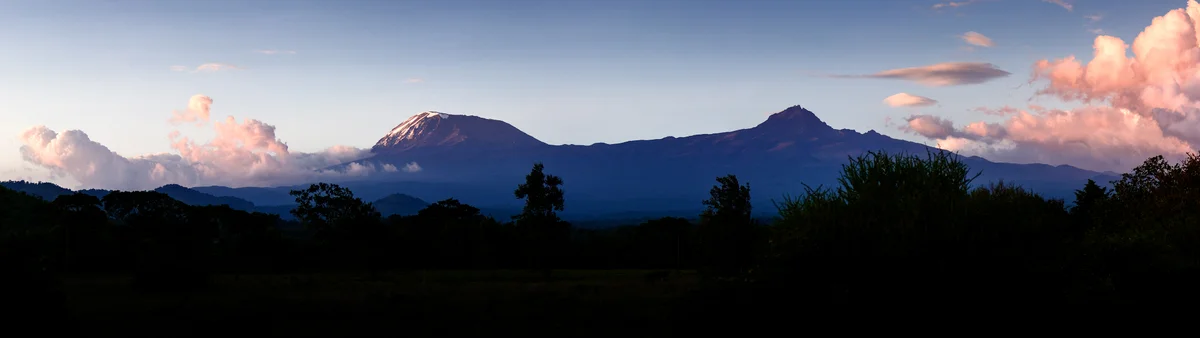
Kilimanjaro Marangu Route via Kibo Hut & Gilman's Point
The historic 'Coca-Cola Route' and the oldest established trail on Mount Kilimanjaro, ascending the southeastern slopes from Marangu through rainforest, moorland, and alpine desert to Kibo Hut and Uhuru Peak. The only route on Kilimanjaro offering permanent dormitory hut accommodations.
Target Objective Peak
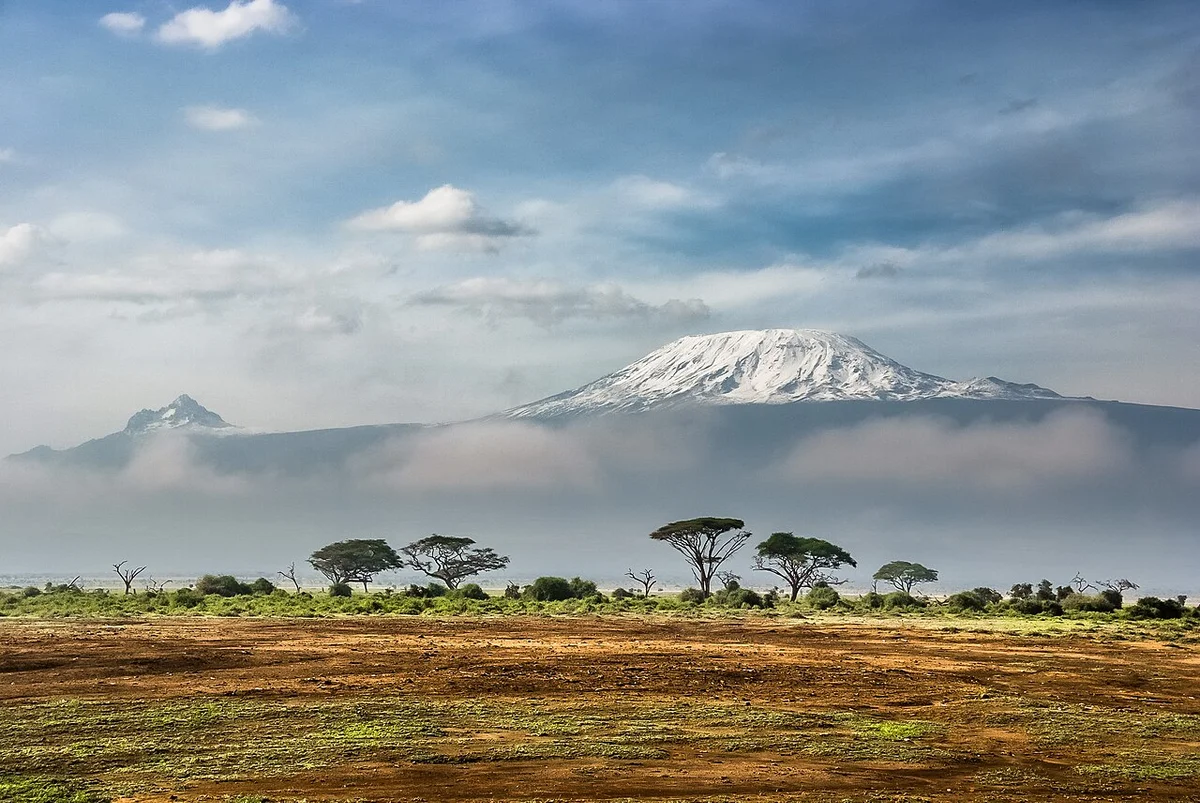

Mount Kilimanjaro
Mount Kilimanjaro is the highest mountain in Africa, the highest free-standing mountain in the world, and one of the Seven Summits, soaring to 5,895 metres (19,341 ft) above the plains of northeastern Tanzania. Consisting of three distinct volcanic cones—Kibo, Mawenzi (5,149 m), and Shira (4,005 m)—its summit at Uhuru Peak was first reached on October 6, 1889, by German geographer Hans Meyer, Austrian alpine pioneer Ludwig Purtscheller, and local Chagga mountain scout Yohani Lauwo.
Featured Expedition Climbers
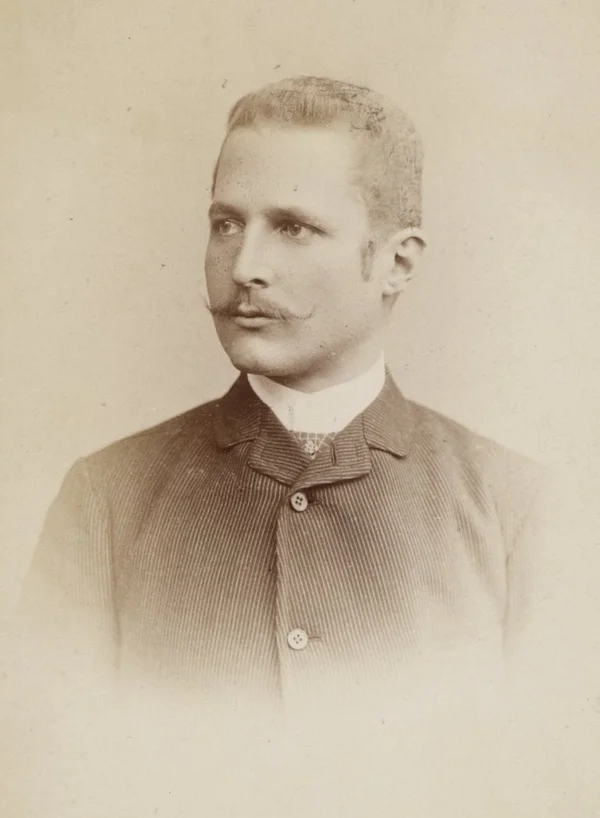
Hans Meyer
Hans Heinrich Joseph Meyer was born on March 22, 1858, in Hildburghausen, Germany, the son of the noted publisher Herrmann Julius Meyer (founder of Bibliographisches Institut and publisher of Meyer's Konversations-Lexikon). Meyer studied history, geography, and political economy at Leipzig, Berlin, and Strasbourg, obtaining his doctorate in 1881 before dedicating his life to scientific expeditions across Asia, North America, and East Africa. In 1887, Meyer mounted his first expedition to Mount Kilimanjaro in German East Africa, reaching the base of Kibo's icy crown at 5,500 metres before being stopped by a vertical ice wall for which he lacked technical ice gear. In 1888, his second attempt with cartographer Oscar Baumann was violently disrupted by the Abushiri Revolt on the coast; both men were captured, held hostage, and ransomed for a staggering 10,000 rupees. Undaunted, Meyer returned in 1889 with celebrated Austrian alpine purist Ludwig Purtscheller, engaging local Chagga headman Yohani Kinyala Lauwo and sixteen Swahili and Chagga porters. On October 6, 1889, after carving an encampment at 4,300 metres on the Saddle, Meyer and Purtscheller reached the southern crater rim and the supreme summit crest, naming it Kaiser-Wilhelm-Spitze (now Uhuru Peak, 5,895 m). Meyer returned in 1898 to conduct extensive photographic and glaciological surveys of the Kibo crater, documenting tropical glacial recession that remains foundational to modern climate science. He passed away on July 5, 1929, revered as one of the preeminent geographic explorers of his generation.
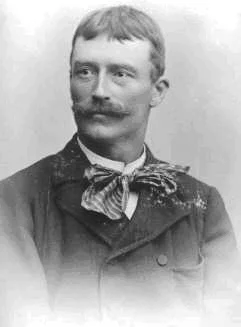
Ludwig Purtscheller
Ludwig Purtscheller was born on October 6, 1849, in Innsbruck, Tyrol, Austria. A gymnastics instructor by profession, Purtscheller dedicated every holiday and vacation to the high mountains, cultivating exceptional physical conditioning, endurance, and an unyielding commitment to climbing without commercial guides. Over his lifetime, he recorded ascents of more than 1,600 peaks across the Alps, including dozens of daring new routes in the Dolomites and Western Alps. In 1889, Hans Meyer recognized that conquering the glaciated volcanic crown of Mount Kilimanjaro required the finest alpine ice climber available in Europe, and invited Purtscheller to join his third expedition. Purtscheller's master-level ice axe technique proved decisive: on October 6, 1889 (his 40th birthday), Purtscheller cut continuous steps up the steep blue ice wall of the Ratzel Glacier on Kibo's eastern flank, enabling the party to breach the crater rim and reach the 5,895-metre summit of Kaiser-Wilhelm-Spitze. Purtscheller's technical notes and physiological observations of high-altitude exertion were published across European alpine journals, cementing his reputation as a visionary pioneer who fused physical education with purest alpine ethics. Tragically, in 1899, while descending the Aiguille du Dru in Chamonix, a snow bridge collapsed, causing an anchor failure; Purtscheller survived the fall but succumbed to pneumonia during recovery in Bern on March 3, 1900.
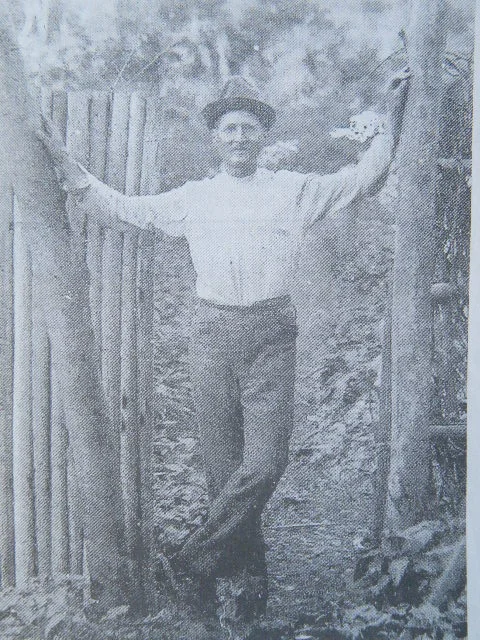
Mzee Yohani Lauwo
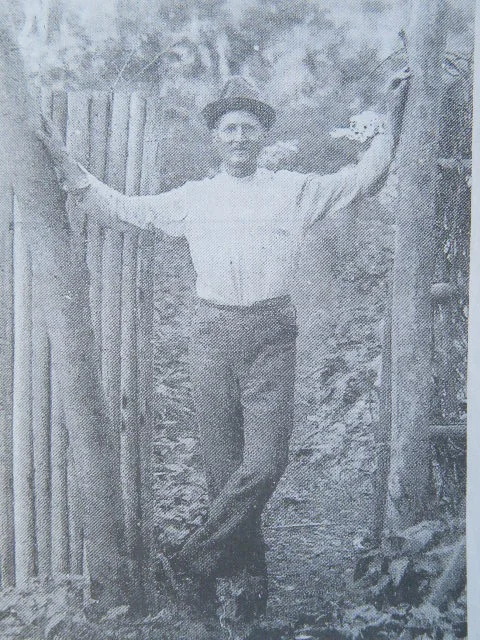
Yohani Kinyala Lauwo was born circa 1871 in the village of Marangu on the fertile southern slopes of Mount Kilimanjaro. As a young Chagga herdsman and honey-hunter, Lauwo possessed an intimate understanding of the dense mist-laden rainforests, high moorlands, and volcanic scree slopes of the great mountain, known locally as Oldoinyo Oibor (the White Mountain). In September 1889, German explorer Hans Meyer arrived in Marangu seeking local guides capable of navigating the uncharted upper reaches of Kibo. Village elders designated the nimble, fearless 18-year-old Lauwo to lead the reconnaissance caravan. Clothed in blankets and often walking barefoot over jagged volcanic scree, Lauwo guided Meyer, Purtscheller, and headman Mwini Amani past the upper limit of vegetation onto the high arid Saddle and up the eastern scree ramps. Lauwo guided the European climbers to their high bivouac and accompanied the summit push to the crater rim at what is today Gilman's Point. Following the historic 1889 ascent, Lauwo dedicated the next seven decades of his life to guiding scientific and recreational expeditions up Kilimanjaro, serving as the revered chief guide of the Marangu Hotel until his retirement in his late eighties. When Kilimanjaro National Park celebrated the mountain's centenary in 1989, Lauwo was honored by the Tanzanian government as a living national treasure. He passed away peacefully in Marangu on May 10, 1996, at the age of approximately 124–125.
Associated Historical Chronicles & Stories
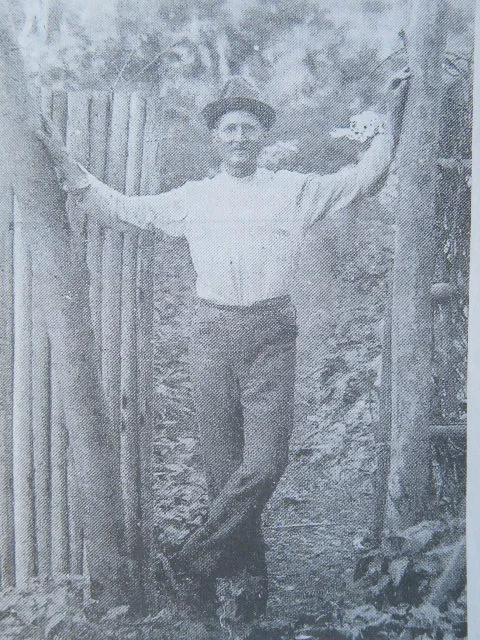
Across the Crater Ice: The 1889 First Ascent of Mount Kilimanjaro
The White Dome of Equatorial Africa...
Documented Sources & Archival Citations
- Across East African Glaciers: An Account of the First Ascent of Kilimanjaro(Hans Meyer / George Philip & Son)
Supporting claim: Firsthand official narrative of the 1889 maiden ascent
Accessed/Documented: 1891 - Über den Kilimandscharo(Ludwig Purtscheller / Zeitschrift des DÖAV)
Supporting claim: Technical account of the step-cutting assault up Ratzel Glacier
Accessed/Documented: 1890