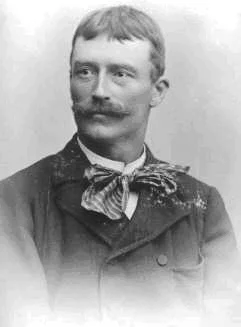
Ludwig Purtscheller
Ludwig Purtscheller was an extraordinary Austrian alpine purist and gymnastics educator celebrated as one of the greatest guideless mountaineers in history, having climbed over 1,600 peaks. On October 6, 1889, Purtscheller achieved the historic first ascent of Mount Kilimanjaro (5,895 m) alongside Hans Meyer, personally cutting hundreds of ice steps across the steep crater ice walls to reach Uhuru Peak.
Mountain Safety & Conditions Disclaimer: High-altitude climbing, glacial travel, and technical ascents entail severe objective risks including avalanches, serac collapses, rapid weather collapse, and altitude illness. Historical route descriptions and summit claims on Mountanity reflect documented archival sources and must not be used as live operational safety assessments. Local regulations, permits, and physical glacial topography change continuously.
Peer Review: Senior Editorial Board & Historical Reviewers • Editorial Standards
Biographical Record & Archival Chronicle
Ludwig Purtscheller was born on October 6, 1849, in Innsbruck, Tyrol, Austria. A gymnastics instructor by profession, Purtscheller dedicated every holiday and vacation to the high mountains, cultivating exceptional physical conditioning, endurance, and an unyielding commitment to climbing without commercial guides. Over his lifetime, he recorded ascents of more than 1,600 peaks across the Alps, including dozens of daring new routes in the Dolomites and Western Alps.
In 1889, Hans Meyer recognized that conquering the glaciated volcanic crown of Mount Kilimanjaro required the finest alpine ice climber available in Europe, and invited Purtscheller to join his third expedition. Purtscheller's master-level ice axe technique proved decisive: on October 6, 1889 (his 40th birthday), Purtscheller cut continuous steps up the steep blue ice wall of the Ratzel Glacier on Kibo's eastern flank, enabling the party to breach the crater rim and reach the 5,895-metre summit of Kaiser-Wilhelm-Spitze.
Purtscheller's technical notes and physiological observations of high-altitude exertion were published across European alpine journals, cementing his reputation as a visionary pioneer who fused physical education with purest alpine ethics. Tragically, in 1899, while descending the Aiguille du Dru in Chamonix, a snow bridge collapsed, causing an anchor failure; Purtscheller survived the fall but succumbed to pneumonia during recovery in Bern on March 3, 1900.
Notable Milestones & Ascents
- Conquered Mount Kilimanjaro (5,895 m) on October 6, 1889 on his 40th birthday
- Climbed over 1,600 alpine peaks without mountain guides, a 19th-century world record
- Cut hundreds of technical steps up the Kibo ice cap to unlock the crater rim
- Co-first ascent of numerous classic alpine routes across the Tyrolean and Swiss Alps
Key Statistics & Topographic Figures
- Official Elevation
- 5,895 m
- Key Milestone
- First Ascent of Mount Kilimanjaro (1889)
- Career Ascents
- Over 1,600 Alpine Peaks Without Guides
- Nationality
- Austrian
- Years Active
- 1849–1900
Archival Primary Source Quotations
“The mountain demands everything of your body and spirit; to conquer it on one's own power is the supreme joy of life.”
Defined Alpine Terminology & Concepts
- Guideless Alpinism
- The climbing ethic of tackling high alpine objectives relying entirely on one's own route-finding, judgment, and ice technique without commercial mountain guides.
Frequently Asked Questions: Ludwig Purtscheller
Who was Ludwig Purtscheller?
Ludwig Purtscheller was a legendary Austrian alpine purist who climbed over 1,600 peaks without guides and co-conquered Mount Kilimanjaro in 1889.
What was Purtscheller's role in the 1889 Kilimanjaro first ascent?
Purtscheller led the technical ice climbing, tirelessly cutting hundreds of steps into the blue ice wall of the Ratzel Glacier to reach the crater rim.
Associated Summits (1)


Mount Kilimanjaro
Mount Kilimanjaro is the highest mountain in Africa, the highest free-standing mountain in the world, and one of the Seven Summits, soaring to 5,895 metres (19,341 ft) above the plains of northeastern Tanzania. Consisting of three distinct volcanic cones—Kibo, Mawenzi (5,149 m), and Shira (4,005 m)—its summit at Uhuru Peak was first reached on October 6, 1889, by German geographer Hans Meyer, Austrian alpine pioneer Ludwig Purtscheller, and local Chagga mountain scout Yohani Lauwo.
Pioneered & Associated Routes (1)

Kilimanjaro Marangu Route via Kibo Hut & Gilman's Point
The historic 'Coca-Cola Route' and the oldest established trail on Mount Kilimanjaro, ascending the southeastern slopes from Marangu through rainforest, moorland, and alpine desert to Kibo Hut and Uhuru Peak. The only route on Kilimanjaro offering permanent dormitory hut accommodations.
Documented Expeditions (1)
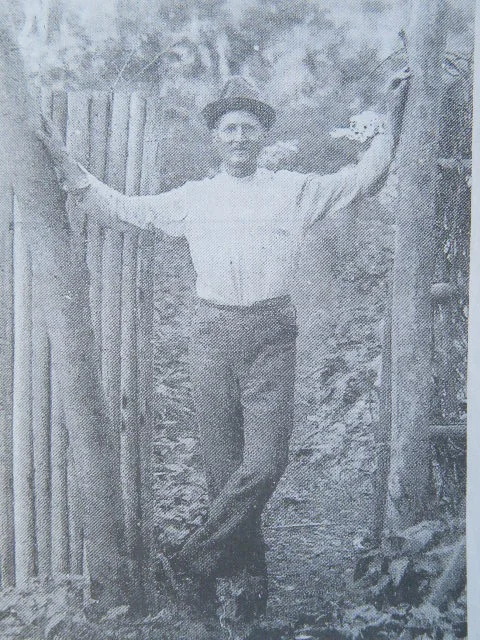
1889 Hans Meyer, Ludwig Purtscheller and Yohani Lauwo Mount Kilimanjaro Historic First Ascent Expedition
On October 6, 1889, German geographer Hans Meyer and Austrian alpine master Ludwig Purtscheller achieved the historic maiden first ascent of Mount Kilimanjaro (5,895 m), Africa's highest summit. Guided through the cloud forests and across the high volcanic saddle by Chagga scout Yohani Lauwo, Purtscheller carved hundreds of steps into the ice wall of Ratzel Glacier to breach the crater rim of Kibo and stand on the highest point in Africa.
Documented Sources & Archival Citations
- Über den Kilimandscharo(Ludwig Purtscheller / Zeitschrift des DÖAV)
Supporting claim: Firsthand technical narrative of the 1889 summit ice climb
Accessed/Documented: 1890 - Über Fels und Firn(Ludwig Purtscheller / Bruckmann)
Supporting claim: Posthumous memoir documenting his climbing philosophy and career
Accessed/Documented: 1901