1939 Walter Wood and Erwin Kraus Pico Cristóbal Colón Historic First Ascent Expedition
On February 2, 1939, American explorers Walter Wood and Anderson Bakewell alongside Colombian pioneer Erwin Kraus achieved the historic first ascent of Pico Cristóbal Colón (5,730 m). Overcoming dense cloud forests and steep northern firn ramps, they conquered the fifth most topographically prominent mountain on Earth.
Mountain Safety & Conditions Disclaimer: High-altitude climbing, glacial travel, and technical ascents entail severe objective risks including avalanches, serac collapses, rapid weather collapse, and altitude illness. Historical route descriptions and summit claims on Mountanity reflect documented archival sources and must not be used as live operational safety assessments. Local regulations, permits, and physical glacial topography change continuously.
Peer Review: Senior Editorial Board & Historical Reviewers • Editorial Standards
Official Expedition Narrative & Archival Record
In early 1939, American mountaineer Walter A. Wood Jr. organized an expedition under the auspices of the American Alpine Club to explore the isolated, mysterious coastal massif of the Sierra Nevada de Santa Marta in northern Colombia. Recognizing that local knowledge was critical, Wood invited thirty-three-year-old Colombian-German alpinist and artist Erwin Kraus to join the team alongside American explorer Anderson Bakewell. The approach was an expedition in itself: the climbers spent nearly two weeks hacking through dense jungle trails, crossing roaring rivers, and negotiating passage with indigenous Kogui and Arhuaco leaders who held the glaciated peaks sacred. Establishing Base Camp at Laguna Naboba (4,400 m) in a stark amphitheatre of granitic towers, the team moved a high tent camp to the moraine at 4,800 metres. On February 2, 1939, roped together under pristine equatorial skies, Wood, Bakewell, and Kraus tackled the North Glacier. Navigating past open bergschrunds and ascending 45-degree firn ramps, they gained the jagged connecting arête between the twin giants of the range. Traversing exposed rock ledges, they attained the summit of Pico Cristóbal Colón at 5,730 metres. Standing on the fifth most prominent peak on Earth, just forty-two kilometres from the sparkling blue waters of the Caribbean Sea, the climbers celebrated Colombia's supreme alpine first ascent. Kraus captured magnificent photographs of the virgin icefields, cementing his status as the father of Colombian mountaineering.
Documented Team Composition
- Walter A. Wood Jr. (Expedition Leader & Alpinist, United States)
- Anderson Bakewell (Climber & Explorer, United States)
- Erwin Kraus (Lead Colombian Alpinist & Artist, Colombia)
Key Statistics & Topographic Figures
- Summit Elevation
- 5,730 m (18,799 ft)
- Topographic Prominence
- 5,509 m (5th Most Prominent Peak on Earth)
- First Ascent Date
- February 2, 1939
- First Ascent Team
- Walter Wood, Anderson Bakewell, Erwin Kraus
- Distance to Coast
- 42 km (To the Caribbean Sea)
Archival Primary Source Quotations
“We moved from stifling tropical rainforests into bamboo jungles, then alpine meadows, and finally stepped onto glaciers gleaming in the Caribbean sky.”
Defined Alpine Terminology & Concepts
- Gonawindúa
- The sacred indigenous Kogui and Arhuaco name for the glaciated high peaks of the Sierra Nevada de Santa Marta, viewed as the spiritual heart of the universe.
- Topographic Prominence
- The vertical height of a mountain's summit above the lowest contour line encircling it and no higher summit.
Frequently Asked Questions: 1939 Walter Wood and Erwin Kraus Pico Cristóbal Colón Historic First Ascent Expedition
Who made the first ascent of Pico Cristóbal Colón in Colombia?
American mountaineers Walter Wood and Anderson Bakewell alongside Colombian pioneer Erwin Kraus achieved the historic first ascent on February 2, 1939.
Why is Pico Cristóbal Colón unique in world geography?
Pico Cristóbal Colón (5,730 m) is the fifth most topographically prominent peak on Earth (5,509 m prominence), rising directly from tropical Caribbean lowlands in just 42 km.
What cultural permissions were required to climb in the Sierra Nevada de Santa Marta?
The climbers met with indigenous Kogui and Arhuaco leaders to receive blessing to traverse their ancestral sacred territory (Gonawindúa), revered as the heart of the world.
What route did the 1939 team climb on Cristóbal Colón?
They climbed the North Glacier and ascended 45-degree firn ramps to the high col before traversing an exposed granitic arête to the summit.
Ascent Route & Topography
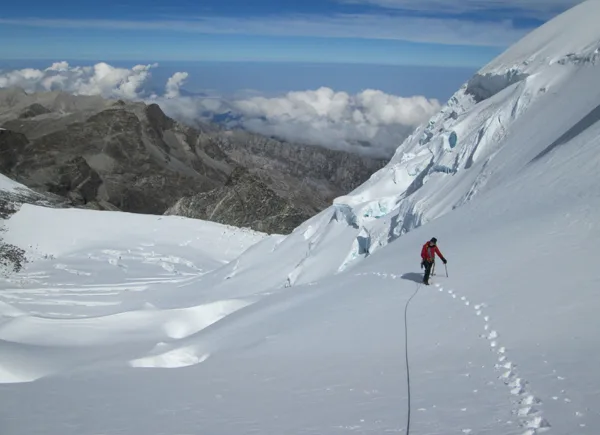
Pico Cristóbal Colón Normal Route (North Glaciers & Arête)
The classic ascent of Pico Cristóbal Colón navigates north-facing hanging glaciers and steep firn ramps before traversing an exposed granitic arête to the 5,730-metre summit. Requiring a multi-day jungle trek through indigenous ancestral territories, the route demands complete expedition self-sufficiency.
Target Objective Peak
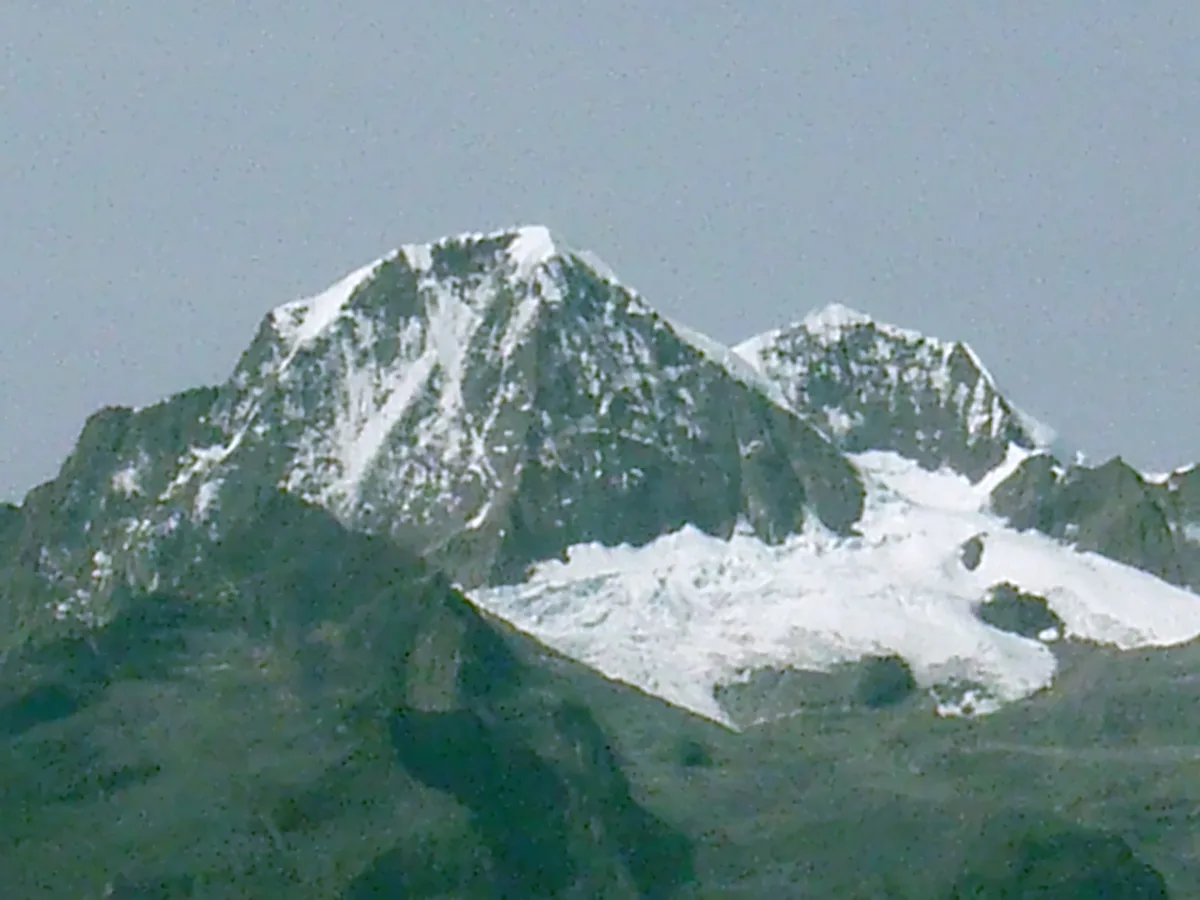
Pico Cristóbal Colón
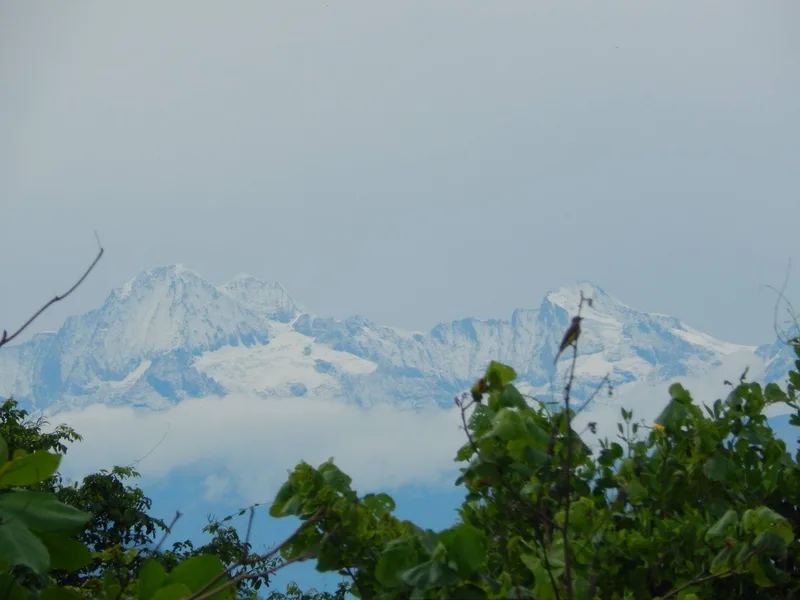
Pico Cristóbal Colón is the highest mountain in Colombia and the fifth most topographically prominent peak on Earth, soaring to 5,730 metres in the isolated coastal massif of the Sierra Nevada de Santa Marta. Rising abruptly just 42 kilometres from the Caribbean Sea, this glaciated titan holds profound sacred significance for indigenous Kogui, Arhuaco, Wiwa, and Kankuamo peoples as the heart of the world. The peak was first climbed in 1939 by Walter Wood, Anderson Bakewell, and Colombian mountaineering pioneer Erwin Kraus.
Featured Expedition Climber
Erwin Kraus
Born in Bogotá in 1905 to German parents, Erwin Kraus developed an enduring passion for high wilderness during his youth. Combining the athletic precision of classic European mountaineering with deep love for the Colombian cordilleras, Kraus embarked on an unparalleled four-decade campaign of high-altitude exploration that systematically conquered every major glaciated massif in Colombia. In January 1939, Kraus joined the American expedition led by Walter Wood and Anderson Bakewell into the isolated coastal massif of the Sierra Nevada de Santa Marta. On February 2, 1939, after hacking through dense cloud forests and climbing steep firn on the North Glacier, Kraus and his companions stood upon the summit of Pico Cristóbal Colón (5,730 m), achieving the first ascent of Colombia's highest mountain. Three years later, on April 3, 1942, Kraus led Colombian companions Guido Tamayo and Heriberto Degen up the virgin western glaciers of Ritacuba Blanco (5,410 m), crowning the Cordillera Oriental in the Sierra Nevada del Cocuy. Kraus went on to complete first ascents of Nevado del Huila (5,364 m) and Nevado del Tolima (5,215 m). A gifted photographer and landscape painter, Kraus carried heavy view cameras to high cols, producing an irreplaceable visual record of tropical glaciers that are now rapidly vanishing. A visionary conservationist who championed the creation of Colombia's National Natural Parks system, Kraus passed away in Bogotá in 2003 at the age of 97, immortalized as the founding father of Colombian alpinism.
Associated Historical Chronicles & Stories
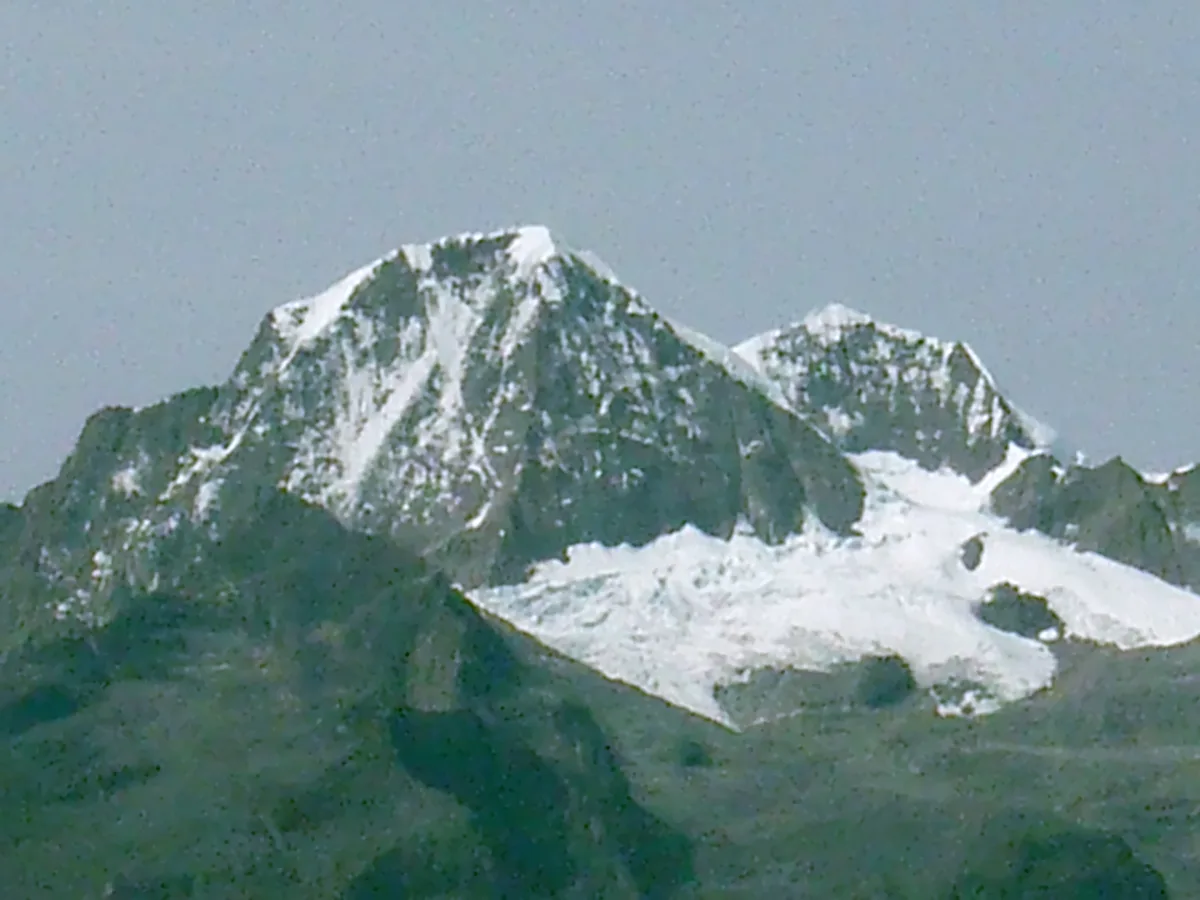
Crown of the Caribbean: The 1939 First Ascent of Pico Cristóbal Colón
On February 2, 1939, Walter Wood, Anderson Bakewell, and Erwin Kraus made the historic first ascent of Pico Cristóbal Colón (5,730 m) in Colombia's Sierra Nevada de Santa Marta.
Documented Sources & Archival Citations
- The Sierra Nevada de Santa Marta(American Alpine Journal)
Supporting claim: Firsthand expedition journal and cartographic survey of the 1939 Cristóbal Colón first ascent
Accessed/Documented: 1940 - Montañas de Colombia(Villegas Editores)
Supporting claim: Historical analysis of the 1939 Wood-Kraus expedition on Pico Cristóbal Colón
Accessed/Documented: 2001