1956 Austrian Karakoram Expedition to Gasherbrum II
The landmark Austrian expedition led by Fritz Moravec that achieved the maiden first ascent of Gasherbrum II (8,035m) via the Southwest Ridge without supplemental oxygen on July 7, 1956.
Mountain Safety & Conditions Disclaimer: High-altitude climbing, glacial travel, and technical ascents entail severe objective risks including avalanches, serac collapses, rapid weather collapse, and altitude illness. Historical route descriptions and summit claims on Mountanity reflect documented archival sources and must not be used as live operational safety assessments. Local regulations, permits, and physical glacial topography change continuously.
Peer Review: Senior Editorial Board & Historical Reviewers • Editorial Standards
Official Expedition Narrative & Archival Record
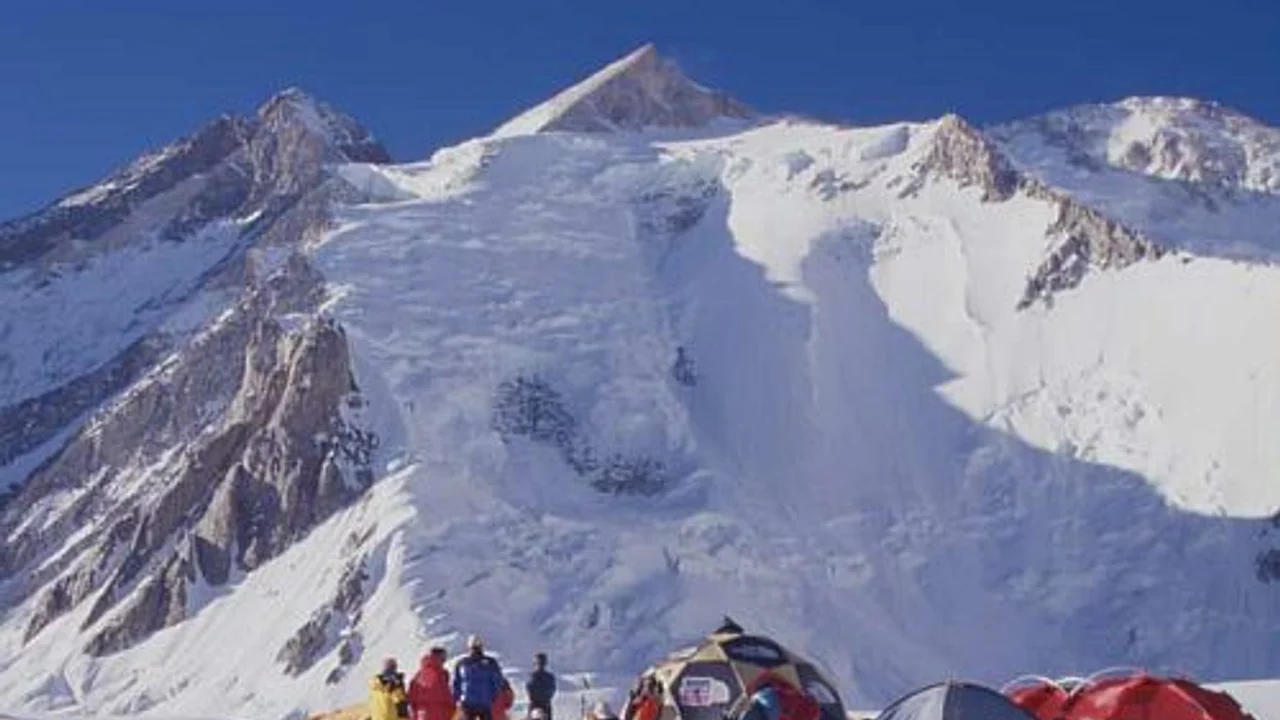
Organized under the auspices of the Austrian Alpine Club (ÖAV) and led by Fritz Moravec, the 1956 Austrian Karakoram Expedition traveled up the Baltoro Glacier to tackle Gasherbrum II (8,035m), the thirteenth-highest peak in the world. Operating with a compact, highly disciplined team, they navigated the chaotic serac crevasses of the South Gasherbrum Glacier to establish Camp I in the upper cwm. The technical crux of the ascent was unlocked along the steep mixed knife-edge ice crest christened the 'Banana Ridge', leading to Camp III at 6,900 meters. Overcoming a devastating blizzard that destroyed intermediate depots, Moravec, Josef Larch, and Hans Willenpart rallied from Camp IV at 7,400 meters. On July 7, 1956, battling intense cold and high-altitude exhaustion without bottled oxygen, all three men navigated the delicate diagonal snow couloir to step onto the 8,035-meter summit of Gasherbrum II at 11:30 AM, achieving Austria's second 8,000-meter first ascent.
Documented Team Composition
- Fritz Moravec (Expedition Leader)
- Josef Larch
- Hans Willenpart
- Hans Ratay
- Richard Ekhart
- Heinrich Roiss
Key Statistics & Topographic Figures
- Summit Date
- July 7, 1956
Maiden First Ascent
- Summit Team
- Fritz Moravec, Josef Larch, Hans Willenpart
Austrian Trio
- Oxygen Status
- No Supplemental Oxygen
Pure Alpine Endurance
- Peak Elevation
- 8,035 meters (26,362 ft)
World 13th Highest
Archival Primary Source Quotations
“High above the Baltoro, we stepped onto the summit of Gasherbrum II without oxygen, proving that willpower and Alpine technique can triumph over the highest Karakoram giants.”
Defined Alpine Terminology & Concepts
- Banana Ridge
- The knife-edge mixed ice spur on Gasherbrum II between Camp II (6,400m) and Camp III (6,900m) that forms the route’s chief technical barrier.
- Rgasha Brum
- The local Balti language name for the Gasherbrum massif, meaning "Beautiful" or "Shining Mountain."
Frequently Asked Questions: 1956 Austrian Karakoram Expedition to Gasherbrum II
Who made the first ascent of Gasherbrum II in 1956?
Fritz Moravec, Josef Larch, and Hans Willenpart made the historic first ascent of Gasherbrum II (8,035m) on July 7, 1956, climbing under the Austrian Alpine Club (ÖAV).
Did the 1956 Austrian team use supplemental oxygen on Gasherbrum II?
No. Fritz Moravec, Josef Larch, and Hans Willenpart climbed Gasherbrum II entirely without bottled oxygen, relying purely on natural acclimatization in the Death Zone.
What was the Banana Ridge on Gasherbrum II?
The Banana Ridge is a curved, razor-sharp mixed ice and rock crest between 6,400 and 6,900 meters on the Southwest Ridge. It forms the primary technical crux of the normal route on Gasherbrum II.
What disaster struck the 1956 Gasherbrum II expedition at Camp I?
A catastrophic slab avalanche swept through Camp I in mid-June, completely burying their main food, tent, and equipment depots. Rather than retreating, the team pooled their remaining gear and launched a successful lightweight assault.
What does the name Gasherbrum mean?
The name comes from the Balti words "Rgasha" (beautiful) and "Brum" (mountain), translating to "Shining Mountain" because its immense granite faces reflect golden light at sunset.
What route was pioneered during the 1956 first ascent of Gasherbrum II?
The Austrian expedition pioneered the Southwest Ridge from the South Gasherbrum Glacier, which remains the standard normal route on the mountain today.
Ascent Route & Topography
Southwest Ridge (Normal Route)
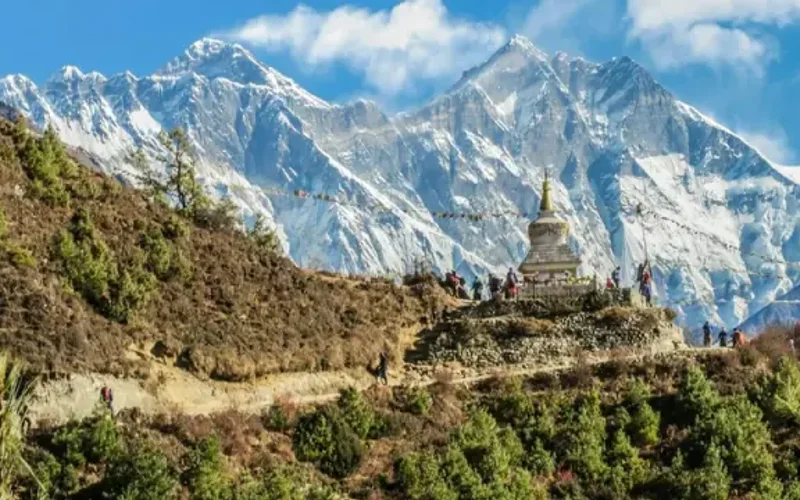
The Southwest Ridge is the standard and historically celebrated route on Gasherbrum II (8,035m). Starting from the South Gasherbrum Glacier, climbers navigate the heavily crevassed lower icefall into the Gasherbrum Cwm before tackling the technical crux of the route: the steep mixed snow and ice crest known as the Banana Ridge. Above Camp III, the route traverses expansive snow basins into the Death Zone, making a final push up a delicate diagonal couloir to the summit. First climbed in 1956 by an Austrian team, and completed in rapid alpine style in 1982 by Reinhold Messner, Nazir Sabir, and Sher Khan.
Target Objective Peak


Gasherbrum II
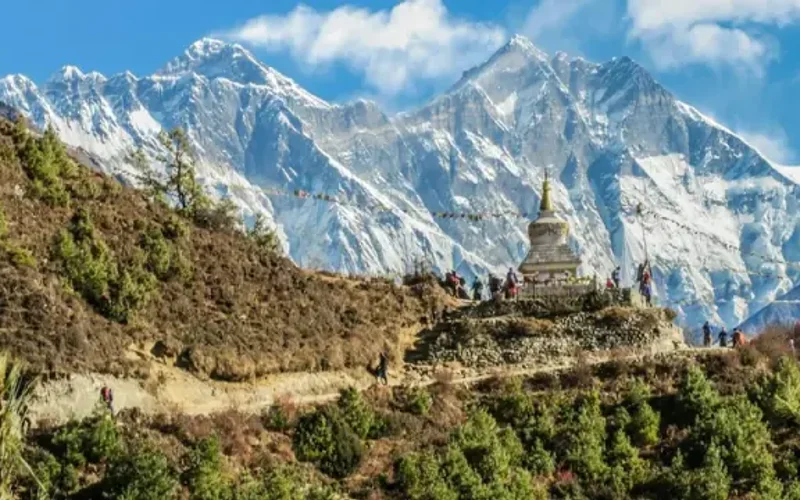
Gasherbrum II, standing at 8,035 meters (26,362 ft), is the thirteenth-highest mountain on Earth and the third-highest peak of the Gasherbrum massif in the Karakoram. Located at the head of the Baltoro Glacier on the Pakistan-China frontier, it features a classic pyramidal profile with challenging ice couloirs. First summited in 1956 by an Austrian team, it was famously climbed in pure alpine style in 1982 by Reinhold Messner, Nazir Sabir, and Sher Khan.
Featured Expedition Climbers

Fritz Moravec
Fritz Moravec was born on April 27, 1922, in Vienna, Austria. Moravec discovered mountaineering as a youth in the Gesäuse and Rax ranges of Lower Austria and Styria, rapidly becoming one of Austria's finest rock and ice climbers. During World War II, his mountain warfare experience further honed his technical survival instincts. In the post-war era, Moravec spearheaded several pioneering scientific and climbing expeditions to the great ranges of the world, including early ventures into the Spitsbergen Arctic and the Ruwenzori mountains of Central Africa. In 1956, the Austrian Alpine Club (ÖAV) appointed Moravec as leader of the Austrian Karakoram Expedition to attempt the unclimbed Gasherbrum II (8,035m) at the head of the Baltoro Glacier. Moravec organized a remarkably compact and efficient expedition. Establishing Base Camp on the South Gasherbrum Glacier, the team unlocked a route through the dangerous lower icefall and breached the technical crux—the steep mixed ice knife-edge known as the Banana Ridge—to establish high camps. On July 7, 1956, Moravec, alongside Josef Larch and Hans Willenpart, pushed through a final diagonal snow couloir in the Death Zone to stand on the 8,035-meter summit of Gasherbrum II, completing the maiden conquest of the world's thirteenth-highest peak. In 1959, Moravec returned to the Himalayas to lead an Austrian expedition to Dhaulagiri I (8,167m), reaching 7,800 meters before being forced down by ferocious blizzards—a pioneer attempt that established key reconnaissance for the successful 1960 climb. Moravec dedicated his later life to alpine education, founding the famous Austrian Youth Mountaineering School (Bergsteigerschule Glockner-Kaprun). He wrote bestselling mountain books including *Weiße Berge, schwarze Menschen* before passing away in Vienna on March 17, 1997.
Hans Willenpart
Hans Willenpart was born on December 1, 1927, in Scheibbs, Lower Austria. Growing up exploring the rugged limestone massifs of the Ybbstal and Gesäuse Alps, Willenpart established himself as a cool-headed and formidable ice climber during an era of rapid technical innovation in alpine equipment. In 1956, Willenpart joined the Austrian Karakoram Expedition to Gasherbrum II (8,035m) led by Fritz Moravec. Moving up the treacherous South Gasherbrum Glacier, Willenpart worked closely with Josef Larch to prospect and safeguard the route through volatile serac fields and across the exposed granite and blue-ice knife-edge of the 'Banana Ridge' up to 6,900 meters. On July 7, 1956, from the expedition's assault camp at 7,400 meters, Willenpart, Moravec, and Larch pushed through deep, unstable snow and extreme cold in the Death Zone. In an unbroken push, the three Austrians breached the upper couloir and reached the 8,035-meter summit of Gasherbrum II at 11:30 AM, achieving the summit without supplementary oxygen. In 1958, Willenpart returned to the Karakoram as a member of the Austrian expedition to Haramosh (7,409m). He continued to climb actively throughout the Alps until his untimely death on May 16, 1980, remembered in Austrian alpine lore as a cornerstone of the nation's golden era in the Karakoram.
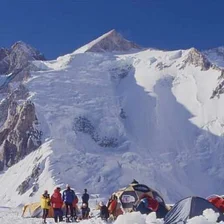
Josef Larch
Josef 'Sepp' Larch was born on July 28, 1930, in Sterzing (Vipiteno), South Tyrol, and later settled in Upper Austria. Endowed with exceptional physical power and climbing technique, Larch became one of the leading figures of the aggressive post-war generation of Eastern Alpine climbers. In July 1952, Larch gained international acclaim by completing the eighth overall ascent of the terrifying Eiger North Face (1938 Heckmair route) with Karl Winter, enduring ferocious rockfall and storms. In 1956, Larch was selected by expedition leader Fritz Moravec as the primary technical lead climber for the Austrian Karakoram Expedition to Gasherbrum II (8,035m). Approaching via the Baltoro Glacier, Larch played an indispensable role in navigating the labyrinthine crevasses of the South Gasherbrum Glacier and fixing critical ropes up the technical crux of the route, the razor-sharp mixed ice ridge known as the 'Banana Ridge' above 6,400 meters. On July 7, 1956, despite extreme fatigue and thin air in the Death Zone, Larch joined Moravec and Hans Willenpart on the final summit push from Camp IV at 7,400 meters. Breaking trail through a steep diagonal snow couloir, Larch stepped onto the 8,035-meter summit of Gasherbrum II, completing the first ascent of the Karakoram giant without supplemental oxygen. Throughout the 1960s and 1970s, Larch continued to climb at an elite level, mentoring generations of Austrian alpinists and working as an artisan and mountain guide in Weyer, Upper Austria. He passed away on October 7, 2011, at the age of 81, revered as one of Austria's truest and toughest alpine pioneers.
Associated Historical Chronicles & Stories
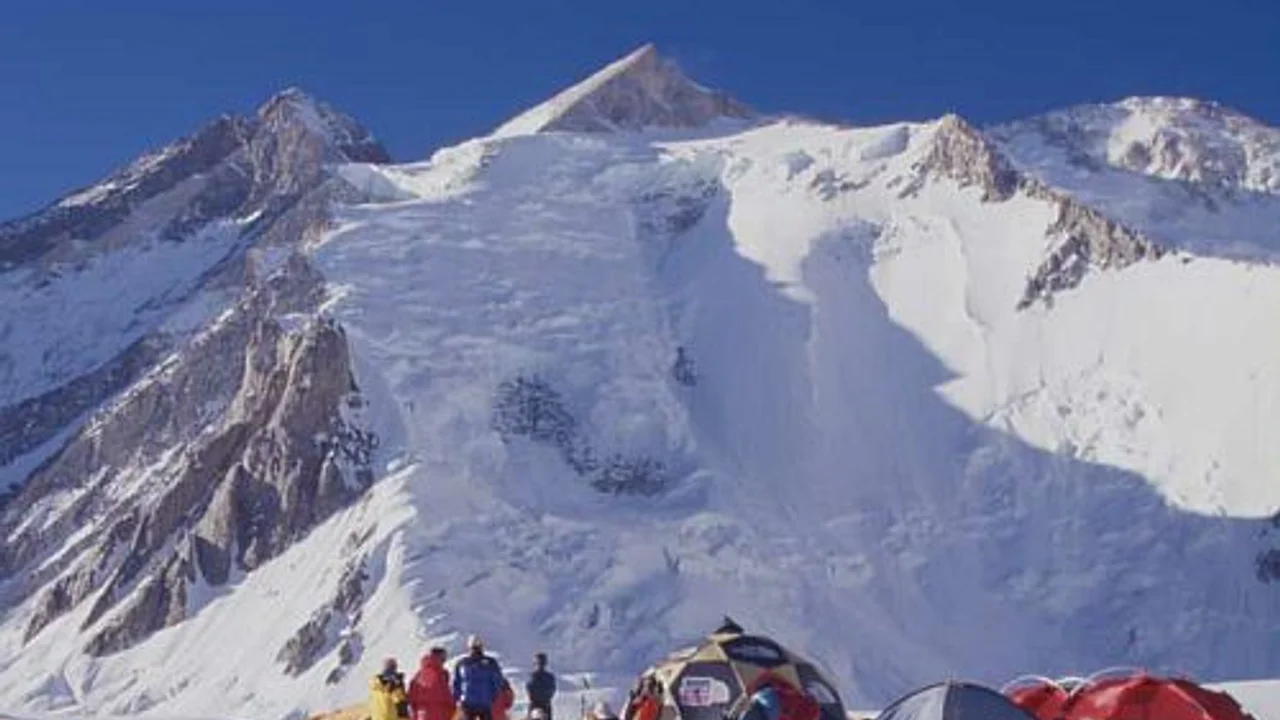
Gasherbrum II 1956: The Austrian Conquest of the Shining Mountain
On July 7, 1956, Fritz Moravec, Josef Larch, and Hans Willenpart conquered the formidable Southwest Ridge of Gasherbrum II (8,035m), triumphing without supplemental oxygen over lost depots, shattered seracs, and the razor crest of the Banana Ridge.
Documented Sources & Archival Citations
- Weiße Berge, schwarze Menschen: Zur Erstbesteigung des Gasherbrum II(Fritz Moravec / Österreichischer Bundesverlag)
Supporting claim: Official expedition leader chronicle of the 1956 Gasherbrum II first ascent
Accessed/Documented: 1958 - The Himalayan Database: Gasherbrum II 1956 Archive(Elizabeth Hawley Archive)
Supporting claim: Official expedition verification and summit registration
Accessed/Documented: 2026 - American Alpine Journal: 1956 Karakoram Ascents(American Alpine Club)
Supporting claim: International alpine record and route analysis of the Moravec expedition
Accessed/Documented: 1957