1960 Swiss Dhaulagiri Expedition
The landmark Swiss-Austrian expedition led by Max Eiselin that achieved the maiden first ascent of Dhaulagiri I (8,167m) via the Northeast Ridge without bottled oxygen on May 13, 1960.
Mountain Safety & Conditions Disclaimer: High-altitude climbing, glacial travel, and technical ascents entail severe objective risks including avalanches, serac collapses, rapid weather collapse, and altitude illness. Historical route descriptions and summit claims on Mountanity reflect documented archival sources and must not be used as live operational safety assessments. Local regulations, permits, and physical glacial topography change continuously.
Peer Review: Senior Editorial Board & Historical Reviewers • Editorial Standards
Official Expedition Narrative & Archival Record
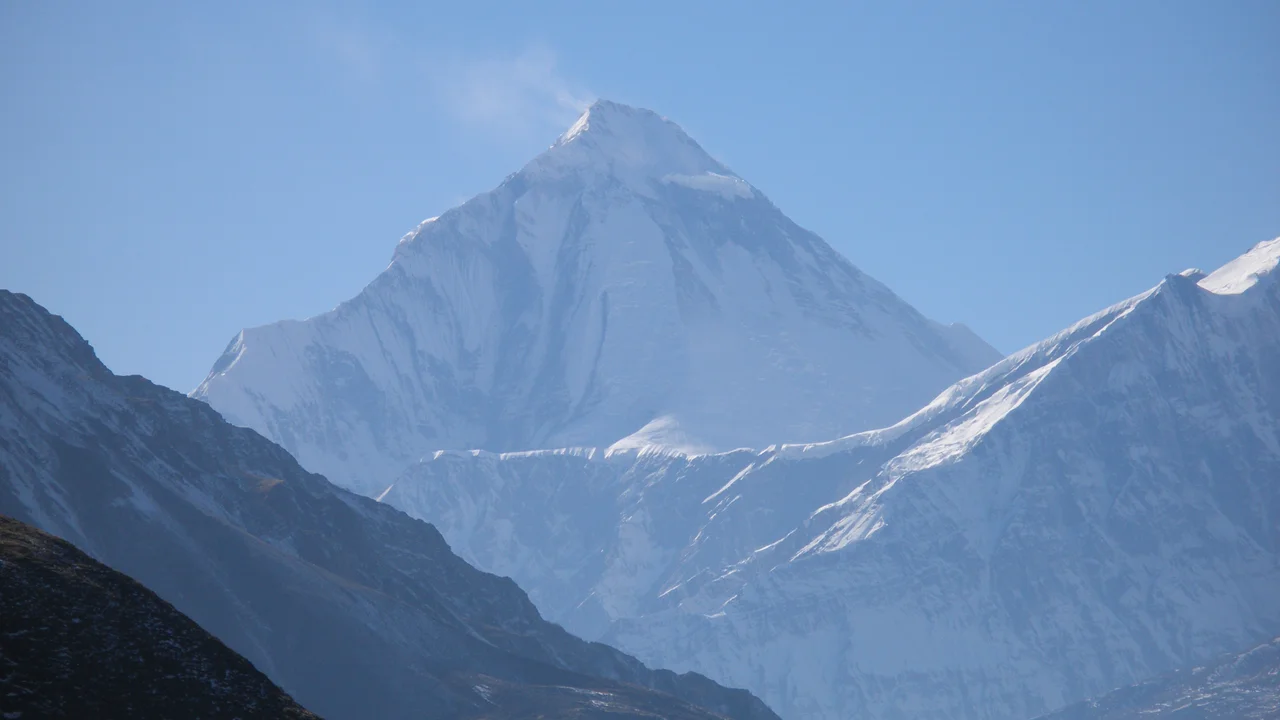
Organized and led by Swiss alpinist Max Eiselin, the 1960 Swiss Dhaulagiri Expedition succeeded in conquering Dhaulagiri I (8,167m)—the 'White Mountain' of Nepal, which had resisted seven earlier international attempts. The expedition made aviation history by employing a prototype ski-equipped Pilatus PC-6 Porter airplane named 'Yeti', flown by pilots Ernst Saxer and Emil Wick, which made record-breaking high-altitude landings on the Northeast Col at 5,700 meters to ferry supplies before crashing on the glacier without injuries. Operating without supplemental oxygen above Camp V, the international climbing team worked up the steep, corniced Northeast Ridge. On May 13, 1960, Kurt Diemberger, Peter Diener, Ernst Forrer, Albin Schelbert, and Sherpas Nawang Dorje and Nyima Dorje reached the 8,167-meter summit in bitter cold and fierce winds. A second summit party consisting of Michel Vaucher and Hugo Weber repeated the ascent ten days later on May 23, cementing one of the greatest collaborative triumphs in Himalayan history.
Documented Team Composition
- Max Eiselin (Expedition Leader)
- Kurt Diemberger
- Peter Diener
- Ernst Forrer
- Albin Schelbert
- Michel Vaucher
- Hugo Weber
- Jean-Jacques Roussi
- Nawang Dorje (Sherpa Sirdar)
- Nyima Dorje (Sherpa)
Key Statistics & Topographic Figures
- Summit Date
- May 13, 1960
Maiden First Ascent
- First Summit Wave
- Diemberger, Diener, Forrer, Schelbert, Nawang & Nyima Dorje
6 Climbers Without O2
- Second Summit Wave
- Michel Vaucher & Hugo Weber
May 23, 1960
- Aircraft Used
- Pilatus PC-6 Porter ("Yeti")
High-Altitude Glacier Landings
- Peak Elevation
- 8,167 meters (26,795 ft)
World 7th Highest
Archival Primary Source Quotations
“On Dhaulagiri, human step by step prevailed where the airplane had crashed. We stood on the White Mountain’s summit without oxygen, touching the sky.”
Defined Alpine Terminology & Concepts
- Northeast Col
- The 5,700-meter high glacial pass between Dhaulagiri I and the Tukche peaks where the Pilatus Porter aircraft landed.
- Dhavala Giri
- The ancient Sanskrit etymology of Dhaulagiri, translating directly to "The Dazzling White Mountain."
Frequently Asked Questions: 1960 Swiss Dhaulagiri Expedition
Who made the first ascent of Dhaulagiri in 1960?
Kurt Diemberger, Peter Diener, Ernst Forrer, Albin Schelbert, and Sherpas Nawang Dorje and Nyima Dorje reached the summit of Dhaulagiri I (8,167m) on May 13, 1960, followed on May 23 by Michel Vaucher and Hugo Weber.
What was the famous "Yeti" airplane on the 1960 Dhaulagiri expedition?
A prototype ski-equipped Pilatus PC-6 Porter airplane named "Yeti" set an aviation world record by landing supplies on the Northeast Col at 5,700 meters before crashing on the glacier during a subsequent takeoff.
Did the 1960 Dhaulagiri summit team use supplemental oxygen?
No. All climbers on the May 13 and May 23 summit pushes climbed Dhaulagiri I without supplemental oxygen, relying entirely on natural acclimatization.
What historic record did Kurt Diemberger achieve on Dhaulagiri?
By summiting Dhaulagiri in 1960 after summiting Broad Peak in 1957, Kurt Diemberger became one of only two people in world history (alongside Hermann Buhl) to make maiden first ascents of two 8,000-meter peaks.
Why was Dhaulagiri called the "White Mountain"?
Dhaulagiri originates from the Sanskrit words "Dhavala" (dazzling white) and "Giri" (mountain), reflecting its massive glaciated walls that dominate western Nepal.
How many prior expeditions had failed on Dhaulagiri before 1960?
Seven prior international expeditions (from France, Switzerland, Argentina, and Austria) had failed between 1950 and 1959 before the 1960 Swiss team unlocked the Northeast Ridge.
Ascent Route & Topography
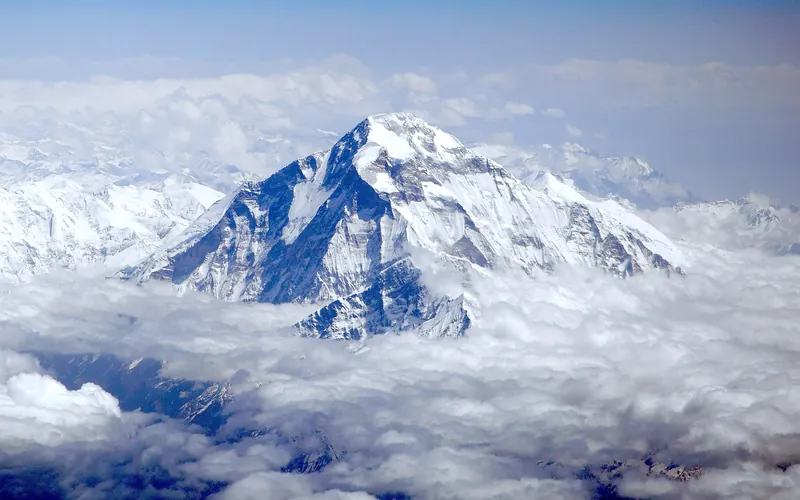
Dhaulagiri I Northeast Ridge (Normal Route)
The Northeast Ridge is the standard climbing route on Dhaulagiri I, first ascended in 1960 by a Swiss-Austrian team. The route begins on the glaciated Mayangdi Khola valley, climbs to the Northeast Col (5,700m), and works its way up the mountain's north-northeast face. The upper section traverses steep, wind-scoured blue ice shelves below the summit rocks and negotiates a final, exposed couloir leading directly to the 8,167m summit.
Target Objective Peak
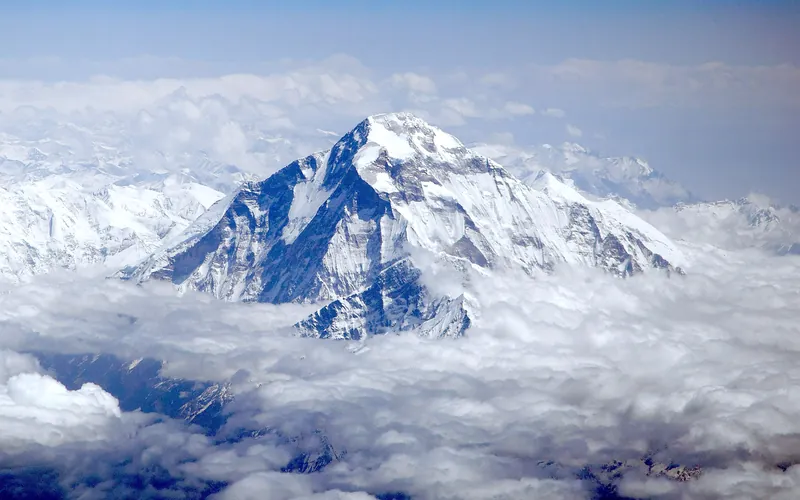

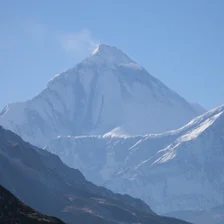
Dhaulagiri I
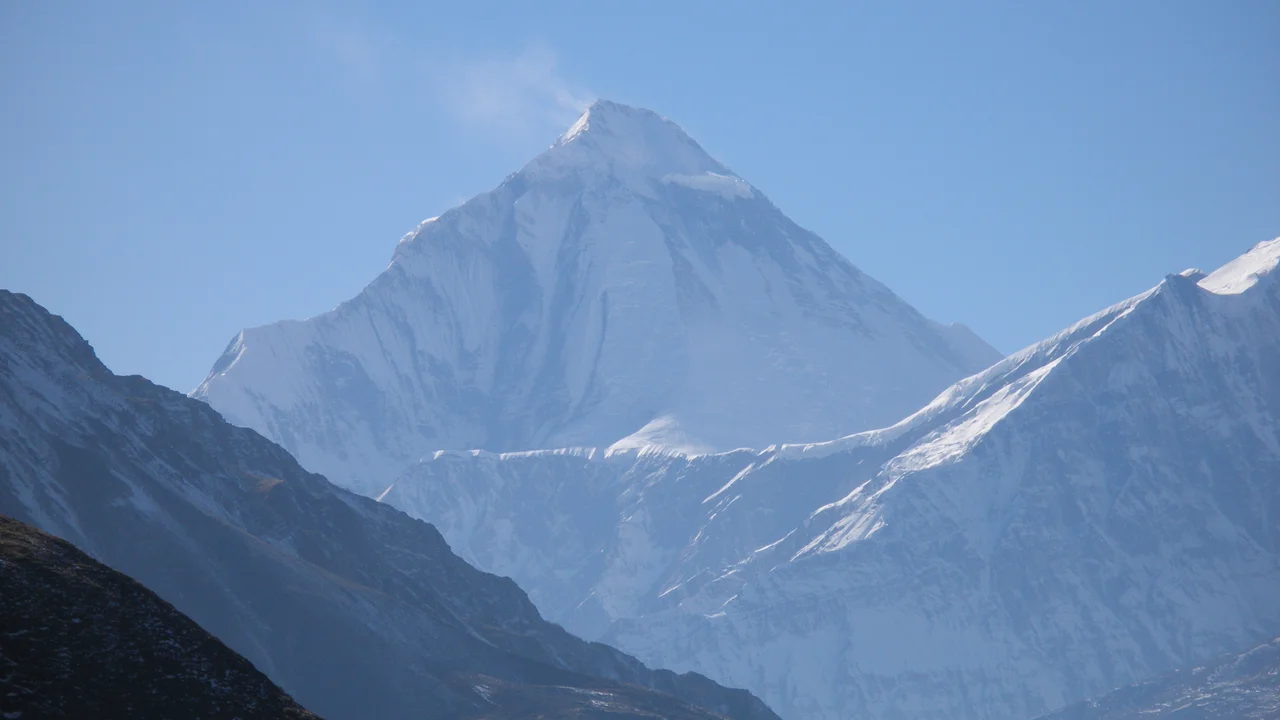
Dhaulagiri I, at 8,167 meters (26,795 ft), is the seventh-highest mountain on Earth and the highest peak situated entirely within Nepal. Rising steeply above the Kali Gandaki Gorge—the deepest gorge on Earth—opposite Annapurna, Dhaulagiri forms a staggering 7,000-meter vertical rise from the river valley.
Featured Expedition Climbers
Albin Schelbert
Albin Schelbert was born on July 24, 1932, in Muotathal in the Canton of Schwyz, Switzerland. Hailing from a traditional Swiss mountain family, Schelbert developed into a powerhouse rock and ice climber, earning his certified Swiss UIAGM mountain guide patent at a young age and forging difficult new lines across the Uri Alps and the Glarus Alps. In 1960, Schelbert was chosen by expedition leader Max Eiselin to join the international Swiss-Austrian Dhaulagiri Expedition. Rising steeply between the Annapurna sanctuary and the Tibetan borderland, Dhaulagiri (8,167m) was the highest unclimbed mountain in the world. When the expedition's Pilatus Porter transport plane crashed on the Northeast Col, Schelbert played a crucial role in packing heavy loads across the high glaciers to establish Camp V and Camp VI. On May 13, 1960, Schelbert set out from Camp VI (7,800m) in the primary summit party. Moving without supplemental oxygen despite biting sub-zero gale force winds, Schelbert climbed alongside Peter Diener, Ernst Forrer, Kurt Diemberger, and Sherpas Nawang Dorje and Nyima Dorje. Traversing the upper ice couloir and summit ridge, Schelbert stood on the 8,167-meter summit of Dhaulagiri I, completing the first ascent of Nepal's mighty White Mountain. Schelbert continued his elite alpine career as one of Switzerland's most sought-after guides and technical climbers, notably participating in severe winter ascents in the Bernese Oberland. On June 21, 1975, Schelbert was tragically killed in a climbing accident in the Swiss Alps at age 42, revered by the Swiss Alpine Club as a paragon of alpine modesty, strength, and pioneering spirit.
Ernst Forrer
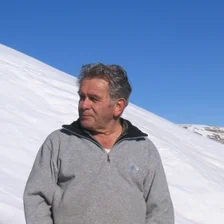
Ernst Forrer was born on December 3, 1932, in Wildhaus in the Toggenburg valley of the Canton of St. Gallen, Switzerland. Growing up beneath the sheer limestone cliffs of the Churfirsten, Forrer became one of Switzerland’s most naturally gifted mountain guides and ski mountaineers, renowned for his physical durability and rock climbing agility. In early 1960, Forrer joined the Swiss Dhaulagiri Expedition organized by Max Eiselin. Dhaulagiri was then the highest unclimbed mountain on Earth, having defeated numerous expeditions over the preceding decade. While the team utilized a ski-equipped Pilatus Porter airplane ('Yeti') to establish a high landing strip on the Northeast Col, an engine failure caused a crash-landing on the glacier, leaving the team without aerial resupply and requiring sheer physical endurance to establish the higher camps on foot. Undaunted, Forrer, alongside Albin Schelbert, Peter Diener, Kurt Diemberger, and Sherpas Nawang Dorje and Nyima Dorje, established Camp VI at 7,800 meters. On the freezing morning of May 13, 1960, Forrer climbed in the lead rope team up the jagged Northeast Ridge. Reaching the summit pyramid without bottled oxygen, Forrer stepped onto the highest point of Dhaulagiri I at 8,167 meters, making history alongside his five companions. Following his Himalayan achievement, Forrer continued a long career as a revered mountain guide in the Swiss Alps, leading ascents across the Mont Blanc massif, the Valais 4,000-meter peaks, and expeditions to the South American Andes. He remains celebrated in Swiss mountaineering annals as a quiet master of high-altitude alpine exploration.

Kurt Diemberger
Kurt Diemberger was born on March 16, 1932, in Villach, Austria. Educated in business and pedagogy in Vienna, Diemberger found his true calling on the towering limestone walls of the Alps. By the mid-1950s, he had established himself among Europe's elite extreme alpinists, mastering the treacherous Giant Arête on the Dent du Géant and completing major routes across the Mont Blanc massif and the Bernese Oberland. In 1957, Diemberger was invited to join Marcus Schmuck's revolutionary four-man Austrian Karakoram Expedition to Broad Peak (8,051m). Rejecting the cumbersome military siege tactics of the era, the small team operated without supplemental oxygen, without high-altitude porters, and without fixed camps established by support relays. On June 9, 1957, Diemberger reached the 8,051-meter summit alongside Marcus Schmuck and Fritz Wintersteller, and later joined the ailing Hermann Buhl on his delayed summit push, completing one of high-altitude mountaineering's most legendary alpine-style triumphs. Just days later, Diemberger accompanied Buhl on an attempt of nearby Chogolisa (7,654m), witnessing Buhl plunge to his death when a summit ridge cornice collapsed during a blinding blizzard. Undeterred by the tragedy, Diemberger returned to the Himalayas in 1960 as a key climbing member of the Swiss Dhaulagiri Expedition led by Max Eiselin. On May 13, 1960, Diemberger stepped onto the summit of Dhaulagiri I (8,167m) via the Northeast Ridge alongside Peter Diener, Ernst Forrer, Albin Schelbert, and Sherpas Nyima Dorje and Nawang Dorje. With this conquest, Diemberger cemented an unmatched milestone in mountaineering history: alongside Hermann Buhl, he became one of only two human beings to claim the maiden first ascents of two eight-thousanders. Over the following decades, Diemberger pioneered high-altitude cinematography, carrying heavy 16mm film cameras onto the summits of Everest and K2. In 1986, he and his climbing and filming partner Julie Tullis summited K2, only to be trapped by the catastrophic 1986 K2 disaster; while Tullis and four others perished in a five-day storm in Camp IV, Diemberger survived a harrowing descent with severe frostbite. An acclaimed author of classic memoirs including *Summits and Secrets* and *The Endless Knot*, Diemberger was awarded the Piolet d'Or Lifetime Achievement Award in 2013, revered as high-altitude climbing's ultimate living pioneer.
Peter Diener
Peter Diener was born on January 29, 1934, in Zittau, Saxony (Germany). Developing an early passion for rock climbing in the sandstone towers of the Zittau Mountains and the Elbe Sandstone, Diener escaped East Germany in 1952, seeking alpine freedom in Switzerland. Settling in the Bernese Oberland and later in Winterthur, he quickly joined the vanguard of extreme European alpinists, mastering the Grandes Jorasses Walker Spur, the Petit Dru Bonatti Pillar, and severe routes on the Eiger. In 1960, Swiss expedition organizer Max Eiselin recruited Diener for the international Swiss-Austrian expedition to Dhaulagiri I (8,167m)—the formidable peak that had repulsed seven prior expeditions from France, Switzerland, Argentina, and Austria. The 1960 expedition made aviation history by using a prototype ski-equipped Pilatus PC-6 Porter airplane named 'Yeti' to airlift supplies to the Northeast Col at 5,700 meters before the plane crashed during takeoff (with no fatalities). Moving up the rugged Northeast Ridge, Diener, alongside Ernst Forrer, Albin Schelbert, Kurt Diemberger, and Sherpas Nawang Dorje and Nyima Dorje, established the high assault camp at 7,800 meters. On May 13, 1960, battling extreme sub-zero winds and without supplemental oxygen, Diener reached the 8,167-meter summit of Dhaulagiri I, completing the first ascent of the world's seventh-highest peak. Following his Himalayan triumph, Diener worked for decades in the Swiss mountain sports industry, designing advanced mountaineering equipment and safety harnesses. He remained an active climber and lecturer well into his eighties before passing away on October 19, 2021, at age 87 in Switzerland.
Associated Historical Chronicles & Stories
Dhaulagiri 1960: The Swiss-Austrian Conquest of the White Mountain
On May 13, 1960, Kurt Diemberger, Peter Diener, Ernst Forrer, Albin Schelbert, and Sherpas Nyima Dorje and Nawang Dorje conquered Dhaulagiri I (8,167m) via the Northeast Ridge without bottled oxygen, following the crash of their legendary glacier airplane 'Yeti'.
Documented Sources & Archival Citations
- Erfolg am Dhaulagiri(Max Eiselin / Orell Füssli Verlag)
Supporting claim: Official Swiss expedition report detailing the Pilatus Porter operations, logistics, and summit climbs
Accessed/Documented: 1960 - The Himalayan Database: Spring 1960 Dhaulagiri Records(Elizabeth Hawley Archive)
Supporting claim: Official expedition verification, summit timestamps, and oxygen-free registry
Accessed/Documented: 2026 - The Mountain World 1960/61(Swiss Foundation for Alpine Research)
Supporting claim: Comprehensive scientific and alpine analysis of the Dhaulagiri first ascent
Accessed/Documented: 1961