1965 Fonrouge and Comesaña Fitz Roy Supercanaleta First Ascent
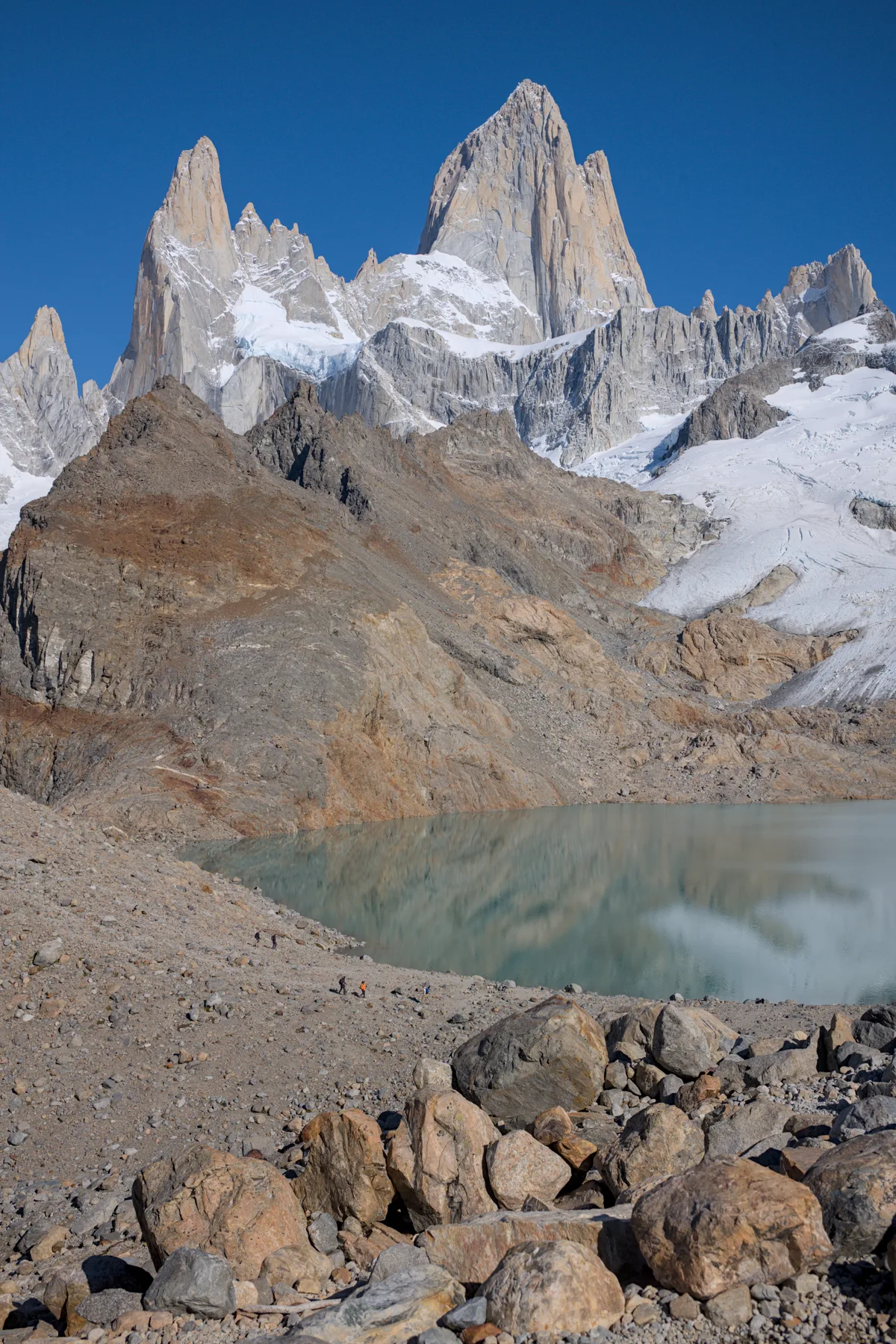
On January 16, 1965, young Argentine mountaineers José Luis Fonrouge and Carlos Comesaña achieved the second ascent of Cerro Fitz Roy via the formidable 1,600-metre Supercanaleta, climbing in pure, unsupported alpine style.
Mountain Safety & Conditions Disclaimer: High-altitude climbing, glacial travel, and technical ascents entail severe objective risks including avalanches, serac collapses, rapid weather collapse, and altitude illness. Historical route descriptions and summit claims on Mountanity reflect documented archival sources and must not be used as live operational safety assessments. Local regulations, permits, and physical glacial topography change continuously.
Peer Review: Senior Editorial Board & Historical Reviewers • Editorial Standards
Official Expedition Narrative & Archival Record
In January 1965, twenty-two-year-old José Luis Fonrouge and nineteen-year-old Carlos Comesaña arrived beneath the towering west precipice of Cerro Fitz Roy in Argentine Patagonia. Rejecting the siege tactics of contemporary expeditions that relied on tons of fixed ropes, heavy camps, and months of preparation, the young Argentine duo opted for an unprecedented, lightweight alpine-style assault. Carrying only two days of dried provisions, a single stove, and minimal protection, they crossed the glaciated bergschrund on January 14 to enter the Supercanaleta—a colossal 1,600-metre ice and mixed couloir splitting the southwest face. Climbing continuously through falling ice, loose stones, and 85° black ice, they reached the Bloque Empotrado at 2,900 metres, carving a precarious bivouac shelf into the slope. On January 16, battling gale-force winds and technical rock pitches up to UIAA V+ along the upper ridge, Fonrouge and Comesaña reached the 3,405-metre summit of Fitz Roy. Their self-reliant, rapid ascent stood decades ahead of its time, universally hailed as one of the finest achievements in the history of worldwide big-wall mountaineering.
Documented Team Composition
- José Luis Fonrouge (Climber, Argentina)
- Carlos Comesaña (Climber, Argentina)
Key Statistics & Topographic Figures
- Summit Date
- January 16, 1965 (2nd ascent of Fitz Roy, 1st via Supercanaleta)
- Route Length
- 1,600 metres (5,250 ft)
- Climbers
- José Luis Fonrouge (22) and Carlos Comesaña (19)
- Climbing Style
- Pure unsupported alpine style
- Peak Elevation
- Cerro Fitz Roy (3,405 m / 11,171 ft)
Archival Primary Source Quotations
“Two boys from Buenos Aires with two days of dried food conquered the greatest couloir in Patagonia in pure alpine style.”
Defined Alpine Terminology & Concepts
- Supercanaleta Couloir
- The dramatic 1,600-metre gash splitting the southwest face of Fitz Roy, containing continuous ice up to 85 degrees.
- Alpine-Style Siege Contrast
- The tactical divide between heavy expeditionary siege tactics and lightweight, fast, and self-contained alpine assaults.
Frequently Asked Questions: 1965 Fonrouge and Comesaña Fitz Roy Supercanaleta First Ascent
What was the 1965 Fonrouge and Comesaña Fitz Roy Expedition?
The historic first ascent of the 1,600-metre Supercanaleta on Cerro Fitz Roy (3,405 m), completed in pure alpine style on January 16, 1965, by José Luis Fonrouge and Carlos Comesaña.
How fast did Fonrouge and Comesaña climb Fitz Roy?
They climbed the 1,600-metre wall and descended in two and a half days, carrying only two days of dried rations and a single stove.
Why was this ascent celebrated as a turning point in Patagonian climbing?
It established the first lightweight, self-contained alpine-style ascent of a premier Patagonian big wall, rejecting heavy siege tactics.
What was the technical crux of the Supercanaleta?
A 1,000-metre couloir of 60° to 85° ice followed by sustained UIAA V+ rock pitches on the windswept upper southwest ridge.
Where did the climbers bivouac on the route?
At the Bloque Empotrado (2,900 m), an immense jammed boulder where they chopped a narrow ice shelf in the gully.
Ascent Route & Topography
Fitz Roy Supercanaleta
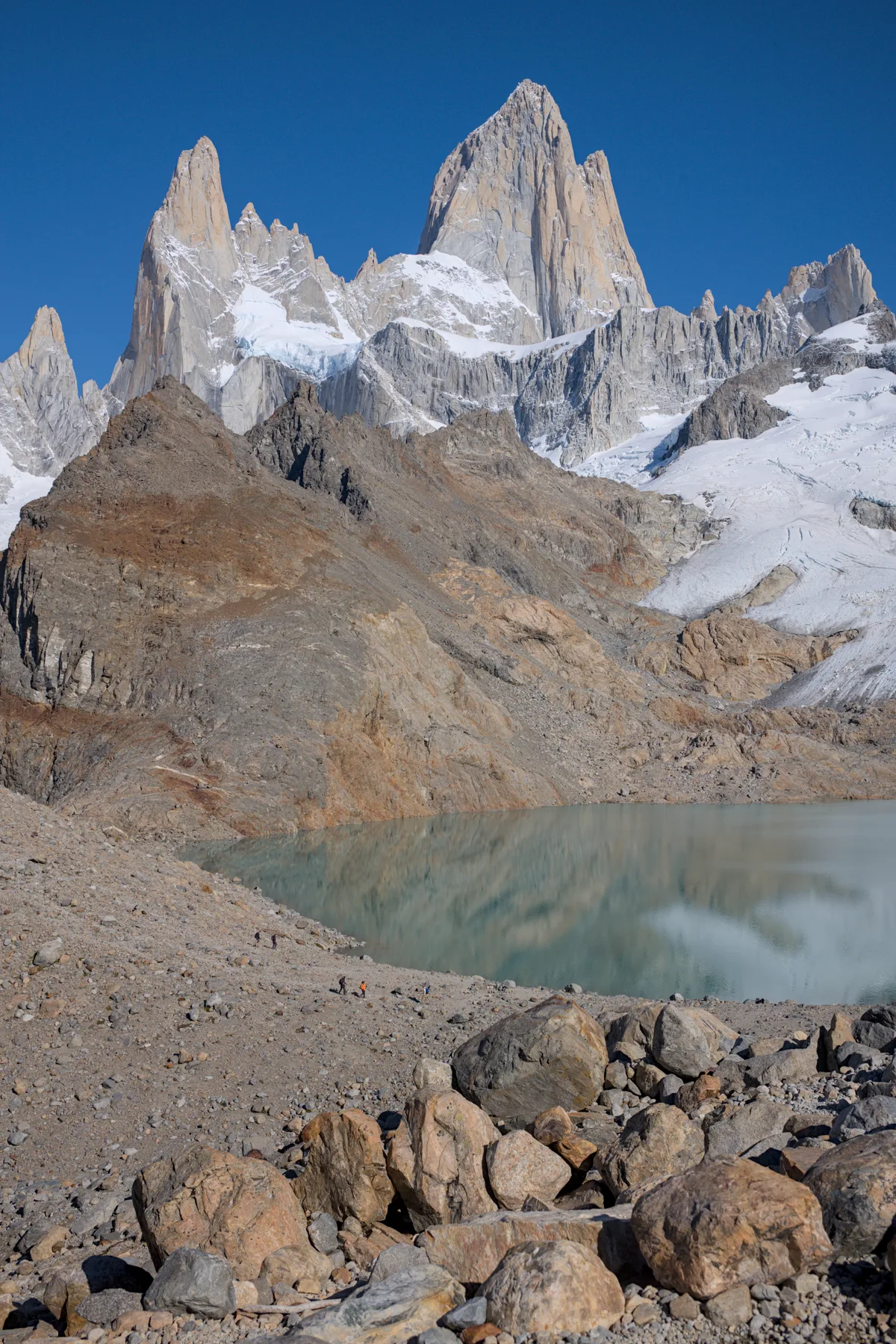
The Supercanaleta on the Southwest Face of Cerro Fitz Roy (3,405 m) is one of the most legendary, direct, and imposing alpine ice lines in the world. Ascending an unbroken 1,600-metre vertical couloir of ice, snow, and mixed granite chimneys, it was first conquered in January 1965 in pure alpine style by Argentine mountaineering prodigies José Luis Fonrouge and Carlos Comesaña over two and a half days.
Target Objective Peak


Cerro Fitz Roy
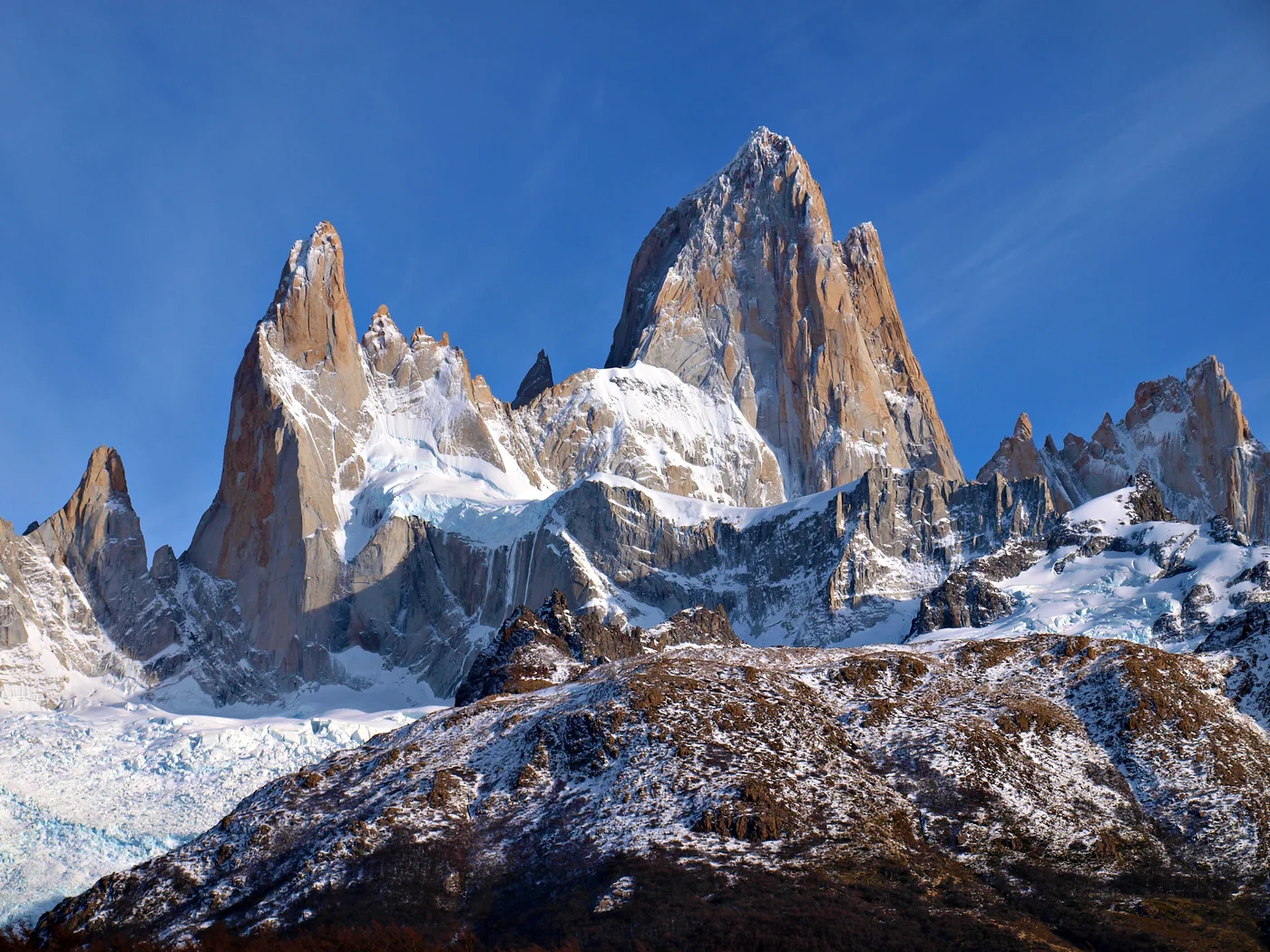
Cerro Fitz Roy, also known as Monte Fitz Roy or Cerro Chaltén at 3,405 meters (11,171 ft), is a world-renowned granite monolith situated in the Southern Patagonian Icefield near El Chaltén, Argentina. Revered for its vertical granite walls and notorious hurricane-force Patagonian storms, it is considered one of the most technically demanding alpine summits on Earth. French climbers Lionel Terray and Guido Magnone completed the legendary first ascent on February 2, 1952, establishing the historic Franco-Argentine Route.
Featured Expedition Climber
José Luis Fonrouge
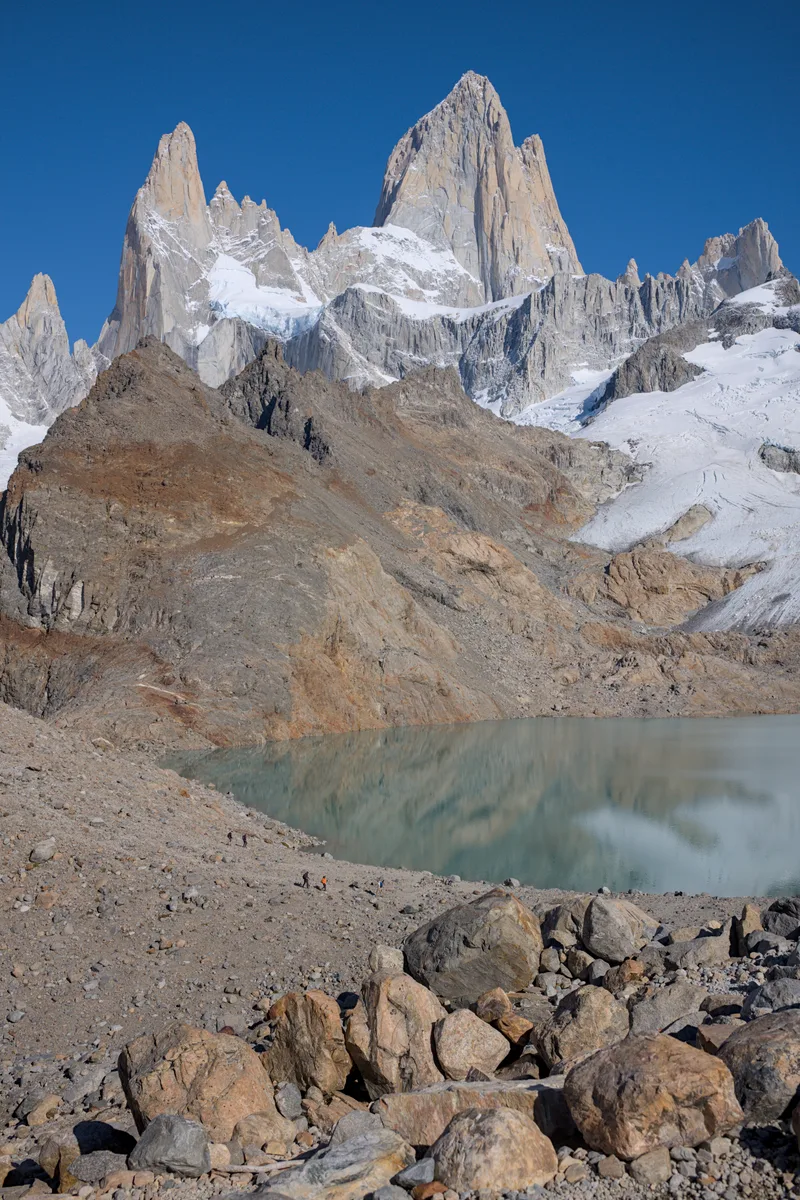
Born on November 21, 1942, in Buenos Aires, Argentina, José Luis Fonrouge learned the art of vertical granite on the crags of Tandil and the high peaks of Bariloche. In the mid-1960s, while heavy international expeditions mounted prolonged sieges with fixed ropes across Patagonia, Fonrouge championed a radical new philosophy: moving fast, light, and self-contained in pure alpine style. In January 1965, accompanied by his trusted nineteen-year-old partner Carlos Comesaña, Fonrouge approached the terrifying, unclimbed 1,600-metre ice couloir splitting the southwest face of Cerro Fitz Roy. Carrying only two days of dried provisions and minimal gear, the young Argentines ascended 1,000 metres of 85° ice, bypassed the Bloque Empotrado, and negotiated sustained rock pitches along the upper ridge to claim the second ascent of Fitz Roy and the first true alpine-style masterwork in Patagonia. In 1968, Fonrouge returned to the Chaltén massif to make the second ascent of Aguja Poincenot via a brilliant new route. His exploratory climbs extended across the Peruvian Andes and the European Alps, and he later served as President of the Federación Argentina de Ski y Andinismo (FASA). Fonrouge passed away on August 20, 2001, celebrated as a founding father of modern South American mountaineering.
Associated Historical Chronicles & Stories
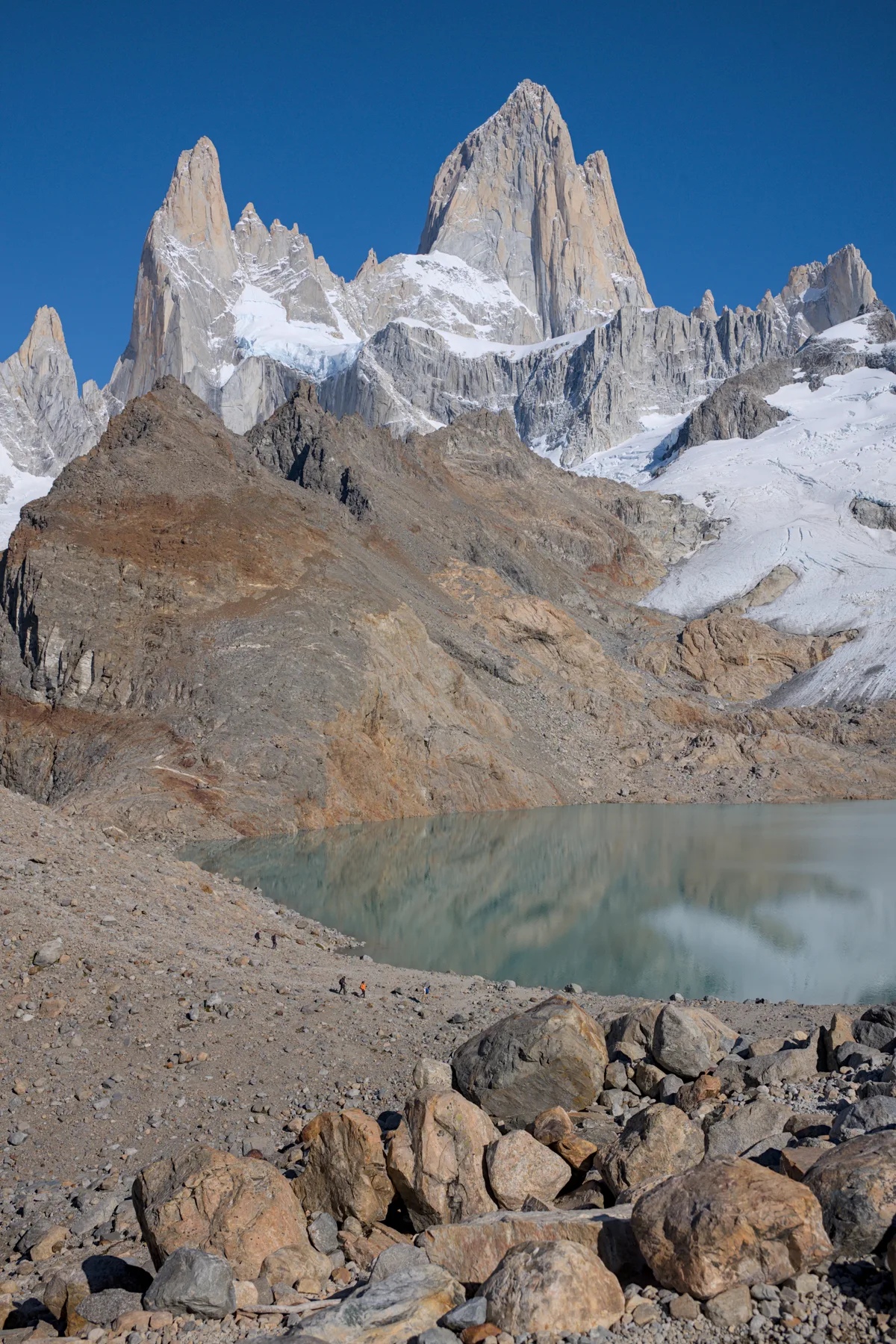
The Ice Spear: Fonrouge and Comesaña's 1965 Fitz Roy Supercanaleta Masterpiece
In January 1965, two young Argentine climbers, José Luis Fonrouge and Carlos Comesaña, completed the second ascent of Cerro Fitz Roy via the 1,600-metre Supercanaleta, climbing in pure, unsupported alpine style.
Documented Sources & Archival Citations
- American Alpine Journal: Supercanaleta of FitzRoy(José Luis Fonrouge / American Alpine Club)
Supporting claim: Official expedition journal chronicling the 1965 Argentine first ascent of the Supercanaleta
Accessed/Documented: 1966 - Patagonia Vertical: Chaltén Massif(Rolando Garibotti / Sidarta)
Supporting claim: Comprehensive historical analysis of the 1965 alpine-style breakthrough on Fitz Roy
Accessed/Documented: 2026