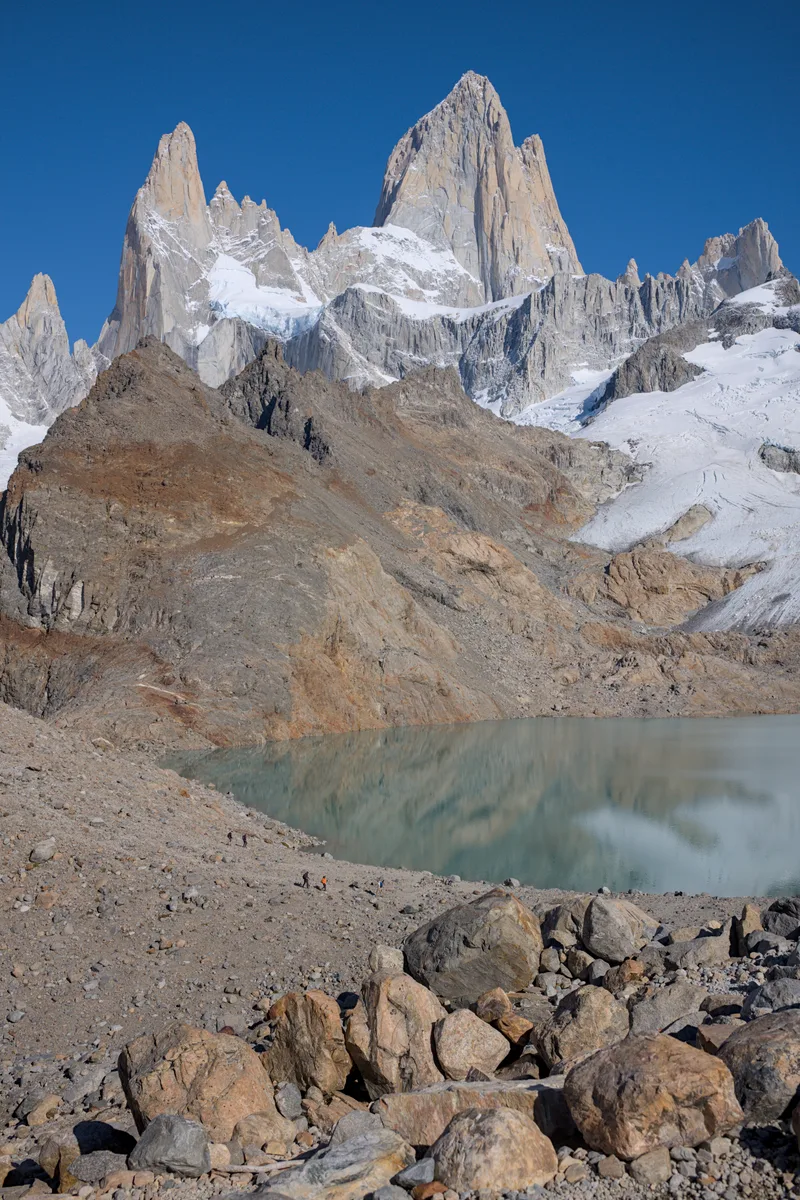
José Luis Fonrouge
José Luis Fonrouge was Argentina's foremost 20th-century mountaineer and a visionary pioneer of lightweight alpine style in Patagonia. In January 1965, at just twenty-two years of age, he and Carlos Comesaña completed the historic first ascent of the Supercanaleta on Cerro Fitz Roy, conquering 1,600 metres of vertical ice and mixed rock in a single push.
Mountain Safety & Conditions Disclaimer: High-altitude climbing, glacial travel, and technical ascents entail severe objective risks including avalanches, serac collapses, rapid weather collapse, and altitude illness. Historical route descriptions and summit claims on Mountanity reflect documented archival sources and must not be used as live operational safety assessments. Local regulations, permits, and physical glacial topography change continuously.
Peer Review: Senior Editorial Board & Historical Reviewers • Editorial Standards
Biographical Record & Archival Chronicle
Born on November 21, 1942, in Buenos Aires, Argentina, José Luis Fonrouge learned the art of vertical granite on the crags of Tandil and the high peaks of Bariloche. In the mid-1960s, while heavy international expeditions mounted prolonged sieges with fixed ropes across Patagonia, Fonrouge championed a radical new philosophy: moving fast, light, and self-contained in pure alpine style. In January 1965, accompanied by his trusted nineteen-year-old partner Carlos Comesaña, Fonrouge approached the terrifying, unclimbed 1,600-metre ice couloir splitting the southwest face of Cerro Fitz Roy. Carrying only two days of dried provisions and minimal gear, the young Argentines ascended 1,000 metres of 85° ice, bypassed the Bloque Empotrado, and negotiated sustained rock pitches along the upper ridge to claim the second ascent of Fitz Roy and the first true alpine-style masterwork in Patagonia. In 1968, Fonrouge returned to the Chaltén massif to make the second ascent of Aguja Poincenot via a brilliant new route. His exploratory climbs extended across the Peruvian Andes and the European Alps, and he later served as President of the Federación Argentina de Ski y Andinismo (FASA). Fonrouge passed away on August 20, 2001, celebrated as a founding father of modern South American mountaineering.
Notable Milestones & Ascents
- First ascent of the 1,600-metre Supercanaleta on Cerro Fitz Roy in January 1965 in pure alpine style
- First ascent of the Southwest Ridge on Aguja Poincenot in December 1968 with Peter Skvarca
- Pioneered lightweight alpine-style ethics in Patagonia decades ahead of international standards
- Major technical ascents across the Cordillera Blanca of Peru and the Mont Blanc Massif
- President of the Federación Argentina de Ski y Andinismo (FASA)
Key Statistics & Topographic Figures
- Lifespan
- November 21, 1942 – August 20, 2001 (aged 58)
- Masterpiece Ascent
- Fitz Roy Supercanaleta (1,600 m, Alpine Style, 1965)
- Partner
- Carlos Comesaña
- Patagonia Breakthrough
- First unsupported alpine-style climb on Fitz Roy
- Leadership
- President of FASA
Archival Primary Source Quotations
“On Fitz Roy we carried our entire world on our backs; if you move fast and trust your partner, the wall ceases to be a monster.”
Defined Alpine Terminology & Concepts
- Supercanaleta
- A colossal, unbroken 1,600-metre ice and mixed couloir splitting the southwest precipice of Cerro Fitz Roy.
- Alpine Style (Patagonia)
- Climbing self-contained from bottom to top without fixed ropes, support camps, or pre-placed food caches.
Frequently Asked Questions: José Luis Fonrouge
Who was José Luis Fonrouge?
José Luis Fonrouge (1942–2001) was Argentina's premier 20th-century alpinist, famed for pioneering pure alpine-style big wall climbing in Patagonia.
What was Fonrouge's greatest climbing masterpiece on Fitz Roy?
In January 1965, at age twenty-two, Fonrouge and Carlos Comesaña achieved the second ascent of Cerro Fitz Roy via the 1,600-metre Supercanaleta in pure alpine style.
Why was the 1965 Supercanaleta ascent historically revolutionary?
While international expeditions used heavy sieges with fixed ropes and tons of gear, Fonrouge and Comesaña climbed Fitz Roy in a single 2.5-day push carrying only two days of rations.
What other major Patagonian first ascents did Fonrouge achieve?
In December 1968, Fonrouge established a brilliant new route on the Southwest Ridge of Aguja Poincenot with Peter Skvarca.
What leadership role did Fonrouge hold in Argentine mountaineering?
He served as President of the Federación Argentina de Ski y Andinismo (FASA), actively promoting youth climbing and mountain conservation.
Where did Fonrouge conduct expeditions outside Patagonia?
He led successful expeditions in the Cordillera Blanca of Peru (including Huascarán) and climbed extensively in the European Alps.
When was José Luis Fonrouge born and when did he pass away?
Born in Buenos Aires on November 21, 1942, Fonrouge died on August 20, 2001, at fifty-eight years of age.
What bivouac location did Fonrouge make famous on Fitz Roy?
The Bloque Empotrado, a massive perched chockstone at 2,900 metres inside the Supercanaleta where the duo carved an ice shelf to survive.
Associated Summits (1)
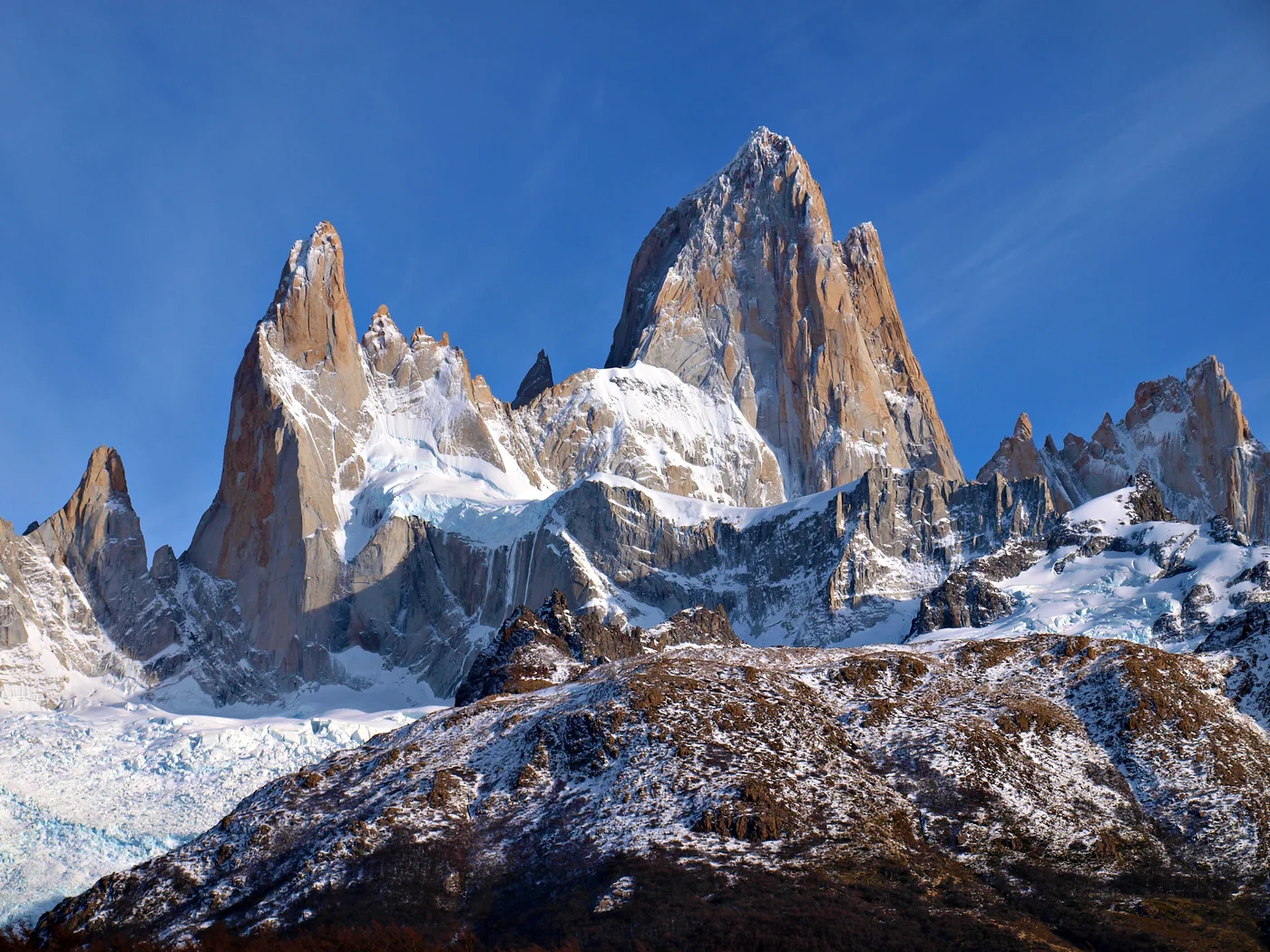


Cerro Fitz Roy
Cerro Fitz Roy, also known as Monte Fitz Roy or Cerro Chaltén at 3,405 meters (11,171 ft), is a world-renowned granite monolith situated in the Southern Patagonian Icefield near El Chaltén, Argentina. Revered for its vertical granite walls and notorious hurricane-force Patagonian storms, it is considered one of the most technically demanding alpine summits on Earth. French climbers Lionel Terray and Guido Magnone completed the legendary first ascent on February 2, 1952, establishing the historic Franco-Argentine Route.
Pioneered & Associated Routes (2)
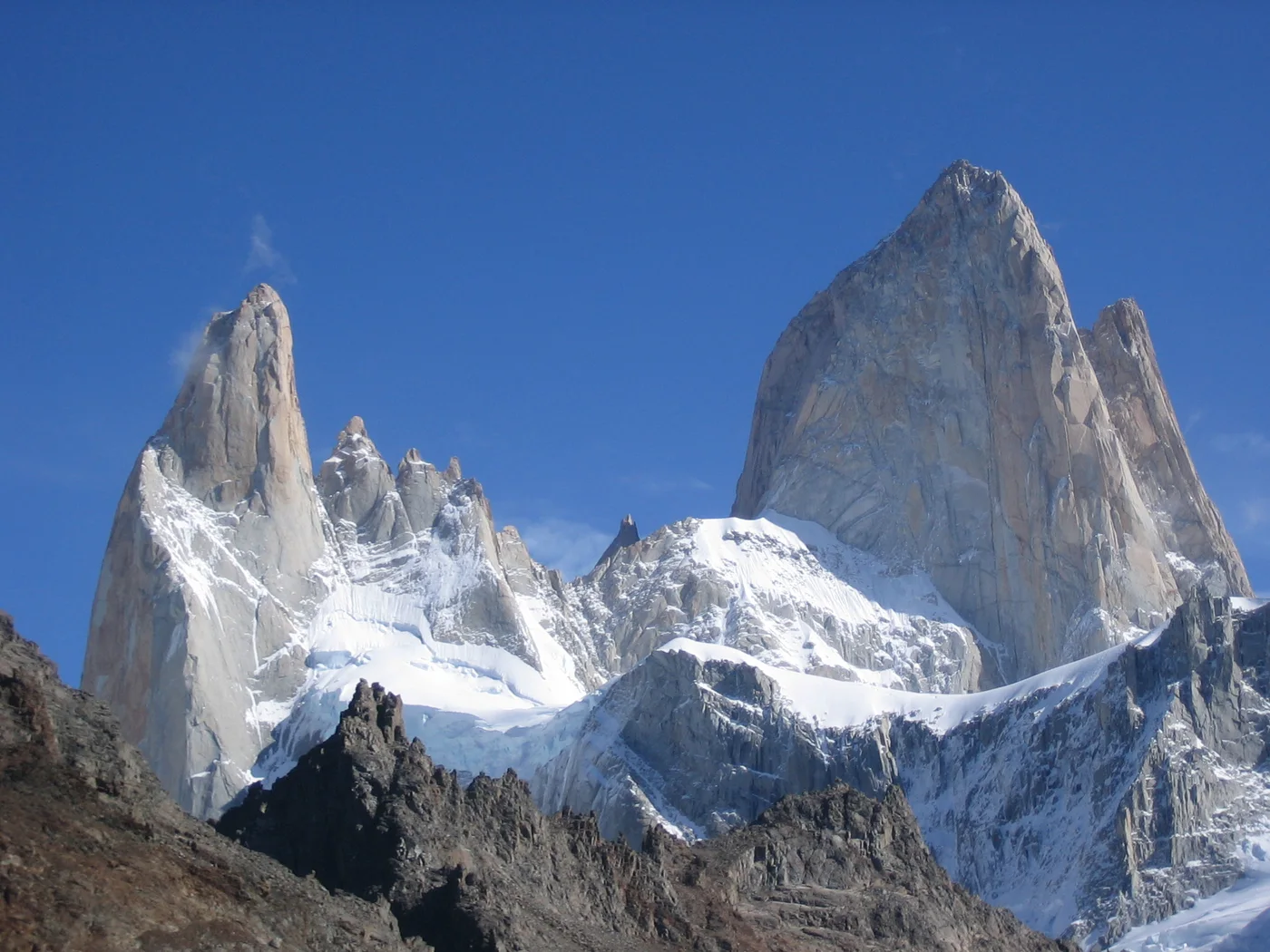
Franco-Argentine Route
The Franco-Argentine Route on Cerro Fitz Roy is the historic first ascent line on Patagonia's most iconic granite monolith. Pioneered in February 1952 by French climbers Lionel Terray and Guido Magnone, the route ascends the Brecha de los Italianos, traverses the south shoulder, and tackles sustained vertical granite cracks up to French 6c (5.11a) and A2 aid amid ferocious Patagonian winds.
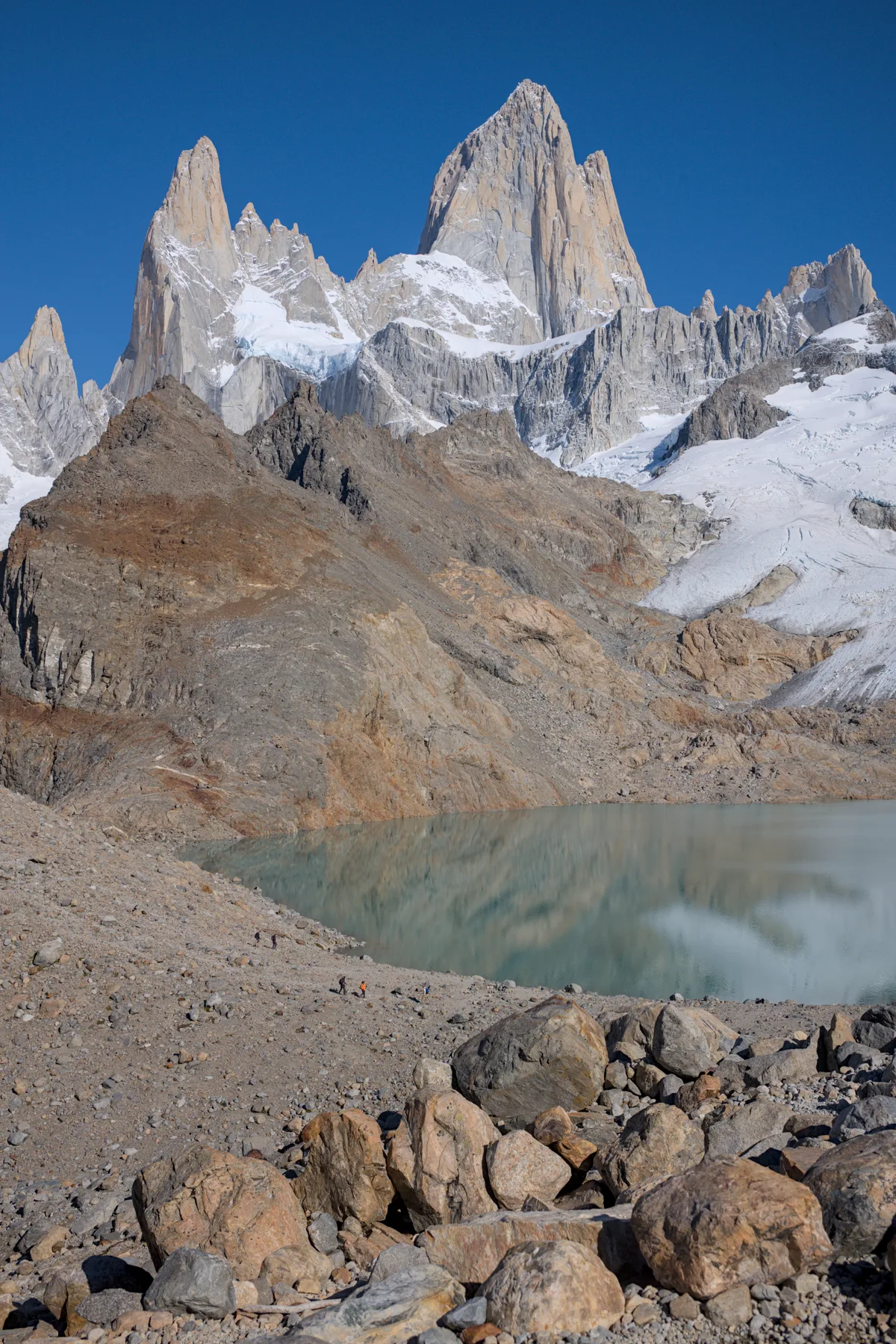
Fitz Roy Supercanaleta
The Supercanaleta on the Southwest Face of Cerro Fitz Roy (3,405 m) is one of the most legendary, direct, and imposing alpine ice lines in the world. Ascending an unbroken 1,600-metre vertical couloir of ice, snow, and mixed granite chimneys, it was first conquered in January 1965 in pure alpine style by Argentine mountaineering prodigies José Luis Fonrouge and Carlos Comesaña over two and a half days.
Documented Expeditions (1)
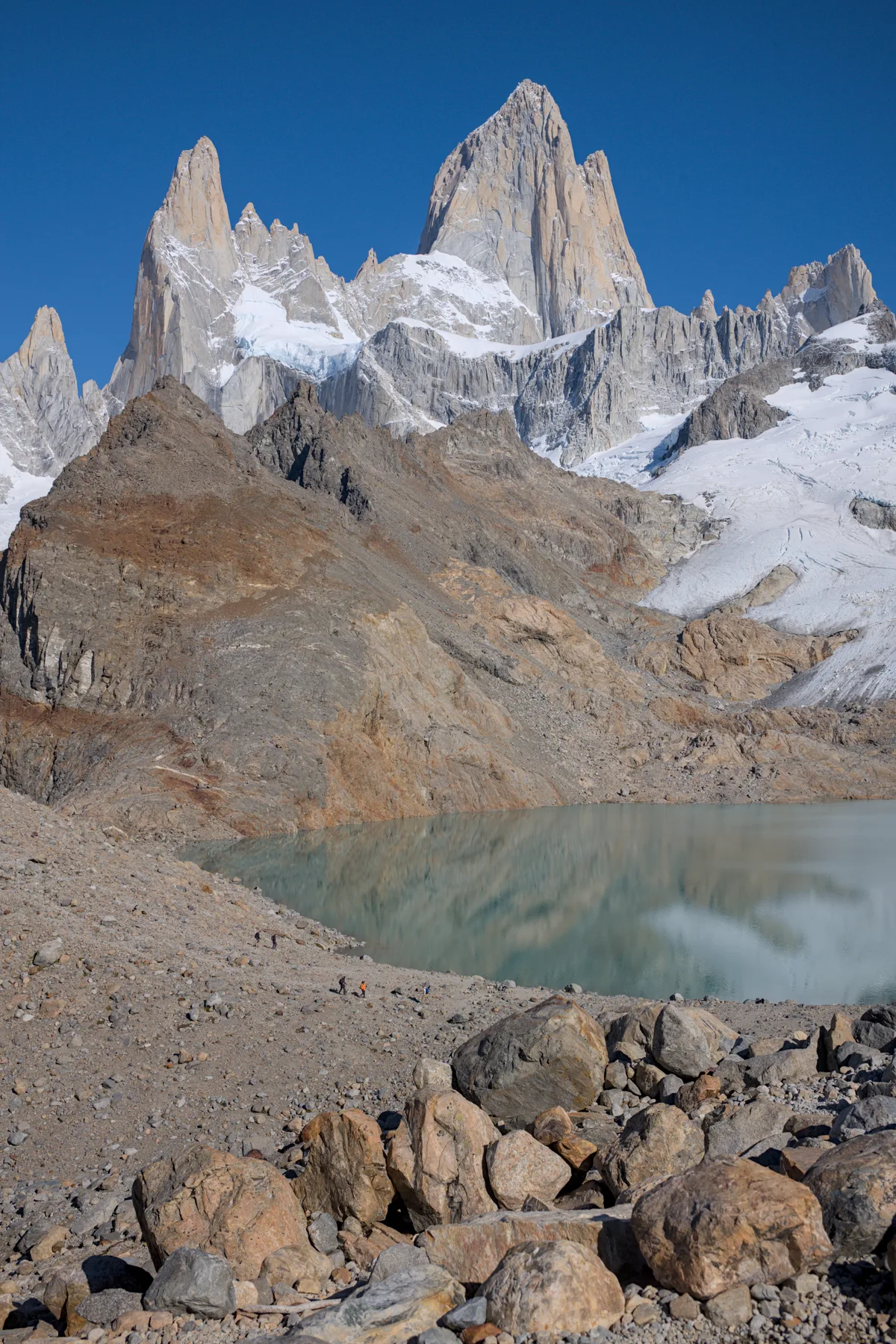
1965 Fonrouge and Comesaña Fitz Roy Supercanaleta First Ascent
On January 16, 1965, young Argentine mountaineers José Luis Fonrouge and Carlos Comesaña achieved the second ascent of Cerro Fitz Roy via the formidable 1,600-metre Supercanaleta, climbing in pure, unsupported alpine style.
Associated Chronicles & Stories (1)
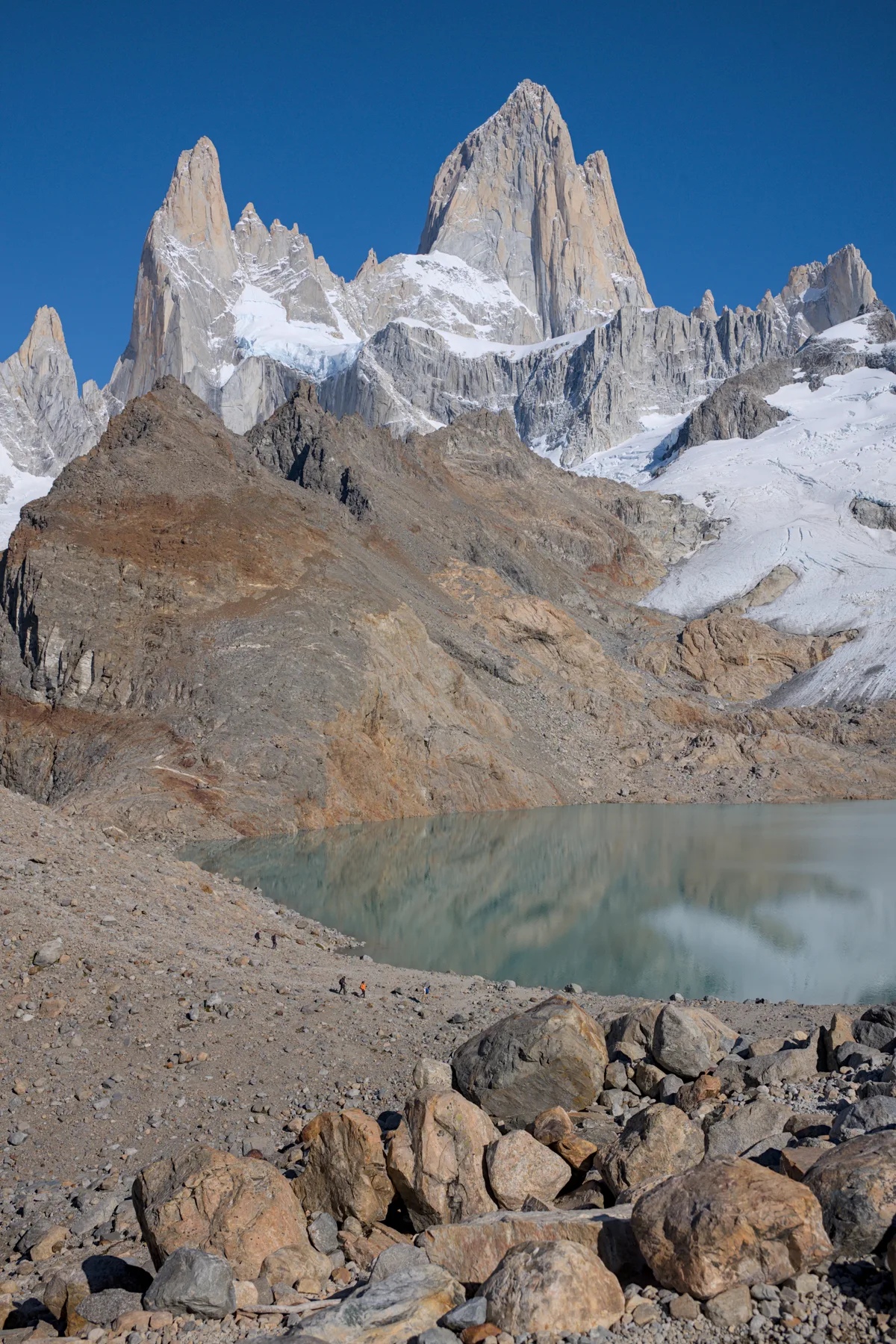
The Ice Spear: Fonrouge and Comesaña's 1965 Fitz Roy Supercanaleta Masterpiece
In January 1965, two young Argentine climbers, José Luis Fonrouge and Carlos Comesaña, completed the second ascent of Cerro Fitz Roy via the 1,600-metre Supercanaleta, climbing in pure, unsupported alpine style.
Documented Sources & Archival Citations
- American Alpine Journal: Supercanaleta of FitzRoy(José Luis Fonrouge / American Alpine Club)
Supporting claim: Fonrouge's firsthand narrative of the historic 1965 alpine-style first ascent
Accessed/Documented: 1966 - Patagonia Vertical: Chaltén Massif History(Rolando Garibotti / Sidarta)
Supporting claim: Comprehensive historical analysis of Fonrouge's pioneering ascents in the Fitz Roy group
Accessed/Documented: 2026