1986 Reinhold Messner Mount Vinson Ascent: The Messner Seven Summits
On December 3, 1986, legendary alpine purist Reinhold Messner reached the summit of Mount Vinson (4,892 m) in Antarctica. Coming just weeks after completing his historic conquest of all fourteen 8,000-metre peaks, Messner's ascent of Vinson finalized the 'Messner List' of the Seven Summits, advocating for Australasia's technical Carstensz Pyramid over Australia's walk-up Mount Kosciuszko.
Mountain Safety & Conditions Disclaimer: High-altitude climbing, glacial travel, and technical ascents entail severe objective risks including avalanches, serac collapses, rapid weather collapse, and altitude illness. Historical route descriptions and summit claims on Mountanity reflect documented archival sources and must not be used as live operational safety assessments. Local regulations, permits, and physical glacial topography change continuously.
Peer Review: Senior Editorial Board & Historical Reviewers • Editorial Standards
Official Expedition Narrative & Archival Record
In the wake of Dick Bass's 1985 Seven Summits milestone, high-altitude purists led by Reinhold Messner argued that Bass's list included Mount Kosciuszko (2,228 m)—a gentle hiking hill in Australia requiring no alpine mountaineering skill. Messner proposed that the true geographic summit of Oceania was Carstensz Pyramid (Puncak Jaya, 4,884 m) in Western New Guinea, a formidable limestone horn requiring multi-pitch rock climbing. In October 1986, Messner had completed his monumental life goal: climbing all fourteen 8,000-metre peaks on Earth without bottled oxygen. Just weeks later, he boarded a polar flight to Antarctica with Canadian climber Pat Morrow and pilot Giles Kershaw, landing on the ice beneath the Sentinel Range. Moving swiftly up the Branscomb Glacier in pure lightweight style without fixed ropes, Messner reached the summit of Mount Vinson on December 3, 1986. With Carstensz Pyramid already climbed in 1971, Messner's ascent of Vinson established the 'Messner List' as the premier ethical and technical standard for the Seven Summits, cementing his legacy across both polar and high-altitude extremes.
Documented Team Composition
- Reinhold Messner (Lead Climber, Italy)
- Pat Morrow (Climber & Photographer, Canada)
- Giles Kershaw (Expedition Pilot, UK)
Key Statistics & Topographic Figures
- Summit Date
- December 3, 1986
- Summit Climber
- Reinhold Messner
- Style
- Lightweight Alpine Style without fixed ropes
- Companion
- Pat Morrow
- Seven Summits Variant
- Messner List (Carstensz Pyramid)
Archival Primary Source Quotations
“A mountain must be a challenge to the human body and spirit. To climb Kosciuszko is a pleasant holiday walk; to climb Carstensz and Vinson is to face the genuine savagery of nature.”
Defined Alpine Terminology & Concepts
- Messner List
- The Seven Summits variant championed by Reinhold Messner and Pat Morrow, recognizing Carstensz Pyramid as the peak of Oceania.
- Alpine Purity
- The climbing philosophy of ascending high peaks without supplementary oxygen, fixed camps, or excessive mechanical assistance.
Frequently Asked Questions: 1986 Reinhold Messner Mount Vinson Ascent: The Messner Seven Summits
When did Reinhold Messner climb Mount Vinson?
Reinhold Messner reached the summit of Mount Vinson on December 3, 1986, just weeks after completing his historic conquest of all fourteen 8,000-metre peaks.
What is the difference between the Messner and Bass Seven Summits lists?
Messner substituted Indonesia's technical Carstensz Pyramid for Australia's walk-up Mount Kosciuszko, establishing a higher alpine standard for the continent of Oceania.
Who accompanied Reinhold Messner on Mount Vinson in 1986?
Messner climbed Mount Vinson in lightweight alpine style alongside Canadian mountaineer Pat Morrow and pilot Giles Kershaw.
Ascent Route & Topography
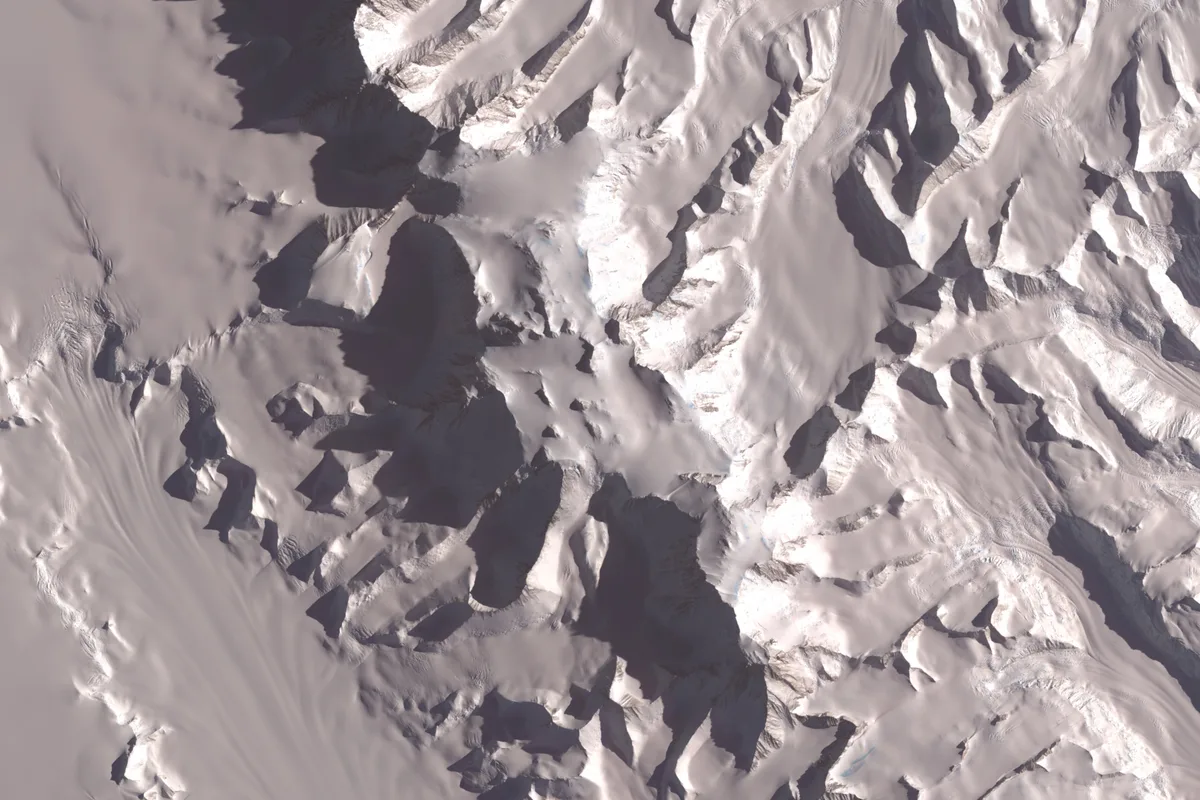
Normal Route of Mount Vinson (Branscomb Glacier Route)
The Normal Route on Mount Vinson ascends the gentle yet crevasse-riven Branscomb Glacier to gain the high saddle between Mount Shinn and Mount Vinson, continuing across the Vinson Plateau to the corniced rocky summit horn. First climbed in December 1966 by the American Antarctic Mountaineering Expedition led by Nicholas Clinch, it is the standard route for Seven Summits mountaineers. While technical climbing difficulty is moderate (Grade II alpine snow and 35° to 45° headwall ice), the objective is made profoundly serious by extreme polar cold (-40°C), ferocious katabatic gales, total geographic isolation, and the necessity of complete self-sufficiency.
Target Objective Peak
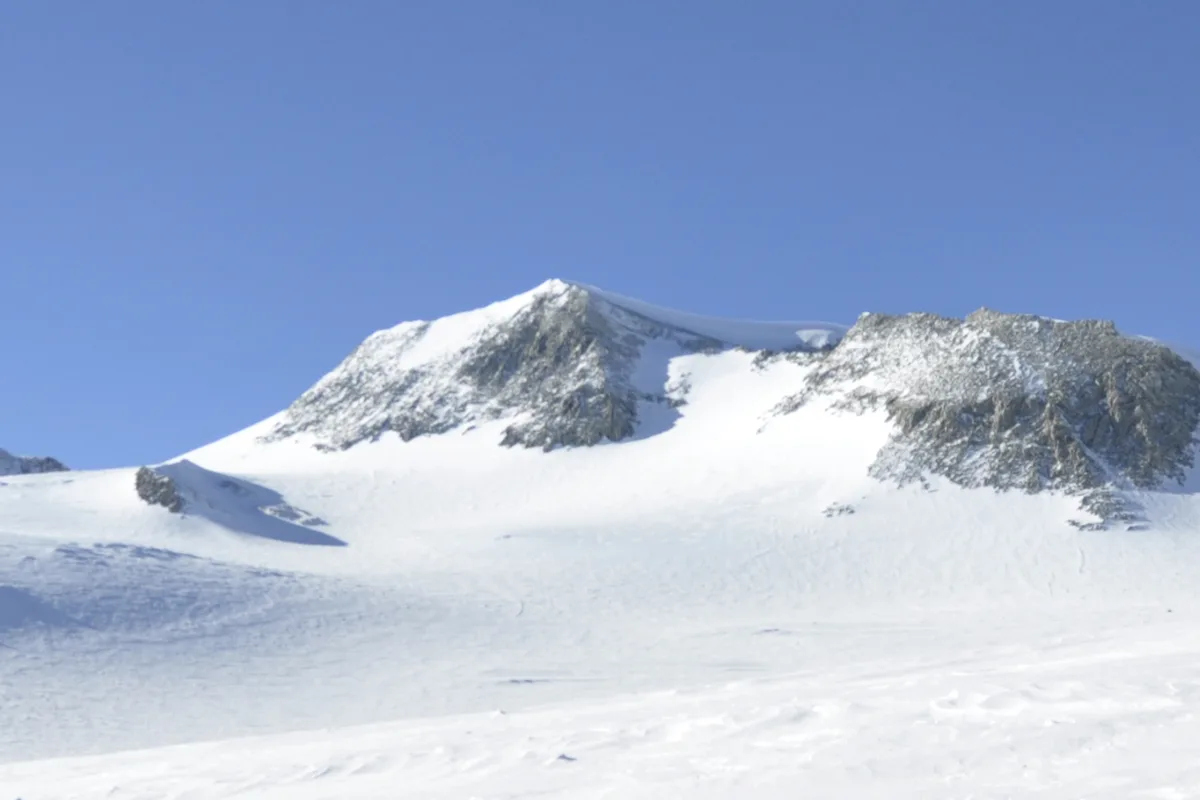

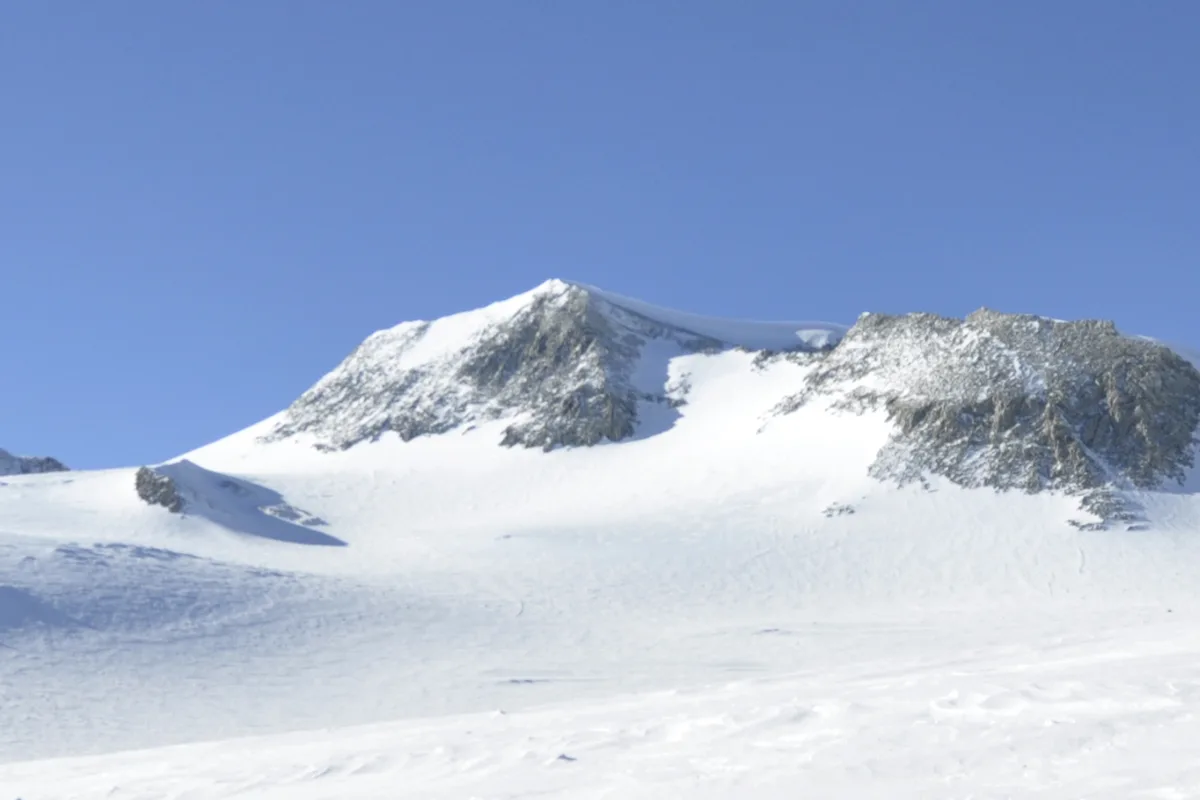
Mount Vinson / Vinson Massif
Mount Vinson is the highest peak in Antarctica at 4,892 metres (16,050 ft), situated in the Sentinel Range of the Ellsworth Mountains approximately 1,200 kilometres from the South Pole. As the summit of Antarctica, it forms one of the celebrated Seven Summits. First sighted by a US Navy aircraft in January 1958 and named after Georgia congressman Carl Vinson, the peak was conquered on December 18, 1966, by a team led by Nicholas Clinch and Barry Corbet during the historic American Antarctic Mountaineering Expedition. While technically moderate via the Branscomb Glacier, climbing Mount Vinson demands extreme endurance against temperatures plunging to -40°C and ferocious katabatic blizzards.
Featured Expedition Climber
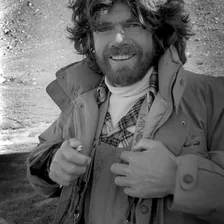
Reinhold Messner
Reinhold Messner was born on September 17, 1944, in Bressanone (Brixen), South Tyrol, Italy, and grew up in the rugged Villnöß valley beneath the towering limestone spires of the Geisler Peaks (Odle). Guided by his father Josef, Messner completed his first alpine ascent at age five. By his late teens, Reinhold and his younger brother Günther had evolved into one of the most prolific and technically daring climbing partnerships in European mountaineering history, establishing hundreds of first ascents across the Dolomites, Western Alps, and Central Europe. In 1968, Messner penned the seminal climbing essay 'The Murder of the Impossible' (Die Ermordung des Unmöglichen), launching a vehement ethical rebellion against the heavy siege tactics, expansion bolts, and mechanical apparatus dominating mid-century mountaineering. He argued passionately that technical artificial aids killed the genuine spiritual and physical challenge of climbing, advocating instead for strict self-reliance, minimal equipment, and clean alpine style. In 1970, Messner stepped onto the global stage during the Austro-German Expedition to Nanga Parbat (8,126m) led by Karl Maria Herrligkoffer. Alongside his brother Günther, Messner completed the audacious first ascent of the Rupal Face—the largest direct rock and ice wall on the planet, rising 4,500 vertical meters above the valley floor. After reaching the summit in fading light on June 27, Günther succumbed to severe altitude exhaustion, making a descent back down the terrifying Rupal Face impossible. In a desperate bid for survival, the brothers undertook the first complete traverse of an 8,000-meter mountain by descending the unexplored Diamir Face. Near the base of the mountain, Günther was swept away and killed by an ice avalanche. Reinhold, hallucinating and suffering catastrophic frostbite, stumbled into local pastures days later, subsequently undergoing surgical amputation of six toes and parts of his fingertips. Rather than ending his mountaineering career, the physical trauma accelerated Messner's transformation into the purest lightweight high-altitude climber of the modern era. In May 1978, Messner and Austrian partner Peter Habeler stunned medical researchers and high-altitude physiologists by summiting Mount Everest (8,848.86m) entirely without supplemental oxygen via the South Col. Prominent scientists had insisted that atmospheric pressure at 8,848 meters made oxygenless human survival impossible. Just three months later, in August 1978, Messner scored another historic milestone by soloing Nanga Parbat from base camp to summit via an unclimbed route on the Diamir Face—the first completely solo ascent of an 8,000-meter peak from base to summit. Messner pushed self-sufficiency to its historical absolute in August 1980 during a solo monsoon ascent of Mount Everest from the Tibetan north side. Operating without oxygen, porters, fixed camps, or two-way radio communication, he survived an 8-meter crevasse fall and battled deep monsoon snow to summit via the North Face and Great Couloir (Norton Couloir). In the summers that followed, he demonstrated the speed and agility of alpine style on giants like K2, Kangchenjunga, and Gasherbrum I and II. In 1982, teaming up with Pakistani climbers Nazir Sabir and Sher Khan, he completed a back-to-back traverse of Gasherbrum II and Broad Peak within nine days. On October 16, 1986, by standing on the summit of Lhotse (8,516m), Messner completed the ascent of all fourteen 8,000-meter peaks on Earth—the first human to achieve the Grand Slam of mountaineering, every single peak climbed without bottled oxygen. Having redefined high-altitude mountaineering, Messner turned his boundless endurance toward horizontal planetary wildernesses. Between 1989 and 1990, he and German polar explorer Arved Fuchs completed the first crossing of Antarctica on foot and skis via the South Pole without motor or dog assistance, covering 2,800 kilometers in 92 days. He subsequently crossed Greenland and traversed the 2,000-kilometer expanse of the Gobi Desert on foot. Messner served as a Member of the European Parliament for the Italian Green Party from 1999 to 2004, championing mountain conservation and Alpine culture. He established the Messner Mountain Museum (MMM)—a network of six architectural museums across South Tyrol and Belluno dedicated to human engagement with mountains, art, and high-altitude history. Messner remains the enduring benchmark for ethics, psychological fortitude, and alpine purity.
Associated Historical Chronicles & Stories
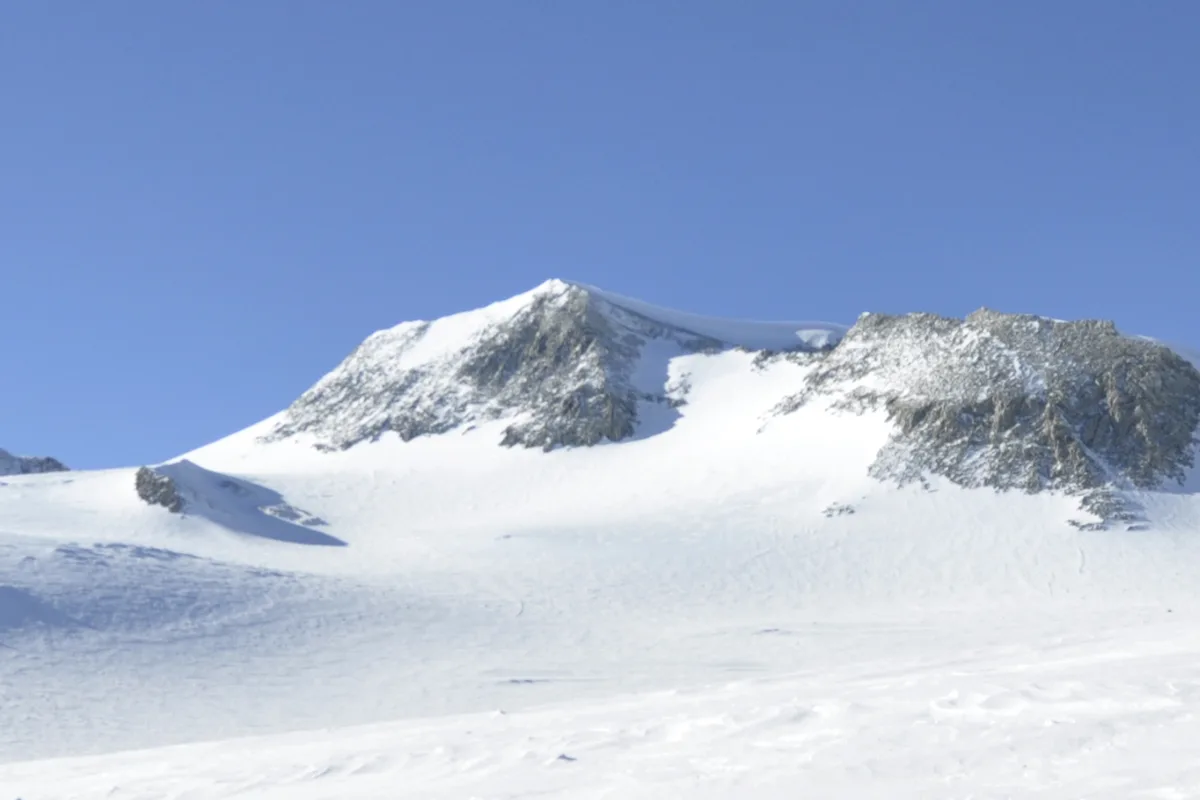
The Master's Crown: Reinhold Messner's 1986 Mount Vinson Ascent
Fresh from conquering all fourteen eight-thousanders, Reinhold Messner summits Mount Vinson to establish the definitive Seven Summits standard.
Documented Sources & Archival Citations
- All 14 Eight-Thousanders & The Seven Summits(Reinhold Messner / Crowood Press)
Supporting claim: Firsthand narrative of Messner's Antarctic ascent
Accessed/Documented: 1988 - Beyond Everest: Quest for the Seven Summits(Pat Morrow / Camden House)
Supporting claim: Account of the 1986 Vinson expedition with Messner
Accessed/Documented: 1986