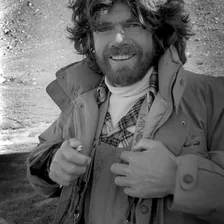
Reinhold Messner
Reinhold Messner is an Italian mountaineer and author from South Tyrol who revolutionized high-altitude climbing. In 1978, he and Peter Habeler made the first ascent of Mount Everest without supplemental oxygen, followed by his 1980 solo Everest ascent. Between 1970 and 1986, Messner became the first person to climb all fourteen 8,000-meter peaks on Earth, achieving every summit without bottled oxygen.
Mountain Safety & Conditions Disclaimer: High-altitude climbing, glacial travel, and technical ascents entail severe objective risks including avalanches, serac collapses, rapid weather collapse, and altitude illness. Historical route descriptions and summit claims on Mountanity reflect documented archival sources and must not be used as live operational safety assessments. Local regulations, permits, and physical glacial topography change continuously.
Peer Review: Senior Editorial Board & Historical Reviewers • Editorial Standards
Biographical Record & Archival Chronicle
Reinhold Messner was born on September 17, 1944, in Bressanone (Brixen), South Tyrol, Italy, and grew up in the rugged Villnöß valley beneath the towering limestone spires of the Geisler Peaks (Odle). Guided by his father Josef, Messner completed his first alpine ascent at age five. By his late teens, Reinhold and his younger brother Günther had evolved into one of the most prolific and technically daring climbing partnerships in European mountaineering history, establishing hundreds of first ascents across the Dolomites, Western Alps, and Central Europe. In 1968, Messner penned the seminal climbing essay 'The Murder of the Impossible' (Die Ermordung des Unmöglichen), launching a vehement ethical rebellion against the heavy siege tactics, expansion bolts, and mechanical apparatus dominating mid-century mountaineering. He argued passionately that technical artificial aids killed the genuine spiritual and physical challenge of climbing, advocating instead for strict self-reliance, minimal equipment, and clean alpine style.
In 1970, Messner stepped onto the global stage during the Austro-German Expedition to Nanga Parbat (8,126m) led by Karl Maria Herrligkoffer. Alongside his brother Günther, Messner completed the audacious first ascent of the Rupal Face—the largest direct rock and ice wall on the planet, rising 4,500 vertical meters above the valley floor. After reaching the summit in fading light on June 27, Günther succumbed to severe altitude exhaustion, making a descent back down the terrifying Rupal Face impossible. In a desperate bid for survival, the brothers undertook the first complete traverse of an 8,000-meter mountain by descending the unexplored Diamir Face. Near the base of the mountain, Günther was swept away and killed by an ice avalanche. Reinhold, hallucinating and suffering catastrophic frostbite, stumbled into local pastures days later, subsequently undergoing surgical amputation of six toes and parts of his fingertips.
Rather than ending his mountaineering career, the physical trauma accelerated Messner's transformation into the purest lightweight high-altitude climber of the modern era. In May 1978, Messner and Austrian partner Peter Habeler stunned medical researchers and high-altitude physiologists by summiting Mount Everest (8,848.86m) entirely without supplemental oxygen via the South Col. Prominent scientists had insisted that atmospheric pressure at 8,848 meters made oxygenless human survival impossible. Just three months later, in August 1978, Messner scored another historic milestone by soloing Nanga Parbat from base camp to summit via an unclimbed route on the Diamir Face—the first completely solo ascent of an 8,000-meter peak from base to summit.
Messner pushed self-sufficiency to its historical absolute in August 1980 during a solo monsoon ascent of Mount Everest from the Tibetan north side. Operating without oxygen, porters, fixed camps, or two-way radio communication, he survived an 8-meter crevasse fall and battled deep monsoon snow to summit via the North Face and Great Couloir (Norton Couloir). In the summers that followed, he demonstrated the speed and agility of alpine style on giants like K2, Kangchenjunga, and Gasherbrum I and II. In 1982, teaming up with Pakistani climbers Nazir Sabir and Sher Khan, he completed a back-to-back traverse of Gasherbrum II and Broad Peak within nine days. On October 16, 1986, by standing on the summit of Lhotse (8,516m), Messner completed the ascent of all fourteen 8,000-meter peaks on Earth—the first human to achieve the Grand Slam of mountaineering, every single peak climbed without bottled oxygen.
Having redefined high-altitude mountaineering, Messner turned his boundless endurance toward horizontal planetary wildernesses. Between 1989 and 1990, he and German polar explorer Arved Fuchs completed the first crossing of Antarctica on foot and skis via the South Pole without motor or dog assistance, covering 2,800 kilometers in 92 days. He subsequently crossed Greenland and traversed the 2,000-kilometer expanse of the Gobi Desert on foot. Messner served as a Member of the European Parliament for the Italian Green Party from 1999 to 2004, championing mountain conservation and Alpine culture. He established the Messner Mountain Museum (MMM)—a network of six architectural museums across South Tyrol and Belluno dedicated to human engagement with mountains, art, and high-altitude history. Messner remains the enduring benchmark for ethics, psychological fortitude, and alpine purity.
Notable Milestones & Ascents
- First person in history to summit all fourteen 8,000-meter peaks (1970–1986), completing every ascent without supplemental oxygen
- First ascent of Mount Everest (8,848m) without supplemental oxygen alongside Peter Habeler on May 8, 1978
- First solo ascent of Mount Everest (8,848m) without supplemental oxygen or radio support via the North Face during the 1980 monsoon
- First complete traverse of an 8,000-meter peak via the direct 4,500m Rupal Face of Nanga Parbat with Günther Messner (1970)
- First solo ascent of Nanga Parbat (8,126m) from base camp to summit via a new route on the Diamir Face (1978)
- First alpine-style traverse of two 8,000m peaks within nine days: Gasherbrum II and Broad Peak with Nazir Sabir and Sher Khan (1982)
- First human to cross Antarctica on foot and skis via the South Pole without motor or dog support alongside Arved Fuchs (1989–1990)
- Author of landmark 1968 manifesto 'The Murder of the Impossible', establishing the ethical foundation of modern lightweight alpinism
Key Statistics & Topographic Figures
- All 14 Eight-Thousanders
- 1970–1986
First Person to Summit All Without Bottled O2
- First Everest Without O2
- May 8, 1978
With Peter Habeler via South Col
- Everest Solo Monsoon Ascent
- August 20, 1980
First Solo Ascent Without Supplemental Oxygen
- Nanga Parbat Rupal Face
- 4,500 Meters
Highest Direct Mountain Wall on Earth
- Karakoram Double Traverse
- 9 Days
Gasherbrum II & Broad Peak with Nazir Sabir (1982)
- Antarctica Crossing on Foot
- 2,800 Kilometers
92-Day Ski Traverse via South Pole with Arved Fuchs (1989–1990)
Archival Primary Source Quotations
“I am not going to Everest to die, I am going there to live. Mountains are not fair or unfair, they are just dangerous.”
“It is not the mountain we conquer, but ourselves. But by using artificial aids and expansion bolts, we murder the impossible and turn mountaineering into mere construction work.”
“Reinhold Messner transformed human understanding of what is physically and mentally possible at the extreme limits of altitude and solitude.”
Defined Alpine Terminology & Concepts
- Alpine Style Climbing
- A self-reliant mountaineering discipline where climbers ascend rapidly carrying all gear and shelter on their backs, rejecting fixed ropes, intermediate supply depots, high-altitude porters, and supplemental oxygen.
- By Fair Means
- The climbing ethic championed by Reinhold Messner where mountaineers measure themselves against peaks using natural human physical and psychological abilities without relying on bottled oxygen or destructive mechanical rock drilling.
- The Death Zone
- High-altitude terrain above 8,000 meters (26,247 feet) where atmospheric oxygen levels are insufficient to sustain human life long-term, initiating progressive cellular and systemic breakdown.
- Mountain Traverse
- Ascending a mountain peak via one route or face and descending via an entirely different route or valley, demanding supreme route-finding skill and eliminating retreat to pre-established camps.
Frequently Asked Questions: Reinhold Messner
Who is Reinhold Messner and what are his greatest mountaineering accomplishments?
Reinhold Messner (born September 17, 1944) is an Italian mountaineer, author, and explorer from South Tyrol, widely recognized as the greatest high-altitude climber in history. In 1978, he and Peter Habeler made the first ascent of Mount Everest without supplemental oxygen, followed by his 1980 solo Everest ascent without bottled oxygen or radio. Messner was the first person to climb all fourteen 8,000-meter peaks on Earth (1970–1986), achieving every summit entirely without supplemental oxygen.
How did Reinhold Messner and Peter Habeler climb Mount Everest without supplemental oxygen in 1978?
On May 8, 1978, Reinhold Messner and Peter Habeler summited Mount Everest (8,848.86m) via the South Col without supplemental oxygen, disproving medical doctrine that claimed extreme hypoxia at 8,848 meters caused immediate death. Operating from Camp IV on the South Col (7,925m), they climbed through sub-zero temperatures and high winds, taking dozens of rapid gasps for each step, and reached the summit at 1:15 PM.
How did Reinhold Messner complete the first solo ascent of Mount Everest in 1980?
Between August 18 and 21, 1980, Messner achieved the first completely solo ascent of Mount Everest from Tibet during the monsoon season. Carrying a pack under 20 kg without porters, oxygen, fixed camps, or radio communication, he climbed through the North Col and navigated deep snow into the Great Couloir (Norton Couloir). Overcoming an 8-meter crevasse fall on day one, he summited alone on August 20, 1980.
What happened on Nanga Parbat’s Rupal Face in 1970 to Reinhold and Günther Messner?
In June 1970, Reinhold and his brother Günther made the historic first ascent of Nanga Parbat’s 4,500-meter Rupal Face, the highest vertical rock and ice wall on Earth. Facing exhaustion at the summit, they completed the first traverse of an 8,000er by descending the uncharted Diamir Face. Near the base, Günther was killed by an ice avalanche. Reinhold survived after wandering for days, suffering severe frostbite that resulted in the amputation of six toes.
What was the core thesis of Reinhold Messner’s 1968 essay 'The Murder of the Impossible'?
In his landmark 1968 essay 'The Murder of the Impossible' (Die Ermordung des Unmöglichen), Messner condemned the post-war escalation of expansion bolts, fixed ropes, and siege machinery in climbing. He argued that engineering solutions destroyed the genuine physical and psychological challenge of the sport, calling for an ethic of pure alpine style, lightweight self-reliance, and clean climbing.
What is the Messner Mountain Museum (MMM)?
The Messner Mountain Museum is a museum network founded by Reinhold Messner comprising six architectural sites across South Tyrol and Belluno in Northern Italy: Firmian, Juval, Dolomites, Ortles, Ripa, and Corones. Each location explores human interaction with mountain environments, showcasing mountaineering history, alpine cultures, glaciers, and regional geology.
Associated Summits (8)
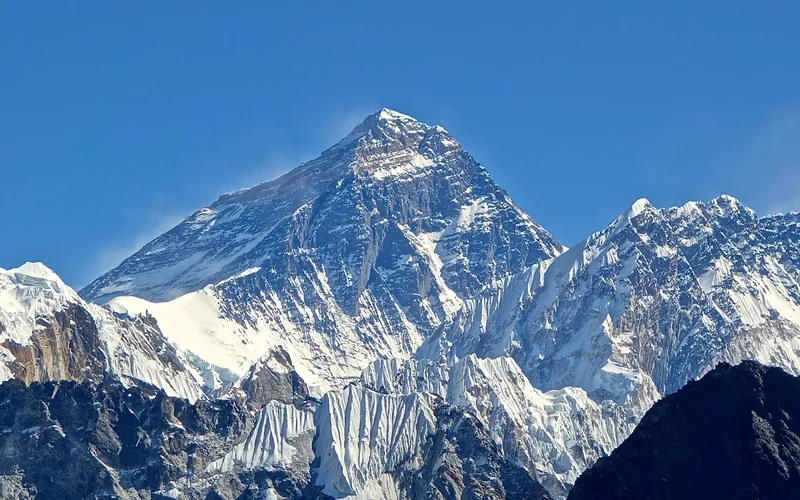


Mount Everest
Mount Everest is the highest mountain above sea level on Earth, standing at an official elevation of 8,848.86 meters (29,031.7 ft). Straddling the international frontier between Nepal and China, it is known locally as Sagarmatha in Nepali ('Goddess of the Sky') and Chomolungma in Tibetan ('Mother Goddess of the World'). The peak rises into the extreme upper troposphere, where oxygen levels drop to barely one-third of sea-level pressure. Climbers face hurricane-force jet stream winds, severe frostbite conditions, shifting ice crevasses in the Khumbu Icefall, and the dangerous Death Zone above 8,000 meters.
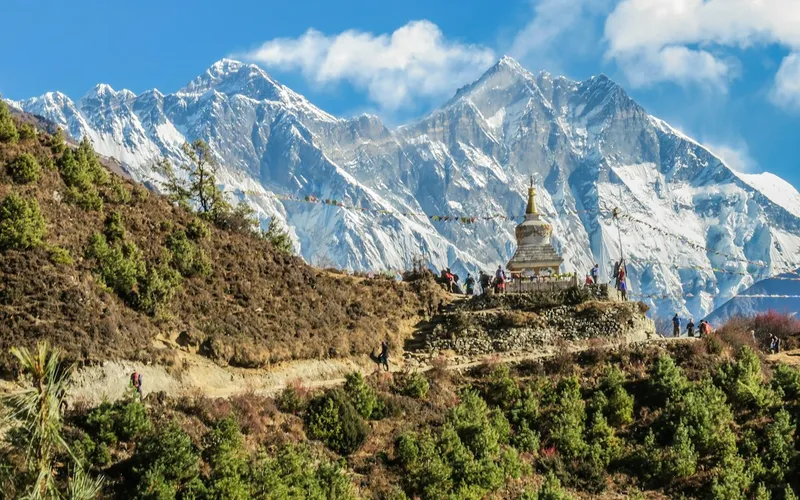

K2
K2, at 8,611 meters (28,251 ft), is the second-highest mountain on Earth and widely regarded as the most technically demanding and lethal 8,000-meter peak. Located in the heart of the Karakoram on the border between Pakistan and China, K2 is characterized by sheer relief, severe weather anomalies, and persistent objective hazards including the notorious Bottleneck couloir.
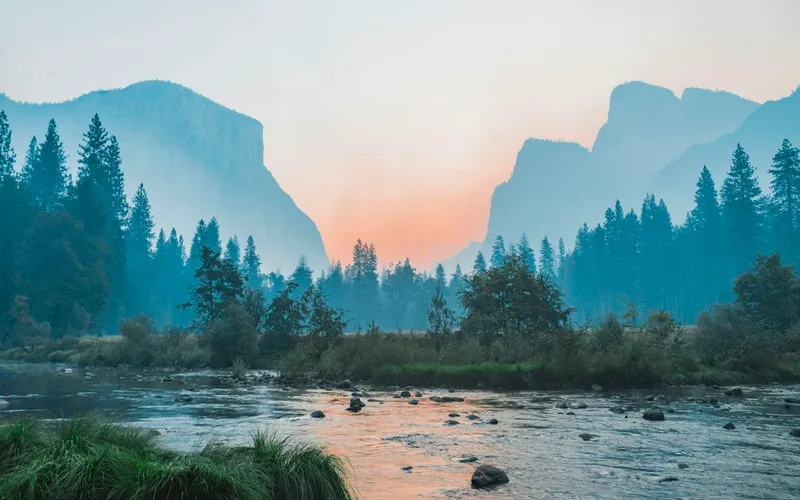
Nanga Parbat
Nanga Parbat, at 8,126 meters (26,660 ft), is the ninth-highest mountain on Earth and the western anchor of the Himalayas in Pakistan. It boasts the Rupal Face, the highest vertical precipice in the world at 4,600 meters from valley floor to summit. Known for profound climbing history, highlighted by Hermann Buhl's legendary solo summit without supplemental oxygen in 1953.
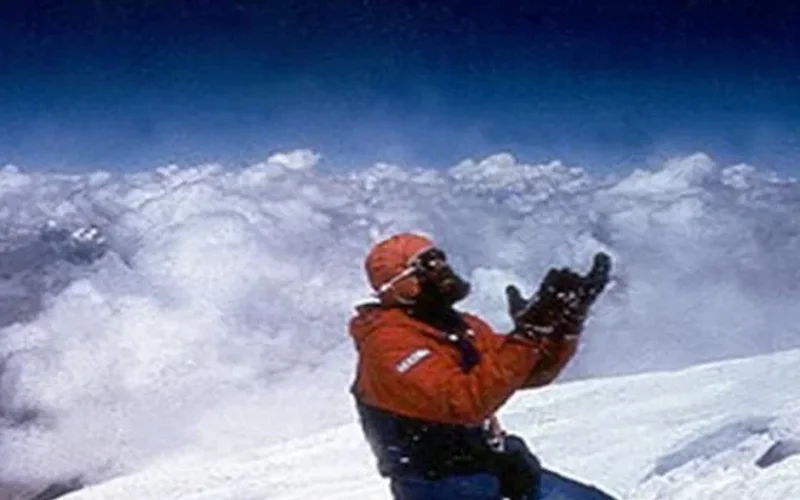
Gasherbrum I
Gasherbrum I, at 8,068 meters (26,470 ft), is the eleventh-highest mountain in the world. Named 'Hidden Peak' by explorer William Martin Conway due to its concealment behind surrounding Karakoram giants, it stands on the border between Pakistan and China. The peak was first climbed in 1958 by an American team led by Nick Clinch, and in 1992 Nazir Sabir summited it with Rajab Shah and Mehrban Shah, marking his fourth Pakistani eight-thousander.
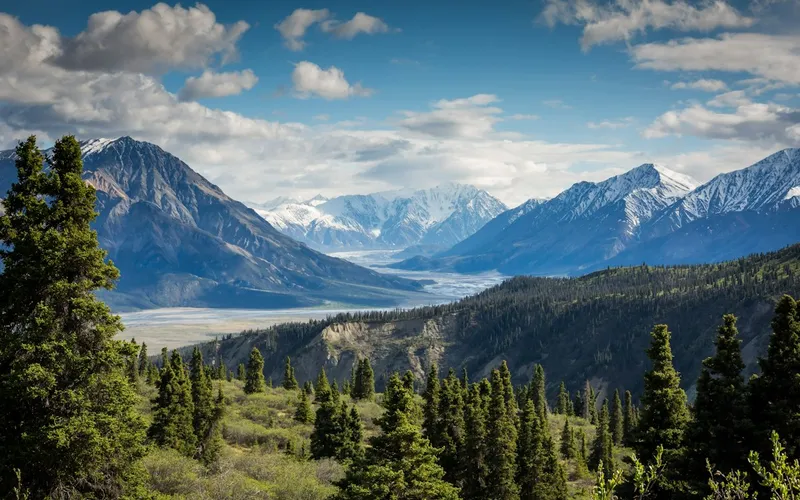
Broad Peak
Broad Peak, at 8,051 meters (26,414 ft), is the twelfth-highest mountain in the world. Located in the Karakoram directly across the Godwin-Austen Glacier from K2, it is famous for its 1.5-kilometre-long summit crest. First climbed in lightweight alpine style without supplemental oxygen or high-altitude porters in 1957 by an Austrian team.
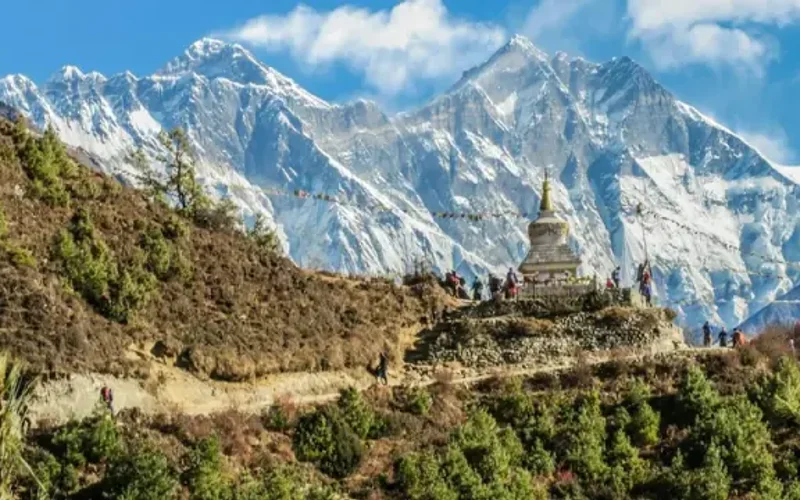
Gasherbrum II
Gasherbrum II, standing at 8,035 meters (26,362 ft), is the thirteenth-highest mountain on Earth and the third-highest peak of the Gasherbrum massif in the Karakoram. Located at the head of the Baltoro Glacier on the Pakistan-China frontier, it features a classic pyramidal profile with challenging ice couloirs. First summited in 1956 by an Austrian team, it was famously climbed in pure alpine style in 1982 by Reinhold Messner, Nazir Sabir, and Sher Khan.
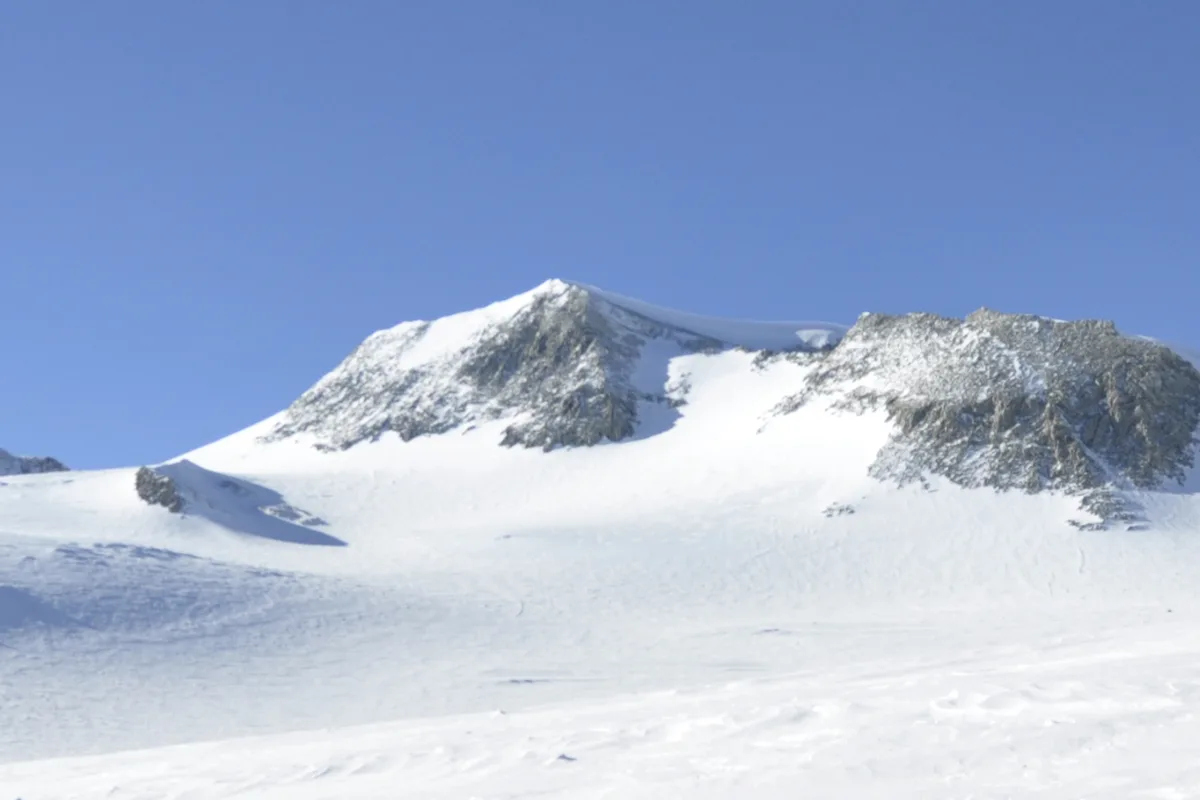

Mount Vinson / Vinson Massif
Mount Vinson is the highest peak in Antarctica at 4,892 metres (16,050 ft), situated in the Sentinel Range of the Ellsworth Mountains approximately 1,200 kilometres from the South Pole. As the summit of Antarctica, it forms one of the celebrated Seven Summits. First sighted by a US Navy aircraft in January 1958 and named after Georgia congressman Carl Vinson, the peak was conquered on December 18, 1966, by a team led by Nicholas Clinch and Barry Corbet during the historic American Antarctic Mountaineering Expedition. While technically moderate via the Branscomb Glacier, climbing Mount Vinson demands extreme endurance against temperatures plunging to -40°C and ferocious katabatic blizzards.
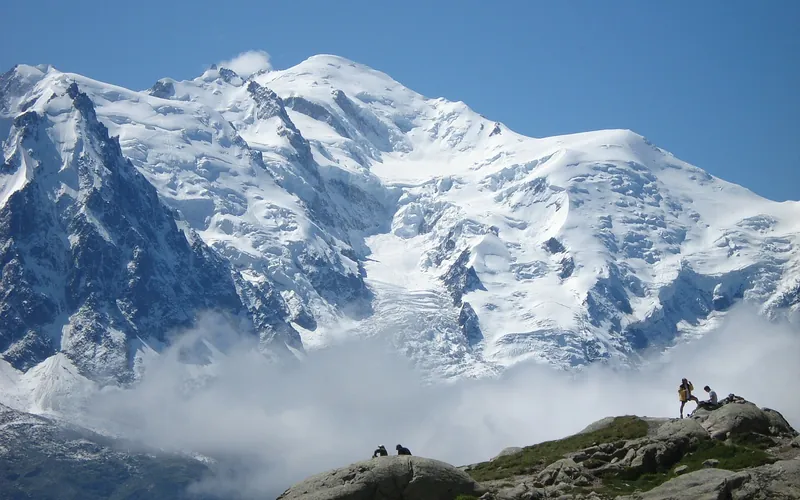


Mont Blanc
Mont Blanc (Monte Bianco), at 4,808 meters (15,774 ft), is the highest mountain in the Alps and Western Europe. Rising on the Franco-Italian watershed, this iconic glacier-draped granite massif is revered as the historic cradle of modern mountaineering following its celebrated first ascent in 1786. Featuring towering seracs, complex crevasse systems, and classic ridges like the Goûter and Bosses, it attracts climbers from around the globe.
Pioneered & Associated Routes (17)
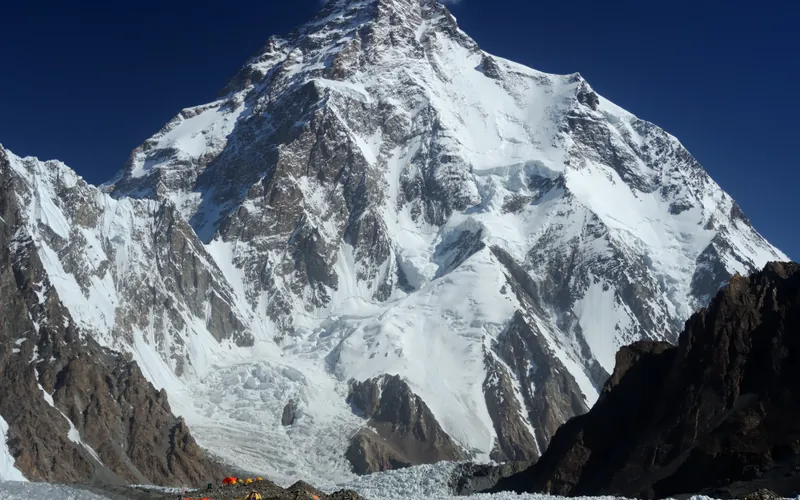
Abruzzi Spur (Southeast Ridge)
The Abruzzi Spur is the most famous and frequently climbed route on K2, tracing the mountain's steep southeast ridge from the Godwin-Austen Glacier to the summit. First explored in 1909 by Prince Luigi Amedeo, Duke of the Abruzzi, it was successfully climbed to the summit in 1954 by an Italian team. The route requires extreme physical endurance and high-grade technical climbing on rock, ice, and mixed terrain through legendary cruxes like House's Chimney, the Black Pyramid, and the Bottleneck couloir.
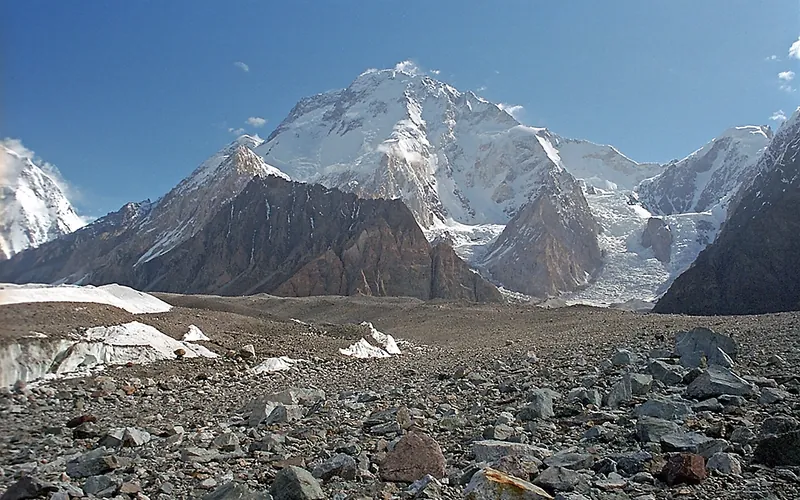
Normal Route (West Ridge & Northwest Face)
The Normal Route on Broad Peak ascends the rugged western spur from the Godwin-Austen Glacier, navigating steep mixed rock ribs before entering the upper glacial basin beneath the high saddle (the Col). From the Col at 7,800 meters, climbers enter the Death Zone to tackle the long, corniced summit ridge leading across the Foresummit to the true summit at 8,051 meters. First conquered in 1957 by an Austrian team in lightweight alpine style without bottled oxygen, and climbed in 1982 by Reinhold Messner, Nazir Sabir, and Sher Khan in a groundbreaking rapid alpine push.
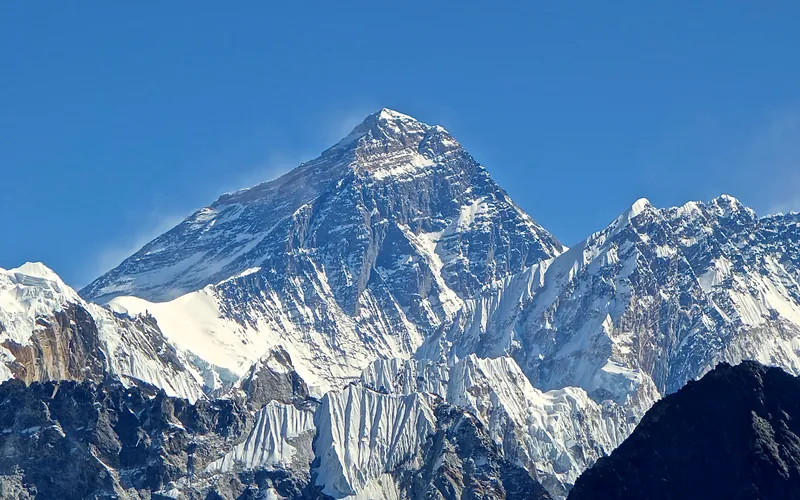
Mount Everest North Face (Hornbein Couloir Direct)
The North Face of Mount Everest via the Japanese Couloir and the sheer Hornbein Couloir is one of the most direct and formidable ice lines in the Himalayas. Rising 3,000 vertical meters from the Rongbuk Glacier to the summit, it funnels through a narrow 60-degree snow-and-ice cleft slicing straight through the Yellow Band and upper limestone cliffs of the North Face. In August 1986, Swiss alpinists Erhard Loretan and Jean Troillet executed one of the most audacious speed climbs in mountain history: climbing the entire face in a single 31-hour push at night without supplemental oxygen, tents, or fixed ropes. After summiting on August 30, they glissaded down the 3,000-meter face on their backs and buttocks in just 3.5 hours, completing the entire round trip in an astonishing 43 hours.
North Col & Northeast Ridge Route
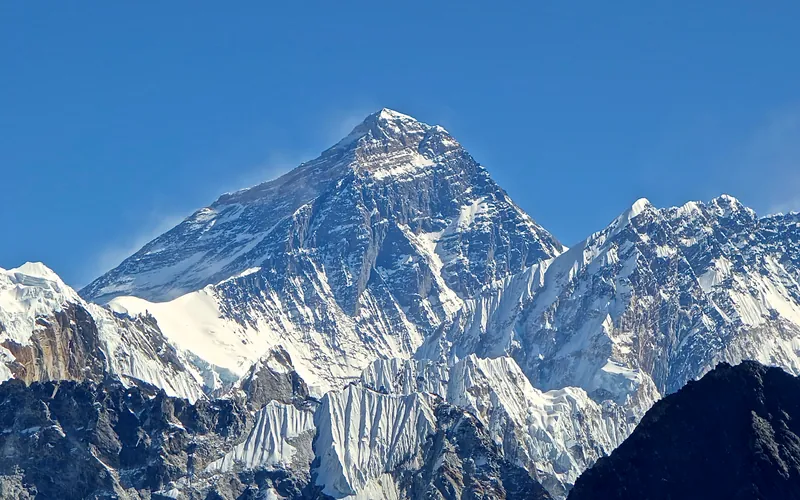
The historic northern route on Mount Everest (8,848.86m), ascending from the Rongbuk and East Rongbuk glaciers to breach the icy wall of the North Col (7,020m). From the col, the route traverses the wind-blasted Northwest Ridge onto the North Face before joining the razor-like Northeast Ridge, navigating the notorious First, Second, and Third Steps in the Death Zone. This was the stage of George Mallory and Andrew Irvine's fateful 1924 climb and was first definitively surmounted on May 25, 1960, by Chinese climbers Wang Fuzhou, Qu Yinhua, and Gongbu.
Mount Everest Southwest Face (Bonington Route)
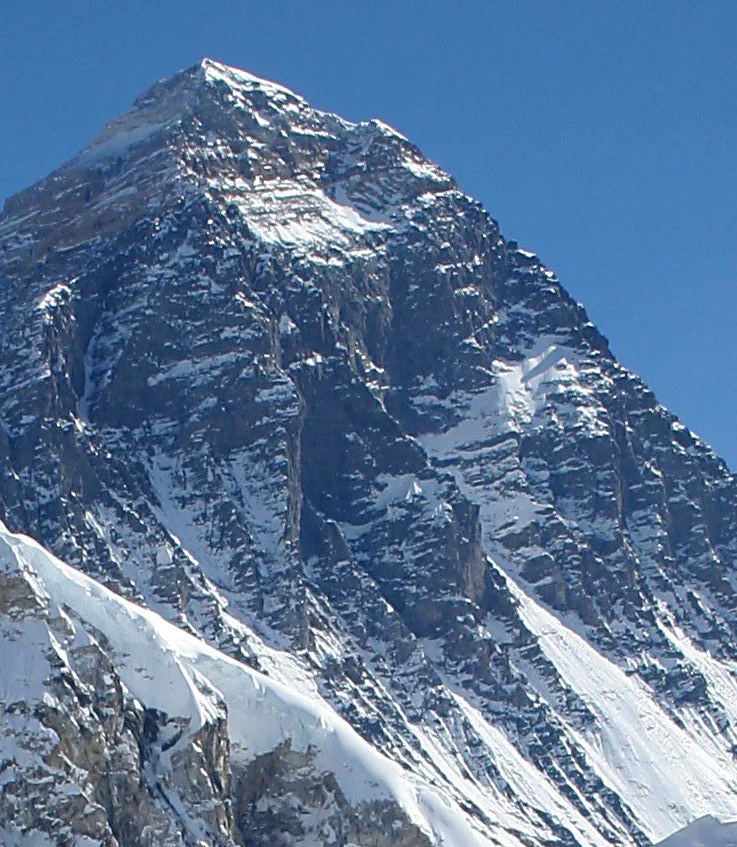
The Southwest Face of Mount Everest (8,848.86m) rises 2,300 vertical meters from the Western Cwm to the summit, presenting one of the largest and most forbidding rock and ice faces in the world. Dominated by the vertical 300-meter 'Rock Band' at 8,200–8,500 meters, the face repelled six international attempts between 1969 and 1974. In autumn 1975, a legendary British expedition led by Chris Bonington breached the face when Paul Braithwaite and Nick Estcourt unlocked the key ramp through the Rock Band. On September 24, 1975, Doug Scott and Dougal Haston climbed to the South Summit and pushed on to the main summit, becoming the first Britons to conquer Everest. Trapped by nightfall during their descent, they survived an epic open bivouac at 8,760 meters without oxygen, sleeping bags, or frostbite.
Mount Everest Complete West Ridge (Yugoslav Direct)
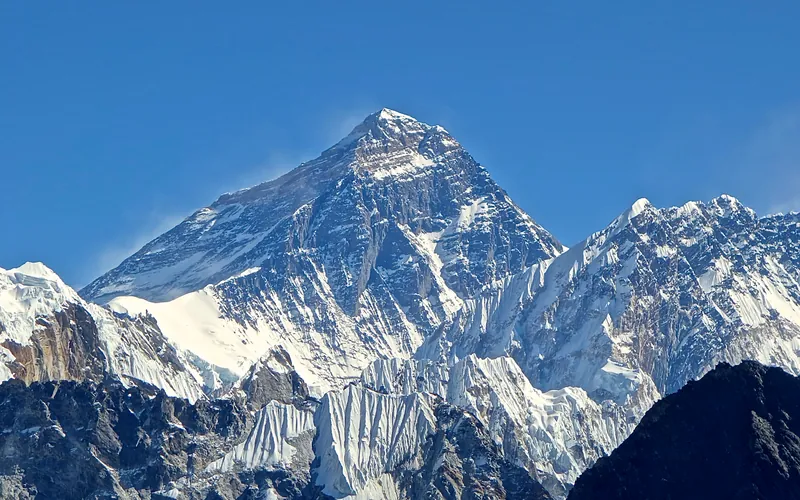
The Complete West Ridge of Mount Everest is one of the most formidable and sustained technical routes on the mountain. Pioneered in spring 1979 by an elite Yugoslav expedition led by Tone Škarja, the route tackles the integral knife-edge crest directly from the Lho La col (6,026m) all the way to the 8,848.86m summit. Unlike the 1963 American West Ridge route which diverted into the Hornbein Couloir from the North Face, the Yugoslav line stayed strictly along the razor-edge crest of the West Ridge, surmounting technical rock buttresses up to Grade V+ at extreme altitude before traversing around the Yellow Band. On May 13, 1979, Andrej Štremfelj and Nejc Zaplotnik achieved the first ascent of the complete ridge, followed two days later by Stane Belak, Marjan Manfreda, and Ang Phu Sherpa in one of the greatest feats in Himalayan history.
Northwest Face & Japanese Couloir (Normal Route)
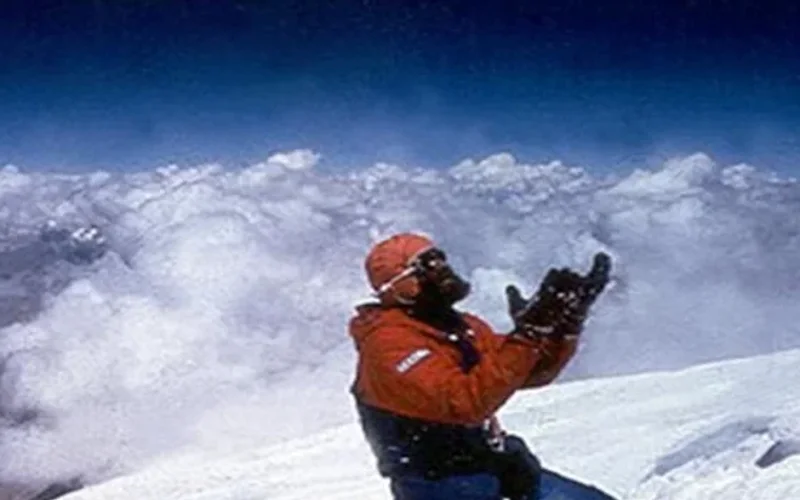
The Northwest Face via the Japanese Couloir is the standard and most frequently climbed line on Gasherbrum I (8,068m / Hidden Peak). Starting from the South Gasherbrum Glacier, climbers traverse the shared lower icefall into the Gasherbrum Cwm, then branch southward toward the forbidding northwest wall. The technical centerpiece is the Japanese Couloir—a sustained 50 to 60-degree gully of hard blue ice and shattered rock leading to the high col and summit slopes. First ascended in 1958 by Americans Pete Schoening and Andy Kauffman via the South Ridge, the Japanese Couloir line became the modern benchmark, climbed rapidly in 1992 by Nazir Sabir, Rajab Shah, and Mehrban Shah.
Southwest Ridge (Normal Route)
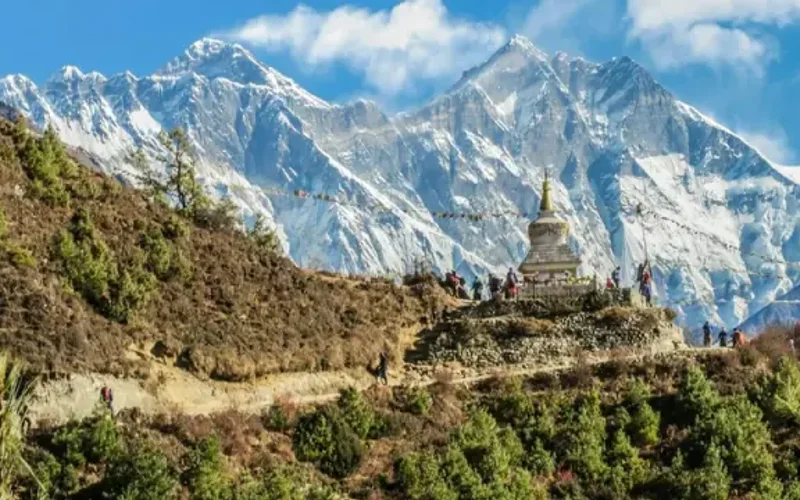
The Southwest Ridge is the standard and historically celebrated route on Gasherbrum II (8,035m). Starting from the South Gasherbrum Glacier, climbers navigate the heavily crevassed lower icefall into the Gasherbrum Cwm before tackling the technical crux of the route: the steep mixed snow and ice crest known as the Banana Ridge. Above Camp III, the route traverses expansive snow basins into the Death Zone, making a final push up a delicate diagonal couloir to the summit. First climbed in 1956 by an Austrian team, and completed in rapid alpine style in 1982 by Reinhold Messner, Nazir Sabir, and Sher Khan.
Goûter Route (Voie Royale / Normal Route)
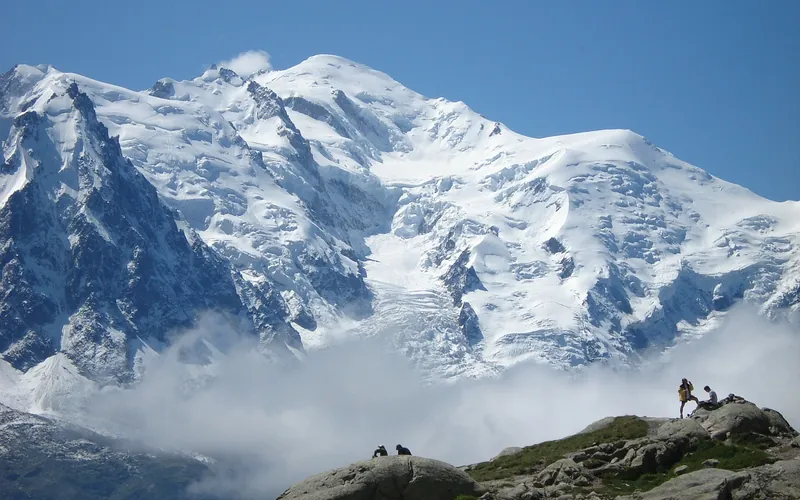
The Goûter Route, often called the Voie Royale, is the most frequented and classic line to the summit of Mont Blanc (4,808 m). Starting from the Tramway du Mont-Blanc terminus at Nid d'Aigle (2,372 m), climbers ascend past the Tête Rousse Glacier, traverse the notorious Grand Couloir, scramble up the steep Aiguille du Goûter to the Goûter Refuge (3,835 m), and complete the dawn push across the Dôme du Goûter and the exposed knife-edge Arête des Bosses to the summit dome.
K2 South Face (The Polish Line)
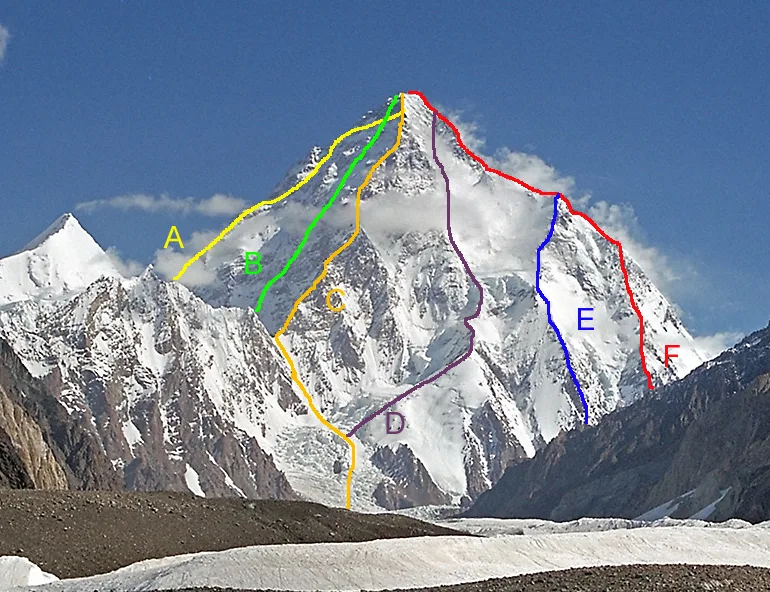
The Polish Line on the South Face of K2 (8,611m) is widely regarded as one of the most perilous and audacious routes ever climbed in high-altitude mountaineering history. Tackling the direct 3,200-meter wall between the Abruzzi Spur and the Magic Line (South-Southwest Pillar), the route ascends through a chaotic labyrinth of hanging seracs, avalanche funnels, and vertical rock bands. Pioneered in alpine style over five harrowing days in July 1986 by Jerzy Kukuczka and Tadeusz Piotrowski without supplemental oxygen, Reinhold Messner famously dubbed it 'suicidal'. Kukuczka and Piotrowski reached the summit on July 8, but tragedy struck during their desperate descent via the Abruzzi Spur when Piotrowski lost both crampons and plunged to his death. To this day, the Polish Line remains unrepeated.
West Ridge (Japanese Route)
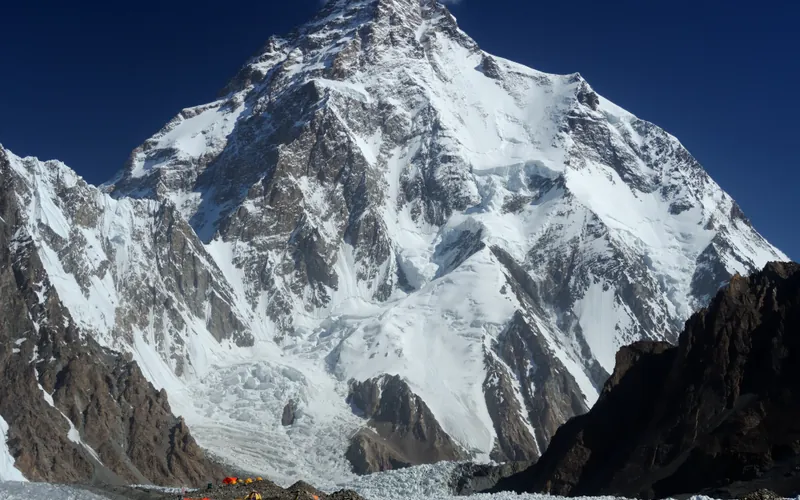
The West Ridge of K2 is one of the most formidable and sustained technical lines in high-altitude mountaineering. Pioneered in August 1981 by a joint Japanese-Pakistani expedition, it ascends directly from the Savoia Glacier along the exposed western crest before negotiating the severe Southwest Face directly into the Death Zone. Demanding immense commitment, it was first completed by Pakistani mountaineer Nazir Sabir and Japanese climber Eiho Ohtani after an epic bivouac near 8,500 meters.
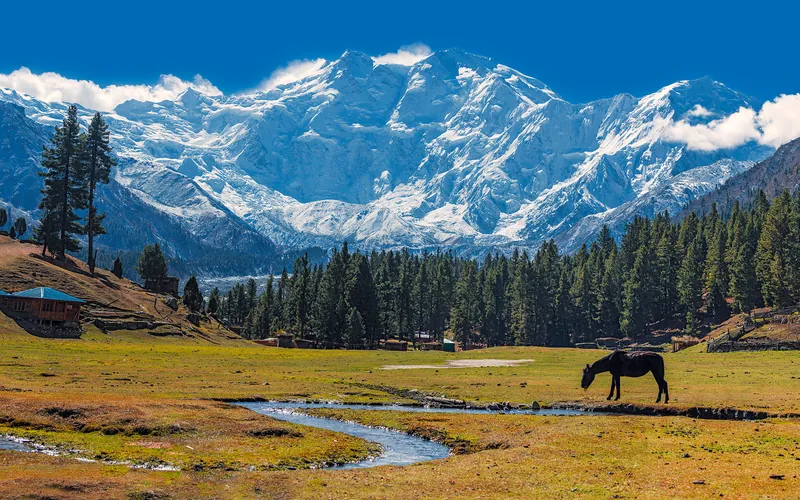
Kinshofer Route (Diamir Face)
The Kinshofer Route is the standard climbing route up the Diamir Face on Nanga Parbat's western side. First climbed in 1962 by German mountaineer Toni Kinshofer and his teammates, it is famous for its early vertical crux, the Kinshofer Wall, which sits low on the mountain between Camp I and Camp II. Once past the wall, climbers face a massive glaciated amphitheater leading up into the freezing upper Bazhin Basin and summit shoulder.
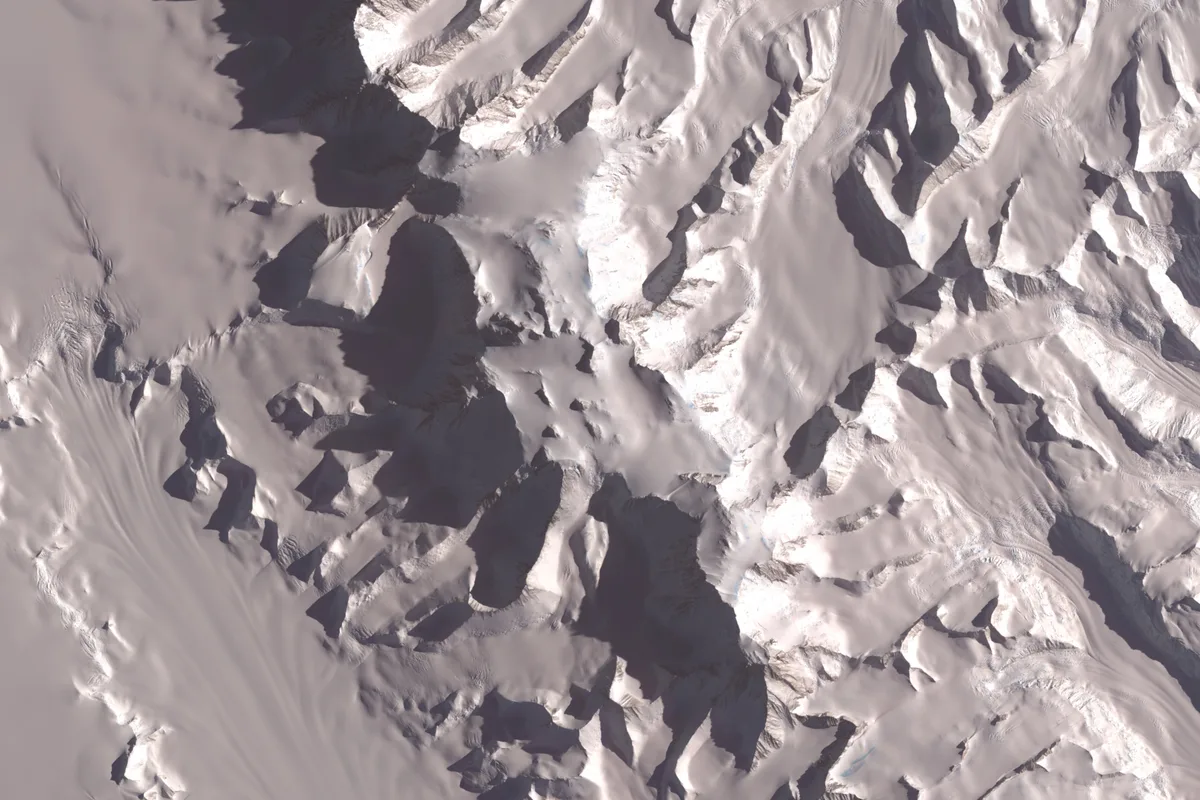
Normal Route of Mount Vinson (Branscomb Glacier Route)
The Normal Route on Mount Vinson ascends the gentle yet crevasse-riven Branscomb Glacier to gain the high saddle between Mount Shinn and Mount Vinson, continuing across the Vinson Plateau to the corniced rocky summit horn. First climbed in December 1966 by the American Antarctic Mountaineering Expedition led by Nicholas Clinch, it is the standard route for Seven Summits mountaineers. While technical climbing difficulty is moderate (Grade II alpine snow and 35° to 45° headwall ice), the objective is made profoundly serious by extreme polar cold (-40°C), ferocious katabatic gales, total geographic isolation, and the necessity of complete self-sufficiency.
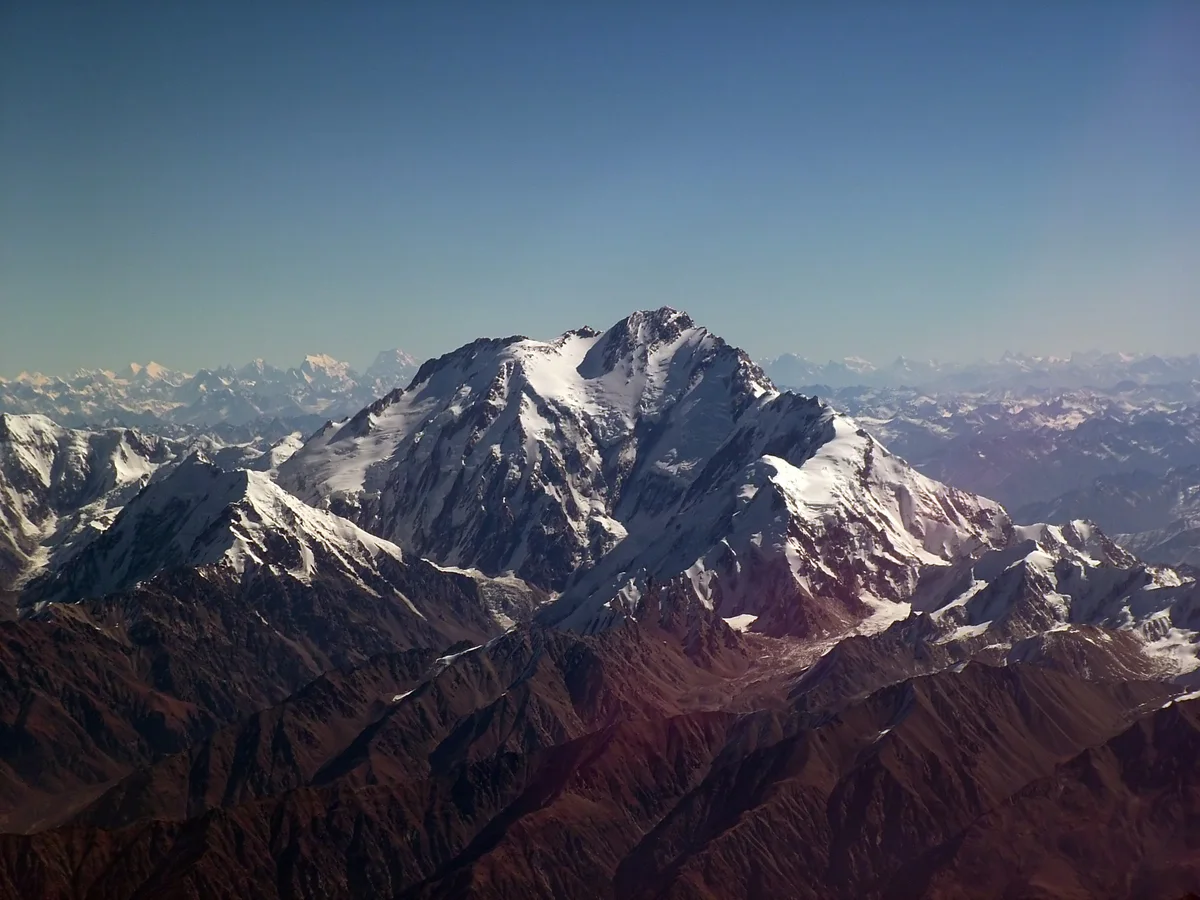
Mazeno Ridge Complete Traverse
The Mazeno Ridge of Nanga Parbat is widely considered the longest and most demanding high-altitude ridge on any eight-thousander, stretching an unbelievable 10 kilometres in length and traversing eight subsidiary peaks exceeding 7,000 metres before meeting the final summit pyramid. Long dubbed the last great problem of the Western Himalaya, it defeated numerous elite expeditions over three decades until British veterans Sandy Allan and Rick Allen completed the first full integral traverse and summit push in pure alpine style over eighteen heroic days in July 2012.
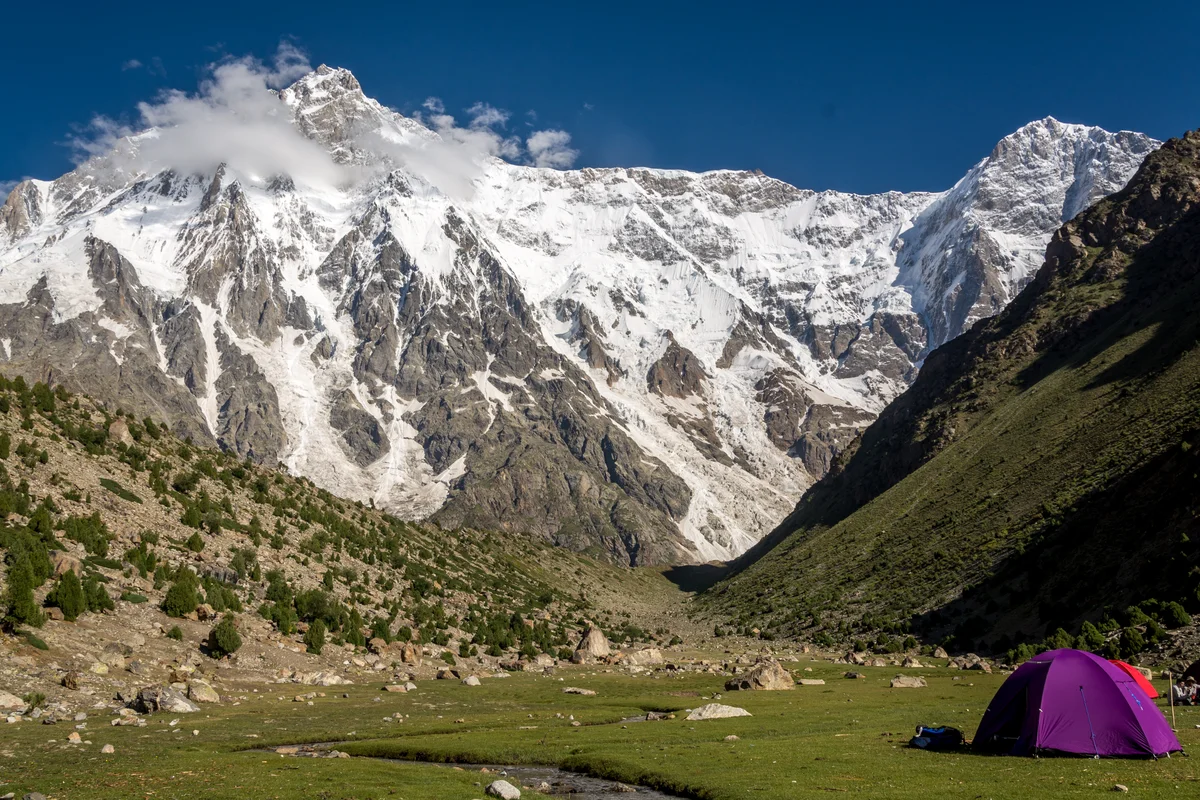
Central Pillar of the Rupal Face Direct
The Central Pillar of the Rupal Face on Nanga Parbat is the greatest vertical mountain wall on Earth, rising an astounding 4,100 metres from the Rupal Valley floor to the 8,126-metre summit. First attempted over decades, it was conquered in pure, lightweight alpine style between September 1 and 8, 2005, by American alpinists Steve House and Vince Anderson without fixed ropes, high camps, or supplemental oxygen, earning them the prestigious Piolet d'Or.
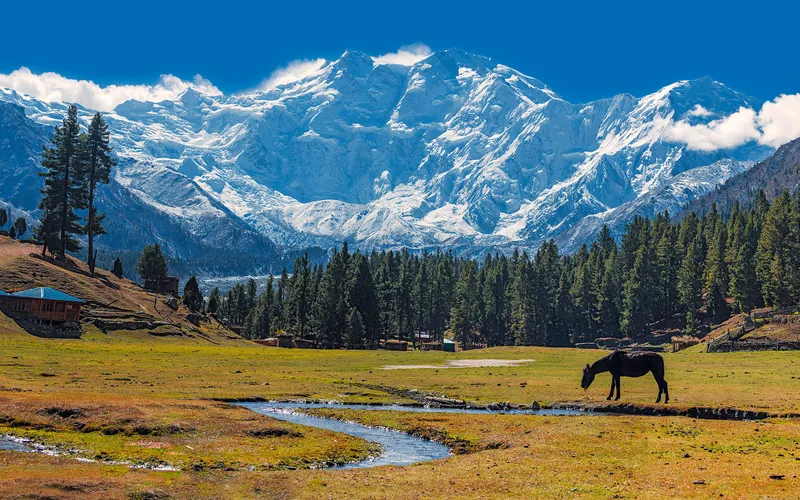
Rakhiot Flank & East Ridge (Original 1953 Route)
The historic original route on Nanga Parbat (8,126m), ascending from the Rakhiot Glacier over the heavily crevassed Rakhiot Icefall to reach the colossal Silbersattel (Silver Saddle) at 7,450 meters. From the saddle, the route traverses an immense high snow plateau for over three kilometers before negotiating the Bazhin Gap and climbing steep mixed rock ribs up the summit pyramid. Immortalized by Hermann Buhl's epic 41-hour solo summit without supplemental oxygen in July 1953.
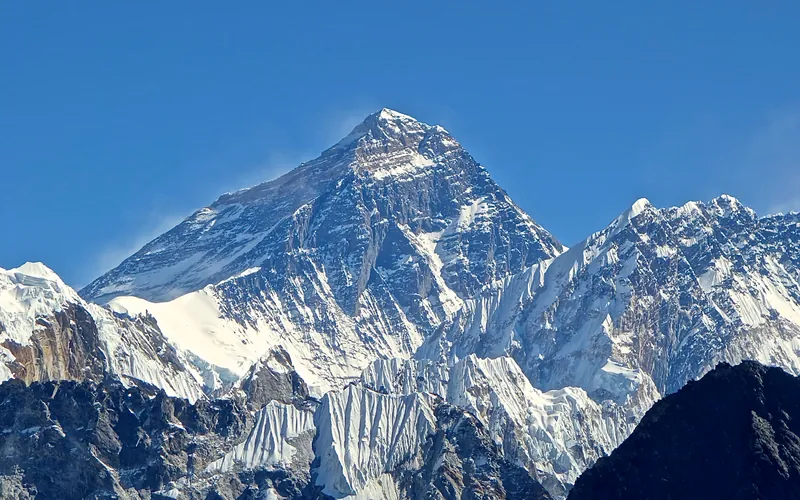
South Col & Southeast Ridge (Normal Route)
The South Col Route along the Southeast Ridge is the historic path of the 1953 first ascent and the most popular route on Mount Everest. Starting from Base Camp on the Khumbu Glacier in Nepal, climbers navigate the shifting seracs of the Khumbu Icefall into the Western Cwm. The route then scales the icy 45-degree slope of the Lhotse Face to the South Col at 7,925 meters, launching the final summit bid through the Balcony, South Summit, and Hillary Step to the summit of Earth at 8,848.86 meters.
Documented Expeditions (5)
1970 Nanga Parbat Rupal Face First Ascent Expedition
Reinhold Messner and his brother Günther conquered the monumental 4,500-meter Rupal Face of Nanga Parbat on June 27, 1970, before executing a tragic first traverse of the mountain down the Diamir Face.
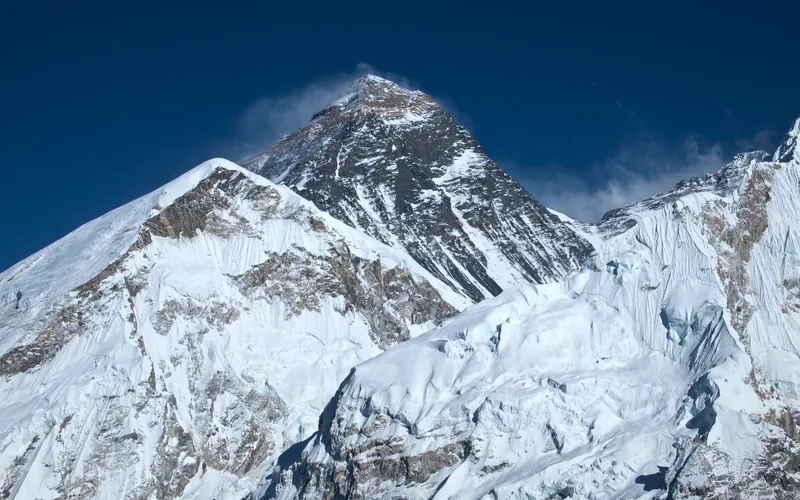
1978 First Oxygenless Mount Everest Expedition
The landmark 1978 Austrian expedition where Reinhold Messner and Peter Habeler shattered medical dogma by summiting Mount Everest (8,848.86m) without supplemental oxygen.
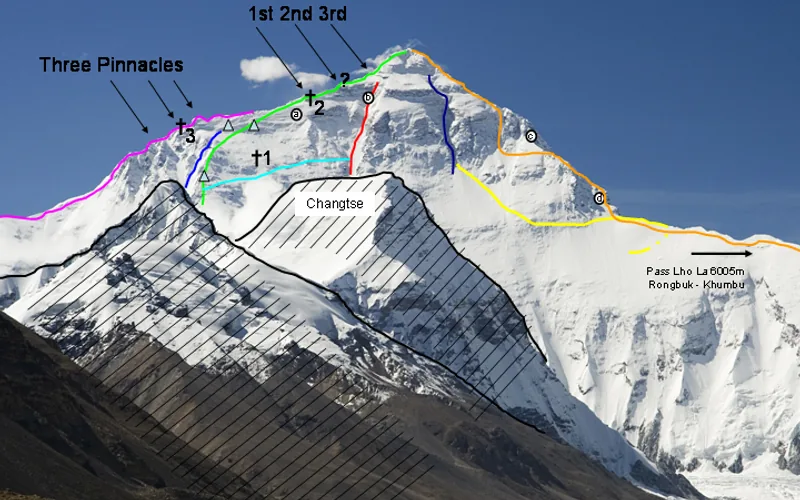
1980 Reinhold Messner Solo Mount Everest Expedition
Reinhold Messner's historic solo ascent of Mount Everest from the Tibetan north side during the monsoon season without supplemental oxygen, fixed camps, or radio contact.
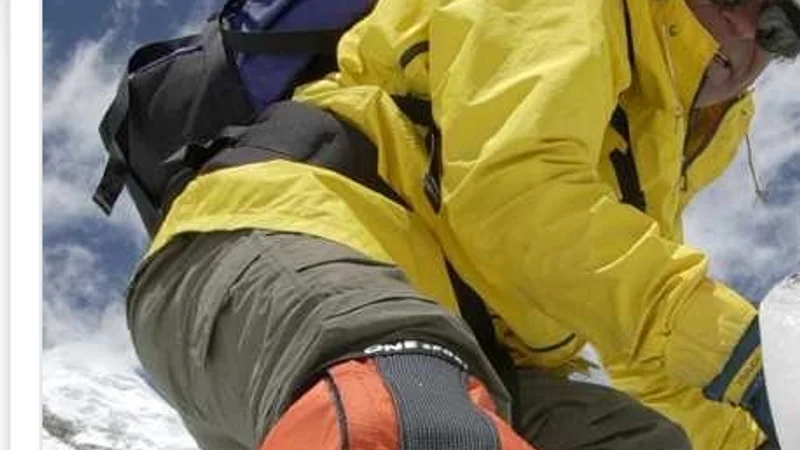
1982 Messner-Sabir Karakoram Alpine Traverse
Revolutionary lightweight expedition with Reinhold Messner, Nazir Sabir, and Sher Khan, summiting Gasherbrum II and Broad Peak within 9 days without oxygen.
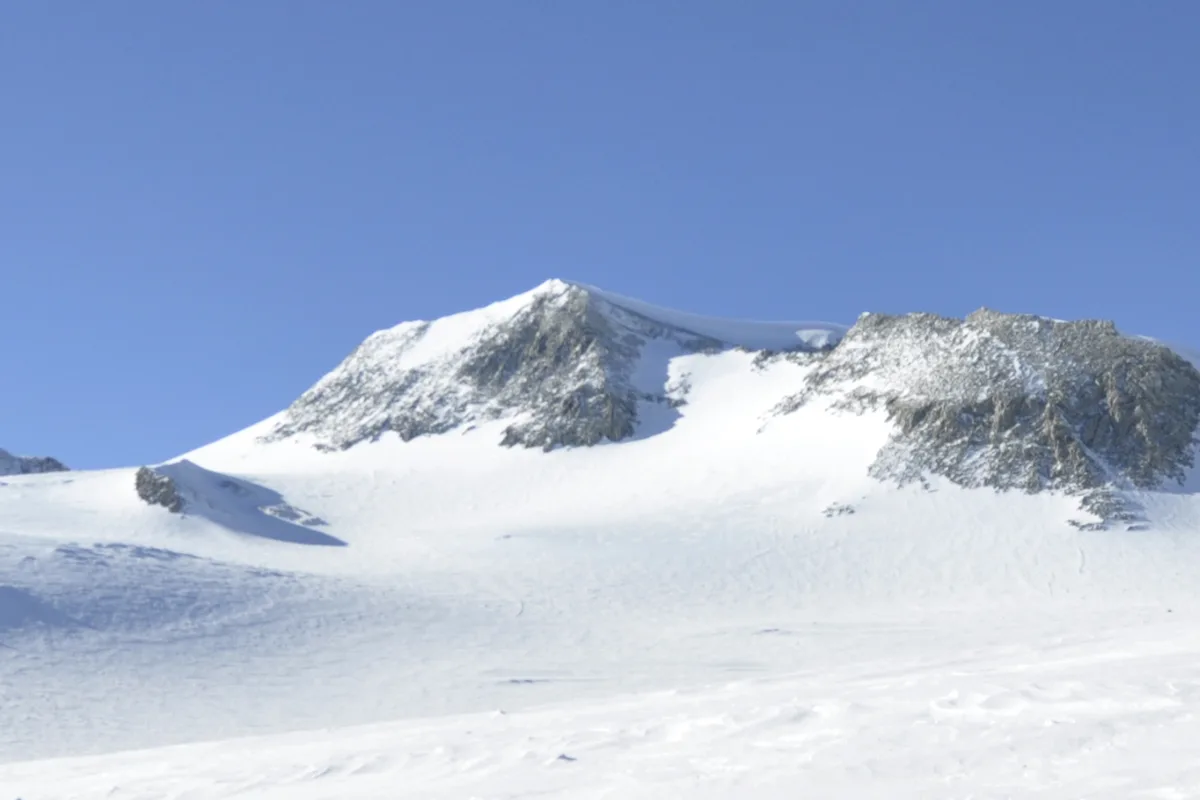
1986 Reinhold Messner Mount Vinson Ascent: The Messner Seven Summits
On December 3, 1986, legendary alpine purist Reinhold Messner reached the summit of Mount Vinson (4,892 m) in Antarctica. Coming just weeks after completing his historic conquest of all fourteen 8,000-metre peaks, Messner's ascent of Vinson finalized the 'Messner List' of the Seven Summits, advocating for Australasia's technical Carstensz Pyramid over Australia's walk-up Mount Kosciuszko.
Associated Chronicles & Stories (5)
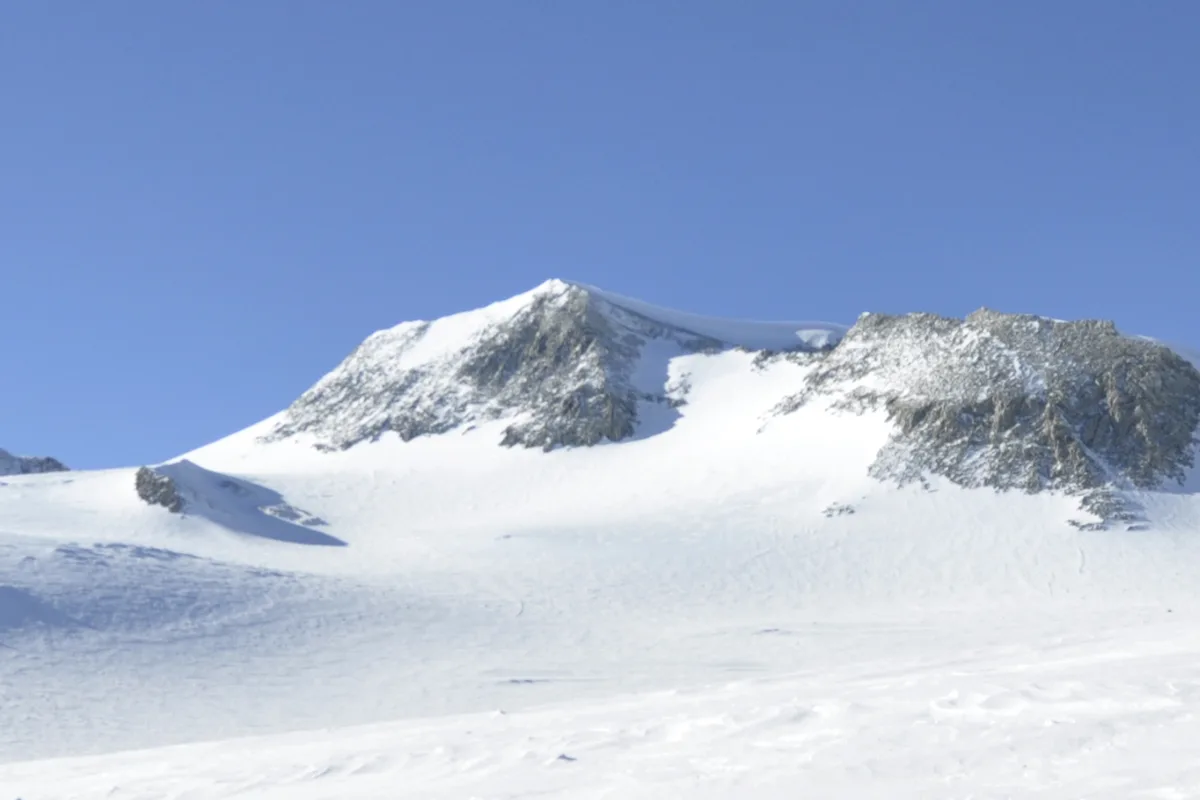
The Master's Crown: Reinhold Messner's 1986 Mount Vinson Ascent
Fresh from conquering all fourteen eight-thousanders, Reinhold Messner summits Mount Vinson to establish the definitive Seven Summits standard.
1970 Nanga Parbat Rupal Face: Messner's Epic Traverse
The harrowing chronicle of Reinhold and Günther Messner conquering Nanga Parbat's 4,500m Rupal Face and the tragic Diamir descent.
1978 Everest Without Oxygen: Shattering Medical Dogma
How Reinhold Messner and Peter Habeler proved humans could summit Everest without supplemental oxygen, overturning established physiology.
1980 Everest Solo: Reinhold Messner's Ultimate Epic
The epic chronicle of Reinhold Messner summiting Mount Everest completely solo, without oxygen or radio, during the monsoon season.
1982 Karakoram Double: The Messner-Sabir Alpine Blitz
How Reinhold Messner and Nazir Sabir climbed Gasherbrum II and Broad Peak in lightweight alpine style within one week in 1982.
Documented Sources & Archival Citations
- The Crystal Horizon: Everest - The First Solo Ascent(Reinhold Messner / The Mountaineers Books)
Supporting claim: Detailed firsthand narrative of the 1980 solo north face monsoon ascent of Mount Everest
Accessed/Documented: 1989 - Everest: Expedition to the Ultimate (Grenzbereich Everest)(Reinhold Messner / Kaye & Ward)
Supporting claim: Documented record of the historic first oxygenless ascent of Everest with Peter Habeler in 1978
Accessed/Documented: 1979 - All 14 Eight-Thousanders(Reinhold Messner / Crowood Press)
Supporting claim: Comprehensive historical log of climbing all fourteen 8,000-meter peaks without bottled oxygen
Accessed/Documented: 1988 - The Naked Mountain: Nanga Parbat - Brother, Death and Solitude(Reinhold Messner / Crowood Press)
Supporting claim: Chronicle of the 1970 Rupal Face ascent, traverse, and loss of Günther Messner
Accessed/Documented: 2003 - The Murder of the Impossible (Die Ermordung des Unmöglichen)(Reinhold Messner / Mountain Magazine (Issue 15))
Supporting claim: Seminal philosophical manifesto advocating for fair means and clean alpine style
Accessed/Documented: 1971 - Pamir Expedition Photographic Archive: Reinhold Messner (1985)(Jaan Künnap / Wikimedia Commons / CC BY-SA 4.0)
Supporting claim: Authentic archival portrait photography of Reinhold Messner in the high mountains
Accessed/Documented: 1985