1982 Messner-Sabir Karakoram Alpine Traverse
Revolutionary lightweight expedition with Reinhold Messner, Nazir Sabir, and Sher Khan, summiting Gasherbrum II and Broad Peak within 9 days without oxygen.
Mountain Safety & Conditions Disclaimer: High-altitude climbing, glacial travel, and technical ascents entail severe objective risks including avalanches, serac collapses, rapid weather collapse, and altitude illness. Historical route descriptions and summit claims on Mountanity reflect documented archival sources and must not be used as live operational safety assessments. Local regulations, permits, and physical glacial topography change continuously.
Peer Review: Senior Editorial Board & Historical Reviewers • Editorial Standards
Official Expedition Narrative & Archival Record
In the summer of 1982, world-renowned alpinist Reinhold Messner joined forces with Pakistani master climber Nazir Sabir and Col. Sher Khan to attempt an unprecedented high-altitude feat: climbing multiple 8,000-meter giants in pure alpine style back-to-back. Eschewing large siege tactics, high-altitude porters, and supplemental oxygen, the three-man team moved swiftly across the Karakoram glaciers. On July 24, 1982, they summited Gasherbrum II (8,035m). Just nine days later, on August 2, 1982, they stood together on the summit of Broad Peak (8,051m). This rapid succession proved that the world's highest mountains could be climbed quickly, cleanly, and safely in pure alpine style.
Documented Team Composition
- Reinhold Messner (Austria / Italy)
- Nazir Sabir (Pakistan)
- Col. Sher Khan (Pakistan)
Key Statistics & Topographic Figures
- Dual Summits
- Gasherbrum II & Broad Peak
Two 8000ers in 9 Days
- Team
- Reinhold Messner, Nazir Sabir, Sher Khan
Alpine-Style Trio
- Oxygen Equipment
- None (Natural Respiration)
Pure Alpine Style
- Dates
- July 24 & August 2, 1982
Rapid Succession
Archival Primary Source Quotations
“Nazir Sabir and Sher Khan are among the strongest, most dependable companions I have ever shared a rope with in the Greater Ranges.”
Defined Alpine Terminology & Concepts
- Double-Header
- Summiting two separate 8,000-meter peaks within the same expedition season, often with minimal recovery time between pushes.
- Alpine Traverse
- A lightweight, continuous journey across major peaks without returning to a permanent fixed siege base between camps.
Frequently Asked Questions: 1982 Messner-Sabir Karakoram Alpine Traverse
What was the 1982 Messner-Sabir Karakoram traverse?
In the summer of 1982, Reinhold Messner, Nazir Sabir, and Sher Khan completed an unprecedented double 8,000-meter peak traverse in pure alpine style, summiting Gasherbrum II (8,035m) on July 24 and Broad Peak (8,051m) on August 2 without bottled oxygen within just nine days.
Did the 1982 expedition use bottled oxygen or fixed camps?
No. The three-man team carried all their own food, gear, and fuel in lightweight packs, moving in continuous alpine style without fixed ropes, high-altitude support porters, or supplemental oxygen.
Why was this climb significant for Pakistani mountaineering?
It proved that Pakistani climbers like Nazir Sabir and Sher Khan possessed the elite technical endurance to climb side-by-side with the world’s best alpinists at the highest standards of clean alpine style.
Ascent Route & Topography
Normal Route (West Ridge & Northwest Face)
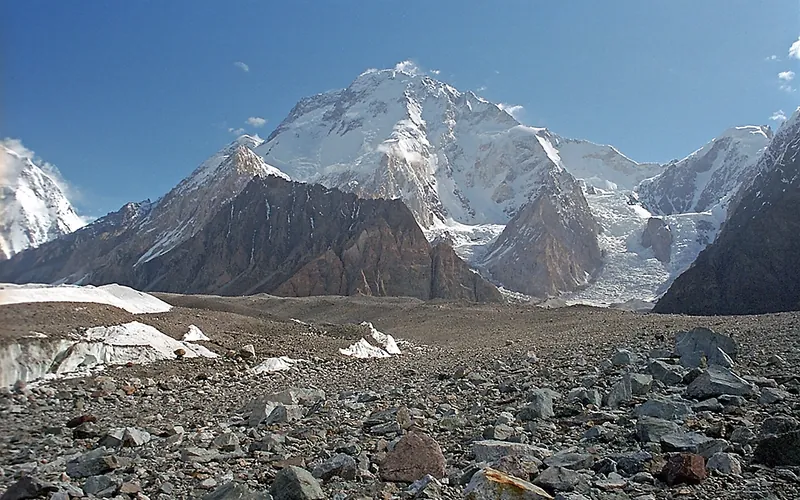
The Normal Route on Broad Peak ascends the rugged western spur from the Godwin-Austen Glacier, navigating steep mixed rock ribs before entering the upper glacial basin beneath the high saddle (the Col). From the Col at 7,800 meters, climbers enter the Death Zone to tackle the long, corniced summit ridge leading across the Foresummit to the true summit at 8,051 meters. First conquered in 1957 by an Austrian team in lightweight alpine style without bottled oxygen, and climbed in 1982 by Reinhold Messner, Nazir Sabir, and Sher Khan in a groundbreaking rapid alpine push.
Southwest Ridge (Normal Route)
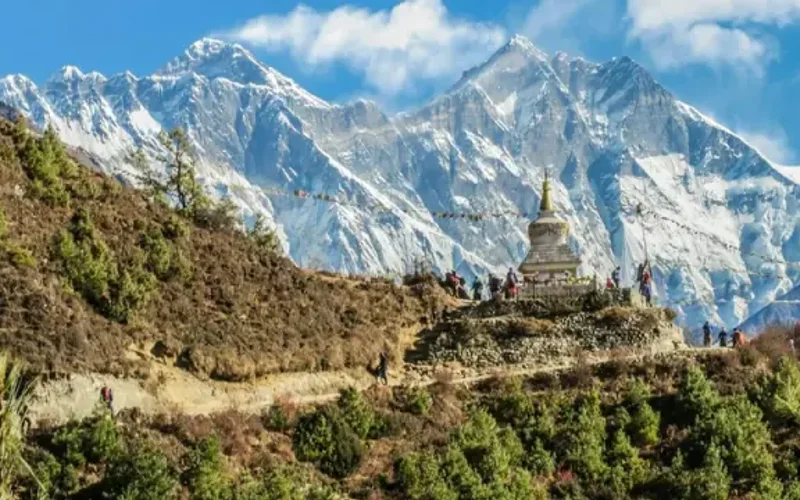
The Southwest Ridge is the standard and historically celebrated route on Gasherbrum II (8,035m). Starting from the South Gasherbrum Glacier, climbers navigate the heavily crevassed lower icefall into the Gasherbrum Cwm before tackling the technical crux of the route: the steep mixed snow and ice crest known as the Banana Ridge. Above Camp III, the route traverses expansive snow basins into the Death Zone, making a final push up a delicate diagonal couloir to the summit. First climbed in 1956 by an Austrian team, and completed in rapid alpine style in 1982 by Reinhold Messner, Nazir Sabir, and Sher Khan.
Target Objective Peaks


Broad Peak
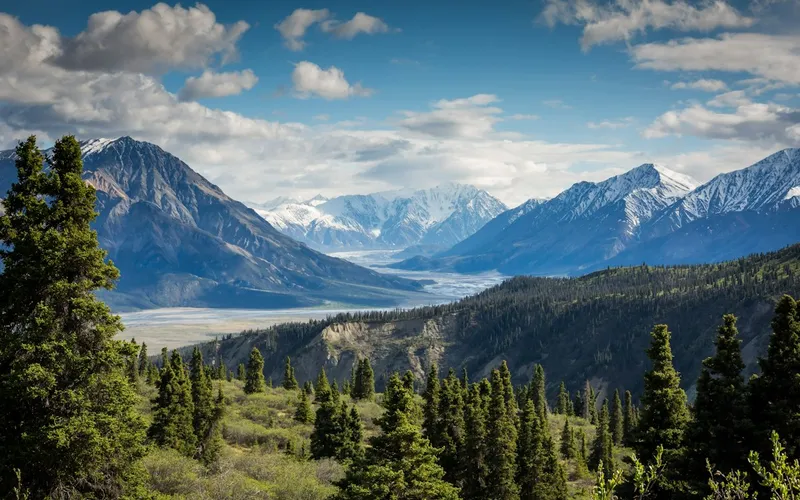
Broad Peak, at 8,051 meters (26,414 ft), is the twelfth-highest mountain in the world. Located in the Karakoram directly across the Godwin-Austen Glacier from K2, it is famous for its 1.5-kilometre-long summit crest. First climbed in lightweight alpine style without supplemental oxygen or high-altitude porters in 1957 by an Austrian team.
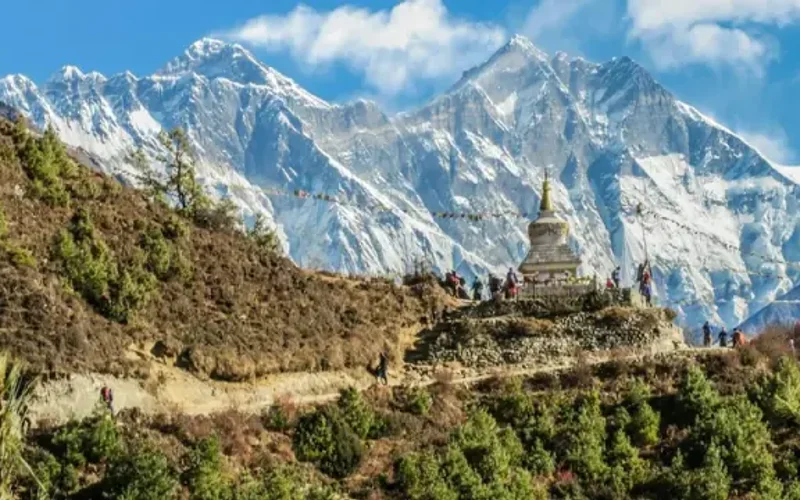
Gasherbrum II
Gasherbrum II, standing at 8,035 meters (26,362 ft), is the thirteenth-highest mountain on Earth and the third-highest peak of the Gasherbrum massif in the Karakoram. Located at the head of the Baltoro Glacier on the Pakistan-China frontier, it features a classic pyramidal profile with challenging ice couloirs. First summited in 1956 by an Austrian team, it was famously climbed in pure alpine style in 1982 by Reinhold Messner, Nazir Sabir, and Sher Khan.
Featured Expedition Climbers
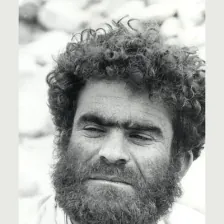
Nazir Sabir
Born on December 10, 1955, in Raminj, Chipursan Valley, Gojal, Hunza, Nazir Ahmad Sabir began his high-altitude mountaineering journey in 1974. At age 20, he achieved international prominence by completing the first human ascent of the virgin granite needle of Paiyu Peak (6,660m) on July 17, 1976, alongside the Alpine Club of Pakistan. On August 7, 1981, Sabir etched his name into mountaineering legend by completing the first ascent of K2 (8,611m) via the formidable West Ridge and Southwest Face alongside Japanese climber Eiho Ohtani. During their descent, the pair endured a historic open bivouac near 8,500 meters without supplemental oxygen in sub-zero hurricane winds, surviving against all physiological odds. In 1982, Sabir joined world-renowned alpinist Reinhold Messner and Col. Sher Khan to achieve a historic alpine-style double-header, summiting Gasherbrum II (8,035m) on July 24 and Broad Peak (8,051m) on August 2 without bottled oxygen within nine days. He conquered Gasherbrum I (8,068m) on August 25, 1992, becoming the first Pakistani to climb four of Pakistan's five 8,000-meter giants. On May 17, 2000, Sabir cemented his place as a national hero by becoming the first Pakistani in history to summit Mount Everest (8,848m) as part of the Mountain Madness expedition. Conferred the President's Pride of Performance (1982) and Sitara-i-Imtiaz (2001), he served as the first civilian President of the Alpine Club of Pakistan (2004–2010), established Nazir Sabir Expeditions, served as an advisor for Tourism and Education in Gilgit-Baltistan, and remains an active global voice for alpine conservation and high-altitude mountain ethics.
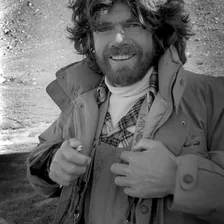
Reinhold Messner
Reinhold Messner was born on September 17, 1944, in Bressanone (Brixen), South Tyrol, Italy, and grew up in the rugged Villnöß valley beneath the towering limestone spires of the Geisler Peaks (Odle). Guided by his father Josef, Messner completed his first alpine ascent at age five. By his late teens, Reinhold and his younger brother Günther had evolved into one of the most prolific and technically daring climbing partnerships in European mountaineering history, establishing hundreds of first ascents across the Dolomites, Western Alps, and Central Europe. In 1968, Messner penned the seminal climbing essay 'The Murder of the Impossible' (Die Ermordung des Unmöglichen), launching a vehement ethical rebellion against the heavy siege tactics, expansion bolts, and mechanical apparatus dominating mid-century mountaineering. He argued passionately that technical artificial aids killed the genuine spiritual and physical challenge of climbing, advocating instead for strict self-reliance, minimal equipment, and clean alpine style. In 1970, Messner stepped onto the global stage during the Austro-German Expedition to Nanga Parbat (8,126m) led by Karl Maria Herrligkoffer. Alongside his brother Günther, Messner completed the audacious first ascent of the Rupal Face—the largest direct rock and ice wall on the planet, rising 4,500 vertical meters above the valley floor. After reaching the summit in fading light on June 27, Günther succumbed to severe altitude exhaustion, making a descent back down the terrifying Rupal Face impossible. In a desperate bid for survival, the brothers undertook the first complete traverse of an 8,000-meter mountain by descending the unexplored Diamir Face. Near the base of the mountain, Günther was swept away and killed by an ice avalanche. Reinhold, hallucinating and suffering catastrophic frostbite, stumbled into local pastures days later, subsequently undergoing surgical amputation of six toes and parts of his fingertips. Rather than ending his mountaineering career, the physical trauma accelerated Messner's transformation into the purest lightweight high-altitude climber of the modern era. In May 1978, Messner and Austrian partner Peter Habeler stunned medical researchers and high-altitude physiologists by summiting Mount Everest (8,848.86m) entirely without supplemental oxygen via the South Col. Prominent scientists had insisted that atmospheric pressure at 8,848 meters made oxygenless human survival impossible. Just three months later, in August 1978, Messner scored another historic milestone by soloing Nanga Parbat from base camp to summit via an unclimbed route on the Diamir Face—the first completely solo ascent of an 8,000-meter peak from base to summit. Messner pushed self-sufficiency to its historical absolute in August 1980 during a solo monsoon ascent of Mount Everest from the Tibetan north side. Operating without oxygen, porters, fixed camps, or two-way radio communication, he survived an 8-meter crevasse fall and battled deep monsoon snow to summit via the North Face and Great Couloir (Norton Couloir). In the summers that followed, he demonstrated the speed and agility of alpine style on giants like K2, Kangchenjunga, and Gasherbrum I and II. In 1982, teaming up with Pakistani climbers Nazir Sabir and Sher Khan, he completed a back-to-back traverse of Gasherbrum II and Broad Peak within nine days. On October 16, 1986, by standing on the summit of Lhotse (8,516m), Messner completed the ascent of all fourteen 8,000-meter peaks on Earth—the first human to achieve the Grand Slam of mountaineering, every single peak climbed without bottled oxygen. Having redefined high-altitude mountaineering, Messner turned his boundless endurance toward horizontal planetary wildernesses. Between 1989 and 1990, he and German polar explorer Arved Fuchs completed the first crossing of Antarctica on foot and skis via the South Pole without motor or dog assistance, covering 2,800 kilometers in 92 days. He subsequently crossed Greenland and traversed the 2,000-kilometer expanse of the Gobi Desert on foot. Messner served as a Member of the European Parliament for the Italian Green Party from 1999 to 2004, championing mountain conservation and Alpine culture. He established the Messner Mountain Museum (MMM)—a network of six architectural museums across South Tyrol and Belluno dedicated to human engagement with mountains, art, and high-altitude history. Messner remains the enduring benchmark for ethics, psychological fortitude, and alpine purity.
Associated Historical Chronicles & Stories
1982 Karakoram Double: The Messner-Sabir Alpine Blitz
How Reinhold Messner and Nazir Sabir climbed Gasherbrum II and Broad Peak in lightweight alpine style within one week in 1982.
Documented Sources & Archival Citations
- American Alpine Journal: Gasherbrum II and Broad Peak(American Alpine Club)
Supporting claim: Account of the Messner, Sabir, and Khan alpine style ascents
Accessed/Documented: 1983 - All 14 Eight-Thousanders(Reinhold Messner / Crowood Press)
Supporting claim: Detailed chronicle of the 1982 Gasherbrum II and Broad Peak campaign
Accessed/Documented: 1988