1987 Mick Fowler & Victor Saunders Spantik Golden Pillar Expedition
Between August 5 and 11, 1987, British climbers Mick Fowler and Victor Saunders accomplished one of the greatest alpine-style ascents in Karakoram history by conquering the 2,000-metre Golden Pillar of Spantik (7,027m) in an eight-day round trip without fixed ropes, support camps, or bolts.
Mountain Safety & Conditions Disclaimer: High-altitude climbing, glacial travel, and technical ascents entail severe objective risks including avalanches, serac collapses, rapid weather collapse, and altitude illness. Historical route descriptions and summit claims on Mountanity reflect documented archival sources and must not be used as live operational safety assessments. Local regulations, permits, and physical glacial topography change continuously.
Peer Review: Senior Editorial Board & Historical Reviewers • Editorial Standards
Official Expedition Narrative & Archival Record
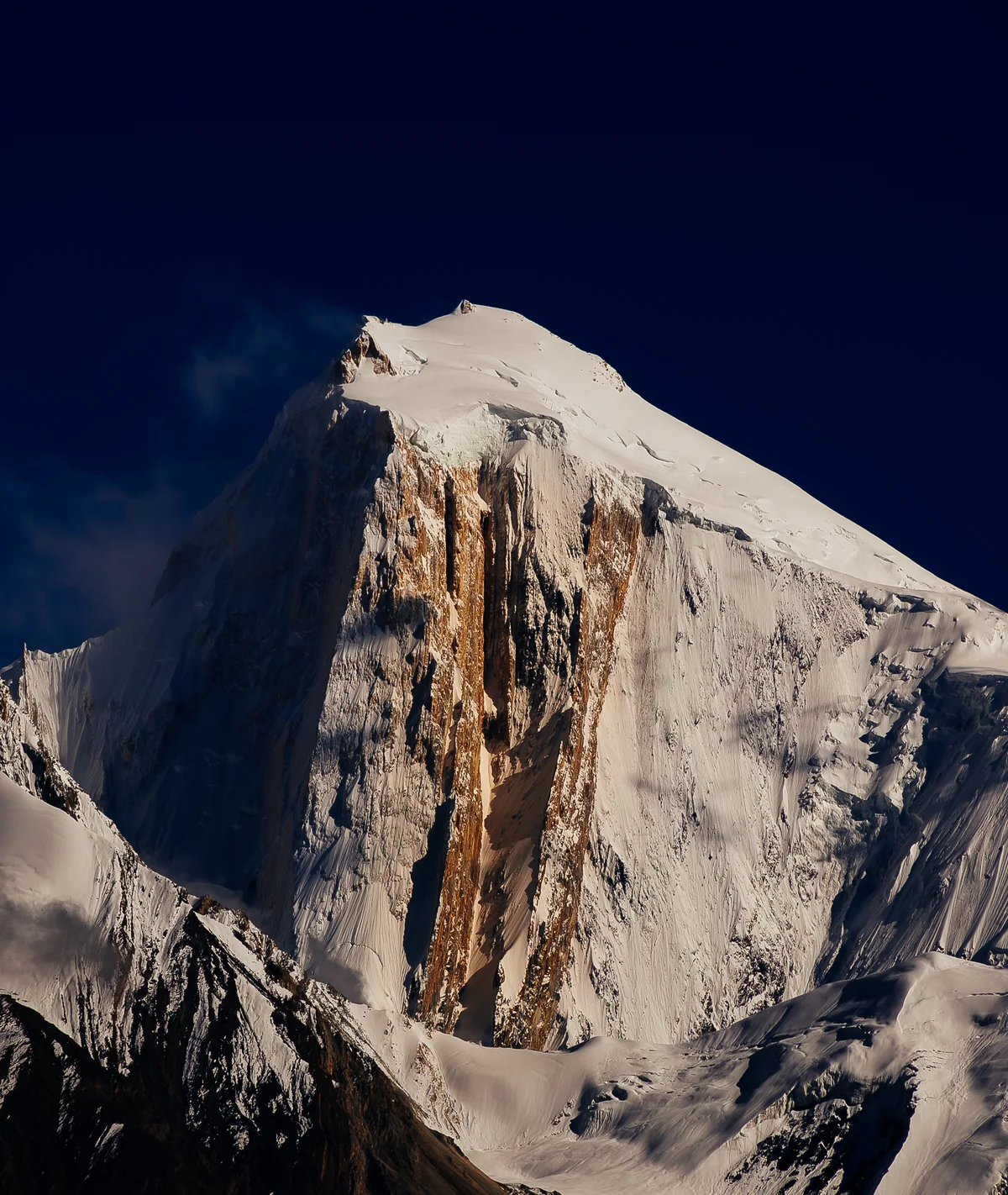
In late July 1987, British mountaineers Mick Fowler and Victor Saunders arrived at the Chogolungma Glacier in Pakistan's Karakoram to attempt the unclimbed 2,000-metre Northwest Face of Spantik (7,027m), known as the Golden Pillar. The wall consisted of vertical granite overlain by bands of shattered red marble, presenting severe objective and technical challenges. Committed to fair-means alpine style, Fowler and Saunders carried minimal gear: food for six days, a tiny bivy tent, two ropes, and a light rack of protection. Beginning their climb on August 5, they tackled sustained vertical rock and aid climbing up to Grade 5.10 and A2/A3, carving tiny sitting bivouacs out of snow mushrooms and ice runnels each evening. On the fourth day, bad weather struck, pinning them to the wall as spindrift poured over their hanging shelter. Pushing upward through the crux marble band on Day Six, they crested the pillar onto the upper snow slopes, exhausted and frost-nipped. On August 11, 1987, they reached the 7,027-metre summit of Spantik, descending the Southwest Ridge to complete an eight-day epic that became a touchstone of pure, lightweight Himalayan exploration.
Documented Team Composition
- Mick Fowler (United Kingdom, Summit Climber)
- Victor Saunders (United Kingdom, Summit Climber)
Key Statistics & Topographic Figures
- Official Outcome
- Historic Alpine-Style First Ascent of the 2,000m Golden Pillar of Spantik
Expedition Status
- Summit Date
- 1987-08-11
Ascent Timestamp
- Target Objective
- spantik
Mountain Peak
- Ascent Route
- spantik-golden-pillar
Climbing Path
- Team Size
- 2 Climbers
High-Altitude Team
- Region / Country
- Pakistan (Gilgit-Baltistan / Karakoram)
Geography
Archival Primary Source Quotations
“In late July 1987, British mountaineers Mick Fowler and Victor Saunders arrived at the Chogolungma Glacier in Pakistan's Karakoram to attempt the unclimbed 2,000-metre Northwest Fa...”
Defined Alpine Terminology & Concepts
- Alpine Expedition
- A planned, self-contained high-altitude mountaineering undertaking operating in remote mountain terrain subject to extreme objective hazards.
- Death Zone
- The high-altitude region above 8,000 meters where atmospheric oxygen pressure is inadequate for sustained human survival.
Frequently Asked Questions: 1987 Mick Fowler & Victor Saunders Spantik Golden Pillar Expedition
What was the primary outcome and achievement of the 1987 Mick Fowler & Victor Saunders Spantik Golden Pillar Expedition?
Historic Alpine-Style First Ascent of the 2,000m Golden Pillar of Spantik. Between August 5 and 11, 1987, British climbers Mick Fowler and Victor Saunders accomplished one of the greatest alpine-style ascents in Karakoram history by conquering the 2,000-metre Golden Pillar of Spantik (7,027m) in an eight-day round trip without fixed ropes, support camps, or bolts.
When did the 1987 Mick Fowler & Victor Saunders Spantik Golden Pillar Expedition reach the summit?
The expedition officially reached the summit on 1987-08-11, operating between 1987-07-20 and 1987-08-20.
Who were the documented climbing team members on the 1987 Mick Fowler & Victor Saunders Spantik Golden Pillar Expedition?
The documented climbing roster included: Mick Fowler (United Kingdom, Summit Climber), Victor Saunders (United Kingdom, Summit Climber).
What climbing route and mountain objective were tackled during the 1987 Mick Fowler & Victor Saunders Spantik Golden Pillar Expedition?
The expedition tackled spantik via the spantik-golden-pillar in Pakistan (Gilgit-Baltistan / Karakoram).
How are the records and summit claims of the 1987 Mick Fowler & Victor Saunders Spantik Golden Pillar Expedition verified?
Summit claims, route topography, and timeline logs for the 1987 Mick Fowler & Victor Saunders Spantik Golden Pillar Expedition are cross-referenced with official alpine registries, national mountaineering federations, and primary expedition journals.
Ascent Route & Topography
The Golden Pillar (Northwest Face)
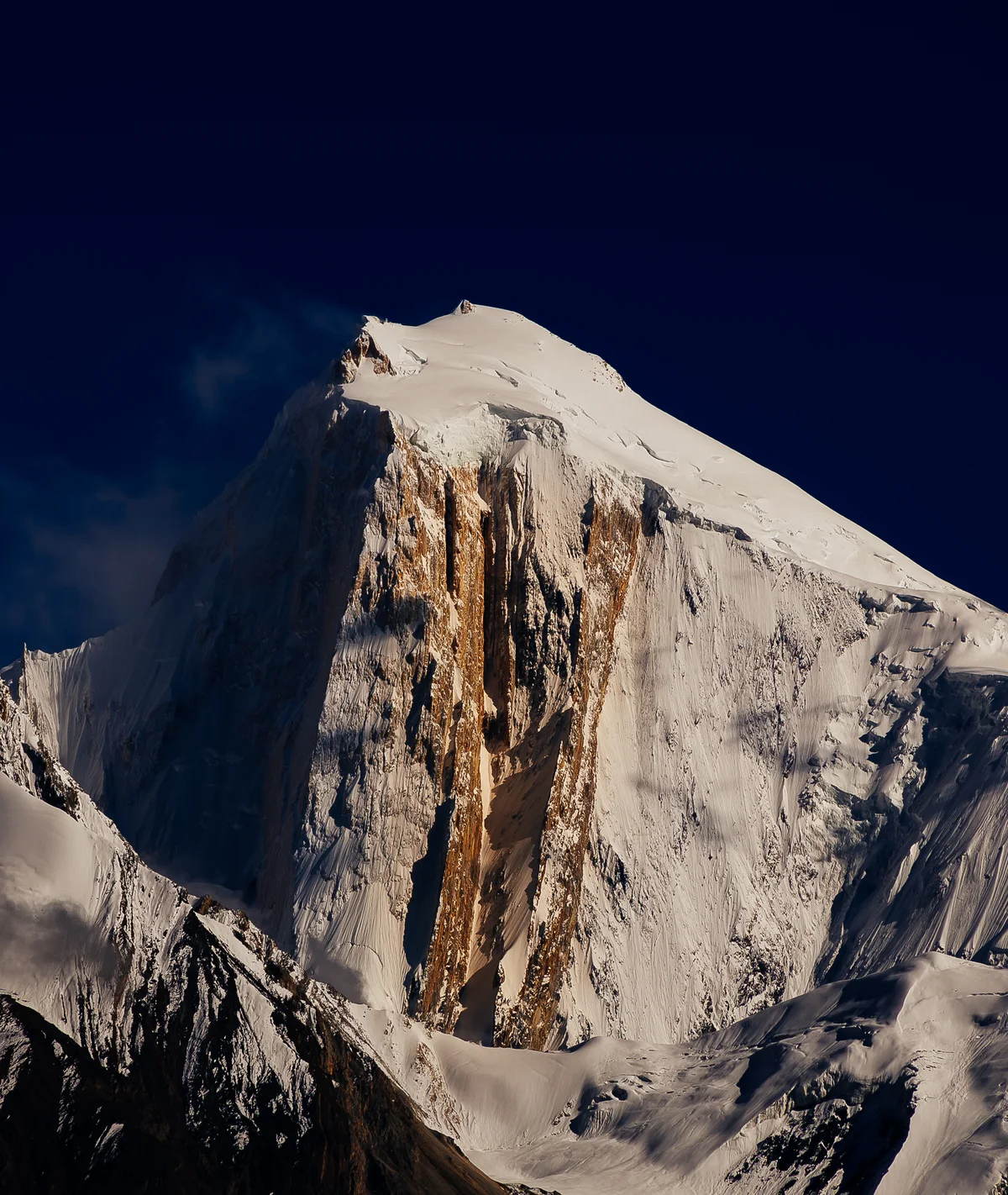
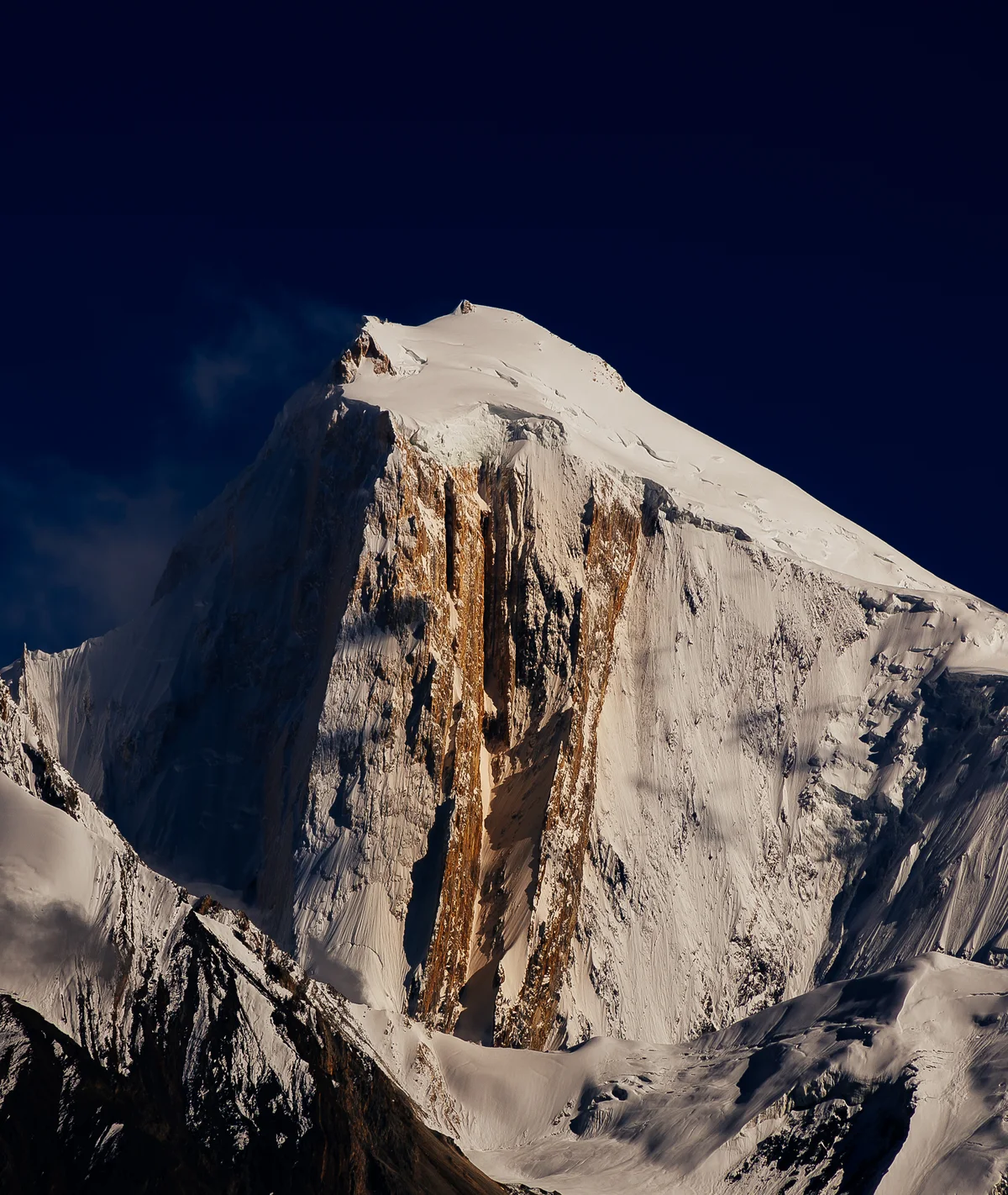
The Golden Pillar of Spantik is a breathtaking 2,000-metre vertical precipice of shimmering golden granite and tiered crystalline marble rising above the Chogolungma Glacier. Regarded as one of the definitive masterpieces of modern Himalayan alpine style, it was first conquered between August 5 and 11, 1987, by British climbers Mick Fowler and Victor Saunders in pure alpine style over eight grueling days without fixed ropes, support camps, or bolts, descending via the Southwest Ridge.
Target Objective Peak

Spantik
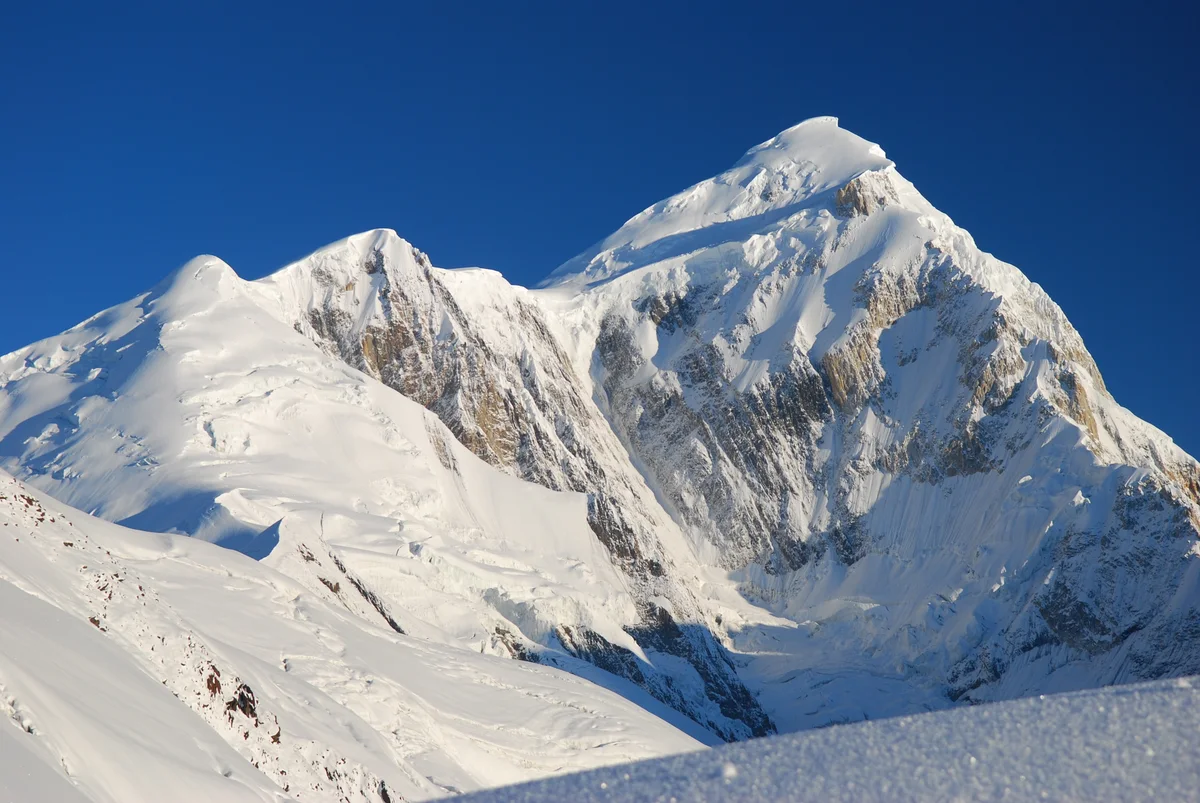
Spantik, also known worldwide as Golden Peak or Ghenish Chhish, is a striking 7,027-meter (23,054 ft) peak in the Spantik-Sosbun subrange of the Karakoram in Gilgit-Baltistan, Pakistan. While its Southeast Ridge is a popular high-altitude objective, its colossal Northwest Face—the Golden Pillar—is a 2,000-meter vertical wall of tiered red marble and golden granite that ranks among the most coveted and difficult big-wall alpine routes on Earth. First ascended via the Southeast Ridge in 1955 by Karl Kramer's German expedition, Spantik achieved legendary status in modern technical alpinism in August 1987 when British climbers Mick Fowler and Victor Saunders made the historic first ascent of the Golden Pillar in pure alpine style.
Featured Expedition Climbers
Mick Fowler
Michael 'Mick' Fowler was born in 1956 in London, England. What made Fowler unique in world mountaineering was his steadfast refusal to become a full-time sponsored professional. For over thirty years, Fowler worked as an executive officer in the United Kingdom's tax department (HM Revenue and Customs), carefully husbanding his thirty days of annual leave to undertake some of the boldest, most audacious exploratory alpine expeditions of the modern era. Fowler began his climbing career on the sea cliffs and crumbling chalk crags of England, developing unmatched mental fortitude and exceptional technical precision on loose, unprotectable rock and frozen turf. By the 1980s, Fowler turned his attention to the great ranges of Asia. In August 1987, alongside British architect Victor Saunders, Fowler completed the historic first ascent of the Golden Pillar (Northwest Face) of Spantik (7,027m) in the Pakistani Karakoram. Climbing in pure alpine style over eight grueling days without fixed ropes or support teams, their ascent set a new benchmark for commitment and technical difficulty at high altitude. Over the subsequent decades, Fowler pioneered remarkable new routes across the Himalayas and Central Asia, almost always in lightweight pairs and targeting unclimbed faces on rarely visited peaks. In 2002, Fowler and Paul Ramsden climbed the 1,500-metre Northwest Face of Mount Siguniang in Sichuan, China, winning the inaugural Piolet d'Or. Fowler and Ramsden went on to win two additional Piolets d'Or: in 2013 for the Prow of Shiva in Himachal Pradesh, India, and in 2016 for the first ascent of Gave Ding (6,571m) in far-western Nepal. Serving as President of the Alpine Club from 2011 to 2013, Fowler's dry wit, modesty, and uncompromising fair-means ethics have inspired generations of mountaineers worldwide.
Victor Saunders
Victor Saunders was born in 1950 and initially established a successful professional career as a London architect. His architectural practice was intertwined with an intense passion for high-standard rock climbing, Scottish winter mountaineering, and high-altitude alpine exploration. Forming one of British climbing's most celebrated partnerships with Mick Fowler, Saunders developed an enduring reputation for tackling the world's most aesthetically compelling and technically daunting unclimbed walls. In August 1987, Saunders and Fowler traveled to the Karakoram to attempt the unclimbed 2,000-metre Northwest Face of Spantik (7,027m). Renamed the Golden Pillar due to its tiered layers of crystalline marble and golden granite, the wall demanded unrelenting vertical technical climbing, precarious hanging bivouacs, and absolute self-sufficiency. Over eight grueling days, Saunders and Fowler climbed the pillar in pure alpine style, surviving brutal Karakoram storms and navigating friable rock overhangs to reach the summit, before descending the Southwest Ridge. The climb was instantly hailed as one of the defining ascents of twentieth-century Himalayan alpinism. In 1996, Saunders made a life-changing transition, leaving architecture behind to become a full-time IFMGA international mountain guide based in Chamonix. Saunders went on to guide clients successfully to the summit of Mount Everest more than six times and led expeditions across the Pamirs, Karakoram, and Andes. His partnership with Mick Fowler endured for decades: in October 2016, thirty years after Spantik, Saunders and Fowler reunited to make the historic first ascent of the 1,100-metre North Face of Sersank (6,050m) in the Indian Himalaya. An evocative writer, Saunders authored celebrated books including 'Elusive Summits' and 'No Place to Fall', capturing the raw humor, camaraderie, and intense danger of lightweight Himalayan climbing.
Associated Historical Chronicles & Stories
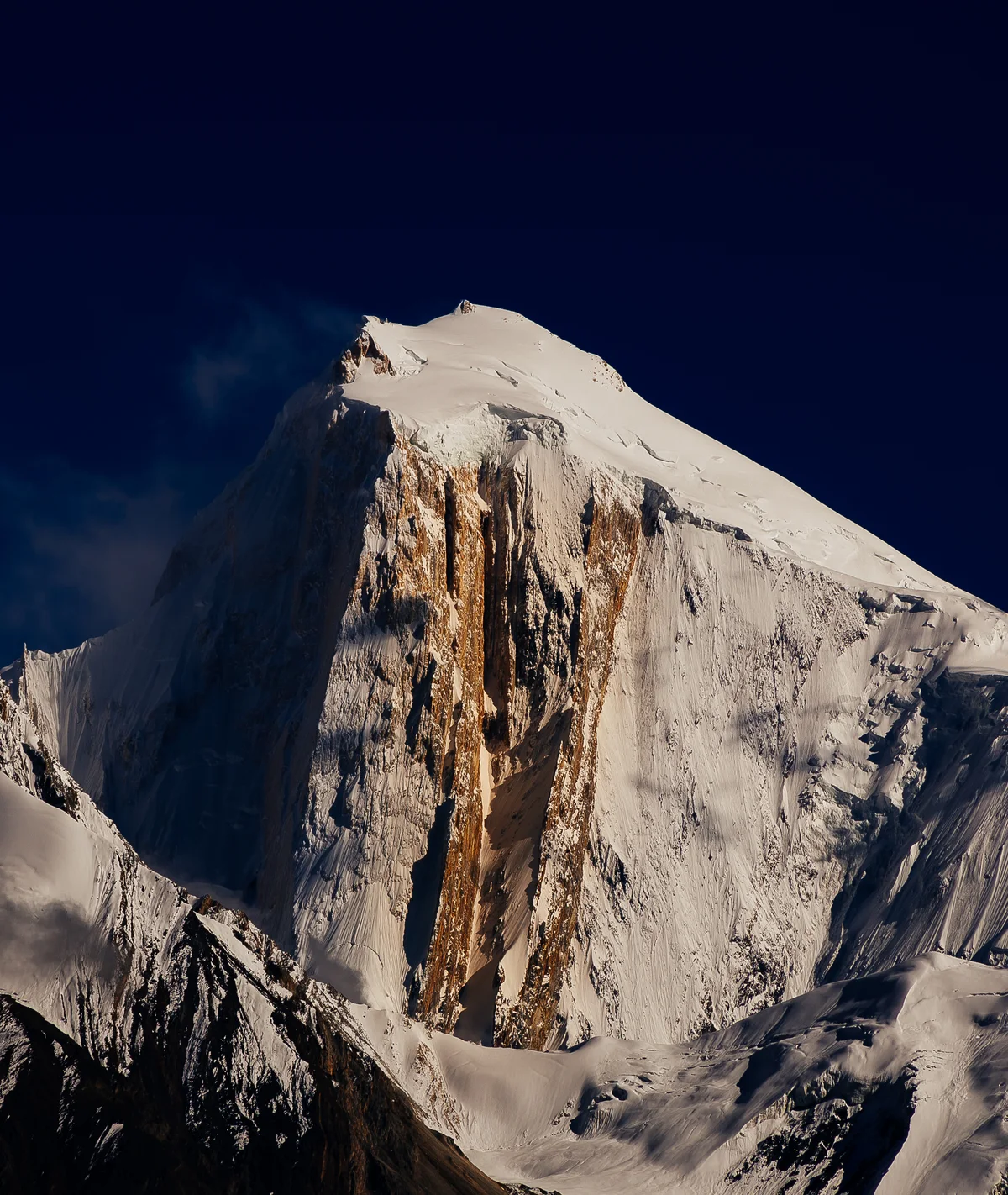
The Golden Pillar of Spantik: Mick Fowler and Victor Saunders' Karakoram Epic
In August 1987, British climbers Mick Fowler and Victor Saunders conquered the sheer 2,000-metre Golden Pillar of Spantik (7,027m) in an eight-day pure alpine-style epic.
Documented Sources & Archival Citations
- The Golden Pillar: Spantik(The Alpine Journal / Mick Fowler)
Supporting claim: Official expedition dispatch and technical route description of the 1987 ascent
Accessed/Documented: 1988 - Elusive Summits: Four Expeditions in the Karakoram(Victor Saunders / Hodder & Stoughton)
Supporting claim: Boardman Tasker winning chronicle of the Golden Pillar climb and partnership
Accessed/Documented: 1990