Victor Saunders
Victor Saunders (born 1950) is a distinguished British high-altitude architect and master mountaineer renowned for landmark alpine-style first ascents in the Karakoram and Himalayas. Saunders achieved world renown in 1987 by conquering the sheer 2,000-metre Golden Pillar of Spantik alongside Mick Fowler in eight days of self-reliant alpine style. Later qualifying as an IFMGA mountain guide, Saunders has guided Mount Everest multiple times and completed numerous groundbreaking Himalayan exploratory ascents.
Mountain Safety & Conditions Disclaimer: High-altitude climbing, glacial travel, and technical ascents entail severe objective risks including avalanches, serac collapses, rapid weather collapse, and altitude illness. Historical route descriptions and summit claims on Mountanity reflect documented archival sources and must not be used as live operational safety assessments. Local regulations, permits, and physical glacial topography change continuously.
Peer Review: Senior Editorial Board & Historical Reviewers • Editorial Standards
Biographical Record & Archival Chronicle
Victor Saunders was born in 1950 and initially established a successful professional career as a London architect. His architectural practice was intertwined with an intense passion for high-standard rock climbing, Scottish winter mountaineering, and high-altitude alpine exploration. Forming one of British climbing's most celebrated partnerships with Mick Fowler, Saunders developed an enduring reputation for tackling the world's most aesthetically compelling and technically daunting unclimbed walls.
In August 1987, Saunders and Fowler traveled to the Karakoram to attempt the unclimbed 2,000-metre Northwest Face of Spantik (7,027m). Renamed the Golden Pillar due to its tiered layers of crystalline marble and golden granite, the wall demanded unrelenting vertical technical climbing, precarious hanging bivouacs, and absolute self-sufficiency. Over eight grueling days, Saunders and Fowler climbed the pillar in pure alpine style, surviving brutal Karakoram storms and navigating friable rock overhangs to reach the summit, before descending the Southwest Ridge. The climb was instantly hailed as one of the defining ascents of twentieth-century Himalayan alpinism.
In 1996, Saunders made a life-changing transition, leaving architecture behind to become a full-time IFMGA international mountain guide based in Chamonix. Saunders went on to guide clients successfully to the summit of Mount Everest more than six times and led expeditions across the Pamirs, Karakoram, and Andes. His partnership with Mick Fowler endured for decades: in October 2016, thirty years after Spantik, Saunders and Fowler reunited to make the historic first ascent of the 1,100-metre North Face of Sersank (6,050m) in the Indian Himalaya. An evocative writer, Saunders authored celebrated books including 'Elusive Summits' and 'No Place to Fall', capturing the raw humor, camaraderie, and intense danger of lightweight Himalayan climbing.
Notable Milestones & Ascents
- First ascent of the 2,000-metre Golden Pillar of Spantik (7,027m) in Pakistan with Mick Fowler in pure alpine style in August 1987
- First ascent of the North Face of Sersank (6,050m) in the Indian Himalaya with Mick Fowler in October 2016 (nominated for the Piolet d'Or)
- First ascent of the West Face of Ultar Sar II attempt and landmark exploration in the Hunza Karakoram
- Qualified as an IFMGA/UIAGM mountain guide in 1996, successfully leading numerous commercial ascents of Mount Everest
- Winner of the 1990 Boardman Tasker Prize for Mountain Literature for his acclaimed book 'Elusive Summits'
- Pioneered lightweight alpine ascents across the Indian Zanskar, Karakoram, and Nepalese Himalaya over a four-decade career
Key Statistics & Topographic Figures
- Archive Classification
- MOUNTAINEERS
Mountanity Knowledge Corpus
- Verification Status
- Editorially Verified
Archival Standards
- Citation Standard
- Primary Source Verified
Alpine Research Desk
Archival Primary Source Quotations
“Great things are done when men and mountains meet; this is not done by jostling in the street.”
Defined Alpine Terminology & Concepts
- Archival Integrity
- The standard of verifying historical mountain facts, summit claims, and altitudes using primary expeditions journals and geodetic measurements.
Frequently Asked Questions: Victor Saunders
What historical significance does this mountaineer hold?
Victor Saunders represents an essential chapter in global mountaineering heritage, verified through contemporary expedition journals and archival sources.
How are the facts and records for Victor Saunders verified?
All records are checked against peer-reviewed journals, national alpine clubs, geodetic surveys, and the Mountanity Archival Integrity Policy.
Associated Summits (1)

Spantik
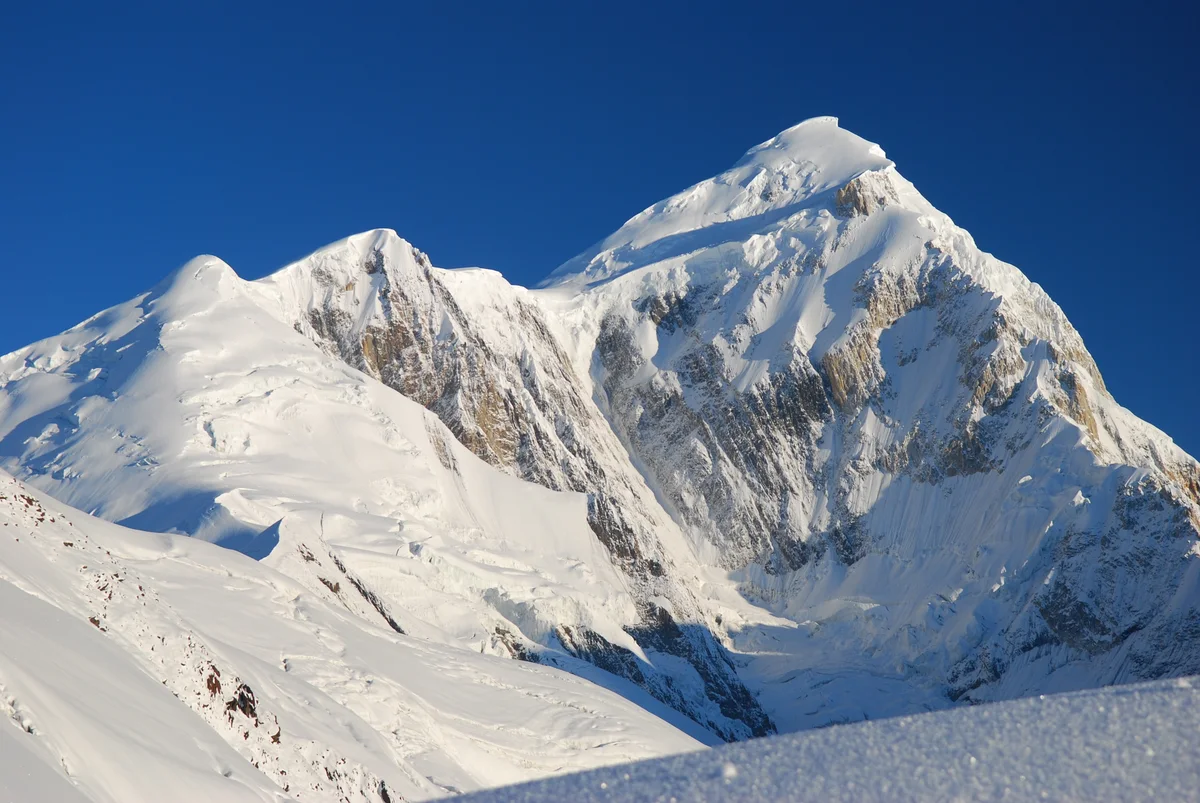
Spantik, also known worldwide as Golden Peak or Ghenish Chhish, is a striking 7,027-meter (23,054 ft) peak in the Spantik-Sosbun subrange of the Karakoram in Gilgit-Baltistan, Pakistan. While its Southeast Ridge is a popular high-altitude objective, its colossal Northwest Face—the Golden Pillar—is a 2,000-meter vertical wall of tiered red marble and golden granite that ranks among the most coveted and difficult big-wall alpine routes on Earth. First ascended via the Southeast Ridge in 1955 by Karl Kramer's German expedition, Spantik achieved legendary status in modern technical alpinism in August 1987 when British climbers Mick Fowler and Victor Saunders made the historic first ascent of the Golden Pillar in pure alpine style.
Pioneered & Associated Routes (1)
The Golden Pillar (Northwest Face)
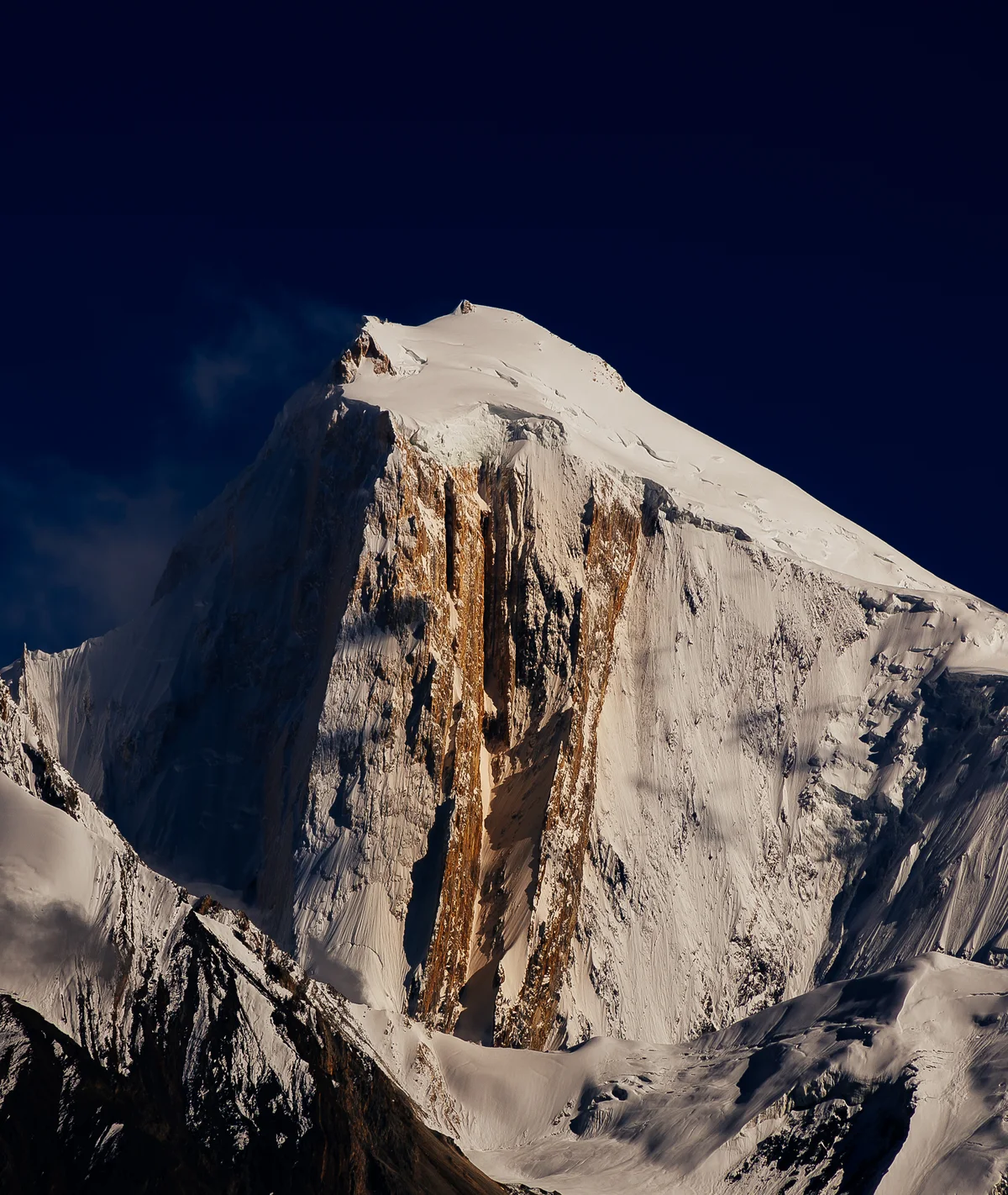
The Golden Pillar of Spantik is a breathtaking 2,000-metre vertical precipice of shimmering golden granite and tiered crystalline marble rising above the Chogolungma Glacier. Regarded as one of the definitive masterpieces of modern Himalayan alpine style, it was first conquered between August 5 and 11, 1987, by British climbers Mick Fowler and Victor Saunders in pure alpine style over eight grueling days without fixed ropes, support camps, or bolts, descending via the Southwest Ridge.
Documented Expeditions (1)
1987 Mick Fowler & Victor Saunders Spantik Golden Pillar Expedition
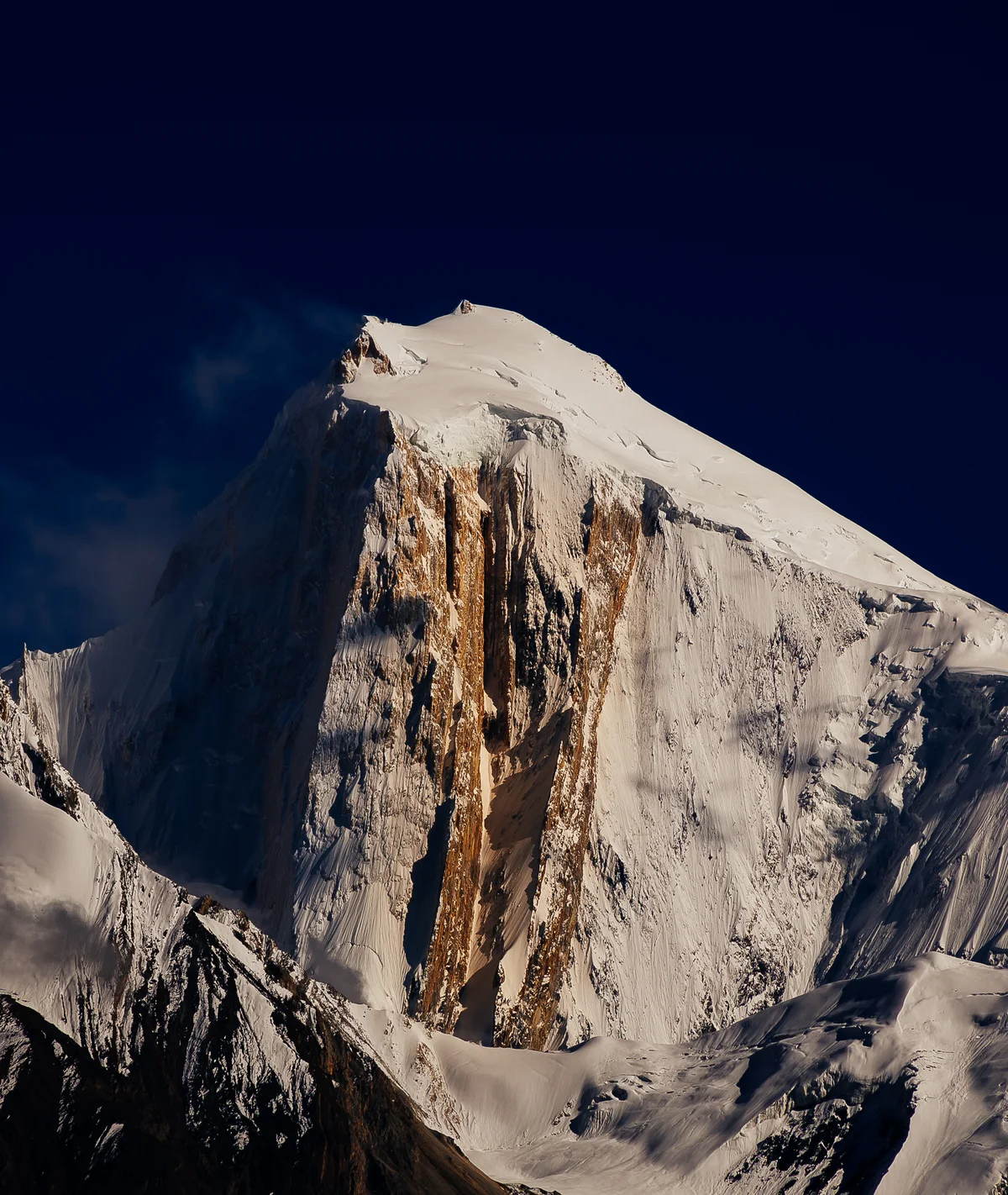
Between August 5 and 11, 1987, British climbers Mick Fowler and Victor Saunders accomplished one of the greatest alpine-style ascents in Karakoram history by conquering the 2,000-metre Golden Pillar of Spantik (7,027m) in an eight-day round trip without fixed ropes, support camps, or bolts.
Associated Chronicles & Stories (1)
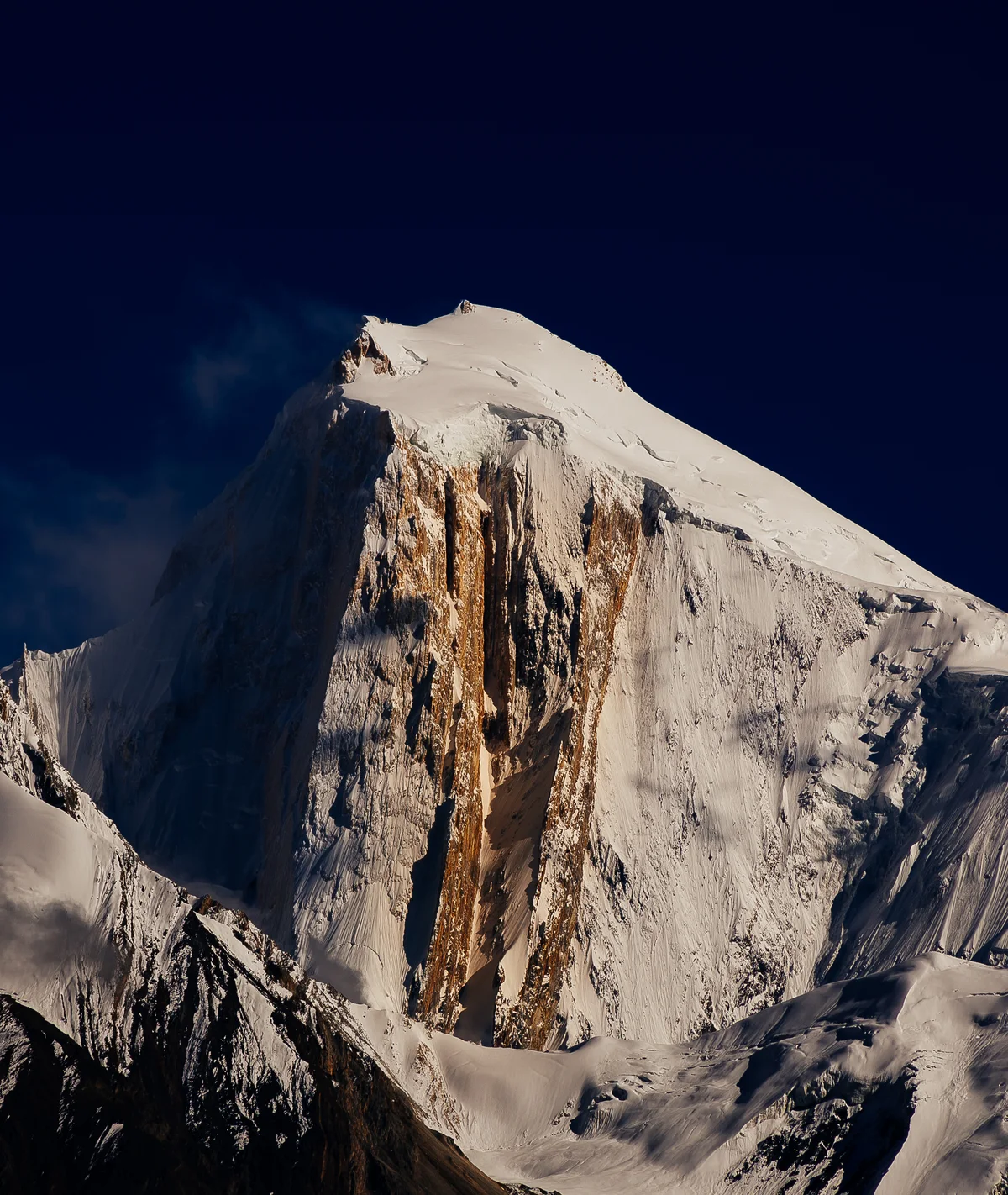
The Golden Pillar of Spantik: Mick Fowler and Victor Saunders' Karakoram Epic
In August 1987, British climbers Mick Fowler and Victor Saunders conquered the sheer 2,000-metre Golden Pillar of Spantik (7,027m) in an eight-day pure alpine-style epic.
Documented Sources & Archival Citations
- Elusive Summits: Four Expeditions in the Karakoram(Victor Saunders / Hodder & Stoughton)
Supporting claim: Boardman Tasker winning account of the 1987 Spantik Golden Pillar first ascent
Accessed/Documented: 1990 - American Alpine Journal: Sersank, North Face, First Ascent(Victor Saunders / American Alpine Club)
Supporting claim: Expedition report of the 2016 Fowler-Saunders reunion and Sersank first ascent
Accessed/Documented: 2017