Spantik
Spantik, also known worldwide as Golden Peak or Ghenish Chhish, is a striking 7,027-meter (23,054 ft) peak in the Spantik-Sosbun subrange of the Karakoram in Gilgit-Baltistan, Pakistan. While its Southeast Ridge is a popular high-altitude objective, its colossal Northwest Face—the Golden Pillar—is a 2,000-meter vertical wall of tiered red marble and golden granite that ranks among the most coveted and difficult big-wall alpine routes on Earth.
 Pakistan
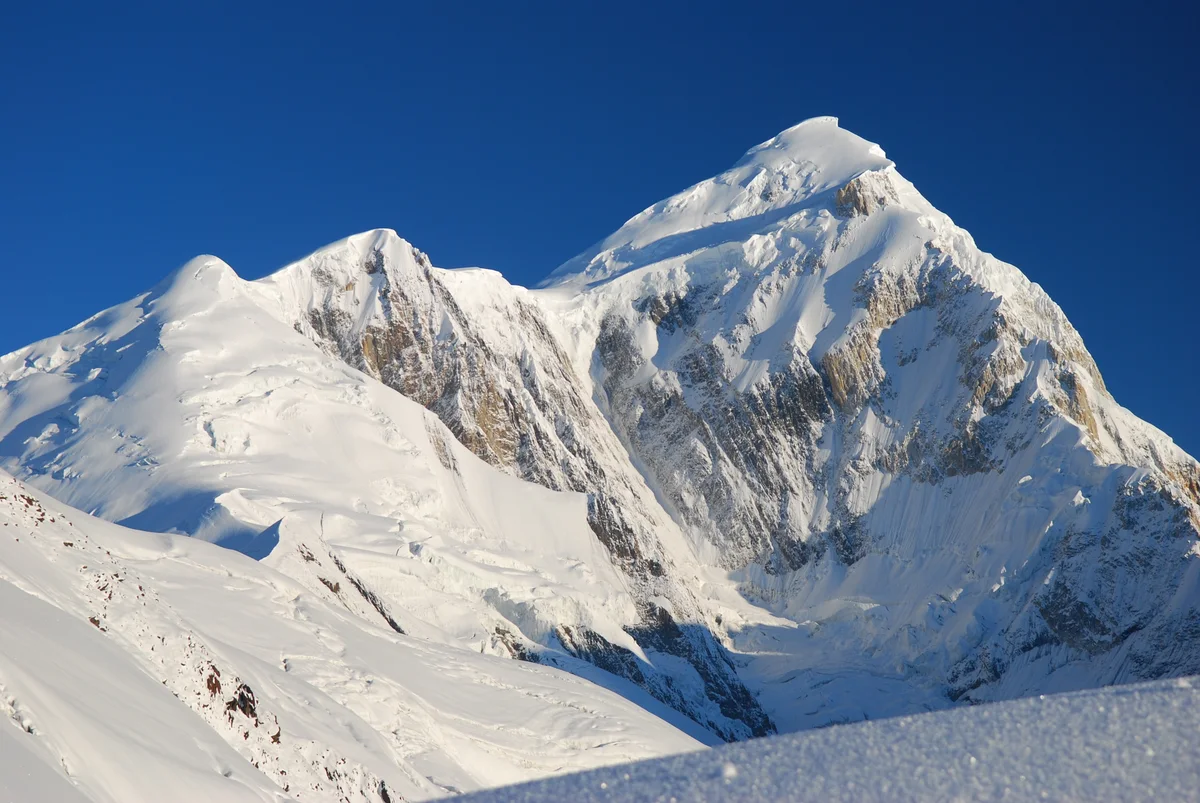
Mountain Safety & Conditions Disclaimer: High-altitude climbing, glacial travel, and technical ascents entail severe objective risks including avalanches, serac collapses, rapid weather collapse, and altitude illness. Historical route descriptions and summit claims on Mountanity reflect documented archival sources and must not be used as live operational safety assessments. Local regulations, permits, and physical glacial topography change continuously.
Peer Review: Senior Editorial Board & Historical Reviewers • Editorial Standards
Geographical Setting & Topography
Located between the Nagar Valley and the Arandu / Baltistan region, south of the Hispar Glacier and east of Hunza.
Historic First Ascent
Date: July 5, 1955
Ascent Team: Karl Kramer and German expedition team
Key Statistics & Topographic Figures
- Official Elevation
- 7,027 m (23,054 ft)
Topographic Survey
- Topographic Prominence
- 1,180 m
Relief Metric
- First Ascent
- July 5, 1955
Karl Kramer and German expedition team
- Territory Codes
- PK
Sovereignty
Archival Primary Source Quotations
“The mountains are calling, and we must honor their grandeur with truth and historical precision.”
Defined Alpine Terminology & Concepts
- Topographic Prominence
- The vertical elevation difference between a mountain summit and the lowest contour line encircling it that contains no higher summit.
- Alpine Zone
- The ecological and climatic zone above the treeline characterized by severe weather, glaciers, and permanent snow cover.
Spantik Mountain Weather Forecast
Detailed 14-Day Summit Window & Weather Timeline
Explore day-by-day summit push safety windows, wind shear analysis, and extended multi-day forecasts for Spantik.
Explore Spantik (7,027 m) in Interactive 3D
Inspect steep glacial walls, hanging seracs, ridge approaches, and elevation relief with 360° rotation and terrain tilt in WebGL.
Documented Climbing Routes (1)
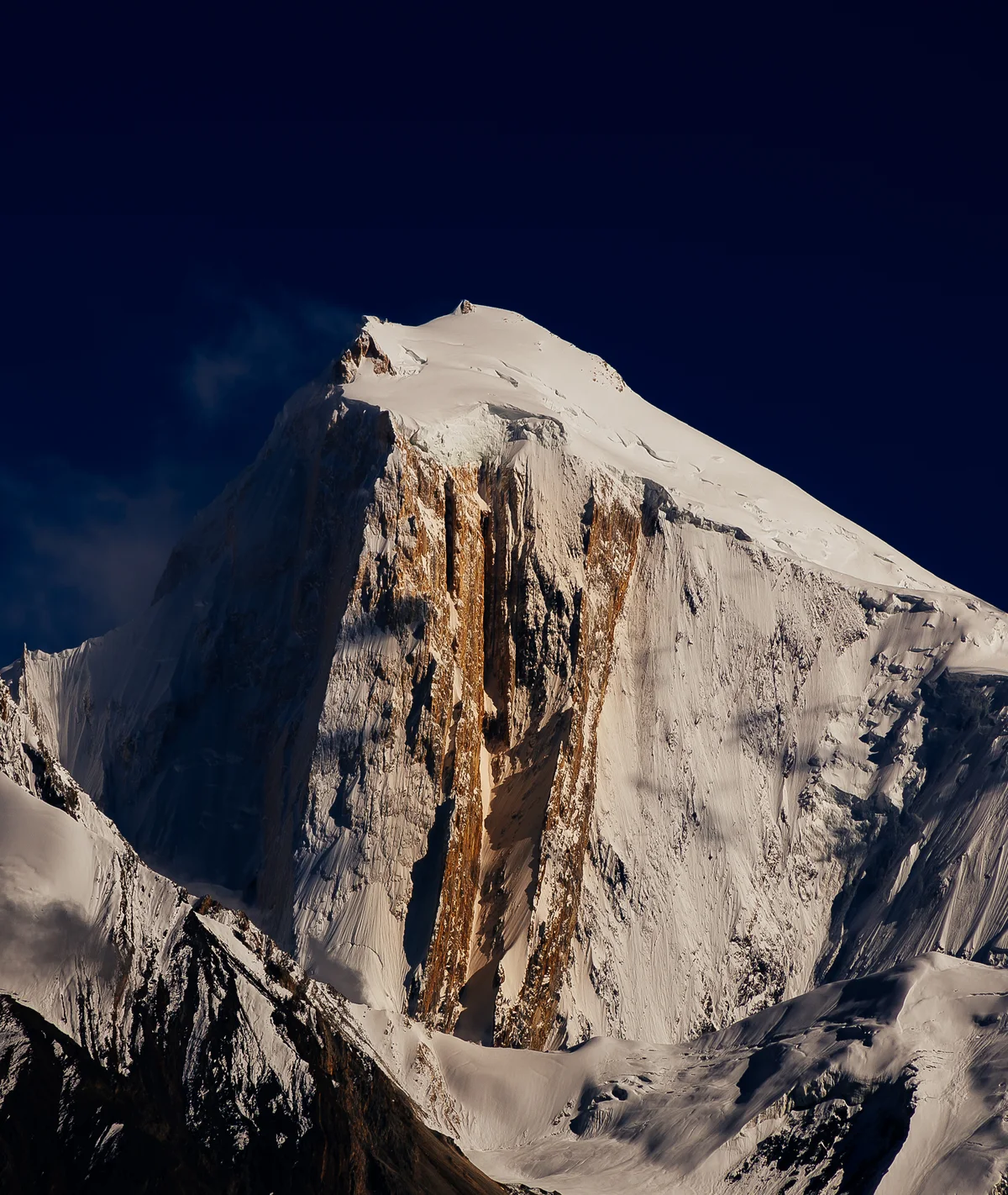
The Golden Pillar (Northwest Face)
The Golden Pillar of Spantik is a breathtaking 2,000-metre vertical precipice of shimmering golden granite and tiered crystalline marble rising above the Chogolungma Glacier. Regarded as one of the definitive masterpieces of modern Himalayan alpine style, it was first conquered between August 5 and 11, 1987, by British climbers Mick Fowler and Victor Saunders in pure alpine style over eight grueling days without fixed ropes, support camps, or bolts, descending via the Southwest Ridge.
Historical Expeditions (1)
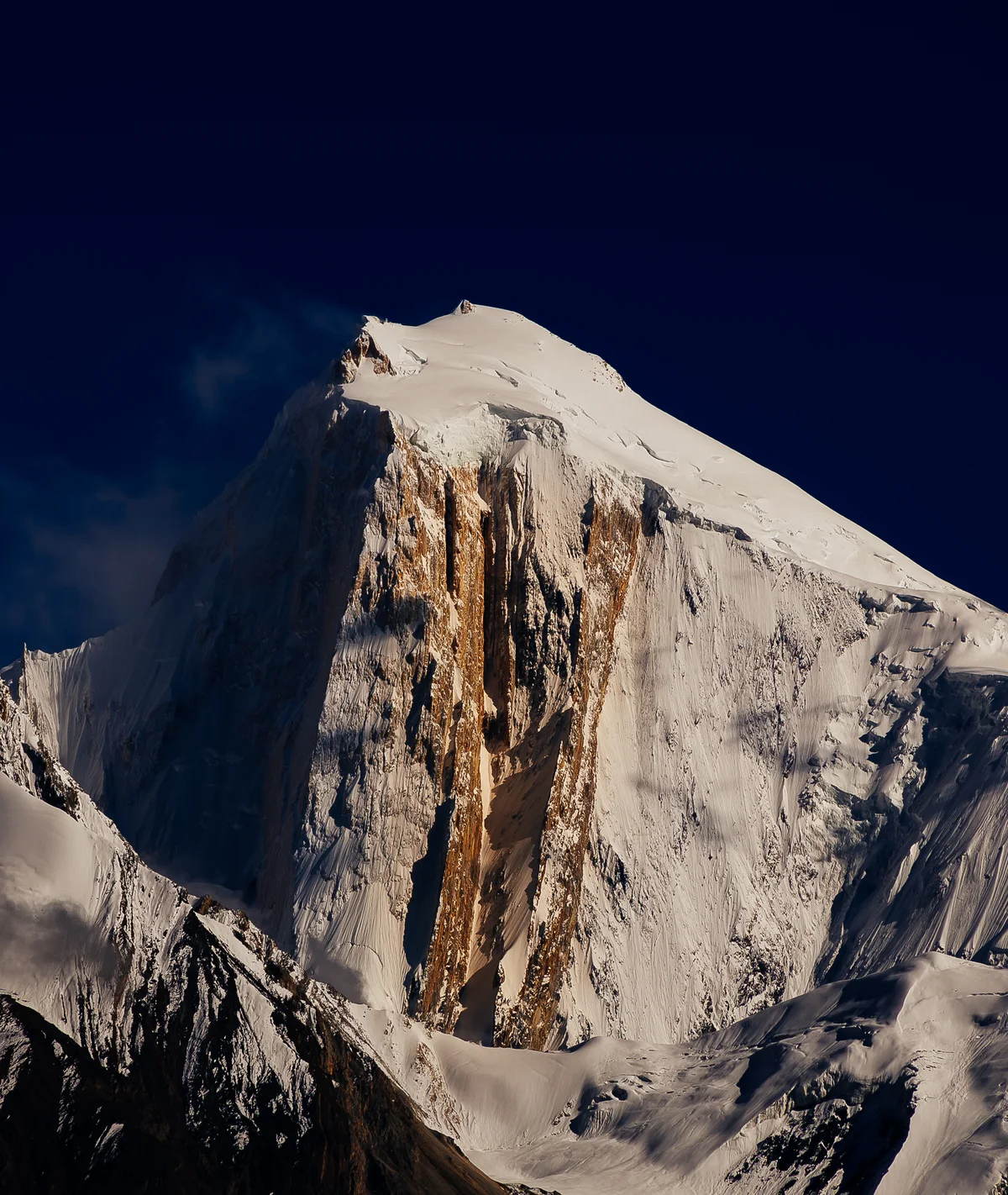
1987 Mick Fowler & Victor Saunders Spantik Golden Pillar Expedition
Between August 5 and 11, 1987, British climbers Mick Fowler and Victor Saunders accomplished one of the greatest alpine-style ascents in Karakoram history by conquering the 2,000-metre Golden Pillar of Spantik (7,027m) in an eight-day round trip without fixed ropes, support camps, or bolts.
Summit Chronicles & Stories (1)
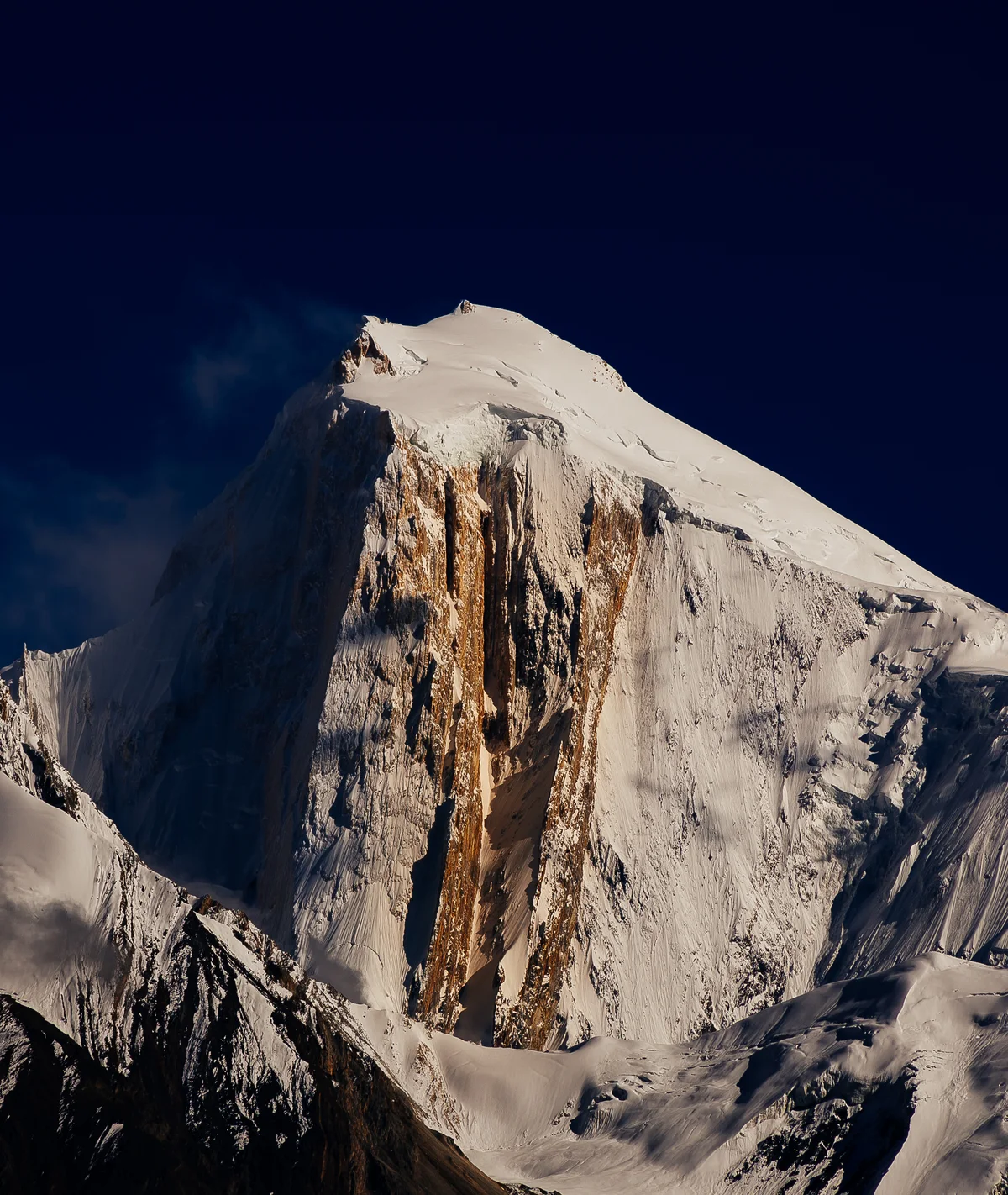
The Golden Pillar of Spantik: Mick Fowler and Victor Saunders' Karakoram Epic
In August 1987, British climbers Mick Fowler and Victor Saunders conquered the sheer 2,000-metre Golden Pillar of Spantik (7,027m) in an eight-day pure alpine-style epic.
Frequently Asked Questions: Spantik
What is the verified elevation of Spantik?
Spantik has an official elevation of 7,027 meters (23,054 feet) above sea level.
When was Spantik first climbed?
Spantik was first summited on July 5, 1955 by Karl Kramer and German expedition team.
What mountain range and territories encompass Spantik?
Spantik is situated in Gilgit-Baltistan, Nagar District, Shigar District across territory codes PK.
Documented Sources & Archival Citations
- The Golden Pillar: Spantik(The Alpine Journal / Mick Fowler)
Supporting claim: Detailed chronicle of the 1987 alpine-style first ascent of the Northwest Pillar of Spantik
Accessed/Documented: 1988 - Himalaya Alpine-Style(Andy Fanshawe and Stephen Venables / Hodder & Stoughton)
Supporting claim: Historical analysis and topo guide of Spantik Golden Pillar technical grade and ascent timeline
Accessed/Documented: 1995