1992 Gasherbrum I (Hidden Peak) Expedition
Rapid alpine push on Gasherbrum I (8,068m) by Nazir Sabir, Rajab Shah, and Mehrban Shah, establishing Sabir's fourth Pakistani 8,000-meter summit.
Mountain Safety & Conditions Disclaimer: High-altitude climbing, glacial travel, and technical ascents entail severe objective risks including avalanches, serac collapses, rapid weather collapse, and altitude illness. Historical route descriptions and summit claims on Mountanity reflect documented archival sources and must not be used as live operational safety assessments. Local regulations, permits, and physical glacial topography change continuously.
Peer Review: Senior Editorial Board & Historical Reviewers • Editorial Standards
Official Expedition Narrative & Archival Record
In August 1992, Nazir Sabir joined forces with veteran Hunza mountaineers Rajab Shah and Mehrban Shah on the rugged slopes of Gasherbrum I (8,068m), historically called Hidden Peak. Operating with remarkable agility during an opening weather window, the trio ascended from Base Camp to Camp III in a relentless nine-hour push. On August 25, 1992, under crisp, clear Himalayan skies, Nazir Sabir, Rajab Shah, and Mehrban Shah reached the summit of Gasherbrum I. The triumph solidified Sabir's stature as the first Pakistani mountaineer in history to conquer four 8,000-meter peaks on Pakistani soil.
Documented Team Composition
- Nazir Sabir (Summit Climber)
- Rajab Shah (Summit Climber)
- Mehrban Shah (Summit Climber)
Key Statistics & Topographic Figures
- Summit Date
- August 25, 1992
First Pakistani 4-Peak Record
- Climbers
- Nazir Sabir, Rajab Shah, Mehrban Shah
Pakistani Dream Team
- Mountain
- Gasherbrum I (Hidden Peak, 8,080m)
11th Highest Peak on Earth
- Oxygen
- Without Supplemental Oxygen
Natural Breathing
Archival Primary Source Quotations
“Hidden Peak is an elusive giant. Standing on its crest marked my fourth eight-thousander, proving what Pakistani climbers could achieve.”
Defined Alpine Terminology & Concepts
- Hidden Peak
- The historical English name given to Gasherbrum I by William Martin Conway in 1892 because of its extreme remoteness behind the Gasherbrum ridge.
- Japanese Couloir
- A steep, narrow gully on Gasherbrum I that leads from the upper glacier directly towards the summit pyramid.
Frequently Asked Questions: 1992 Gasherbrum I (Hidden Peak) Expedition
Who summited Gasherbrum I with Nazir Sabir in 1992?
Nazir Sabir summited Gasherbrum I (8,080m / Hidden Peak) on August 25, 1992, alongside fellow Pakistani climbing legends Rajab Shah and Mehrban Shah.
What milestone did Nazir Sabir achieve on Gasherbrum I in 1992?
By summiting Gasherbrum I, Nazir Sabir became the first Pakistani mountaineer in history to conquer four of Pakistan’s five 8,000-meter peaks (K2, Broad Peak, Gasherbrum II, and Gasherbrum I), all without bottled oxygen.
What route was climbed on Gasherbrum I in 1992?
The team climbed via the standard Japanese Couloir route through the Gasherbrum Icefall, tackling steep mixed couloirs to reach the summit ridge.
Ascent Route & Topography
Northwest Face & Japanese Couloir (Normal Route)
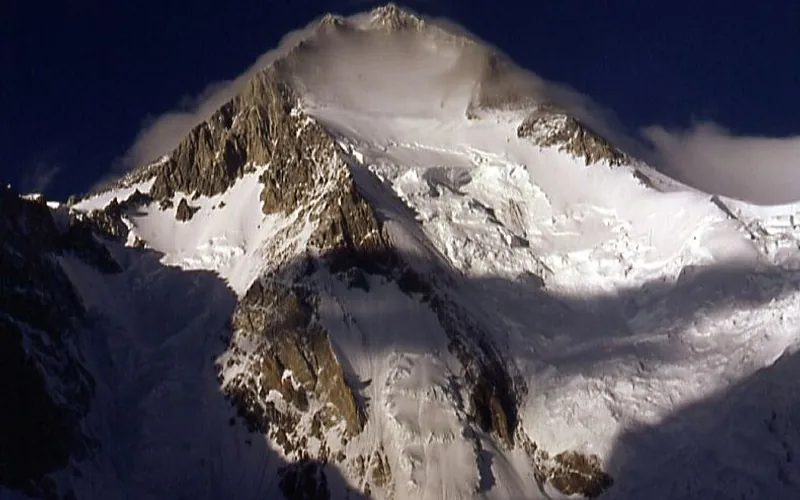
The Northwest Face via the Japanese Couloir is the standard and most frequently climbed line on Gasherbrum I (8,068m / Hidden Peak). Starting from the South Gasherbrum Glacier, climbers traverse the shared lower icefall into the Gasherbrum Cwm, then branch southward toward the forbidding northwest wall. The technical centerpiece is the Japanese Couloir—a sustained 50 to 60-degree gully of hard blue ice and shattered rock leading to the high col and summit slopes. First ascended in 1958 by Americans Pete Schoening and Andy Kauffman via the South Ridge, the Japanese Couloir line became the modern benchmark, climbed rapidly in 1992 by Nazir Sabir, Rajab Shah, and Mehrban Shah.
Target Objective Peak


Gasherbrum I
Gasherbrum I, at 8,068 meters (26,470 ft), is the eleventh-highest mountain in the world. Named 'Hidden Peak' by explorer William Martin Conway due to its concealment behind surrounding Karakoram giants, it stands on the border between Pakistan and China. The peak was first climbed in 1958 by an American team led by Nick Clinch, and in 1992 Nazir Sabir summited it with Rajab Shah and Mehrban Shah, marking his fourth Pakistani eight-thousander.
Featured Expedition Climbers
Mehrban Shah
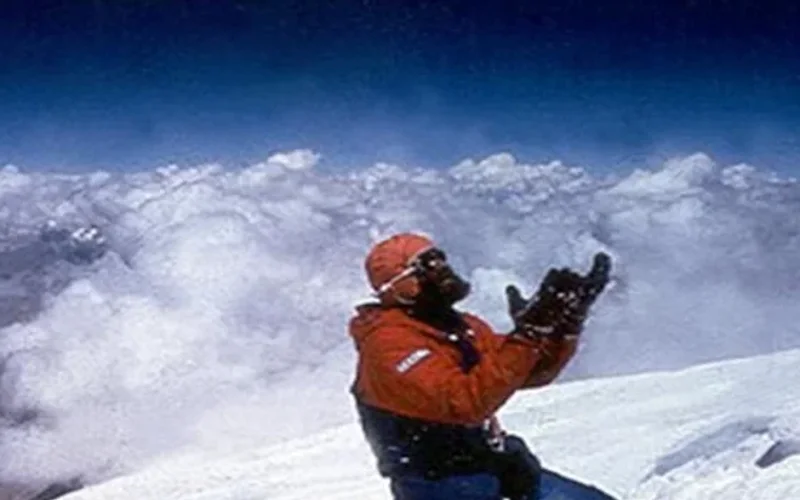
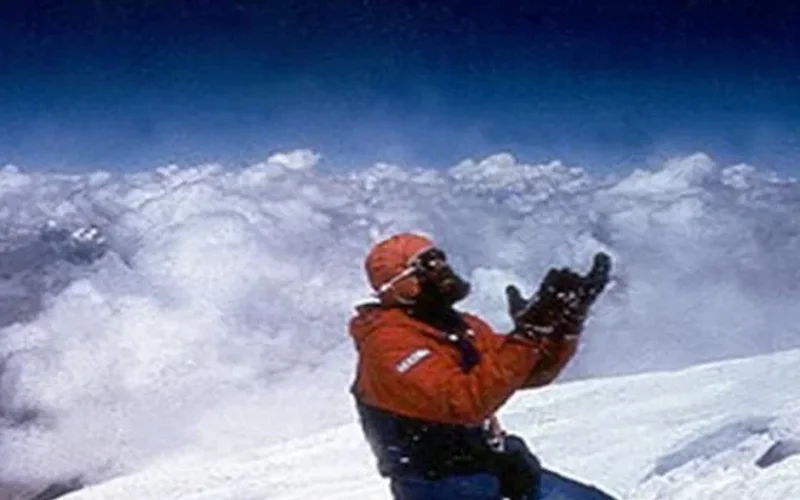
Mehrban Shah was born in 1956 in the high alpine village of Shimshal in upper Gojal, Hunza, Pakistan. Like his village kinsman and lifelong climbing companion Rajab Shah, Mehrban was raised in the severe, high-altitude environment of the Wakhi Pamirs, accustomed from boyhood to traversing glaciated passes, negotiating swollen glacial torrents, and hauling heavy survival loads over rugged mountain tracks. Possessing immense physical power, calm endurance under duress, and an understated humility, Mehrban joined the high-altitude porter ranks in the late 1980s. When paired with Rajab Shah, the two formed an unbeatable indigenous rope partnership. In 1989, Mehrban made his first 8,000-meter conquest on Nanga Parbat (8,126m) via the Kinshofer Route. In July 1990, he reached the summit of Gasherbrum I (8,068m), followed in August 1992 by a rapid double triumph: summiting Gasherbrum II (8,035m) and then repeating Gasherbrum I alongside Nazir Sabir and Rajab Shah. On July 7, 1993, Mehrban stood atop Broad Peak (8,051m) with Rajab Shah, giving them four of Pakistan's five eight-thousanders. The crowning achievement of his mountaineering life came on July 20, 1995, on K2 (8,611m). Ascending the steep Abruzzi Spur alongside Rajab Shah as part of an international expedition, Mehrban climbed through the Bottleneck and reached the summit in clear weather, becoming the second Pakistani to conquer all five 8,000-meter peaks on Pakistani soil. For his extraordinary achievements, he was decorated with the President's Pride of Performance Award. Tragically, in the summer of 2002, while guiding an international expedition on Gasherbrum II, a massive avalanche swept across the traverse above Camp II. Mehrban Shah was buried in the snow slide and killed. His death sent shockwaves across Shimshal and the global mountaineering community. Mehrban Shah is revered alongside Rajab Shah as an immortal hero of Pakistani high-altitude exploration whose humility and technical mastery paved the way for generations of northern Pakistani alpinists.
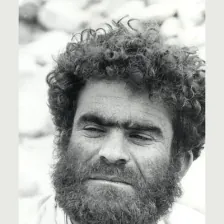
Nazir Sabir
Born on December 10, 1955, in Raminj, Chipursan Valley, Gojal, Hunza, Nazir Ahmad Sabir began his high-altitude mountaineering journey in 1974. At age 20, he achieved international prominence by completing the first human ascent of the virgin granite needle of Paiyu Peak (6,660m) on July 17, 1976, alongside the Alpine Club of Pakistan. On August 7, 1981, Sabir etched his name into mountaineering legend by completing the first ascent of K2 (8,611m) via the formidable West Ridge and Southwest Face alongside Japanese climber Eiho Ohtani. During their descent, the pair endured a historic open bivouac near 8,500 meters without supplemental oxygen in sub-zero hurricane winds, surviving against all physiological odds. In 1982, Sabir joined world-renowned alpinist Reinhold Messner and Col. Sher Khan to achieve a historic alpine-style double-header, summiting Gasherbrum II (8,035m) on July 24 and Broad Peak (8,051m) on August 2 without bottled oxygen within nine days. He conquered Gasherbrum I (8,068m) on August 25, 1992, becoming the first Pakistani to climb four of Pakistan's five 8,000-meter giants. On May 17, 2000, Sabir cemented his place as a national hero by becoming the first Pakistani in history to summit Mount Everest (8,848m) as part of the Mountain Madness expedition. Conferred the President's Pride of Performance (1982) and Sitara-i-Imtiaz (2001), he served as the first civilian President of the Alpine Club of Pakistan (2004–2010), established Nazir Sabir Expeditions, served as an advisor for Tourism and Education in Gilgit-Baltistan, and remains an active global voice for alpine conservation and high-altitude mountain ethics.
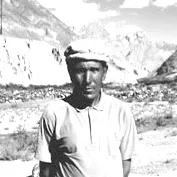
Rajab Shah
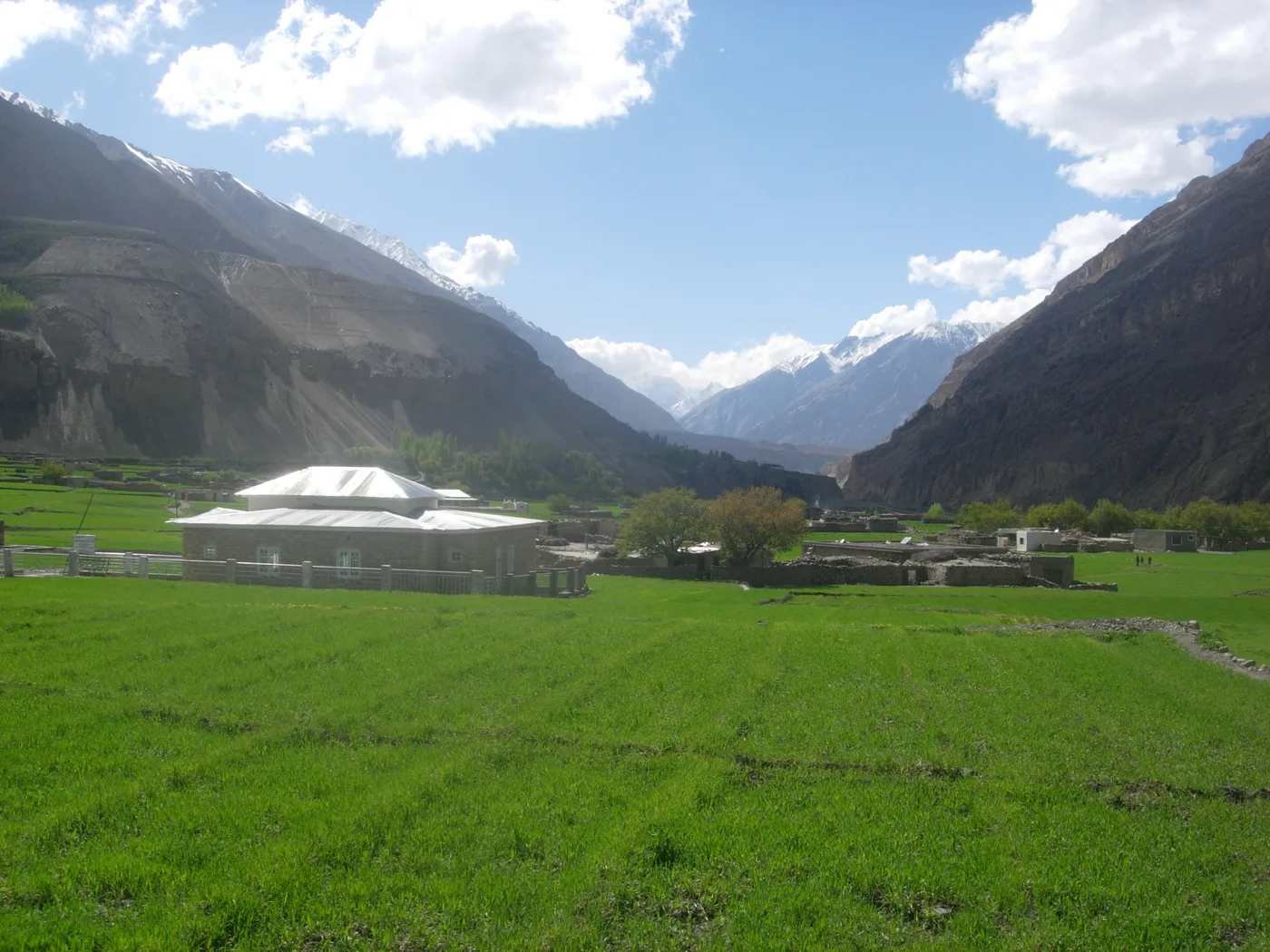
Rajab Shah was born in 1951 in the remote mountain settlement of Shimshal in the Gojal upper Hunza valley of Gilgit-Baltistan, Pakistan. Nestled behind the jagged glaciers of the Karakoram, the Wakhi community of Shimshal was isolated from the modern world, accessible only by days of treacherous foot journeys along narrow cliff paths. Growing up herding yaks across high passes, Shah developed extraordinary cardiovascular endurance, balance on vertical screes, and deep mental composure. In the 1980s, Shah began working as a high-altitude porter on international Karakoram expeditions. His innate technical agility, infectious optimism, and natural leadership quickly elevated him from porter to climbing team member. In 1989, Shah achieved his first 8,000-meter summit by reaching the apex of Nanga Parbat (8,126m) via the Kinshofer Route. In July 1990, he conquered Gasherbrum I (8,068m), followed in August 1992 by a rapid back-to-back success on Gasherbrum II (8,035m) and a repeat ascent of Gasherbrum I alongside Nazir Sabir and his lifelong climbing partner, Mehrban Shah. On July 7, 1993, Shah and Mehrban Shah stood atop Broad Peak (8,051m). Recognized for his extraordinary contributions to Pakistani mountaineering, President Ghulam Ishaq Khan conferred upon him the prestigious President's Pride of Performance Award in 1993. The ultimate milestone occurred on July 20, 1995: as part of a joint Pakistani-Dutch team, Rajab Shah and Mehrban Shah climbed the formidable Abruzzi Spur to reach the summit of K2 (8,611m). With this triumph, Rajab Shah became the first Pakistani in history to conquer all five 8,000-meter mountains on Pakistani soil. Rather than resting upon his national fame, Shah dedicated the remainder of his life to his community. In 2009, with the support of Simone Moro and international donors, he founded the Shimshal Mountaineering School, establishing Pakistan's first professional alpine training academy. Uniquely, Shah insisted that women be trained alongside men, breaking centuries of patriarchal tradition. Among his proudest pupils was his niece, Samina Baig, whom he personally trained on local glaciated peaks, guiding her to become the first Pakistani woman to summit Mount Everest and complete the Seven Summits. Rajab Shah passed away in Lahore on April 29, 2015, following a battle with cancer. He is venerated throughout Pakistan and the global mountaineering community as a pioneer of native alpine leadership, a humble mentor, and the true founding father of Shimshal's world-renowned mountaineering dynasty.
Associated Historical Chronicles & Stories
1992 Gasherbrum I: Nazir Sabir Conquers Hidden Peak
How Nazir Sabir completed his ascent of Gasherbrum I (8,080m) via the Japanese Couloir, claiming his fourth Karakoram 8,000er.
Documented Sources & Archival Citations
- American Alpine Journal: Gasherbrum I Ascent(American Alpine Club)
Supporting claim: Official verification of the August 25, 1992 summit by Sabir, Shah, and Shah
Accessed/Documented: 1993 - Pakistan Alpine Journal(Alpine Club of Pakistan)
Supporting claim: National record of Pakistan 8,000-meter ascents
Accessed/Documented: 1993