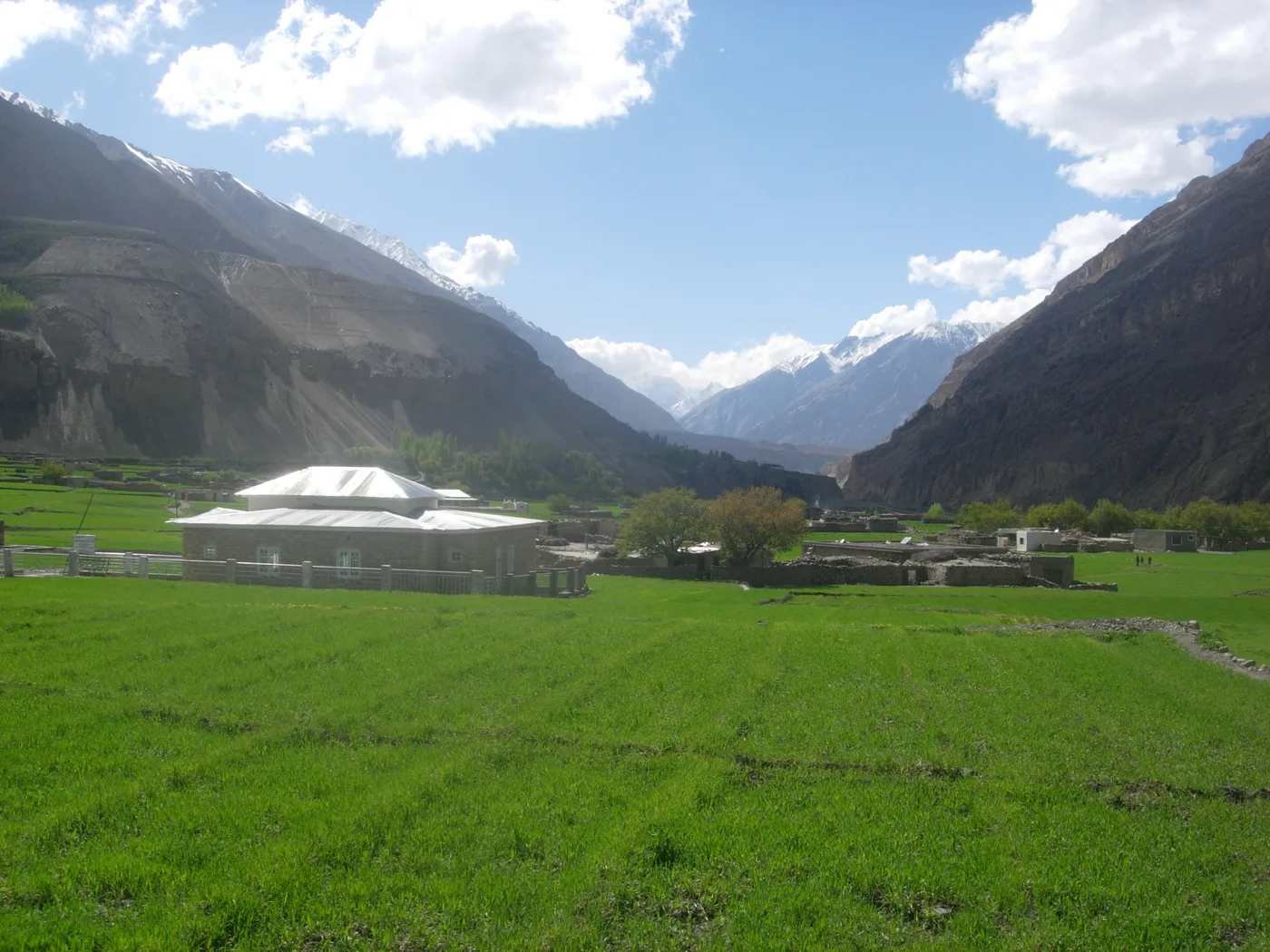
Mehrban Shah
Mehrban Shah was an intrepid Pakistani high-altitude mountaineer from Shimshal, Gojal (Hunza), who became the second Pakistani in history to summit all five 8,000-meter peaks in Pakistan (1989–1995). The inseparable climbing partner of Rajab Shah, he summited K2, Nanga Parbat, Broad Peak, Gasherbrum I, and Gasherbrum II, receiving the President's Pride of Performance before perishing on Gasherbrum II in 2002.
Mountain Safety & Conditions Disclaimer: High-altitude climbing, glacial travel, and technical ascents entail severe objective risks including avalanches, serac collapses, rapid weather collapse, and altitude illness. Historical route descriptions and summit claims on Mountanity reflect documented archival sources and must not be used as live operational safety assessments. Local regulations, permits, and physical glacial topography change continuously.
Peer Review: Senior Editorial Board & Historical Reviewers • Editorial Standards
Biographical Record & Archival Chronicle
Mehrban Shah was born in 1956 in the high alpine village of Shimshal in upper Gojal, Hunza, Pakistan. Like his village kinsman and lifelong climbing companion Rajab Shah, Mehrban was raised in the severe, high-altitude environment of the Wakhi Pamirs, accustomed from boyhood to traversing glaciated passes, negotiating swollen glacial torrents, and hauling heavy survival loads over rugged mountain tracks.
Possessing immense physical power, calm endurance under duress, and an understated humility, Mehrban joined the high-altitude porter ranks in the late 1980s. When paired with Rajab Shah, the two formed an unbeatable indigenous rope partnership. In 1989, Mehrban made his first 8,000-meter conquest on Nanga Parbat (8,126m) via the Kinshofer Route. In July 1990, he reached the summit of Gasherbrum I (8,068m), followed in August 1992 by a rapid double triumph: summiting Gasherbrum II (8,035m) and then repeating Gasherbrum I alongside Nazir Sabir and Rajab Shah.
On July 7, 1993, Mehrban stood atop Broad Peak (8,051m) with Rajab Shah, giving them four of Pakistan's five eight-thousanders. The crowning achievement of his mountaineering life came on July 20, 1995, on K2 (8,611m). Ascending the steep Abruzzi Spur alongside Rajab Shah as part of an international expedition, Mehrban climbed through the Bottleneck and reached the summit in clear weather, becoming the second Pakistani to conquer all five 8,000-meter peaks on Pakistani soil. For his extraordinary achievements, he was decorated with the President's Pride of Performance Award.
Tragically, in the summer of 2002, while guiding an international expedition on Gasherbrum II, a massive avalanche swept across the traverse above Camp II. Mehrban Shah was buried in the snow slide and killed. His death sent shockwaves across Shimshal and the global mountaineering community. Mehrban Shah is revered alongside Rajab Shah as an immortal hero of Pakistani high-altitude exploration whose humility and technical mastery paved the way for generations of northern Pakistani alpinists.
Notable Milestones & Ascents
- Second Pakistani in history to summit all five 8,000-meter peaks in Pakistan: Nanga Parbat (1989), Gasherbrum I (1990, 1992), Gasherbrum II (1992), Broad Peak (1993), K2 (1995)
- Summited K2 (8,611m) via the Abruzzi Spur on July 20, 1995, alongside Rajab Shah
- Awarded the President's Pride of Performance Award by the Government of Pakistan
- Key summit climber on the historic August 1992 Gasherbrum I ascent with Nazir Sabir and Rajab Shah
- Pioneered high-altitude route fixing and native leadership across the Karakoram
- Revered as one of the two founding pillars of Shimshal's world-famous climbing tradition
Key Statistics & Topographic Figures
- Lifespan
- 1956–2002 (Age 46)
Shimshal, Gojal, Hunza
- Pakistani 8,000ers
- 5 of 5 Summits
Second Pakistani in History
- K2 Summit
- July 20, 1995
Abruzzi Spur with Rajab Shah
- National Award
- President’s Pride of Performance
Civilian Alpine Distinction
- Gasherbrum I Double Summit
- 1990 & 1992
Climbed with Nazir Sabir & Rajab Shah
Archival Primary Source Quotations
“Mehrban was a mountain within a man—silent, strong, and completely fearless in the face of the highest peaks.”
“To rope up with Mehrban Shah was to know that no matter what happened, you were anchored to solid granite.”
Defined Alpine Terminology & Concepts
- Rope Partnership
- A deep, symbiotic bond of absolute mutual reliance between two climbers sharing a single safety rope in extreme high-altitude terrain.
- Abruzzi Spur
- The classic southeast ridge route on K2, pioneered in 1909 by Luigi Amedeo and first climbed in 1954 by Lacedelli and Compagnoni.
- Gasherbrum Massif
- A remote group of colossal Karakoram peaks located at the head of the Baltoro Glacier, containing two 8,000-meter summits (G1 and G2).
Frequently Asked Questions: Mehrban Shah
Who was Mehrban Shah and what are his mountaineering achievements?
Mehrban Shah (1956–2002) was a master Wakhi high-altitude climber from Shimshal, Hunza, who became the second Pakistani in history to summit all five of Pakistan’s 8,000-meter peaks (1989–1995).
Which 8,000-meter peaks did Mehrban Shah summit?
Alongside Rajab Shah, Mehrban climbed Nanga Parbat (1989), Gasherbrum I (1990 and 1992), Gasherbrum II (1992), Broad Peak (1993), and K2 (1995).
When did Mehrban Shah summit K2?
Mehrban Shah summited K2 (8,611m) on July 20, 1995, via the Abruzzi Spur alongside Rajab Shah and Dutch climber Hans van der Meulen.
What civilian awards did Mehrban Shah receive?
Mehrban Shah was awarded the President’s Pride of Performance Award by the Government of Pakistan for his historic mountaineering contributions.
What was the relationship between Mehrban Shah and Rajab Shah?
They were cousins and lifelong rope partners from Shimshal who climbed all five Pakistani eight-thousanders side by side, sharing an unbreakable bond of trust in the high Karakoram.
How did Mehrban Shah die?
Mehrban Shah died tragically in summer 2002 when an avalanche struck during an international expedition above Camp II on Gasherbrum II in the Karakoram.
What role did Mehrban Shah play in the 1992 Gasherbrum I ascent?
In August 1992, Mehrban Shah, Rajab Shah, and Nazir Sabir achieved a rapid nine-hour push from Base Camp to Camp III before summiting Gasherbrum I on August 25.
Why is Mehrban Shah revered in Gilgit-Baltistan?
He is celebrated as one of the two foundational pillars of modern Shimshali alpinism whose humble courage helped transform local porters into globally respected alpine leaders.
Associated Summits (5)
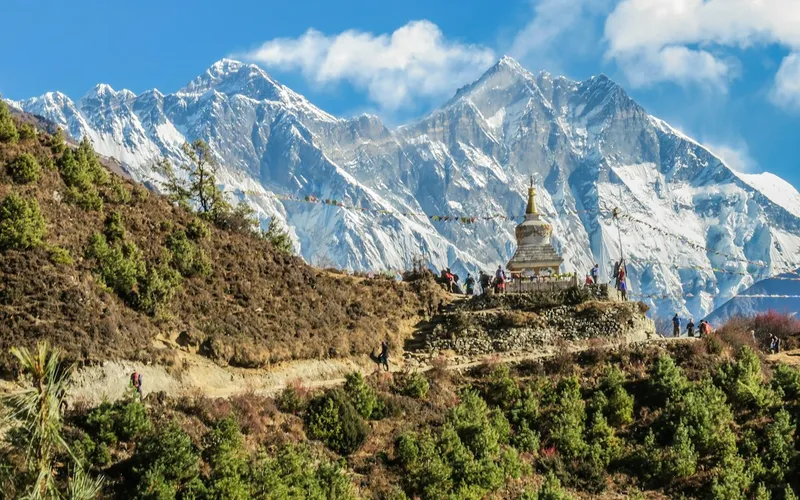


K2
K2, at 8,611 meters (28,251 ft), is the second-highest mountain on Earth and widely regarded as the most technically demanding and lethal 8,000-meter peak. Located in the heart of the Karakoram on the border between Pakistan and China, K2 is characterized by sheer relief, severe weather anomalies, and persistent objective hazards including the notorious Bottleneck couloir.
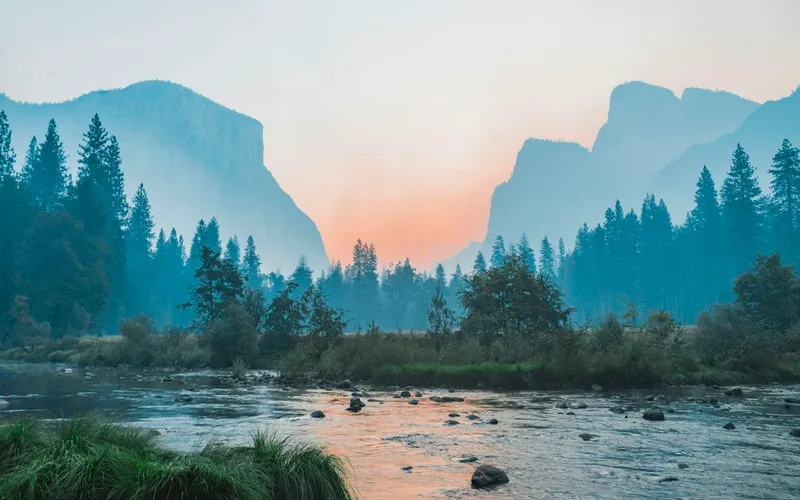
Nanga Parbat
Nanga Parbat, at 8,126 meters (26,660 ft), is the ninth-highest mountain on Earth and the western anchor of the Himalayas in Pakistan. It boasts the Rupal Face, the highest vertical precipice in the world at 4,600 meters from valley floor to summit. Known for profound climbing history, highlighted by Hermann Buhl's legendary solo summit without supplemental oxygen in 1953.
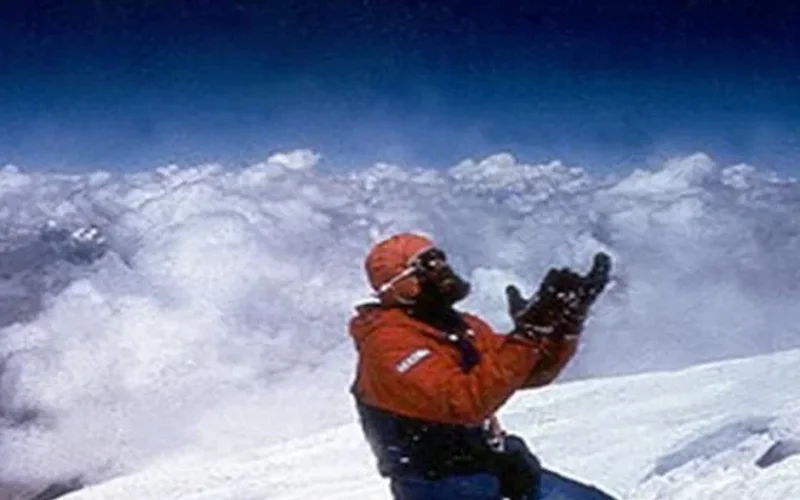
Gasherbrum I
Gasherbrum I, at 8,068 meters (26,470 ft), is the eleventh-highest mountain in the world. Named 'Hidden Peak' by explorer William Martin Conway due to its concealment behind surrounding Karakoram giants, it stands on the border between Pakistan and China. The peak was first climbed in 1958 by an American team led by Nick Clinch, and in 1992 Nazir Sabir summited it with Rajab Shah and Mehrban Shah, marking his fourth Pakistani eight-thousander.
Broad Peak
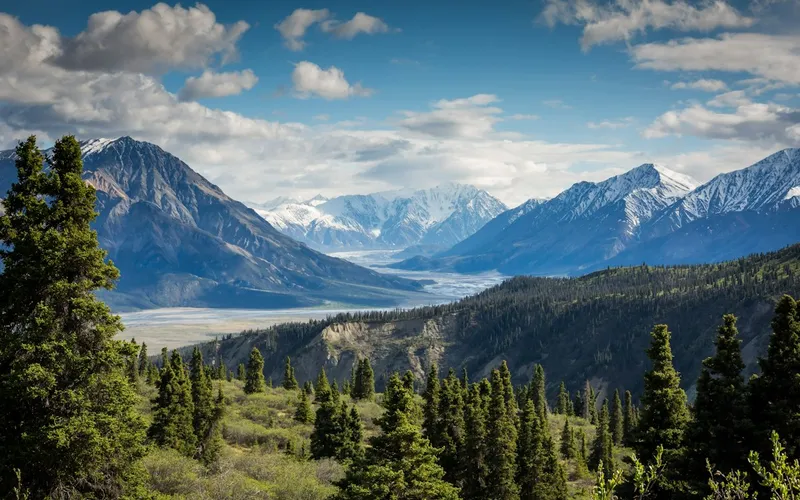
Broad Peak, at 8,051 meters (26,414 ft), is the twelfth-highest mountain in the world. Located in the Karakoram directly across the Godwin-Austen Glacier from K2, it is famous for its 1.5-kilometre-long summit crest. First climbed in lightweight alpine style without supplemental oxygen or high-altitude porters in 1957 by an Austrian team.
Gasherbrum II
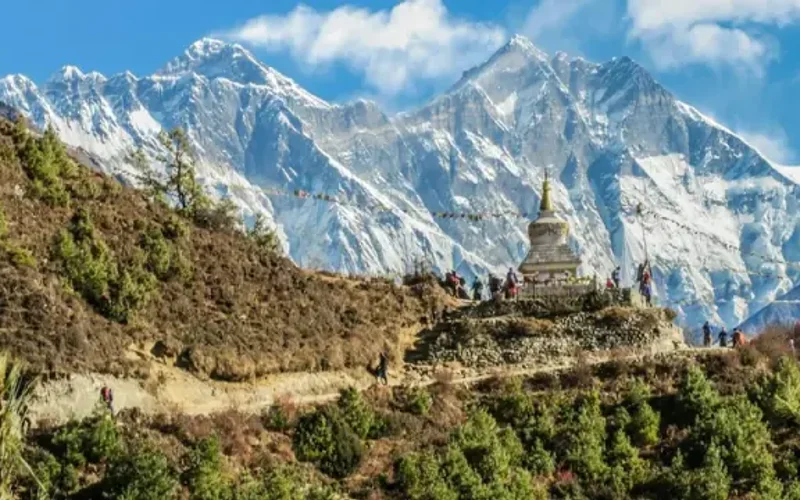
Gasherbrum II, standing at 8,035 meters (26,362 ft), is the thirteenth-highest mountain on Earth and the third-highest peak of the Gasherbrum massif in the Karakoram. Located at the head of the Baltoro Glacier on the Pakistan-China frontier, it features a classic pyramidal profile with challenging ice couloirs. First summited in 1956 by an Austrian team, it was famously climbed in pure alpine style in 1982 by Reinhold Messner, Nazir Sabir, and Sher Khan.
Pioneered & Associated Routes (10)
Abruzzi Spur (Southeast Ridge)
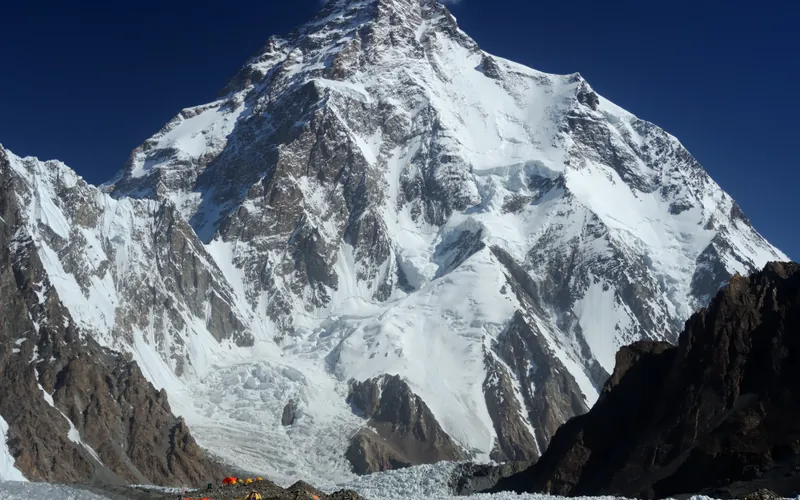
The Abruzzi Spur is the most famous and frequently climbed route on K2, tracing the mountain's steep southeast ridge from the Godwin-Austen Glacier to the summit. First explored in 1909 by Prince Luigi Amedeo, Duke of the Abruzzi, it was successfully climbed to the summit in 1954 by an Italian team. The route requires extreme physical endurance and high-grade technical climbing on rock, ice, and mixed terrain through legendary cruxes like House's Chimney, the Black Pyramid, and the Bottleneck couloir.
Normal Route (West Ridge & Northwest Face)
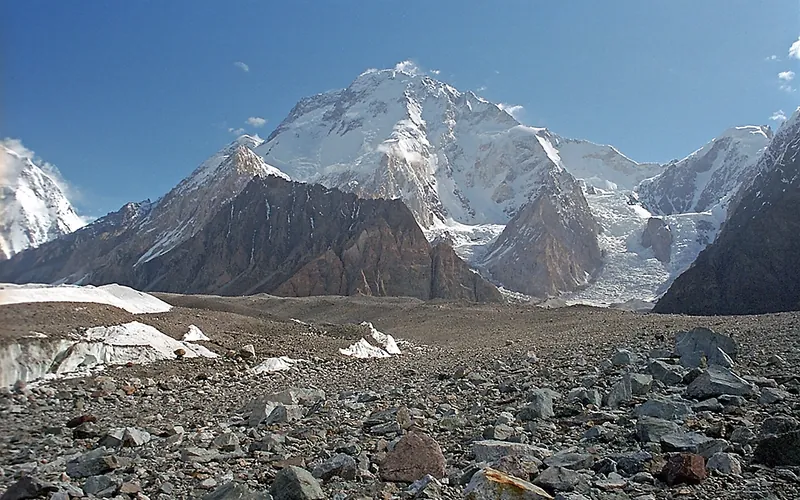
The Normal Route on Broad Peak ascends the rugged western spur from the Godwin-Austen Glacier, navigating steep mixed rock ribs before entering the upper glacial basin beneath the high saddle (the Col). From the Col at 7,800 meters, climbers enter the Death Zone to tackle the long, corniced summit ridge leading across the Foresummit to the true summit at 8,051 meters. First conquered in 1957 by an Austrian team in lightweight alpine style without bottled oxygen, and climbed in 1982 by Reinhold Messner, Nazir Sabir, and Sher Khan in a groundbreaking rapid alpine push.
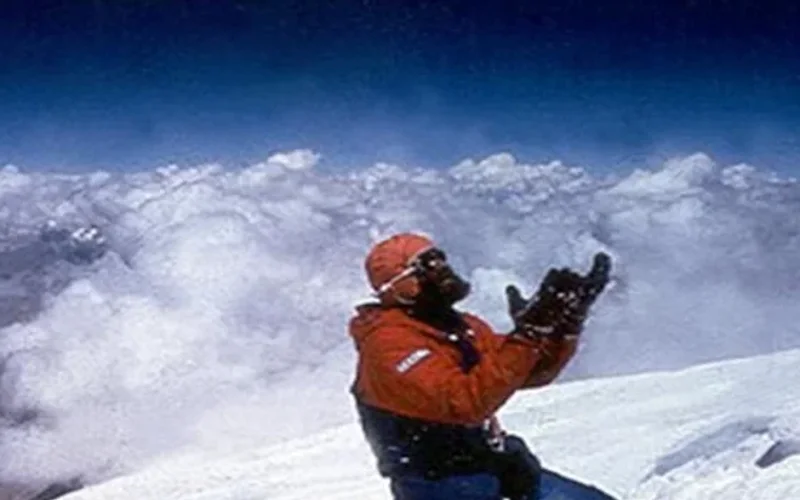
Northwest Face & Japanese Couloir (Normal Route)
The Northwest Face via the Japanese Couloir is the standard and most frequently climbed line on Gasherbrum I (8,068m / Hidden Peak). Starting from the South Gasherbrum Glacier, climbers traverse the shared lower icefall into the Gasherbrum Cwm, then branch southward toward the forbidding northwest wall. The technical centerpiece is the Japanese Couloir—a sustained 50 to 60-degree gully of hard blue ice and shattered rock leading to the high col and summit slopes. First ascended in 1958 by Americans Pete Schoening and Andy Kauffman via the South Ridge, the Japanese Couloir line became the modern benchmark, climbed rapidly in 1992 by Nazir Sabir, Rajab Shah, and Mehrban Shah.
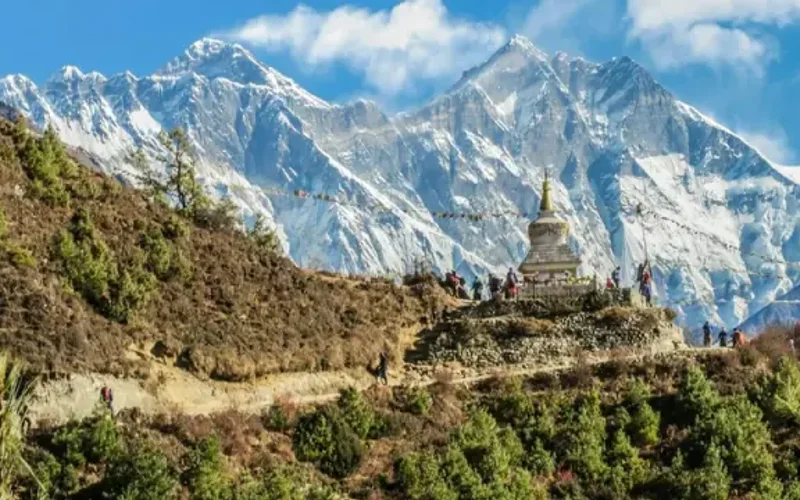
Southwest Ridge (Normal Route)
The Southwest Ridge is the standard and historically celebrated route on Gasherbrum II (8,035m). Starting from the South Gasherbrum Glacier, climbers navigate the heavily crevassed lower icefall into the Gasherbrum Cwm before tackling the technical crux of the route: the steep mixed snow and ice crest known as the Banana Ridge. Above Camp III, the route traverses expansive snow basins into the Death Zone, making a final push up a delicate diagonal couloir to the summit. First climbed in 1956 by an Austrian team, and completed in rapid alpine style in 1982 by Reinhold Messner, Nazir Sabir, and Sher Khan.
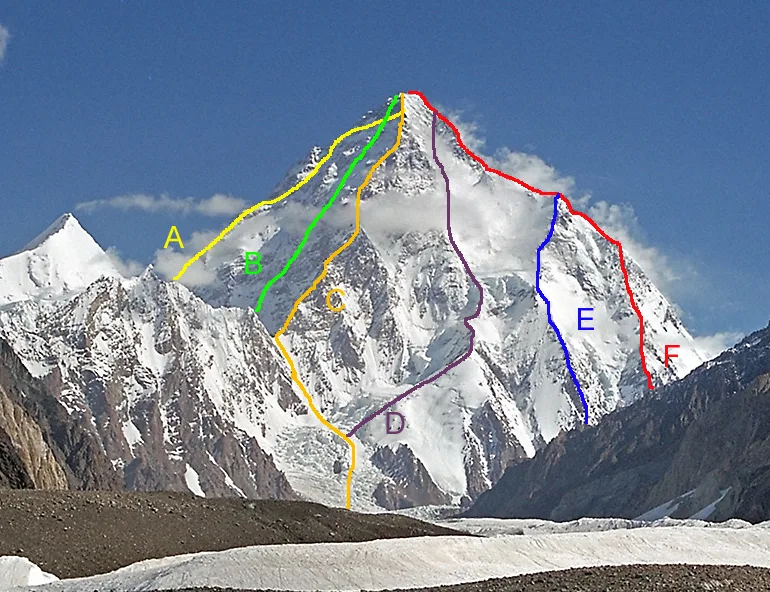
K2 South Face (The Polish Line)
The Polish Line on the South Face of K2 (8,611m) is widely regarded as one of the most perilous and audacious routes ever climbed in high-altitude mountaineering history. Tackling the direct 3,200-meter wall between the Abruzzi Spur and the Magic Line (South-Southwest Pillar), the route ascends through a chaotic labyrinth of hanging seracs, avalanche funnels, and vertical rock bands. Pioneered in alpine style over five harrowing days in July 1986 by Jerzy Kukuczka and Tadeusz Piotrowski without supplemental oxygen, Reinhold Messner famously dubbed it 'suicidal'. Kukuczka and Piotrowski reached the summit on July 8, but tragedy struck during their desperate descent via the Abruzzi Spur when Piotrowski lost both crampons and plunged to his death. To this day, the Polish Line remains unrepeated.
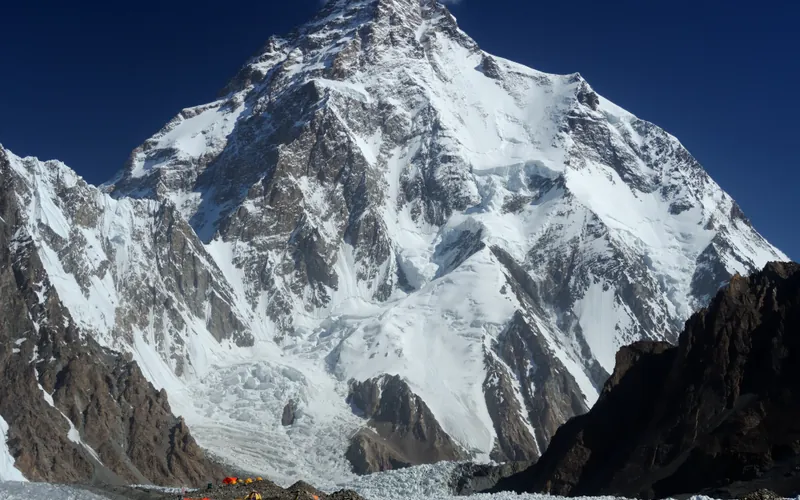
West Ridge (Japanese Route)
The West Ridge of K2 is one of the most formidable and sustained technical lines in high-altitude mountaineering. Pioneered in August 1981 by a joint Japanese-Pakistani expedition, it ascends directly from the Savoia Glacier along the exposed western crest before negotiating the severe Southwest Face directly into the Death Zone. Demanding immense commitment, it was first completed by Pakistani mountaineer Nazir Sabir and Japanese climber Eiho Ohtani after an epic bivouac near 8,500 meters.
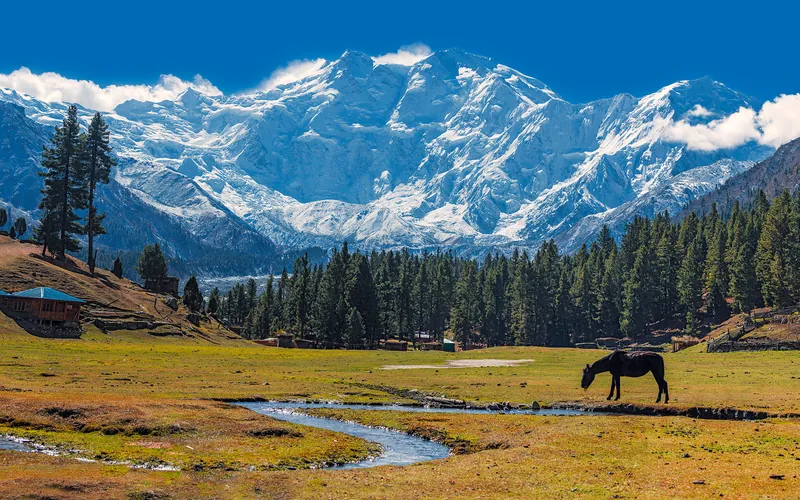
Kinshofer Route (Diamir Face)
The Kinshofer Route is the standard climbing route up the Diamir Face on Nanga Parbat's western side. First climbed in 1962 by German mountaineer Toni Kinshofer and his teammates, it is famous for its early vertical crux, the Kinshofer Wall, which sits low on the mountain between Camp I and Camp II. Once past the wall, climbers face a massive glaciated amphitheater leading up into the freezing upper Bazhin Basin and summit shoulder.
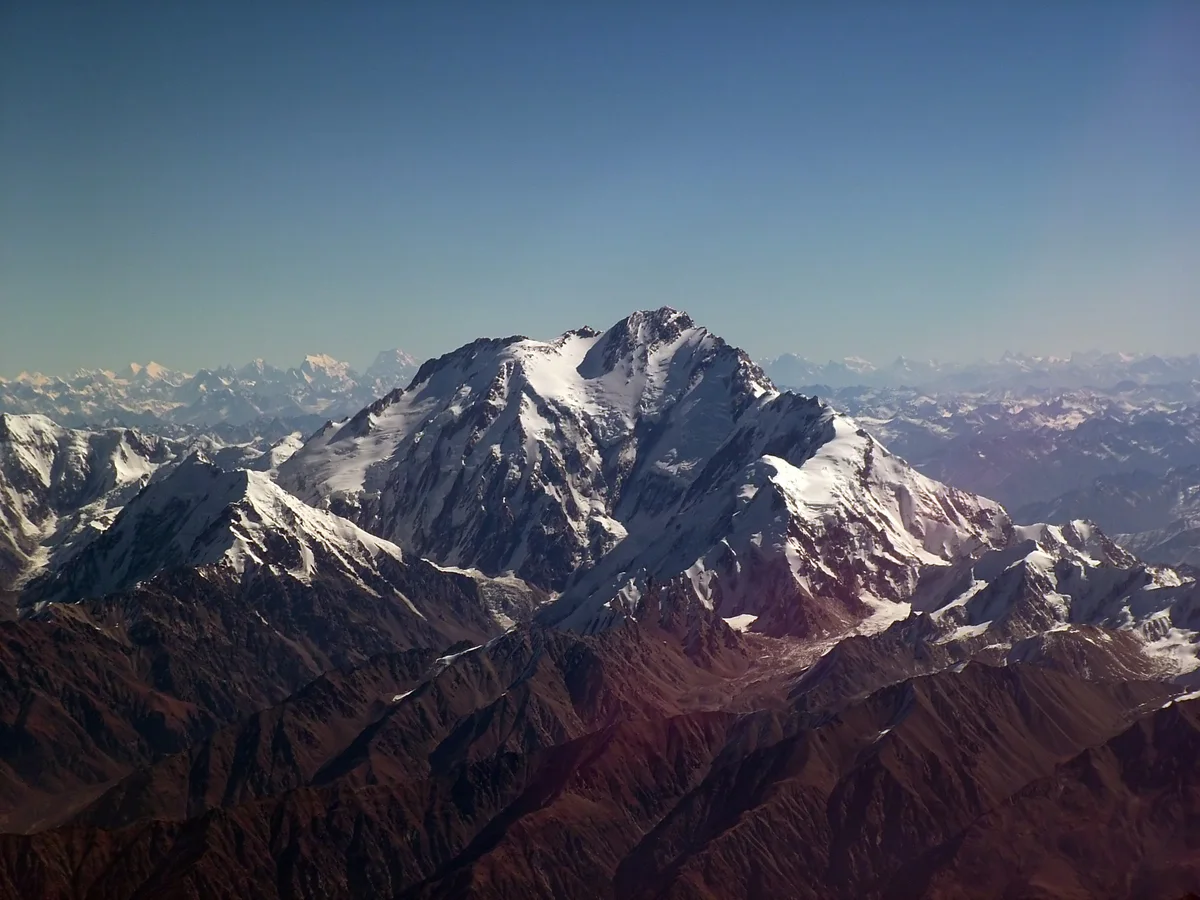
Mazeno Ridge Complete Traverse
The Mazeno Ridge of Nanga Parbat is widely considered the longest and most demanding high-altitude ridge on any eight-thousander, stretching an unbelievable 10 kilometres in length and traversing eight subsidiary peaks exceeding 7,000 metres before meeting the final summit pyramid. Long dubbed the last great problem of the Western Himalaya, it defeated numerous elite expeditions over three decades until British veterans Sandy Allan and Rick Allen completed the first full integral traverse and summit push in pure alpine style over eighteen heroic days in July 2012.
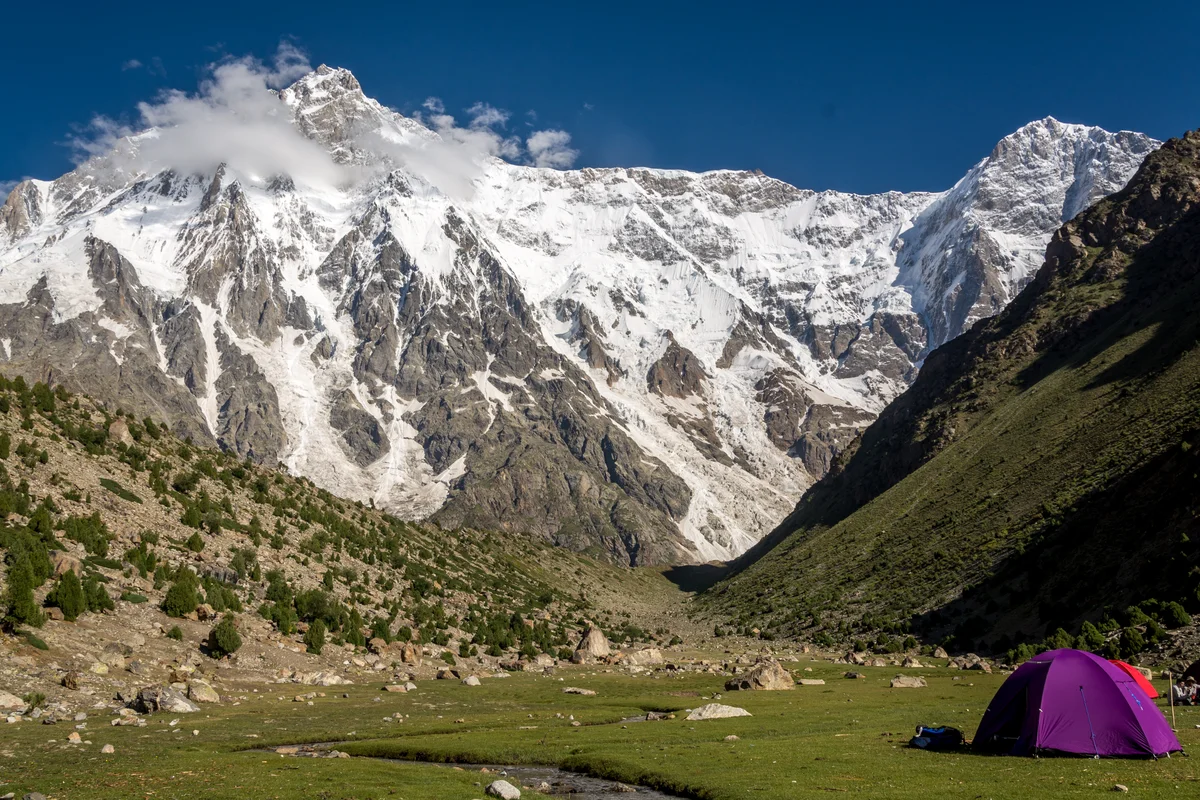
Central Pillar of the Rupal Face Direct
The Central Pillar of the Rupal Face on Nanga Parbat is the greatest vertical mountain wall on Earth, rising an astounding 4,100 metres from the Rupal Valley floor to the 8,126-metre summit. First attempted over decades, it was conquered in pure, lightweight alpine style between September 1 and 8, 2005, by American alpinists Steve House and Vince Anderson without fixed ropes, high camps, or supplemental oxygen, earning them the prestigious Piolet d'Or.
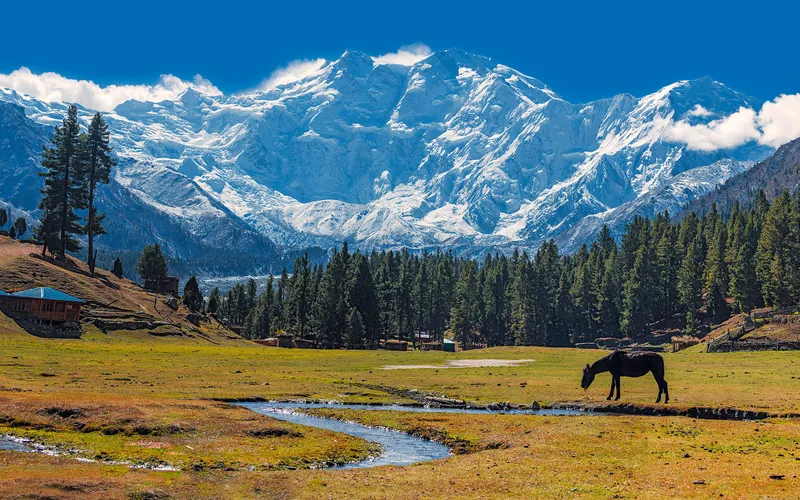
Rakhiot Flank & East Ridge (Original 1953 Route)
The historic original route on Nanga Parbat (8,126m), ascending from the Rakhiot Glacier over the heavily crevassed Rakhiot Icefall to reach the colossal Silbersattel (Silver Saddle) at 7,450 meters. From the saddle, the route traverses an immense high snow plateau for over three kilometers before negotiating the Bazhin Gap and climbing steep mixed rock ribs up the summit pyramid. Immortalized by Hermann Buhl's epic 41-hour solo summit without supplemental oxygen in July 1953.
Documented Expeditions (2)
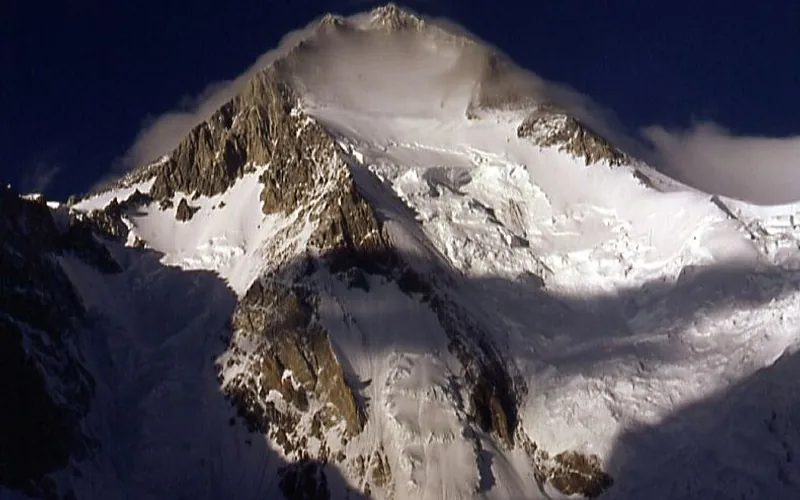
1992 Gasherbrum I (Hidden Peak) Expedition
Rapid alpine push on Gasherbrum I (8,068m) by Nazir Sabir, Rajab Shah, and Mehrban Shah, establishing Sabir's fourth Pakistani 8,000-meter summit.
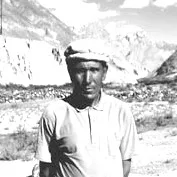
1995 Pakistani-Dutch K2 Expedition: Rajab & Mehrban Shah Summit
On July 20, 1995, Shimshal pioneers Rajab Shah and Mehrban Shah reached the summit of K2 (8,611m) via the Abruzzi Spur with a joint Pakistani-Dutch expedition, completing an unprecedented national triumph as the first and second Pakistanis in history to summit all five 8,000-meter peaks on Pakistani soil.
Associated Chronicles & Stories (1)
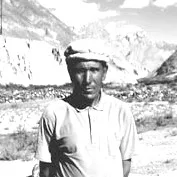
The Tigers of Shimshal: How Rajab Shah and Mehrban Shah Conquered K2 and All Five Pakistani 8,000ers
On July 20, 1995, Shimshal legends Rajab Shah and Mehrban Shah reached the summit of K2, making history as the first two Pakistanis to climb all five 8,000-meter peaks on home soil.
Documented Sources & Archival Citations
- Pakistan Alpine Journal: Tribute to Mehrban Shah(Alpine Club of Pakistan)
Supporting claim: Obituary and official career register of all five 8,000-meter summits
Accessed/Documented: 2003 - Karakoram Explorers and Native Climbers(Alpine Club of Pakistan / Ministry of Tourism)
Supporting claim: Official verification of Pakistani summits on K2, Nanga Parbat, and Gasherbrums
Accessed/Documented: 2005