2004 Karl Unterkircher Mount Everest and K2 Double Expedition
In spring and summer 2004, South Tyrolean alpinist Karl Unterkircher achieved the unprecedented feat of summiting both Mount Everest (8,848m) on May 24 and K2 (8,611m) on July 26 without supplemental bottled oxygen in just sixty-three days.
Mountain Safety & Conditions Disclaimer: High-altitude climbing, glacial travel, and technical ascents entail severe objective risks including avalanches, serac collapses, rapid weather collapse, and altitude illness. Historical route descriptions and summit claims on Mountanity reflect documented archival sources and must not be used as live operational safety assessments. Local regulations, permits, and physical glacial topography change continuously.
Peer Review: Senior Editorial Board & Historical Reviewers • Editorial Standards
Official Expedition Narrative & Archival Record
In spring 2004, thirty-three-year-old South Tyrolean mountain guide Karl Unterkircher joined the prestigious Italian 'K2 2004: 50 Years Later' anniversary project. As part of their acclimatization and climbing campaign, the team first tackled Mount Everest (8,848m) from Nepal via the South Col Route. Demonstrating supreme physical conditioning and lung capacity, Unterkircher climbed without supplemental bottled oxygen, reaching the summit of Everest on May 24, 2004. Without pausing for extended rest, Unterkircher immediately traveled from Kathmandu to Islamabad and trekked up the Baltoro Glacier to the base of K2 (8,611m). Confronting the technical cruxes of the Abruzzi Spur in the heart of the Karakoram summer, Unterkircher again refused bottled oxygen. On July 26, 2004, exactly sixty-three days after standing atop Everest, Unterkircher stood on the summit of K2. He became the first person in mountaineering history to conquer the two highest mountains on Earth without supplemental oxygen in a single climbing season, a monument of physiological endurance.
Documented Team Composition
- Karl Unterkircher (Italy / South Tyrol, Summit Climber)
- Agostino Da Polenza (Expedition Leader)
- Italian National K2 2004 Expedition Team
Key Statistics & Topographic Figures
- Official Outcome
- Historic First Same-Season Summits of Everest and K2 Without Supplemental Oxygen in 63 Days
Expedition Status
- Summit Date
- 2004-07-26
Ascent Timestamp
- Target Objective
- mount-everest, k2
Mountain Peak
- Ascent Route
- south-col-route, abruzzi-spur
Climbing Path
- Team Size
- 3 Climbers
High-Altitude Team
- Region / Country
- Nepal / Pakistan (Himalaya & Karakoram)
Geography
Archival Primary Source Quotations
“In spring 2004, thirty-three-year-old South Tyrolean mountain guide Karl Unterkircher joined the prestigious Italian 'K2 2004: 50 Years Later' anniversary project. As part of their...”
Defined Alpine Terminology & Concepts
- Alpine Expedition
- A planned, self-contained high-altitude mountaineering undertaking operating in remote mountain terrain subject to extreme objective hazards.
- Death Zone
- The high-altitude region above 8,000 meters where atmospheric oxygen pressure is inadequate for sustained human survival.
Frequently Asked Questions: 2004 Karl Unterkircher Mount Everest and K2 Double Expedition
What was the primary outcome and achievement of the 2004 Karl Unterkircher Mount Everest and K2 Double Expedition?
Historic First Same-Season Summits of Everest and K2 Without Supplemental Oxygen in 63 Days. In spring and summer 2004, South Tyrolean alpinist Karl Unterkircher achieved the unprecedented feat of summiting both Mount Everest (8,848m) on May 24 and K2 (8,611m) on July 26 without supplemental bottled oxygen in just sixty-three days.
When did the 2004 Karl Unterkircher Mount Everest and K2 Double Expedition reach the summit?
The expedition officially reached the summit on 2004-07-26, operating between 2004-04-10 and 2004-08-05.
Who were the documented climbing team members on the 2004 Karl Unterkircher Mount Everest and K2 Double Expedition?
The documented climbing roster included: Karl Unterkircher (Italy / South Tyrol, Summit Climber), Agostino Da Polenza (Expedition Leader), Italian National K2 2004 Expedition Team.
What climbing route and mountain objective were tackled during the 2004 Karl Unterkircher Mount Everest and K2 Double Expedition?
The expedition tackled mount-everest, k2 via the south-col-route, abruzzi-spur in Nepal / Pakistan (Himalaya & Karakoram).
How are the records and summit claims of the 2004 Karl Unterkircher Mount Everest and K2 Double Expedition verified?
Summit claims, route topography, and timeline logs for the 2004 Karl Unterkircher Mount Everest and K2 Double Expedition are cross-referenced with official alpine registries, national mountaineering federations, and primary expedition journals.
Ascent Route & Topography
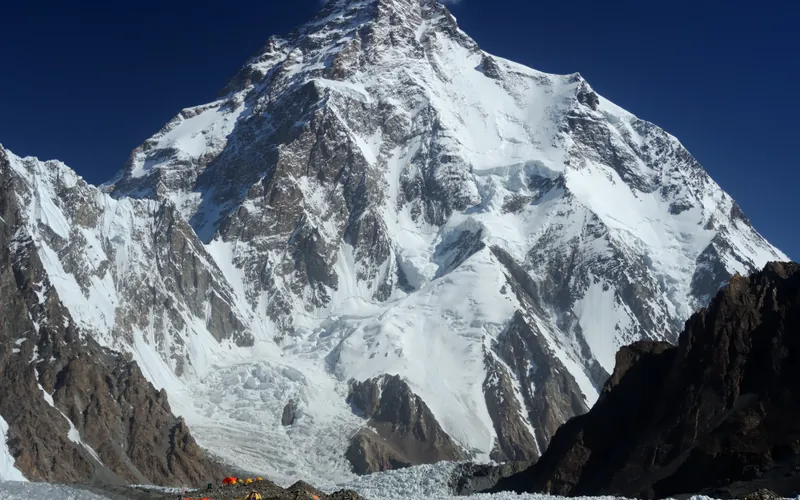
Abruzzi Spur (Southeast Ridge)
The Abruzzi Spur is the most famous and frequently climbed route on K2, tracing the mountain's steep southeast ridge from the Godwin-Austen Glacier to the summit. First explored in 1909 by Prince Luigi Amedeo, Duke of the Abruzzi, it was successfully climbed to the summit in 1954 by an Italian team. The route requires extreme physical endurance and high-grade technical climbing on rock, ice, and mixed terrain through legendary cruxes like House's Chimney, the Black Pyramid, and the Bottleneck couloir.
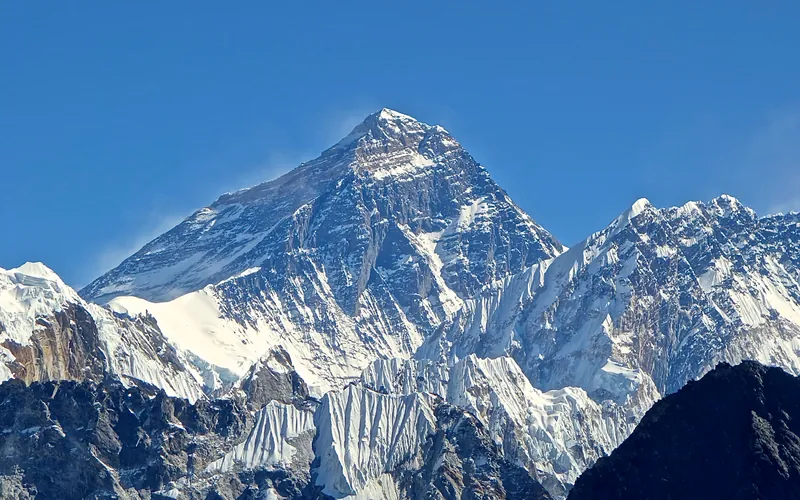
South Col & Southeast Ridge (Normal Route)
The South Col Route along the Southeast Ridge is the historic path of the 1953 first ascent and the most popular route on Mount Everest. Starting from Base Camp on the Khumbu Glacier in Nepal, climbers navigate the shifting seracs of the Khumbu Icefall into the Western Cwm. The route then scales the icy 45-degree slope of the Lhotse Face to the South Col at 7,925 meters, launching the final summit bid through the Balcony, South Summit, and Hillary Step to the summit of Earth at 8,848.86 meters.
Target Objective Peaks



Mount Everest
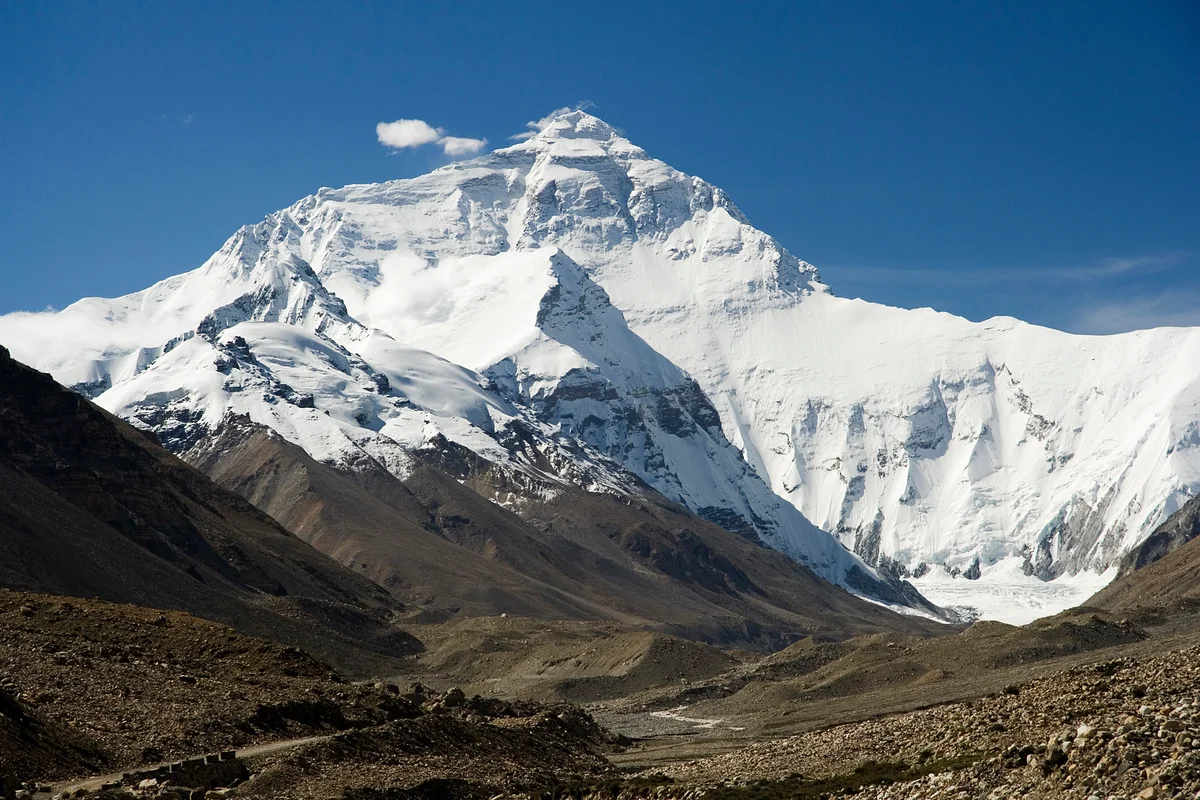
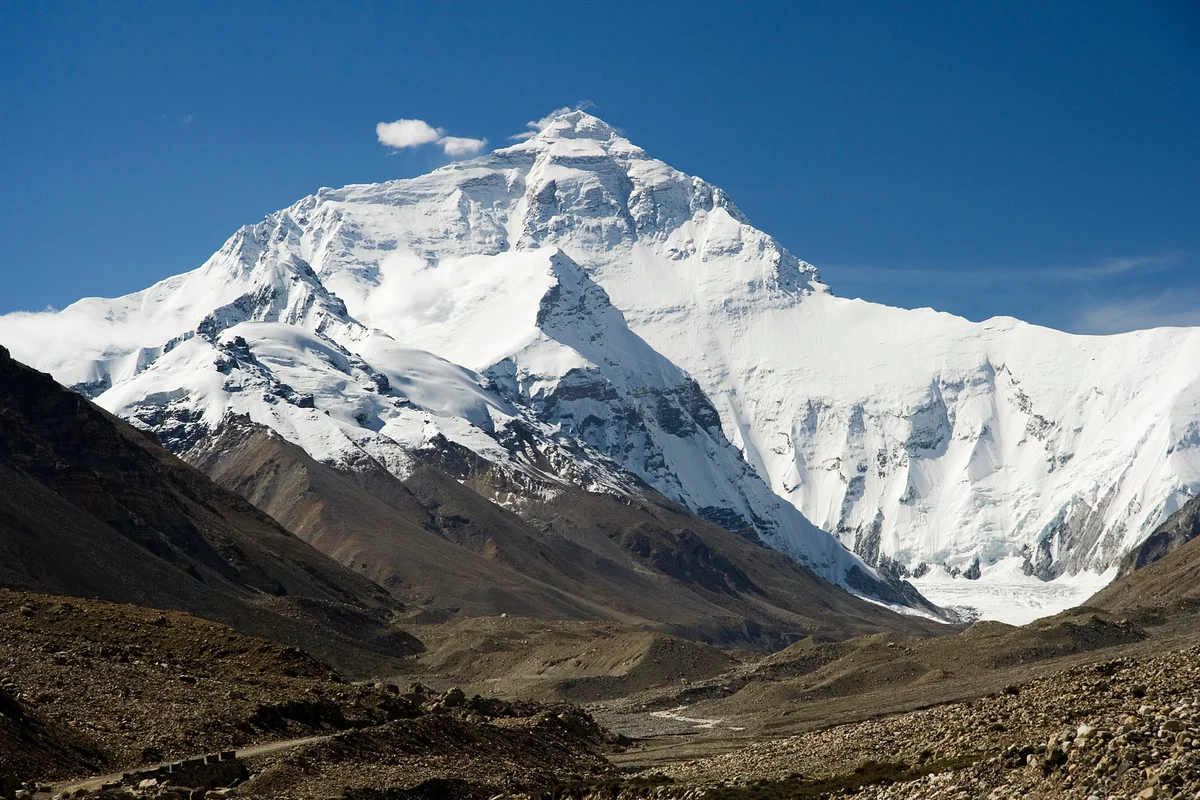
Mount Everest is the highest mountain above sea level on Earth, standing at an official elevation of 8,848.86 meters (29,031.7 ft). Straddling the international frontier between Nepal and China, it is known locally as Sagarmatha in Nepali ('Goddess of the Sky') and Chomolungma in Tibetan ('Mother Goddess of the World'). The peak rises into the extreme upper troposphere, where oxygen levels drop to barely one-third of sea-level pressure. Climbers face hurricane-force jet stream winds, severe frostbite conditions, shifting ice crevasses in the Khumbu Icefall, and the dangerous Death Zone above 8,000 meters.
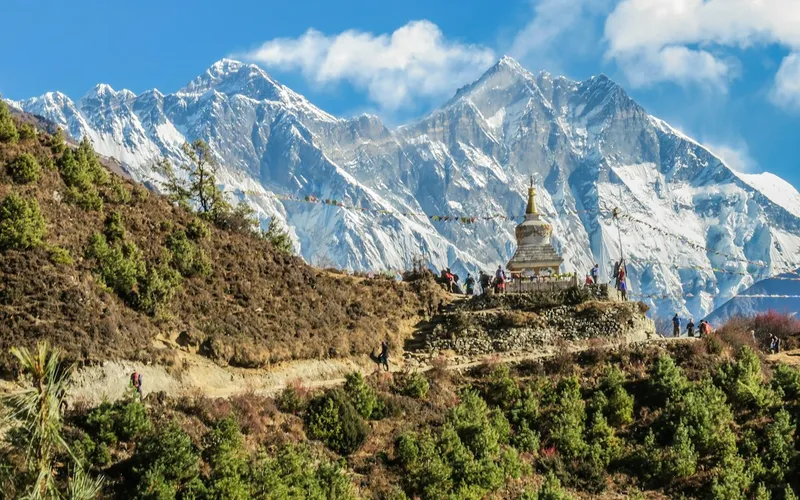

K2
K2, at 8,611 meters (28,251 ft), is the second-highest mountain on Earth and widely regarded as the most technically demanding and lethal 8,000-meter peak. Located in the heart of the Karakoram on the border between Pakistan and China, K2 is characterized by sheer relief, severe weather anomalies, and persistent objective hazards including the notorious Bottleneck couloir.
Featured Expedition Climber
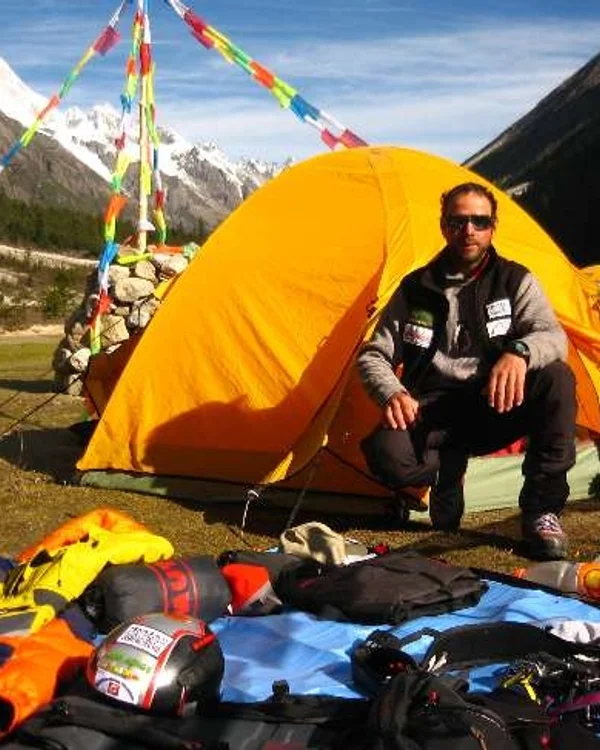
Karl Unterkircher
Karl Unterkircher was born on August 27, 1970, in Sëlva (Wolkenstein in Gröden) in the Ladin-speaking heart of the Val Gardena in South Tyrol, northern Italy. Surrounded by the vertical limestone towers of the Dolomites, Unterkircher became a certified UIAGM mountain guide at an early age, establishing demanding mixed and rock routes on the Sella Towers, the Marmolada, and Sassolungo. In 2004, Unterkircher entered the global mountaineering record books with a feat that stunned international physiologists. On May 24, 2004, climbing as part of the Italian Everest-K2 50th Anniversary Expedition, he summited Mount Everest without supplemental bottled oxygen. Just sixty-three days later, on July 26, 2004, he reached the summit of K2, again entirely without supplemental bottled oxygen. He became the first mountaineer in human history to conquer both Everest and K2 without bottled oxygen in a single climbing season, earning him the prestigious Italian honor of Cavaliere dell'Ordine al Merito della Repubblica Italiana. Following his 2004 double, Unterkircher rejected commercial guiding in favor of cutting-edge alpine exploratory ascents. In 2006, he achieved the first ascent of Mount Genyen (6,204m) in eastern Tibet via a new technical granite route. In 2007, he opened a bold new route on the North Face of Gasherbrum II. In July 2008, Unterkircher led an expedition to Nanga Parbat to tackle the unclimbed Rakhiot Face. On July 15, 2008, while leading across an icefield at 6,400 metres, a hidden snow bridge collapsed beneath him, plunging Unterkircher into a deep crevasse where he died. His companions Simon Kehrer and Walter Nones completed an epic descent down the Diamir flank. Karl Unterkircher is remembered as a mountaineer of luminous passion, unparalleled technical ability, and pure alpine ideals.
Associated Historical Chronicles & Stories
The Sixty-Three Day Double: Karl Unterkircher's Oxygenless Odyssey on Everest and K2
In 2004, South Tyrolean alpinist Karl Unterkircher stunned the mountaineering world by summiting Mount Everest and K2 without supplemental oxygen in just 63 days.
Documented Sources & Archival Citations
- American Alpine Journal: K2 2004 Italian 50th Anniversary Expedition(American Alpine Club)
Supporting claim: Official climb report verifying Unterkircher's summits of Everest (May 24) and K2 (July 26) without bottled oxygen
Accessed/Documented: 2005 - K2: Una Sfida ai Confini del Cielo(Agostino Da Polenza / Mondadori)
Supporting claim: Official expedition chronicle detailing Unterkircher's physiological monitoring and dual summits
Accessed/Documented: 2004