Gasherbrum IV West Face (The Shining Wall)
The West Face of Gasherbrum IV (7,925m), known as 'The Shining Wall', is a 2,500-meter wall of sheer golden limestone, yellow marble bands, and vertical ice gullies rising directly above the Gasherbrum Glacier. In July 1985, Polish mountaineer Wojciech Kurtyka and Austrian Robert Schauer made the historic first ascent of the face in pure, lightweight alpine style without supplemental oxygen, fixed ropes, or high-altitude porters.
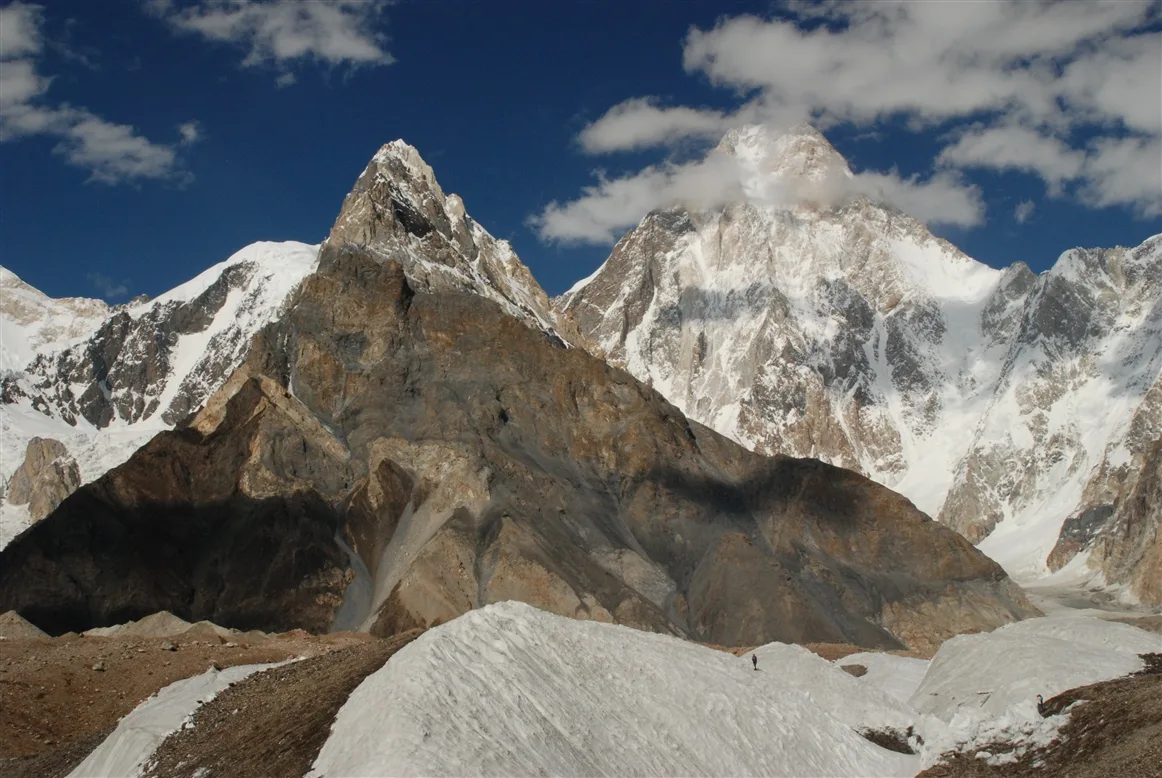
Ascent line, technical cruxes & camp topography profile for Gasherbrum IV West Face (The Shining Wall)
Mountain Safety & Conditions Disclaimer: High-altitude climbing, glacial travel, and technical ascents entail severe objective risks including avalanches, serac collapses, rapid weather collapse, and altitude illness. Historical route descriptions and summit claims on Mountanity reflect documented archival sources and must not be used as live operational safety assessments. Local regulations, permits, and physical glacial topography change continuously.
Peer Review: Senior Editorial Board & Historical Reviewers • Editorial Standards
Tactical & Camp Notes
A commitment grade VI alpine route. Once past the initial ice apron, retreat is virtually impossible due to the overhangs and lack of solid rock anchors in the friable marble.
Identified Objective Hazards
- •Shattered, friable yellow marble offering poor protection and frequent rock dislodgement
- •Spindrift avalanches funneling relentlessly down the narrow 2,500m couloirs
- •Absolute isolation: pure alpine style means zero rescue possibility and zero fixed lines
- •Severe dehydration, frostbite, and cerebral hypoxia during multi-day high-altitude bivouacs
Historical Context
Pioneered in July 1985 by Wojciech Kurtyka (Poland) and Robert Schauer (Austria). Because of extreme storm exhaustion, they bypassed the slightly higher south summit (7,925m) by traversing across the north crest, yet their climb is universally honored as a masterpiece of lightweight alpine purity.
Interactive Elevation Profile
Vertical profile, technical cruxes, and camp staging progression for Gasherbrum IV West Face (The Shining Wall) on Gasherbrum IV.
Advanced base camp below the great Western Cirque of the Gasherbrums.
Camp-by-Camp Topography
Key staging altitudes, technical cruxes, and terrain transitions for Gasherbrum IV West Face (The Shining Wall).
Gasherbrum Glacier Base
Advanced base camp below the great Western Cirque of the Gasherbrums.
Lower Ice Couloir Bivouac
First standing bivouac hacked out of a narrow 65-degree ice ramp beneath the central rock shield.
The Great Marble Band (The Black Tower)
Second hanging bivouac below the vertical yellow marble rock band.
The Storm Bivouac (High Ridge)
A snow cave where Kurtyka and Schauer endured 48 hours of hurricane winds and hypothermia without food or hot liquids.
Gasherbrum IV North Summit
The northern apex of the summit crest reached after breaking through the cornice barrier.
Topographic Location & Terrain Map
Cartographic datum, massif coordinates, and terrain context for Gasherbrum IV West Face (The Shining Wall) on Gasherbrum IV.
Interactive Topographic Terrain Map
Click below to load live cartographic contours, glacier approaches, and geographic markers for Gasherbrum IV (35°45′36″ N, 76°37′00″ E).
Key Statistics & Topographic Figures
- Route Type
- Extreme Alpine Style Big Wall
Topography
- Technical Difficulty
- Extreme Technical Big Wall / Grade ED2, UIAA VII, 70° ice
UIAA VII (5.10+ / 6b rock on loose yellow marble), sustained 60°–75° water-ice and mixed couloirs
- Country / Region
- Pakistan (Gilgit-Baltistan / Baltoro Muztagh)
Location
Archival Primary Source Quotations
“A mountain route is not merely a path of rock and ice; it is a test of human endurance, judgment, and humility.”
Defined Alpine Terminology & Concepts
- Crux
- The most difficult and technically demanding pitch or section of a climbing route.
- Normal Route (Voie Normale)
- The most frequently climbed, least technical, and historically standard path to a mountain summit.
Frequently Asked Questions: Gasherbrum IV West Face (The Shining Wall)
What is the climbing difficulty and grade of Gasherbrum IV West Face (The Shining Wall)?
Gasherbrum IV West Face (The Shining Wall) on gasherbrum-4 is graded as Extreme Technical Big Wall / Grade ED2, UIAA VII, 70° ice, with technical climbing requirements including UIAA VII (5.10+ / 6b rock on loose yellow marble), sustained 60°–75° water-ice and mixed couloirs.
What are the primary hazards on the Gasherbrum IV West Face (The Shining Wall)?
Climbers on Gasherbrum IV West Face (The Shining Wall) must navigate severe objective hazards including Shattered, friable yellow marble offering poor protection and frequent rock dislodgement, Spindrift avalanches funneling relentlessly down the narrow 2,500m couloirs, Absolute isolation: pure alpine style means zero rescue possibility and zero fixed lines, Severe dehydration, frostbite, and cerebral hypoxia during multi-day high-altitude bivouacs.
What camps are established on Gasherbrum IV West Face (The Shining Wall)?
Gasherbrum IV West Face (The Shining Wall) typically features 5 staging camps, progressing from Gasherbrum Glacier Base (5400m) up toward the summit.
Mountain Ascended

Gasherbrum IV
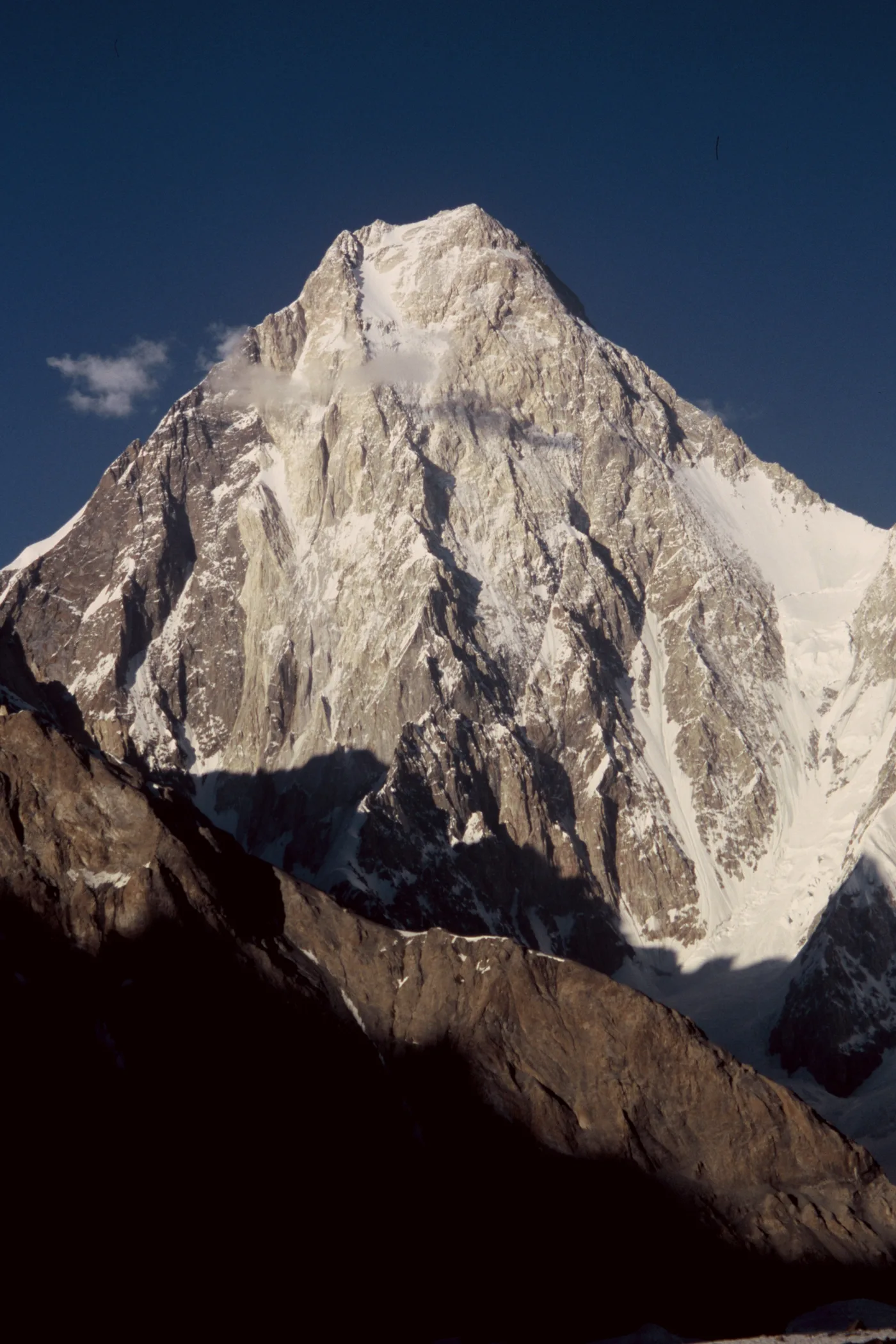
Gasherbrum IV, at 7,925 meters (26,001 ft), is the 17th highest mountain on Earth and the 6th highest in Pakistan. Rising dramatically at the head of the Baltoro Glacier, its breathtaking 2,500-meter West Face of sheer limestone and marble—termed 'The Shining Wall'—is regarded as one of the ultimate technical mountaineering challenges on the planet. First climbed in 1958 by Walter Bonatti and Carlo Mauri via the Northeast Ridge, it later saw the legendary 1985 alpine-style ascent of its West Face by Wojciech Kurtyka and Robert Schauer, widely called the 'Climb of the Century'.
Documented Expeditions on this Route (1)
Verified historical summits, siege campaigns, and pioneer attempts recorded on Gasherbrum IV West Face (The Shining Wall).
1985 Gasherbrum IV West Face (The Shining Wall) Expedition
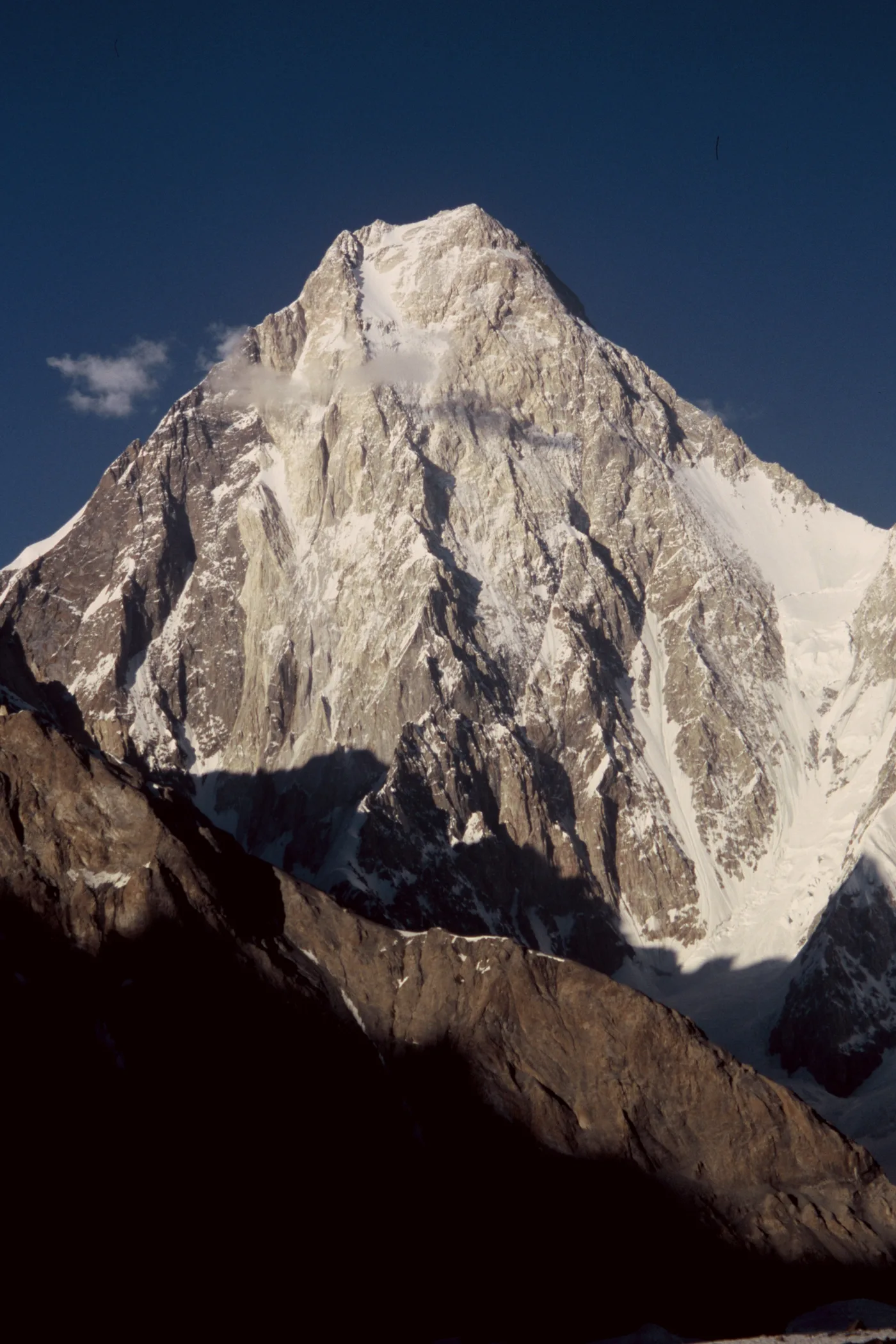
The landmark July 1985 expedition in which Polish mountaineer Wojciech Kurtyka and Austrian Robert Schauer completed the first alpine-style ascent of the 2,500-meter West Face of Gasherbrum IV (7,925m)—a pure, lightweight masterpiece universally celebrated as the greatest big-wall climb of the 20th century.
Archival Chronicles & Stories on this Route (1)
In-depth longform historical narratives, harrowing survival accounts, and firsthand alpine journals on Gasherbrum IV West Face (The Shining Wall).
Gasherbrum IV 1985: Kurtyka and Schauer's Climb of the Century
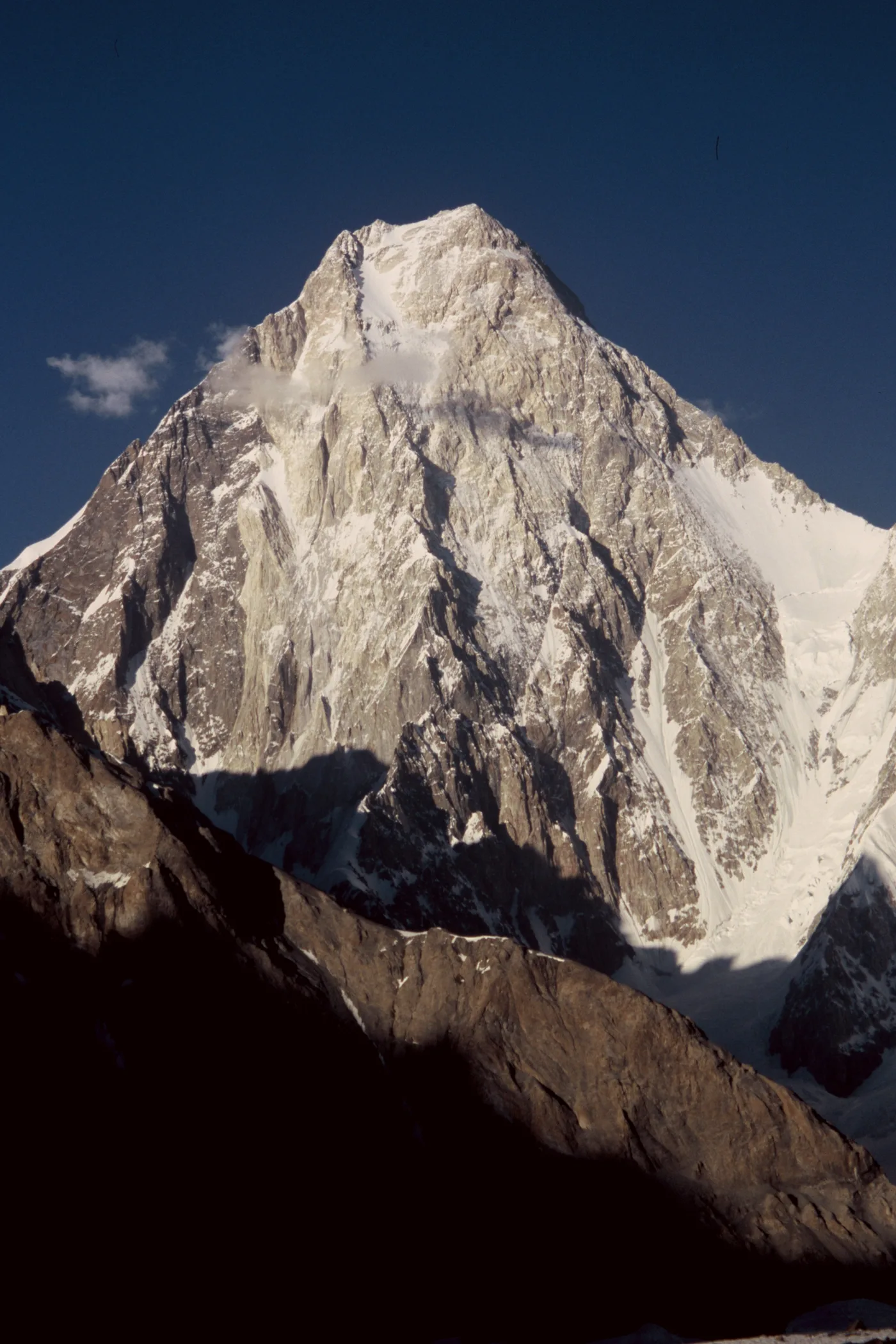
In July 1985, Wojciech Kurtyka and Robert Schauer completed the first alpine-style ascent of Gasherbrum IV's 2,500-meter West Face, enduring a 48-hour storm bivouac without food in an ascent hailed as the greatest big-wall climb of the 20th century.
Documented Sources & Archival Citations
- The Shining Wall: Gasherbrum IV(Wojciech Kurtyka / American Alpine Journal)
Supporting claim: Official expedition journal describing every pitch and survival bivouac
Accessed/Documented: 1986 - Art of Freedom: The Life and Climbs of Voytek Kurtyka(Bernadette McDonald / Mountaineers Books)
Supporting claim: In-depth biographical history of the 1985 climb and Kurtyka's alpine philosophy
Accessed/Documented: 2017