Gasherbrum IV
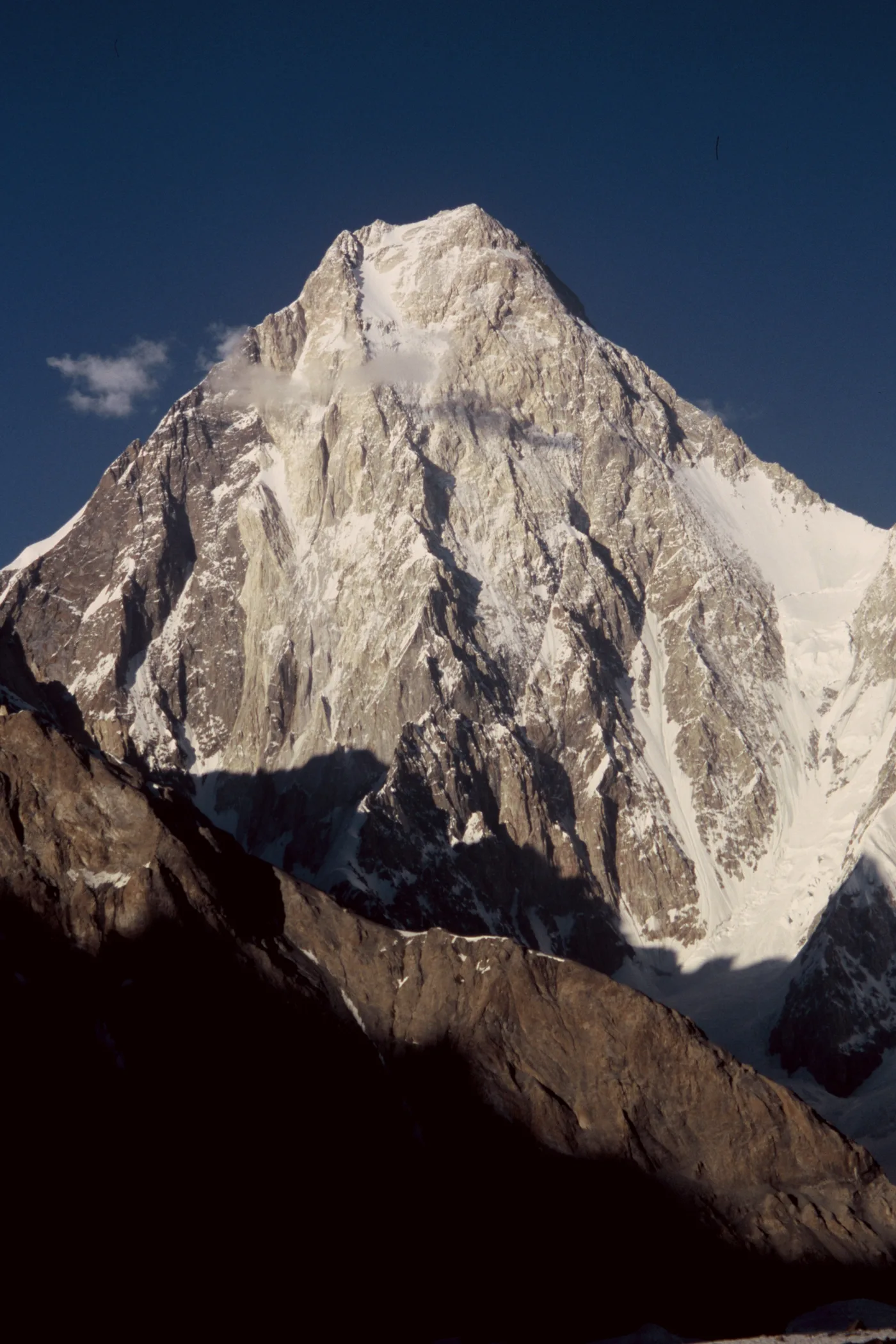
Gasherbrum IV, at 7,925 meters (26,001 ft), is the 17th highest mountain on Earth and the 6th highest in Pakistan. Rising dramatically at the head of the Baltoro Glacier, its breathtaking 2,500-meter West Face of sheer limestone and marble—termed 'The Shining Wall'—is regarded as one of the ultimate technical mountaineering challenges on the planet.

Mountain Safety & Conditions Disclaimer: High-altitude climbing, glacial travel, and technical ascents entail severe objective risks including avalanches, serac collapses, rapid weather collapse, and altitude illness. Historical route descriptions and summit claims on Mountanity reflect documented archival sources and must not be used as live operational safety assessments. Local regulations, permits, and physical glacial topography change continuously.
Peer Review: Senior Editorial Board & Historical Reviewers • Editorial Standards
Geographical Setting & Topography
Located in the Gasherbrum group of the Baltoro Muztagh subrange of the Karakoram, towering directly above Concordia at the junction of the Godwin-Austen and Baltoro glaciers.
Historic First Ascent
Date: August 6, 1958
Ascent Team: Walter Bonatti, Carlo Mauri (Italian Expedition led by Riccardo Cassin)
Key Statistics & Topographic Figures
- Summit Elevation
- 7,925 meters (26,001 ft)
17th Highest on Earth
- West Face Relief
- 2,500 meters (8,200 ft)
The Shining Wall
- First Ascent Date
- August 6, 1958
Walter Bonatti & Carlo Mauri
- Mountain Range
- Karakoram (Baltoro Muztagh)
Gilgit-Baltistan, Pakistan
Archival Primary Source Quotations
“Gasherbrum IV is a fortress of marble and ice. Its west wall is one of the ultimate tests of human audacity.”
Defined Alpine Terminology & Concepts
- The Shining Wall
- The monumental 2,500m West Face of Gasherbrum IV, known for its sheer marble shield and extreme technical big-wall climbing.
- Gasherbrum
- A remote group of peaks in the Karakoram whose name is derived from the Balti words "rgasha" (beautiful) and "brum" (mountain)—Beautiful Mountain.
Gasherbrum IV Mountain Weather Forecast
Detailed 14-Day Summit Window & Weather Timeline
Explore day-by-day summit push safety windows, wind shear analysis, and extended multi-day forecasts for Gasherbrum IV.
Explore Gasherbrum IV (7,925 m) in Interactive 3D
Inspect steep glacial walls, hanging seracs, ridge approaches, and elevation relief with 360° rotation and terrain tilt in WebGL.
Documented Climbing Routes (1)
Gasherbrum IV West Face (The Shining Wall)
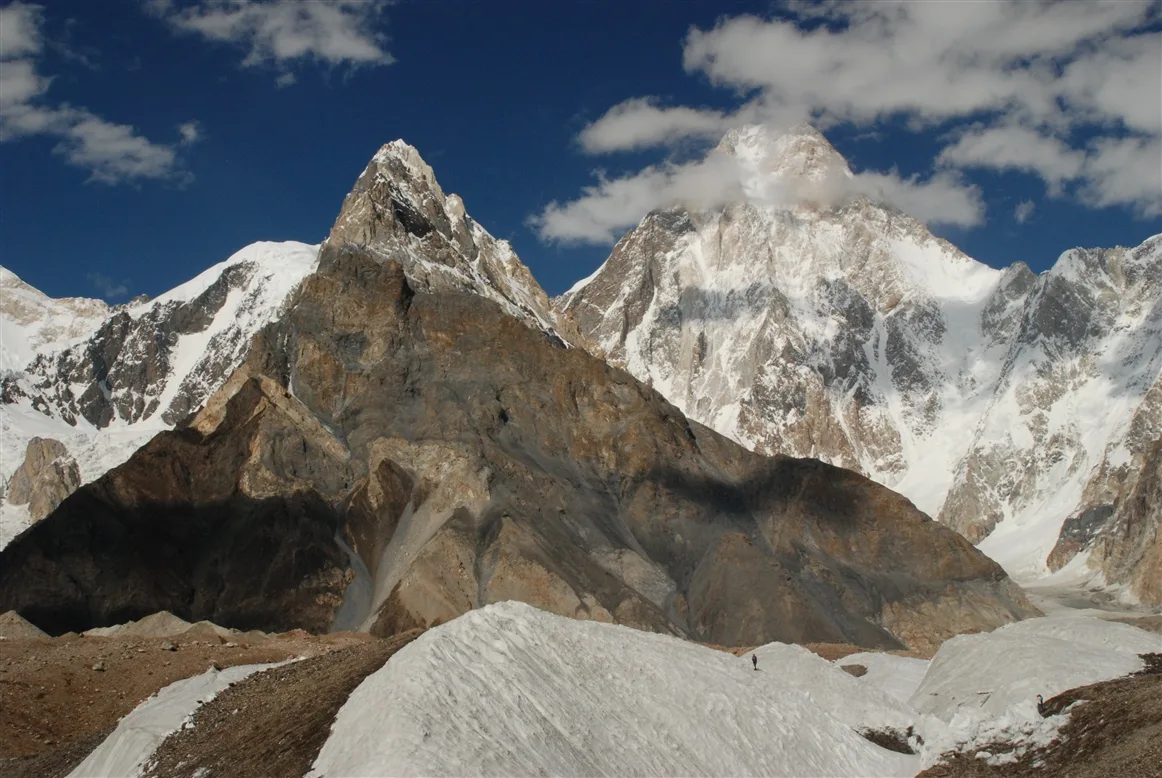
The West Face of Gasherbrum IV (7,925m), known as 'The Shining Wall', is a 2,500-meter wall of sheer golden limestone, yellow marble bands, and vertical ice gullies rising directly above the Gasherbrum Glacier. In July 1985, Polish mountaineer Wojciech Kurtyka and Austrian Robert Schauer made the historic first ascent of the face in pure, lightweight alpine style without supplemental oxygen, fixed ropes, or high-altitude porters. Trapped by a violent high-altitude storm at 7,800 meters without food or water for two days, they pushed over the north summit ridge and endured a grueling descent down the North Ridge, completing an ascent widely celebrated as the greatest big-wall alpine climb of the 20th century.
Historical Expeditions (1)
1985 Gasherbrum IV West Face (The Shining Wall) Expedition
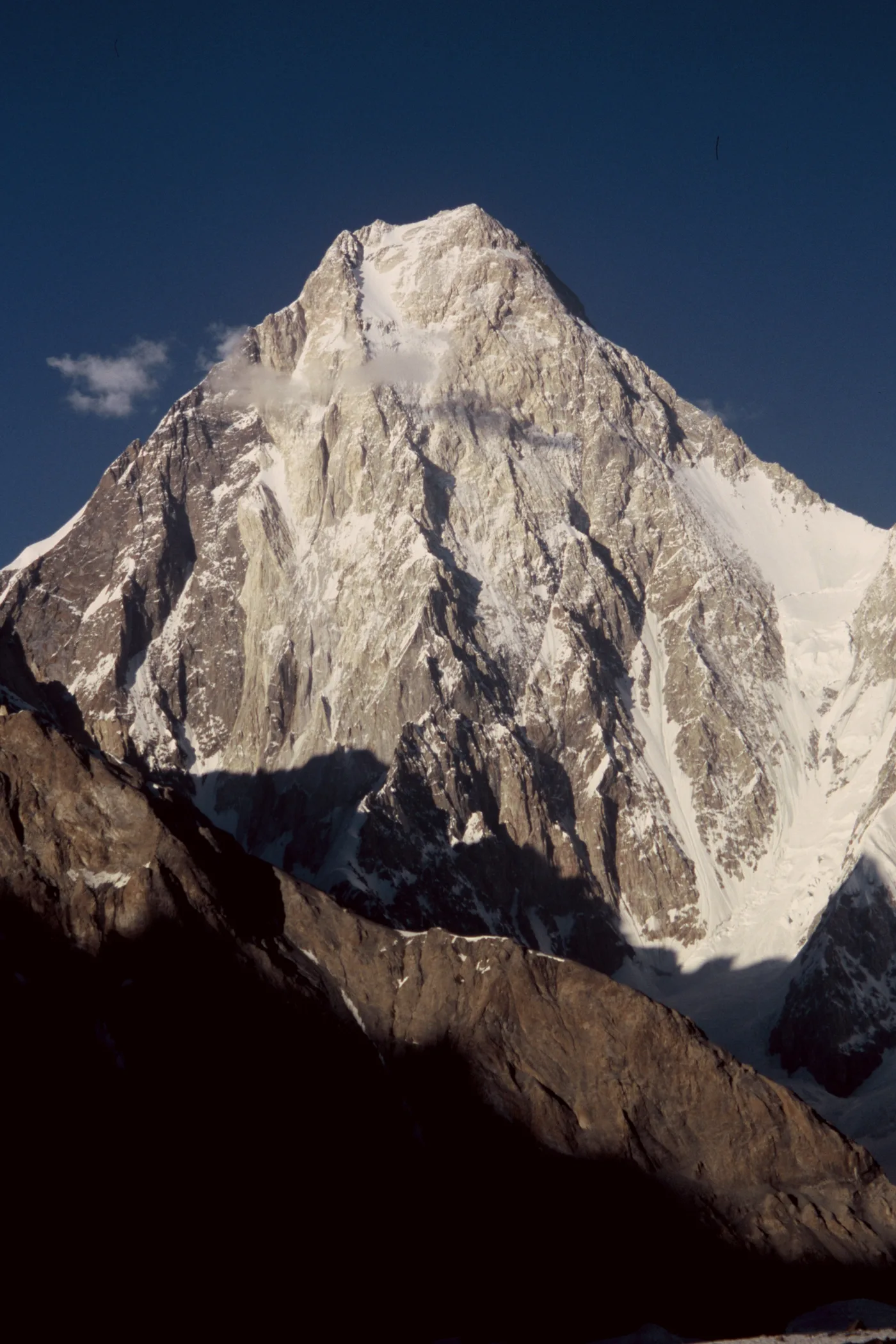
The landmark July 1985 expedition in which Polish mountaineer Wojciech Kurtyka and Austrian Robert Schauer completed the first alpine-style ascent of the 2,500-meter West Face of Gasherbrum IV (7,925m)—a pure, lightweight masterpiece universally celebrated as the greatest big-wall climb of the 20th century.
Summit Chronicles & Stories (1)
Gasherbrum IV 1985: Kurtyka and Schauer's Climb of the Century
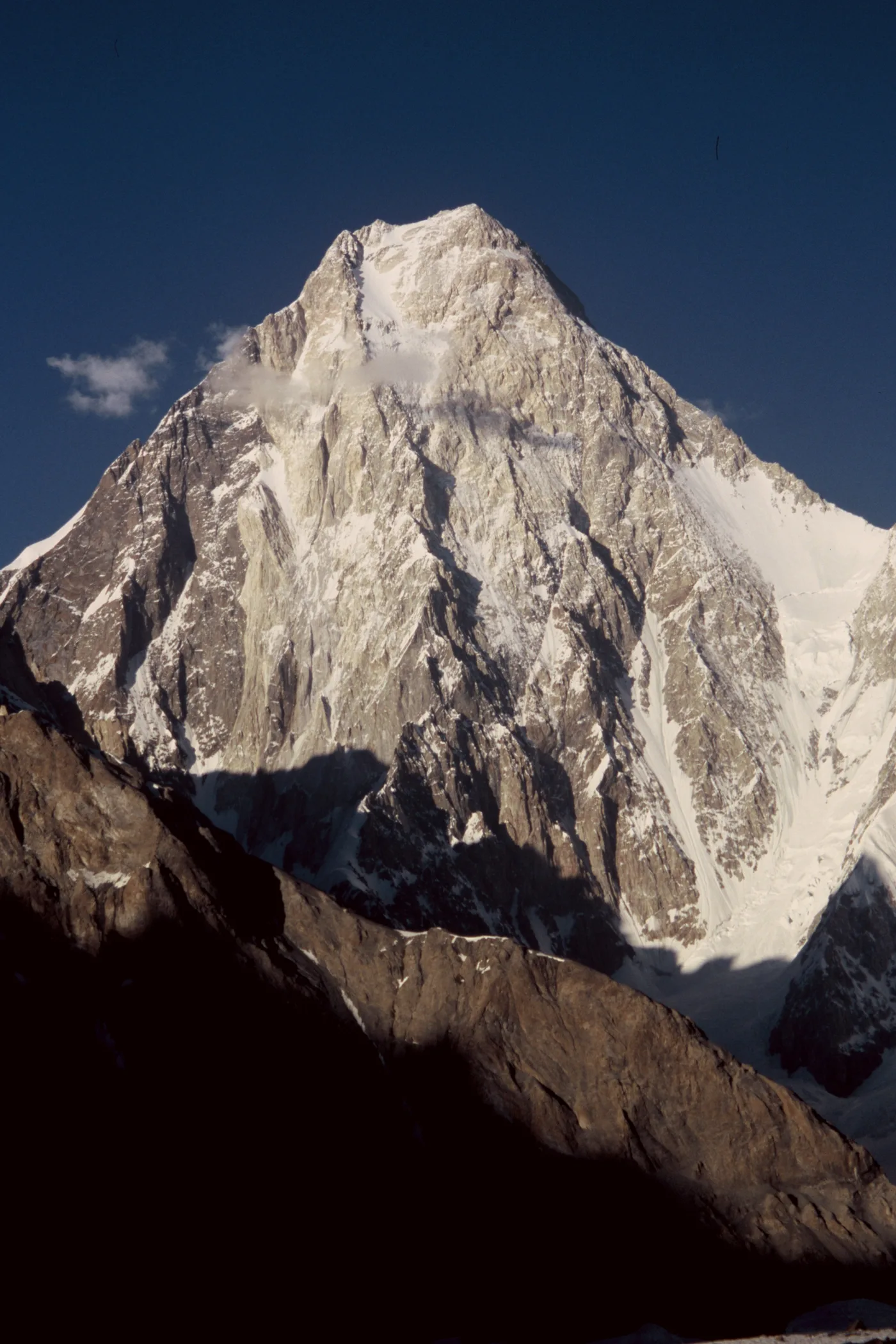
In July 1985, Wojciech Kurtyka and Robert Schauer completed the first alpine-style ascent of Gasherbrum IV's 2,500-meter West Face, enduring a 48-hour storm bivouac without food in an ascent hailed as the greatest big-wall climb of the 20th century.
Frequently Asked Questions: Gasherbrum IV
What is Gasherbrum IV and how high is it?
Gasherbrum IV is the 17th highest mountain on Earth and the 6th highest in Pakistan, standing at an official elevation of 7,925 meters (26,001 feet) in the Karakoram range.
Why is Gasherbrum IV called The Shining Wall?
Its sheer 2,500-meter West Face is composed of smooth, pale yellow marble and limestone that reflects the setting evening sun across the Baltoro Glacier, glowing brilliantly like a shining wall.
Who first climbed Gasherbrum IV?
Italian alpinists Walter Bonatti and Carlo Mauri made the maiden first ascent of Gasherbrum IV on August 6, 1958, via the Northeast Ridge as part of an Italian expedition led by Riccardo Cassin.
What was the famous 1985 climb on Gasherbrum IV?
In July 1985, Polish climber Wojciech Kurtyka and Austrian Robert Schauer made the first alpine-style ascent of the 2,500m West Face without oxygen or ropes, hailed as the "Climb of the Century".
Is Gasherbrum IV considered an 8,000-meter peak?
No. At 7,925 meters, Gasherbrum IV falls just 75 meters short of the 8,000-meter threshold, but its extreme technical difficulty exceeds that of almost all official 8,000-meter giants.
Where is Gasherbrum IV located?
Gasherbrum IV is located in the Gilgit-Baltistan region of Pakistan, rising in the Baltoro Muztagh subrange directly above the famous glacial junction of Concordia.
What makes Gasherbrum IV so technically difficult?
The mountain features vertical marble faces with crumbling, brittle holds, steep mixed ice couloirs, extreme wind exposure, and an absence of natural camps on its knife-edge ridges.
Has the West Face of Gasherbrum IV been repeated?
The direct central West Face line pioneered by Kurtyka and Schauer in 1985 remains unrepeated to the main summit, standing as an enduring benchmark of extreme big-wall climbing.
Documented Sources & Archival Citations
- The Mountains of My Life(Walter Bonatti / Penguin Books)
Supporting claim: Firsthand narrative of the 1958 Northeast Ridge first ascent with Carlo Mauri
Accessed/Documented: 2001 - The Shining Wall: Gasherbrum IV(Wojciech Kurtyka / American Alpine Journal)
Supporting claim: Official expedition chronicle of the 1985 alpine-style West Face ascent
Accessed/Documented: 1986